
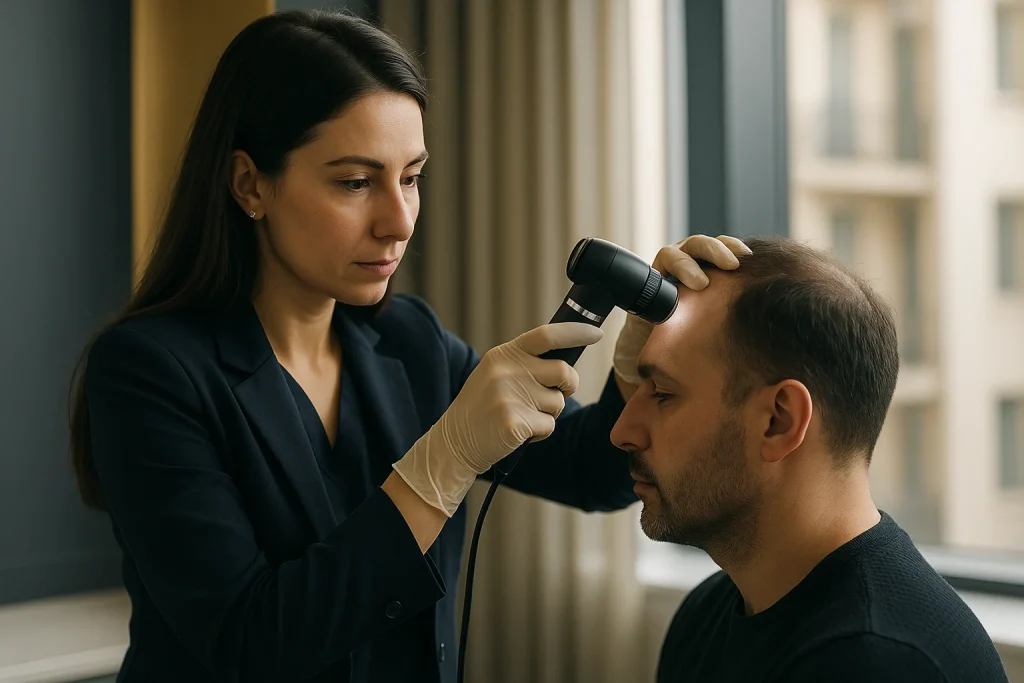
Temporal triangular alopecia is usually a stable, non-scarring patch of reduced hair density at the front side of the scalp. Hair transplantation may be considered when the diagnosis is confirmed, the area is stable, and there is sufficient donor hair, but your doctor should first exclude other causes of hair loss.
- Temporal triangular alopecia typically creates a one-sided or two-sided triangular patch near the temples, often beginning in childhood.
- The condition is non-scarring, meaning hair follicles are usually present but produce fine, light hairs.
- A trichoscopic examination helps a doctor distinguish this condition from alopecia areata, traction alopecia, and other forms of hair loss.
- Hair transplantation can be an option for selected adults with a stable diagnosis and suitable donor hair.
- Emotional effects of visible hair loss are valid, and professional support can be helpful alongside medical care.
01Understanding Temporal Triangular Alopecia
Temporal triangular alopecia is an uncommon, non-scarring form of localized hair loss that usually affects the front side of the scalp, close to one temple. The patch often has a triangular, spear-shaped, or oval outline and may appear on one side only, although both sides can be involved. It is frequently noticed during childhood, but some people do not recognise it until later because the area can remain unchanged for many years.
Unlike hair loss that causes a smooth bald surface, this condition commonly leaves small, fine, pale hairs within the affected area. These are called vellus hairs. The scalp skin usually looks healthy, with no obvious redness, scale, pain, or scarring. This appearance is one reason why a careful scalp examination is important before any treatment is planned.
The word alopecia simply means hair loss. Although the name can sound concerning, temporal triangular alopecia is generally not considered a dangerous medical condition. It does not usually affect general health, and it is not typically linked with a problem in the hair follicles that spreads across the scalp. However, any new, rapidly changing, itchy, or inflamed patch of hair loss should be assessed by a qualified doctor.
02How Doctors Confirm the Diagnosis
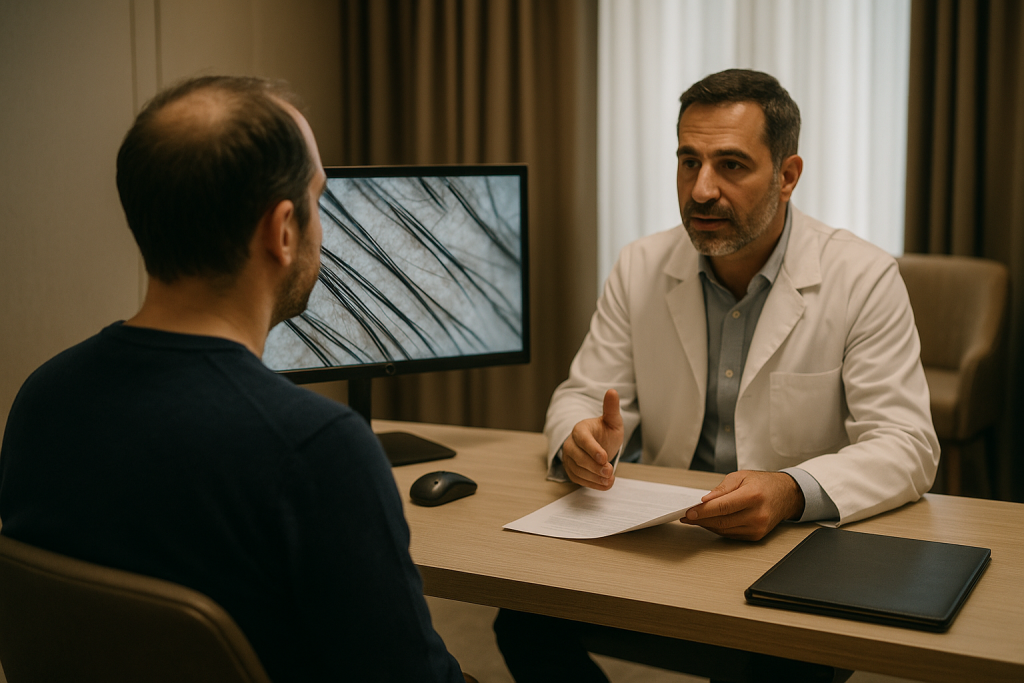
Diagnosis usually begins with a discussion about when the patch was first noticed and whether its size, shape, or hair density has changed. Your doctor may ask about childhood photographs, family history, skin symptoms, hairstyles, recent illnesses, medications, and other areas of hair loss. This history can help separate a long-standing stable patch from a newly developing hair-loss condition.
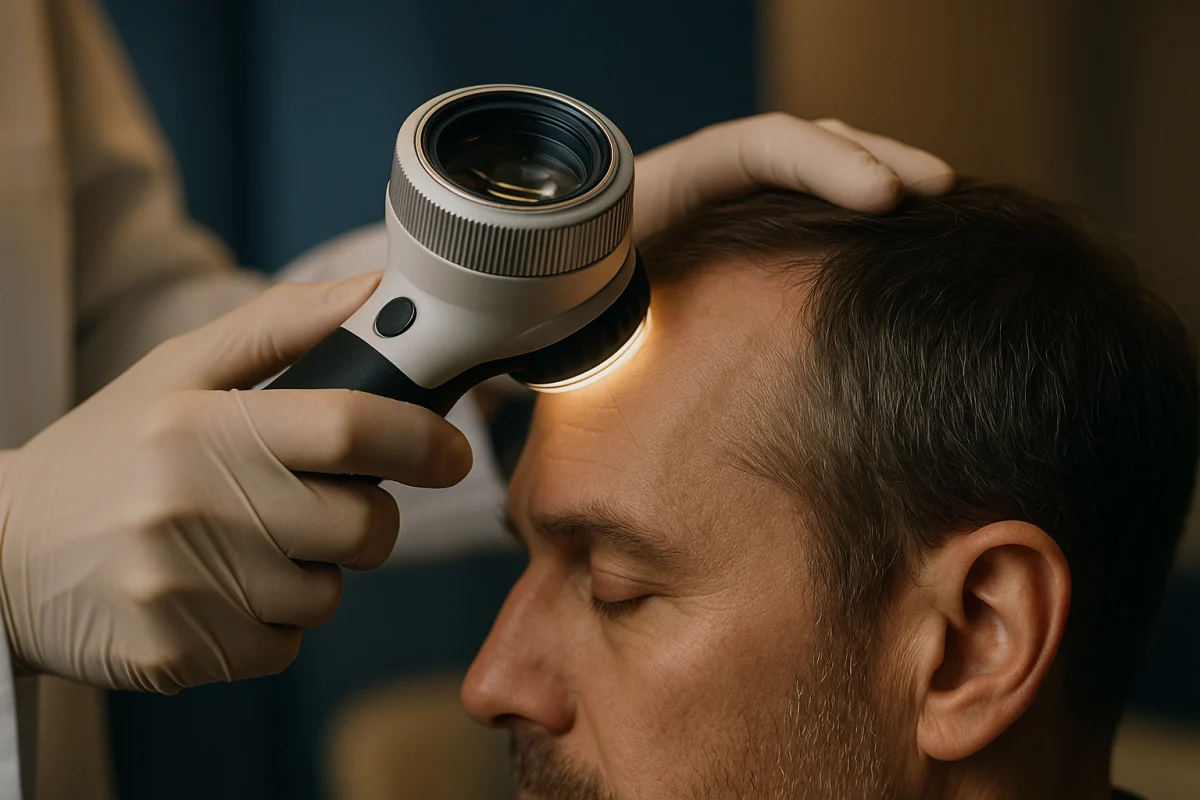
A close scalp examination is followed in many cases by trichoscopy, a non-invasive method that magnifies the scalp and hairs. In this condition, trichoscopy may show many fine vellus hairs mixed with normal terminal hairs and healthy follicular openings. It can also help identify signs that point instead to inflammation, scarring, broken hairs, or autoimmune hair loss.
Sometimes the diagnosis is not clear from the clinical examination alone. In that situation, a dermatologist may recommend further assessment and, less commonly, a small scalp biopsy. A biopsy is not required for every patient, but it can be useful when the patch has an unusual appearance or when another diagnosis needs to be excluded. A hair transplant consultation should not replace this diagnostic step.
03Why It Can Be Mistaken for Other Hair Loss Conditions
The most important condition to distinguish from temporal triangular alopecia is alopecia areata. Alopecia areata is an autoimmune condition that can create sharply defined bald patches, often with a more sudden onset. The hairless skin may look smooth, and trichoscopy can show different features, such as exclamation-mark hairs or black dots. The outlook and treatment approach for alopecia areata are different from those for a stable triangular temple patch.
Traction alopecia is another possible cause of temple hair thinning. It can develop when repeated pulling from tight braids, ponytails, extensions, head coverings, or styling practices places tension on the hairline. Early traction alopecia may improve if the tension stops, while longstanding traction can lead to permanent follicle damage. A doctor will consider hairstyle history and the distribution of thinning before reaching a conclusion.
Other possibilities include fungal scalp infection, congenital hair differences, androgenetic hair loss, and less common scarring disorders. This is why a visible patch should not be diagnosed from photographs alone. A doctor-reviewed online assessment can be a useful starting point, but an in-person evaluation may still be needed where symptoms or images suggest uncertainty.
04Natural Course and Non-Surgical Management
In most patients, the patch remains stable after it becomes noticeable. It may grow in proportion with the scalp during childhood, but it does not usually behave like a rapidly progressive form of hair loss. Spontaneous return of dense terminal hair is not commonly expected, which is why some people explore cosmetic or surgical options later in life.
There is no single medical treatment that reliably restores normal-density hair in every affected area. Topical hair-growth treatments have been tried in some cases, but their benefit can vary and the results may not continue after treatment stops. Your doctor can explain whether a medical approach is reasonable for your diagnosis, medical history, age, and scalp findings.
Some patients prefer no active treatment, especially when the patch is small or easily covered by existing hair. Styling changes, a different parting, gentle hair fibres, or haircut adjustments may improve the appearance temporarily. These approaches do not change the underlying follicles, but they can offer a practical option while a diagnosis is confirmed or while a younger patient waits until transplant planning is more appropriate.
05When Hair Transplantation May Be Considered
Hair transplantation may be considered for temporal triangular alopecia when the diagnosis is secure, the pattern has been stable, and the person has adequate donor hair. Because the scalp is non-scarring and follicles are generally present, the area can often accept transplanted grafts. Still, suitability is individual and depends on hair characteristics, the size of the patch, the surrounding density, and the person’s expectations.
A transplant is usually planned more cautiously for children and teenagers. The face and scalp continue to develop, and the future hairline may change with age. In many situations, doctors advise waiting until adulthood and until the pattern has been clearly stable. This helps protect donor hair and allows a more accurate design that matches the mature facial proportions.
Before recommending surgery, the medical team should also assess for other active hair-loss processes. For example, untreated alopecia areata or progressing pattern hair loss can affect the overall cosmetic result. A transplant can redistribute existing donor follicles, but it does not stop future hair loss elsewhere. A realistic long-term plan is therefore an essential part of safe decision-making.
06Planning a Natural-Looking Temple Restoration
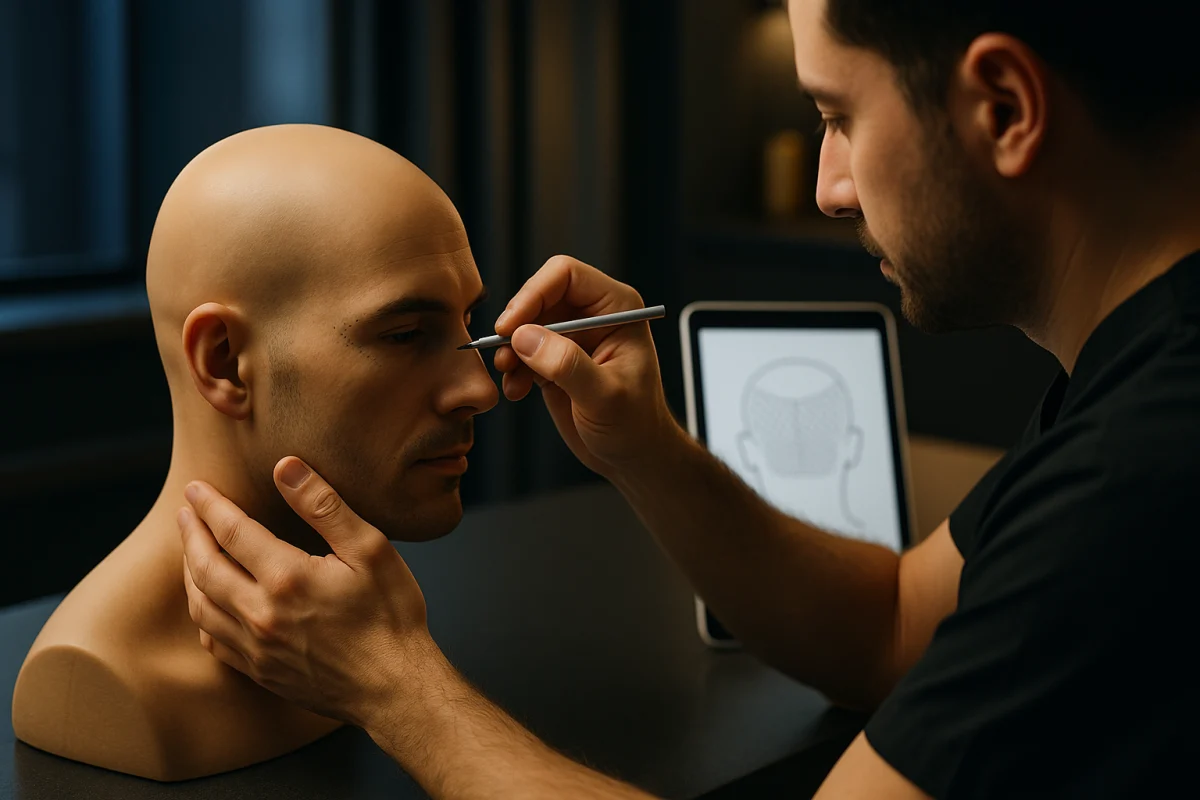
Temple restoration requires detailed design because the temporal points frame the face and naturally contain finer, softer hairs than the central scalp. The direction and angle of each implanted hair are particularly important. Grafts placed too upright, too densely, or in an overly sharp line may look less natural than a carefully graduated transition from normal hair into the previously sparse area.
A surgeon may select finer single-hair grafts for the leading edge, then place slightly fuller grafts behind them where appropriate. Donor-hair texture, curl, colour contrast, and diameter can all influence visual coverage. A person with coarse or very dark hair, for example, may need a different density strategy from someone with finer hair and lower scalp-to-hair contrast.
At Acibadem Hair Transplant Center in Istanbul, doctors review hair and scalp photographs as part of a free online hair analysis before discussing a possible procedure. The clinic offers Sapphire FUE and DHI techniques, and the most suitable approach depends on the graft plan rather than a one-size-fits-all method. Your doctor will confirm whether either technique is appropriate after reviewing the diagnosis, donor area, and treatment goals.
07What the Procedure and Recovery Usually Involve
If surgery is appropriate, hair follicles are generally taken from a donor area where the hair is more resistant to thinning, commonly at the back or sides of the scalp. The grafts are then prepared and placed into tiny recipient sites within the temple patch. Local anaesthesia is commonly used; needle-free anaesthesia is also available at Acibadem Hair Transplant Center for eligible patients, following medical assessment.
After the procedure, small crusts, mild redness, swelling, and temporary tenderness can occur. Patients are given instructions on washing, sleeping position, exercise, sun exposure, and avoiding friction during the early healing phase. Following these instructions matters because transplanted grafts are delicate in the first days. Your medical team should provide clear guidance and explain when to contact them about unexpected symptoms.
Transplanted hairs often shed during the first weeks, which can be a normal part of the hair-growth cycle. New visible growth generally develops gradually rather than immediately, and maturation takes time. Final density and appearance are commonly assessed over many months, often around month 12. Individual growth varies, and no clinic should guarantee that every graft will grow or that a specific cosmetic appearance can be achieved.
08Long-Term Expectations, Confidence, and Follow-Up
The main goal of a transplant in a stable temple patch is to blend the area naturally with surrounding hair, not to create an unnaturally dense block of hair. Some patients may need a conservative density plan to preserve the donor area or to match naturally fine temple hairs. In selected cases, a later touch-up may be discussed, but it should never be assumed to be necessary or suitable.
Visible hair loss can affect confidence, social comfort, and how a person feels about photographs or hairstyles. These feelings are understandable, even when the condition is medically harmless. A supportive consultation should include space to discuss expectations and concerns. If hair loss is causing persistent low mood, anxiety, avoidance, or distress, speaking with a mental health professional can be an important part of overall care.
For international patients, practical follow-up also matters. Acibadem Hair Transplant Center provides all-inclusive packages that can include VIP transfer, a 4-star hotel, a care kit, and 12 months of follow-up. The clinic is licensed by the Turkish Ministry of Health and offers doctor-reviewed online hair analysis, with WhatsApp replies typically within around two hours. These services support communication, but the final decision for treatment should always follow an appropriate medical evaluation.
09A Practical Aftercare Plan for the First Two Weeks
The first two weeks after a hair transplant are mainly about protecting the newly placed grafts while the scalp begins to heal. Your medical team will provide procedure-specific instructions, and these should take priority over general online advice. In most cases, patients are asked not to touch, scratch, rub, or pick at the recipient area. Even when small crusts appear, they should be softened and removed only according to the washing plan given by the clinic.
Sleeping carefully is often important in the first few nights. Your team may advise keeping the head elevated and avoiding direct pressure on the transplanted temple area. Loose, front-opening clothing can also be more practical than garments pulled over the head. If a hat is permitted, it should be used only when the clinic confirms that it will not rub against the grafts.
Gentle washing usually begins according to the clinic’s schedule. This often involves applying the recommended product carefully, allowing it to soften crusting, and rinsing with low pressure rather than a strong shower stream. Do not use fingernails on the scalp. If you are unsure whether a product, hairdryer setting, styling product, or cleansing method is safe, ask the aftercare team before using it.
Temporary redness, mild swelling, itching, and small crusts can occur during early healing. However, increasing pain, spreading redness, fever, discharge, significant bleeding, or swelling that concerns you should be reported promptly to your medical team. Do not try to diagnose a possible complication through social media or by comparing your recovery with another patient’s photographs.
10Hair Growth Timeline After Temple Grafting
A hair transplant does not produce immediate cosmetic density. During the first days, the implanted grafts may be visible as very short hairs with small crusts around them. Once healing progresses, the scalp often looks calmer, but the transplanted hairs may then shed. This shedding phase can be unexpected, yet it is commonly part of the normal cycle after transplantation and does not necessarily mean that the follicles have been lost.
New growth usually starts gradually over the following months. Early hairs can initially look fine, uneven, or lighter than expected before they mature. Temple areas also need time to blend with the surrounding hair because the design depends on soft direction, natural angles, and gradual density rather than a sharply defined line. Photographs taken in consistent lighting can help the medical team monitor change more accurately than daily mirror checks.
Meaningful improvement is generally judged over several months, while a fuller assessment is commonly made around month 12. Acibadem Hair Transplant Center measures results using trichoscopic graft survival at month 12 and documents a 98% rate under its written guarantee. This measurement relates to graft survival assessment, not a promise of an identical cosmetic outcome for every patient. Hair calibre, skin contrast, healing, graft placement, and any future hair loss in surrounding areas can all influence the visible result.
Patients should continue to monitor their natural, non-transplanted hair as well. A successful restoration of a stable triangular patch does not prevent unrelated thinning elsewhere on the scalp. If you notice widening thinning, new patches, scalp inflammation, or a change in the original temple area, arrange medical review rather than assuming it is part of the transplant growth timeline.
11International Travel and Consultation Preparation
For patients travelling to Istanbul, preparation begins before booking a procedure. Clear photographs taken in daylight can support the initial doctor-reviewed online hair analysis. Images are typically most useful when they show the front hairline, both temples, the affected patch from close range, the donor area at the back and sides, and the overall scalp. It is also helpful to share when the patch was first noticed, whether it has changed, and whether a dermatologist has already assessed it.
Bring or send relevant medical information before travel, including previous scalp diagnoses, biopsy or trichoscopy reports if available, current medicines, allergies, and any history of excessive bleeding, poor wound healing, or reactions to anaesthesia. Your doctor will decide whether further local assessment, laboratory testing, or a change in plans is needed. A remote review can help with planning, but it cannot replace an in-person medical examination when diagnostic uncertainty remains.
Avoid arranging a schedule that requires immediate strenuous activity, swimming, prolonged sun exposure, or a tightly fitting helmet after the procedure. International patients should also allow enough flexibility for the clinic’s recommended post-procedure check, washing guidance, and travel advice. Acibadem Hair Transplant Center offers all-inclusive packages with VIP transfer, a 4-star hotel, a care kit, and 12 months of follow-up, helping patients organise practical aspects of care.
After returning home, keep the clinic’s follow-up contact details available and follow the agreed photo-update schedule. Acibadem Hair Transplant Center provides doctor-reviewed online hair analysis and typically replies on WhatsApp within around two hours. For urgent symptoms, however, patients should follow the clinic’s emergency guidance and seek appropriate local medical care when advised.
12Frequently Asked Questions
Are there foods I should avoid if I have alopecia areata?
There is no proven list of foods that everyone with alopecia areata should avoid. Restrictive diets can lead to nutritional deficiencies, which may also affect hair health. If you suspect a food allergy, have digestive symptoms, or are considering major dietary changes, discuss this with your doctor or a registered dietitian.
What does autoimmune hair loss mean?
Autoimmune hair loss describes hair loss caused when the immune system mistakenly targets structures involved in hair growth. Alopecia areata is the best-known example and can cause round or irregular patches of hair loss. It is different from temporal triangular alopecia, which is not typically considered an autoimmune condition.
Can alopecia disappear and return again?
Some forms of alopecia can fluctuate. Alopecia areata, for example, may improve, recur, or affect different areas over time. Temporal triangular alopecia is usually more stable and long-lasting, rather than appearing and disappearing in episodes, but a doctor should assess any changing patch.
Is there a link between alopecia and depression?
Hair loss does not automatically cause depression, but its visible and emotional impact can contribute to low mood, anxiety, reduced confidence, or social withdrawal in some people. Depression can also occur for many unrelated reasons. If mood changes are persistent or severe, seeking support from a qualified mental health professional is important.
This article is for general information only and is not a substitute for professional medical advice.
 06
06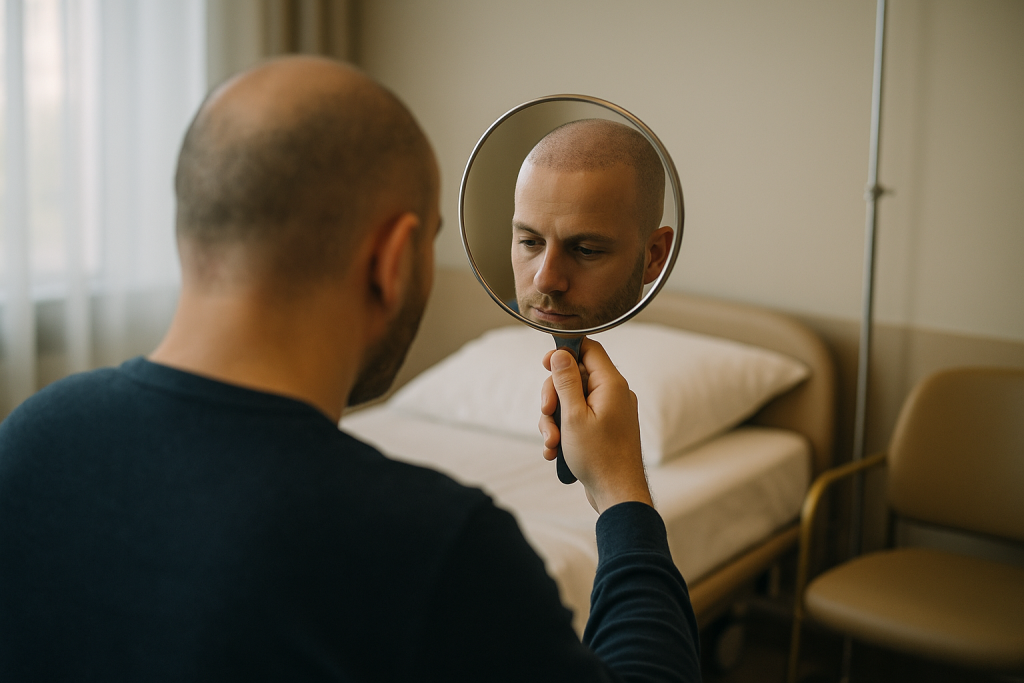 12
12