
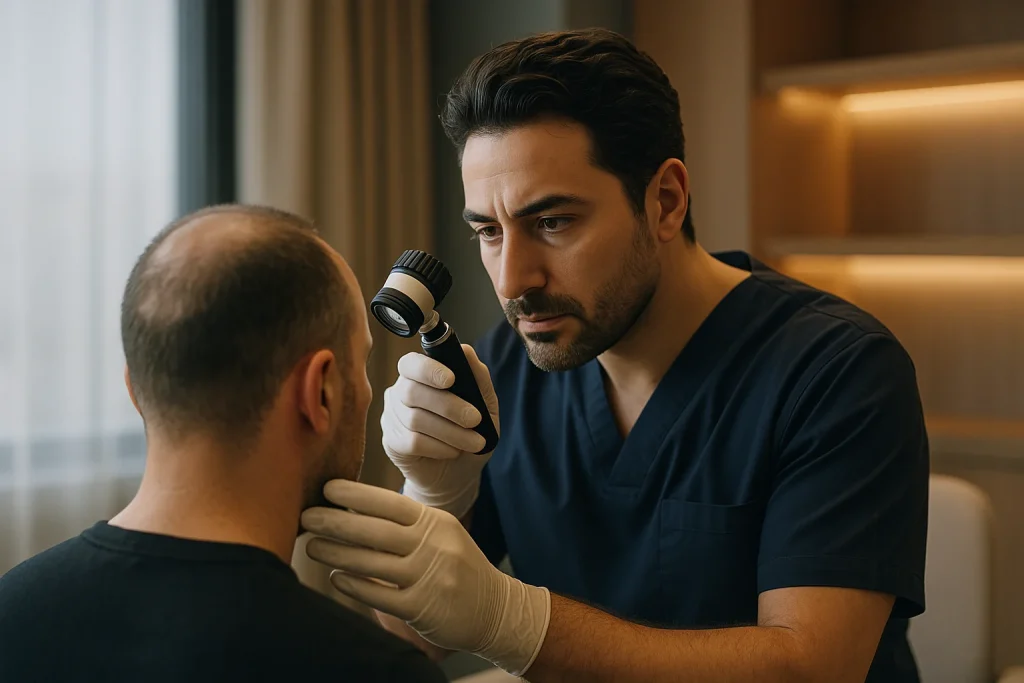
Knowing how to treat folliculitis before a hair transplant starts with a medical assessment to identify the likely cause and settle active scalp inflammation. In most patients, surgery is postponed until pustules, tenderness, drainage, and significant redness have resolved and your doctor confirms that the scalp is ready.
- Active scalp folliculitis should be assessed and treated before hair transplant surgery is planned.
- Folliculitis may be bacterial, fungal, inflammatory, or linked to friction, products, shaving, and ingrown hairs.
- A visual examination may not identify the cause reliably, so your doctor may recommend a swab, culture, or other tests.
- Harsh home treatments, including rubbing alcohol, can irritate the scalp and may delay recovery.
- A stable, symptom-free scalp helps the surgical team plan safer graft placement and aftercare.
01Treating Scalp Folliculitis Before Hair Transplant
If you are researching how to treat folliculitis before a hair transplant, the first priority is to control the active scalp condition rather than to rush into surgery. Folliculitis means inflammation around hair follicles. It can appear as small red bumps, white-headed spots, crusting, itchiness, soreness, or deeper painful lumps. Because a hair transplant involves making tiny recipient-site openings and placing grafts into the scalp, active inflammation or infection needs careful medical review first.
In a dedicated hair restoration consultation, the scalp should be examined for active pustules, discharge, widespread redness, scabbing, tenderness, or areas of hair loss that may have another cause. Your doctor will also ask about recent product use, shaving, sweating, medicines, skin conditions, and previous episodes. This information helps distinguish a short-lived flare from a recurring or more complex condition.
In most patients, a hair transplant is considered only after the scalp has become clinically calm. This does not mean that every past spot prevents treatment forever. It means there should be no untreated active infection or significant inflammation in the donor or recipient areas on the day of surgery. The final decision should always be made by the doctor assessing your scalp in person or through an appropriate clinical review.
02Why an active flare can affect hair transplant planning
Folliculitis can create a less predictable healing environment. Inflamed follicles and broken skin may be more sensitive to local anaesthesia, cleansing, and the small incisions used during hair restoration. If bacteria or yeast are present, there is also concern that the condition could spread or become more irritated after a procedure. For these reasons, a responsible clinic will not treat active scalp infection as a cosmetic inconvenience.
The donor area matters as much as the thinning area. In Sapphire FUE, individual follicular units are extracted from the donor scalp. In DHI, grafts are implanted using a specialised implantation method. Both approaches require healthy skin and careful handling of the follicles. Folliculitis in either area may change the timing of surgery, the distribution of grafts, or the need for further dermatological assessment.
Waiting can feel disappointing when you are ready to improve your hair appearance, but it is often the safer course. A short delay allows the cause to be investigated, treatment to work, and the scalp barrier to recover. It also gives the team a clearer view of the natural hair pattern and skin quality, which supports more accurate planning.
03A clinical guide on how to treat folliculitis before surgery
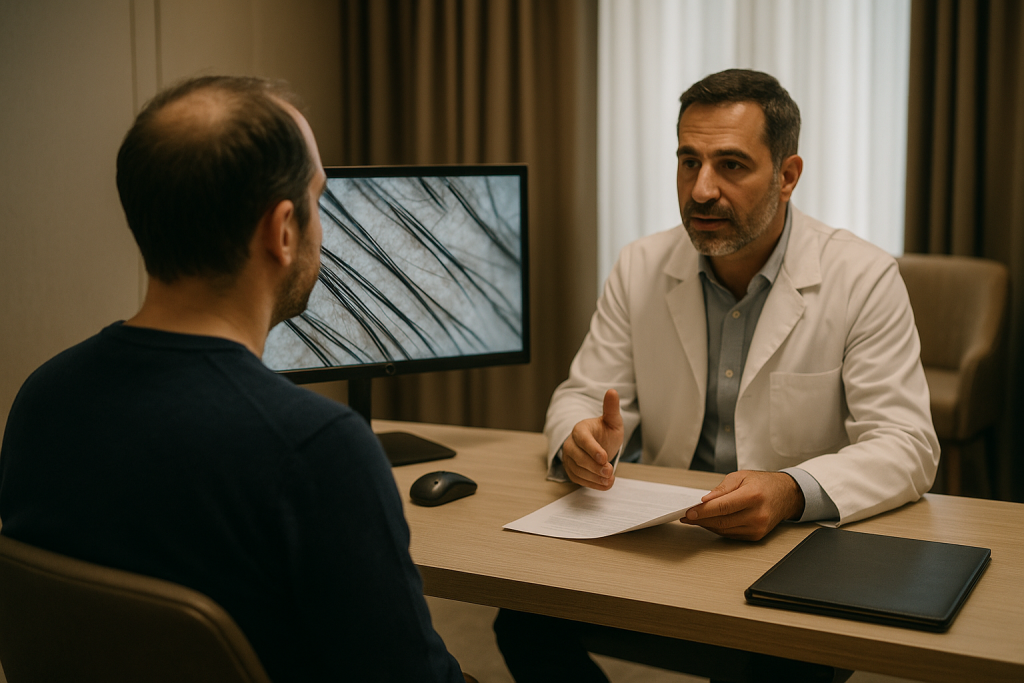
How to treat folliculitis depends on what is causing the inflamed follicles. A doctor may diagnose the condition from its appearance and your history, but a swab or culture can be useful when spots are recurrent, severe, draining, not responding as expected, or difficult to classify. Testing may help identify bacteria, yeast, or another issue that needs a different approach.
When bacterial folliculitis is suspected, management may include a prescribed topical treatment, an antiseptic wash chosen for the scalp, or oral medicine in selected cases. The choice and duration depend on the severity, the affected area, medical history, and test results where available. It is important not to use leftover antibiotics or stop prescribed treatment early without speaking to the clinician who prescribed it.
If fungal or yeast-related folliculitis is considered more likely, antibacterial treatment alone may not help. A clinician may recommend an antifungal scalp treatment or medicine after evaluating the pattern and possible contributing factors. Other look-alike conditions, such as acneiform eruptions, dermatitis, psoriasis, or scarring inflammatory disorders, may require a different plan, which is why self-diagnosis is not reliable.
04Common triggers that can inflame scalp follicles
Folliculitis can be triggered when follicles become blocked, irritated, or exposed to microorganisms. Common contributors include sweat left on the scalp, oily or occlusive styling products, infrequent washing after exercise, tight headwear, helmet friction, close shaving, and ingrown hairs. A hot and humid environment can also make some scalp eruptions more noticeable.
Not every trigger is external. Changes in the scalp microbiome, naturally oily skin, hormonal influences, immune conditions, certain medicines, and underlying inflammatory skin disease can contribute in some people. Repeated scratching may damage the skin barrier and introduce bacteria from the hands or nails, creating a cycle of itch and further irritation.
Before hair transplant planning, it can help to keep a simple record of when flares occur. Note whether symptoms follow a new shampoo, hair oil, workout routine, cap, haircut, or medication change. This record does not replace medical diagnosis, but it can give your doctor useful clues and help identify practical steps to reduce repeat irritation.
05Simple scalp care while you wait for medical review
Gentle scalp care is usually more helpful than aggressive cleansing. Wash regularly with a mild product appropriate for your scalp, especially after heavy sweating, and rinse thoroughly. Avoid picking, squeezing, or shaving over painful spots. These actions can worsen inflammation, increase crusting, and make it harder for a clinician to assess the original pattern.
Try to reduce friction and occlusion where possible. Clean hats, helmet liners, pillowcases, combs, and hairbrushes regularly, and avoid sharing them. If you use waxes, heavy oils, dry shampoo, or other leave-on styling products, consider whether they seem to coincide with flares and discuss this with your clinician. Avoid applying several new products at once, as this makes irritation harder to identify.
It is also sensible to tell the hair restoration team about any treatment you are using, including medicated shampoos, prescription creams, oral medicine, supplements, or recent steroid use. Some products may need to be paused or continued around surgery only under medical guidance. Your doctor will confirm a suitable scalp-care plan and the right timing for any procedure.
06What not to do when folliculitis is active
Rubbing alcohol is generally not a preferred treatment for scalp folliculitis. Although alcohol can reduce surface germs, it may sting, dry the skin, disrupt the scalp barrier, and increase irritation. It does not address every cause of folliculitis, including fungal or inflammatory conditions, and it should not be applied to broken, raw, or recently treated scalp skin unless specifically advised by a clinician.
Avoid using multiple strong antiseptics, exfoliating acids, essential oils, or acne products on the scalp without medical advice. Products that are suitable for facial acne may be too irritating for the scalp or may leave residue around the hair shafts. Over-treating can make redness and itching look worse, even if the original infection is improving.
When learning how to treat folliculitis, it is important to avoid assuming that every bump needs an antibiotic. Unnecessary antibiotic use may cause side effects and can contribute to resistance. A more targeted approach, based on the suspected cause and your clinical assessment, is safer and more likely to support a stable scalp before transplantation.
07When your scalp may be ready for hair restoration
A scalp is typically considered more suitable for transplant planning when there are no active pustules, drainage, spreading redness, marked tenderness, or new crusting in the planned donor and recipient areas. The skin should look settled, and symptoms such as pain and intense itching should be controlled. For recurrent folliculitis, your doctor may also want a longer period of stability before confirming a procedure date.
At Acibadem Hair Transplant Center in Istanbul, a free online hair analysis can be reviewed by doctors before travel planning. Clear photographs and a full history of scalp symptoms help the team identify whether an in-clinic assessment or dermatology review may be needed first. WhatsApp replies are typically provided within around two hours, although a remote review cannot replace examination when an active scalp condition is present.
Our dedicated hair restoration clinic is licensed by the Turkish Ministry of Health and offers Sapphire FUE and DHI techniques. Once the scalp is suitable, the team can discuss procedure planning, needle-free anaesthesia availability, all-inclusive package arrangements, and 12 months of follow-up. Hair transplant outcomes depend on many individual factors, so the doctor will confirm whether surgery is appropriate only after a proper assessment.
08A practical checklist for the weeks before your procedure
Once folliculitis has settled, preparation should focus on keeping the scalp stable rather than experimenting with new treatments. Follow the plan given by the clinician managing your scalp condition, including the correct use of any prescribed shampoo, lotion, cream, or oral medicine. Do not stop a prescribed course early simply because the skin looks better, unless the prescribing clinician tells you to do so.
In the one to two weeks before a planned hair transplant, avoid close clipping, shaving, chemical colouring, bleaching, scalp exfoliation, or strong at-home treatments unless your hair restoration team has specifically approved them. These steps can irritate the skin or make it difficult to judge whether a new red area is folliculitis, contact irritation, or a reaction to a product.
Take clear scalp photographs if you have a history of recurrent bumps. Images taken during a flare and again after it settles can help your doctor understand the pattern. Before travelling, share any new symptoms, recent treatment changes, allergies, and relevant medical information with the clinic. Your doctor will confirm which medicines and scalp products should be continued, paused, or avoided before surgery.

09Symptoms that should be reported before travelling for a hair transplant
Contact the clinic promptly if you develop new pustules, yellow crusting, drainage, spreading redness, increasing pain, warmth, swelling, fever, or tender lumps before your appointment. These signs do not always mean a serious infection, but they need clinical review. It is safer to report a possible flare early than to arrive for surgery with an untreated scalp problem.
You should also mention a recent course of antibiotics, antifungal medicine, steroid treatment, or a new diagnosis involving the skin or immune system. These details may affect whether the scalp needs more time to recover or whether additional assessment is appropriate. Do not conceal a flare because you are concerned about changing travel plans; postponing treatment may be the more responsible option when active inflammation is present.
For international patients, it is useful to keep copies of relevant prescriptions, test results, and a brief note from your usual doctor if you have received treatment locally. This can support a clearer discussion during the pre-operative assessment. However, the hair restoration doctor will make the final decision about proceeding based on the scalp examination and your current clinical condition.
10Travel planning when you have recently had scalp folliculitis
If you are travelling to Istanbul after a recent flare, plan enough flexibility in your schedule for an in-person scalp check before the procedure. Avoid booking a transplant immediately after finishing treatment without allowing time for your doctor to confirm that the symptoms have resolved. A scalp may look improved in photographs while still being tender, inflamed, or prone to recurrence on examination.
During travel, keep the scalp clean and avoid prolonged pressure, overheating, and heavy use of styling products where possible. If you wear a hat during your journey, choose a clean, loose-fitting option that does not rub sore areas. Carry only the scalp products or medicines that have been recommended for you, preferably in their original packaging, and avoid trying unfamiliar products in a new climate.
Acibadem Hair Transplant Center provides all-inclusive arrangements that include VIP transfer, a 4-star hotel, a care kit, and 12 months of follow-up. These arrangements can make the practical side of travelling easier, but they do not replace the need for medical clearance. Patients from abroad should still inform the team of any scalp change before departure so that travel and treatment plans can be reviewed appropriately.
11Reducing the chance of folliculitis returning after a transplant
After a hair transplant, the recipient and donor areas need gentle handling while the grafts and skin recover. The clinic will provide specific washing and aftercare instructions, and these should take priority over general online advice. In the early healing period, avoid scratching, picking scabs, rubbing the scalp with towels, or applying unapproved oils, sprays, concealers, or medicated products to the treated areas.
A small amount of temporary redness, sensitivity, swelling, or crust formation can occur during normal post-transplant healing. However, new pus-filled spots, worsening pain, spreading redness, unpleasant-smelling discharge, fever, or persistent swelling should be reported to the clinic without delay. It is important not to assume that every post-operative bump is normal healing or to treat it with leftover medication at home.
Once your doctor confirms that normal washing and activity can resume, practical habits may help reduce avoidable irritation. These include washing after heavy sweating, using clean pillowcases and hair tools, avoiding very tight headwear, and introducing styling products gradually. Patients with a history of recurrent folliculitis may need a longer-term scalp maintenance plan from their doctor or dermatologist, especially if flares have previously been linked to an underlying skin condition.
12Frequently Asked Questions
How can I know whether my folliculitis is fungal or bacterial?
The appearance can provide clues, but it is not always possible to tell reliably at home. Bacterial folliculitis may cause tender pustules or crusting, while fungal or yeast-related folliculitis can be very itchy and consist of many similar-looking bumps, but these patterns can overlap. A doctor may examine the scalp and, when needed, take a swab, culture, or other sample to guide treatment.
What can make scalp folliculitis worse?
Picking or scratching, close shaving, sweat left on the scalp, tight headwear, dirty hair tools, and heavy or irritating products may worsen folliculitis. Harsh cleansers and repeated use of strong antiseptics can also damage the skin barrier. If symptoms are spreading, painful, recurrent, or producing discharge, seek medical assessment rather than adding more home treatments.
What usually triggers folliculitis?
Triggers may include blocked or irritated follicles, bacteria or yeast, friction, sweating, shaving, ingrown hairs, and occlusive scalp products. Some people also have an underlying skin condition or medication-related factor that contributes to repeated flares. A clinician can help identify the likely cause, particularly when episodes keep returning.
Can rubbing alcohol be used for folliculitis?
Rubbing alcohol is not usually recommended as a routine treatment for scalp folliculitis. It may cause dryness, burning, and further irritation, especially on inflamed or broken skin, and it may not treat the underlying cause. Ask a doctor or pharmacist about a scalp-appropriate option rather than applying alcohol directly to the affected area.
How long should I wait after folliculitis before a hair transplant?
There is no single waiting period that applies to every patient. The important factor is that active inflammation and infection have resolved and the scalp has remained stable for a period your doctor considers appropriate. Your hair restoration doctor may recommend further review if you have recurrent folliculitis or an uncertain diagnosis.
This article is for general information only and is not a substitute for professional medical advice.
 06
06 12
12