
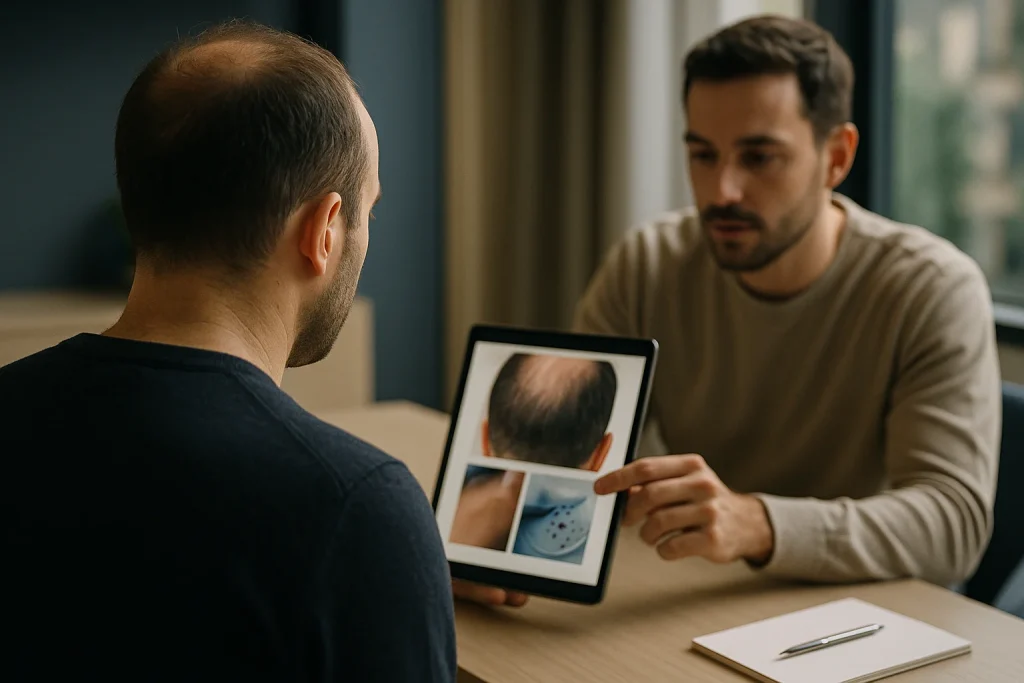
Vitamin d supplements for hair growth may be helpful when a confirmed vitamin D deficiency is contributing to shedding or poor hair health. They are not a universal hair-loss treatment, and taking high doses without testing can be unsafe. A blood test and medical review can help identify whether vitamin D is relevant in your situation.
- Vitamin D is involved in normal hair follicle activity, but low levels are only one possible factor in hair thinning.
- A blood test is the reliable way to confirm vitamin D deficiency before starting supplementation.
- Correcting a documented deficiency may support hair recovery over time, but it does not usually treat genetic hair loss on its own.
- High-dose vitamin D can cause harmful calcium changes, especially when used without medical supervision.
- Ongoing shedding, scalp symptoms, or a widening part should be assessed because several medical and hair-related causes may overlap.
01Why testing should come before a vitamin D supplement
Many people search for vitamin d supplements for hair growth after noticing extra hair in the brush, a broader parting, or reduced density. Vitamin D has an important role in the body, including normal skin and hair follicle function. However, hair shedding does not automatically mean that vitamin D is low. Testing before supplementation gives a clearer starting point and helps avoid treating the wrong cause.
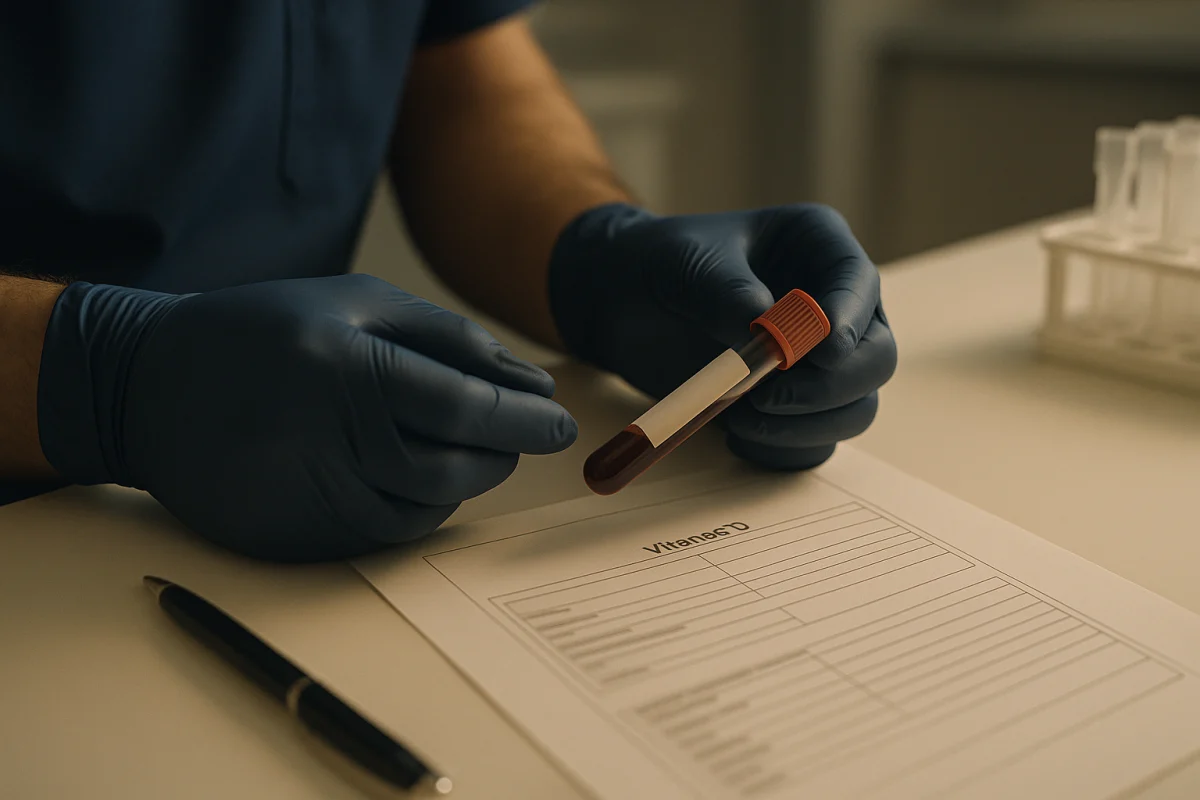
A simple blood test can show whether your vitamin D level is within the laboratory reference range, low, or needs medical attention. Your doctor will interpret the result in the context of your symptoms, health history, diet, sun exposure, current medicines, and other test results. A number alone is not a diagnosis of the reason for hair loss.
This step matters because the pattern of hair loss can provide important clues. Diffuse shedding across the scalp may occur after illness, stress, major weight change, childbirth, nutritional problems, or some medicines. Gradual thinning around the part line or temples may instead reflect hereditary pattern hair loss. These conditions can exist at the same time, so a supplement alone may not address the full picture.
Vitamin D is fat-soluble, which means that excess amounts can build up in the body. Taking more than you need may raise calcium levels and can cause symptoms such as nausea, thirst, constipation, weakness, confusion, or kidney-related problems. For this reason, a clinically guided plan is generally safer than choosing a high-dose product based on hair concerns alone.
02How vitamin D is connected with the hair follicle
Hair follicles move through repeating phases of active growth, transition, rest, and shedding. Vitamin D receptors are found in the skin and hair follicle structures, and these receptors are understood to be involved in normal follicle cycling. This biological connection is why vitamin D is often discussed in relation to hair growth and hair loss.
Research has observed low vitamin D levels in some people with certain types of hair loss. This does not prove that low vitamin D is always the cause. A low level may be one contributing factor, a finding linked with another health issue, or unrelated to the main reason for thinning. Clinical assessment is needed to distinguish association from cause.
When vitamin D deficiency is present, correcting it supports general bone, muscle, immune, and metabolic health as well as normal body function. If deficiency is contributing to abnormal shedding, restoring an appropriate level may support recovery of the hair cycle. The response varies between individuals and is not a guarantee of visible regrowth.
It is also important to separate hair shaft quality from follicle number. Dryness, breakage, and reduced shine can make hair appear thinner, but they are different from loss of growing hairs from the scalp. A clinician may ask whether you see short broken strands, full-length shed hairs with a small bulb, or gradual reduction in density in a specific pattern.
03Signs and risk factors that may justify a blood test
Vitamin D deficiency can be silent, meaning that many people have no clear symptoms. In others, symptoms may include tiredness, muscle aches, bone discomfort, or weakness, although these symptoms are common and can have many causes. Hair shedding alone cannot confirm a deficiency.
People may be more likely to have low vitamin D if they have limited sun exposure, regularly cover most of their skin outdoors, have darker skin, follow a diet low in vitamin D sources, or spend long periods indoors. Living in a region with limited sunlight during parts of the year can also affect vitamin D production in the skin. Certain digestive, liver, kidney, or endocrine conditions may change vitamin D absorption, activation, or use.
Some medicines can also affect vitamin D metabolism or calcium balance. Pregnancy, breastfeeding, older age, a history of fractures, and previous deficiency may be relevant to the discussion as well. Your doctor may decide that vitamin D testing is appropriate as part of a broader evaluation, rather than as a stand-alone test for hair concerns.
A detailed hair history is useful. Consider when the shedding began, whether it was sudden or gradual, whether there was a trigger two to four months beforehand, and whether close relatives have similar thinning. Scalp itching, redness, pain, scaling, patchy bald areas, eyebrow changes, or rapid loss deserve timely medical assessment because they can point to conditions that need specific treatment.
04What a vitamin D blood test can and cannot tell you
The test commonly used to assess vitamin D stores is called serum 25-hydroxyvitamin D, sometimes written as 25(OH)D. Your healthcare professional may request it when there is a clinical reason to assess vitamin D status. Laboratory ranges and the meaning of borderline values can differ, so results should be reviewed using the reporting laboratory and your individual health context.
A test can identify a low vitamin D level and help guide whether dietary changes, routine supplementation, a prescribed replacement plan, or follow-up testing may be suitable. It cannot confirm that vitamin D is the only reason for hair thinning. Even with a low result, hereditary hair loss, thyroid disorders, iron deficiency, inflammatory scalp disease, hormonal changes, or recent physical stress may still need consideration.
Depending on symptoms and history, a doctor may consider other investigations. These can include tests related to iron stores, thyroid function, blood count, vitamin B12, zinc, hormones, or general health. Not every patient needs every test. Ordering tests selectively helps ensure that findings are meaningful and avoids unnecessary supplementation.
Bring a list of all vitamins, minerals, prescribed medicines, and over-the-counter products to your appointment. Some multivitamins, bone-health products, fortified foods, and combination supplements already contain vitamin D. Knowing the full intake is important because unintentional duplication can increase the total amount consumed.
05Using vitamin d supplements for hair growth after a confirmed deficiency
If testing confirms deficiency, your doctor or pharmacist can advise on an appropriate form, dose, duration, and follow-up plan. The correct approach depends on how low the level is, whether there are absorption concerns, your age, kidney function, calcium status, and other medical factors. Some people need a short-term medical replacement plan, while others may need a maintenance approach.
Vitamin d supplements for hair growth should therefore be understood as treatment for a documented nutritional or medical issue, not as a cosmetic shortcut. Taking a supplement may correct deficiency, but it is not expected to create new follicles or reverse every form of hair loss. If pattern hair loss is also present, a clinician may discuss evidence-based management options appropriate to the diagnosis.
Do not assume that a larger dose will produce faster hair improvement. Excess vitamin D may lead to high calcium levels in the blood. The risk can be more relevant for people with kidney disease, a history of kidney stones, parathyroid disorders, sarcoidosis or similar inflammatory conditions, or those taking medicines that affect calcium balance.
Food can contribute to vitamin D intake, although diet alone may not correct every deficiency. Depending on local availability and dietary preferences, sources can include oily fish, egg yolk, fortified dairy products, fortified plant alternatives, and fortified cereals. Sensible sun exposure may support vitamin D production for some people, but it should never involve sunburn or replace professional advice for a confirmed deficiency.
06Other common reasons for thinning that supplements may miss
It is easy to focus on one vitamin, especially when a blood result is below range. Yet vitamin d supplements for hair growth may not resolve thinning caused mainly by genetics. Androgenetic alopecia, often called female or male pattern hair loss, typically develops gradually and may cause a widening central part, reduced crown density, or recession at the hairline and temples.
Telogen effluvium is another common cause of diffuse shedding. It may follow fever, surgery, a significant infection, rapid weight loss, restrictive eating, emotional stress, childbirth, or a change in medication. In many patients, shedding begins after the triggering event rather than immediately. Identifying the trigger and assessing ongoing health needs are often more useful than taking multiple supplements without a diagnosis.
Iron deficiency, thyroid disease, low protein intake, inflammatory scalp conditions, traction from tight hairstyles, and hair shaft damage may also affect appearance or shedding. Autoimmune forms of hair loss can cause more defined patches and should be assessed promptly. A healthy scalp examination can be as important as blood testing.
For patients considering a hair transplant, it is particularly important to establish why hair is thinning and whether loss is stable. A transplant redistributes healthy donor follicles; it does not stop ongoing loss in untreated native hair. At Acibadem Hair Transplant Center in Istanbul, online hair analysis is reviewed by doctors to help patients understand whether an in-person clinical assessment and a long-term plan may be needed.

07When to expect changes in shedding and visible density
Hair grows slowly, and the hair cycle does not reset overnight when a deficiency is corrected. If low vitamin D was contributing to shedding, changes are usually assessed over months rather than days or a few weeks. Some patients first notice that shedding becomes less intense, while visible fullness may take longer because new hairs need time to grow to a noticeable length.
It is reasonable to take consistent photographs in similar lighting, from the same angles, if a clinician has advised monitoring. This can be more informative than checking the mirror every day. Hair wash frequency, styling, length, and lighting can make normal variation look more dramatic than it is.
Follow-up testing may be recommended to confirm that vitamin D levels have improved safely. Your doctor will decide the timing based on the initial result and treatment plan. If shedding continues, becomes more severe, or changes into a patterned or patchy form despite correction of deficiency, further assessment is appropriate.
Patience is important, but persistent symptoms should not be ignored. Hair recovery depends on the underlying cause, the duration of the problem, general health, and the condition of the follicles. Earlier evaluation can be valuable when there is rapid loss or a clear change in scalp appearance.
08How to prepare for a hair and nutrient consultation
Before a consultation, note when you first noticed changes and whether the problem is shedding, breakage, reduced density, or receding hairline. Record recent illnesses, surgery, weight changes, dietary changes, new medicines, menstrual changes where relevant, and family history of thinning. This information helps a doctor consider the most likely explanations.
Take photographs of your scalp only if you feel comfortable, ideally in natural light with dry hair and without filters. Include the front hairline, centre part, temples, and crown where possible. These images can help show distribution, although they do not replace an examination of the scalp and follicles.
List all supplements and their strengths, not only those marketed for hair. Include vitamin D drops or tablets, multivitamins, calcium products, herbal products, protein powders, and fortified drinks. A clinician can identify overlaps and discuss whether any product may affect testing, medication safety, or calcium levels.
Our dedicated hair restoration clinic in Istanbul is licensed by the Turkish Ministry of Health. International patients can request a free online hair analysis reviewed by doctors, with WhatsApp replies typically available within around two hours. This service can provide general next-step guidance, while blood testing, diagnosis, and prescribing decisions should be made through an appropriate medical consultation.
09Frequently Asked Questions
Is it safe to take diltiazem and vitamin D together?
There is not typically considered to be a major direct interaction between standard vitamin D supplementation and diltiazem, but this does not mean the combination is suitable for everyone. Diltiazem is a prescription medicine, and vitamin D can affect calcium balance, so your prescribing clinician or pharmacist should review your medicines, dose, kidney health, and any calcium-containing products before you start or change a supplement.
Can vitamin D supplements regrow lost hair?
Vitamin D supplements may support hair recovery when a confirmed vitamin D deficiency is contributing to shedding. They do not reliably regrow hair lost from hereditary pattern hair loss, scarring conditions, or every other cause of thinning. A diagnosis is needed to set realistic expectations and identify the right treatment approach.
What is the best vitamin for hair thinning?
There is no single best vitamin for all types of hair thinning. The most useful nutrient treatment is the one that corrects a proven deficiency, which may involve vitamin D, iron-related nutrients, vitamin B12, zinc, or another issue depending on the person. Taking several supplements without testing may delay identification of the actual cause.
How long does vitamin D take to help hair growth?
If vitamin D deficiency is a contributing factor, changes are generally evaluated over several months because hair follicles grow slowly. Reduced shedding may be noticed before improved visible density, but timing varies and improvement is not guaranteed. Your doctor can advise when follow-up blood tests and hair assessment may be appropriate.
This article is for general information only and is not a substitute for professional medical advice.
 06
06 12
12