
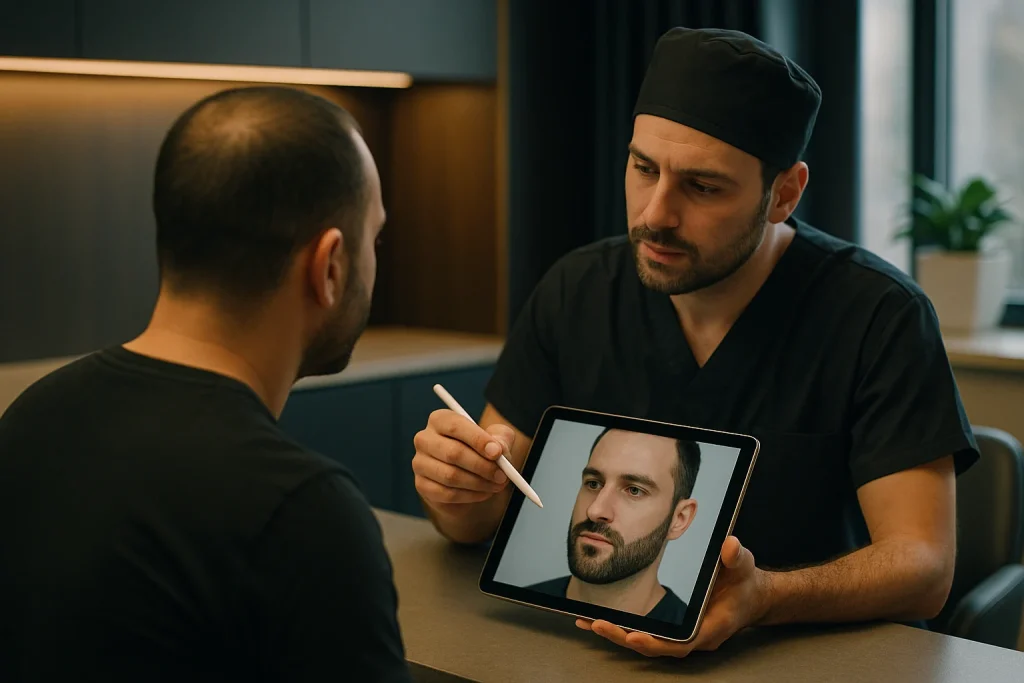
A beard transplant usually starts with a medical consultation, facial-hair design and donor-area assessment, followed by graft placement and a structured recovery period. Initial shedding is expected in many patients, while visible new growth commonly develops gradually over several months and matures over about 12 months.
- A doctor should assess your beard pattern, skin health, donor hair and medical history before treatment is planned.
- Natural-looking facial hair depends on careful graft angle, direction, density and placement across each facial zone.
- Small scabs and temporary shedding are commonly part of the normal early healing process.
- Most patients see gradual new growth after several months, with maturation continuing up to around 12 months.
- Costs and suitability vary, so a written treatment plan is more useful than a standard online quote.
01Your Consultation and Candidacy Assessment
A beard transplant is a surgical method that moves healthy hair follicles, usually from the scalp, into areas of the beard, moustache, sideburns or jawline with limited growth. It may be considered by people who have naturally sparse facial hair, uneven density, small scars or hair loss after trauma. The first appointment is not simply about choosing a beard shape. It is a clinical assessment to confirm whether treatment is suitable and whether enough donor hair is available for a balanced result.
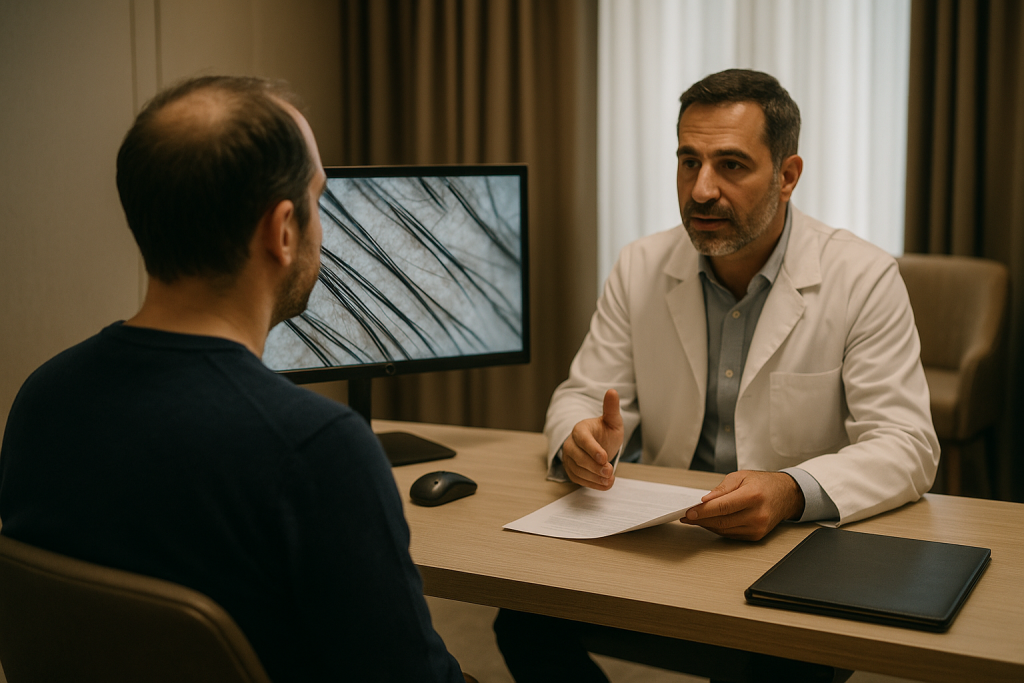
During a consultation, the doctor will usually ask about your medical history, current medicines, allergies, previous procedures and any condition that affects healing or hair growth. Your facial skin and donor area are examined for active inflammation, infection, scarring, hair characteristics and hair density. A doctor may advise postponing treatment when a skin condition is active or when the cause of hair loss has not yet been clarified. This careful screening helps create a safer and more realistic plan.
You will also discuss what you would like to improve. Some patients want fuller cheeks, while others wish to define the moustache, connect the beard to the sideburns, fill a small patch or camouflage a stable scar. Bring clear examples of styles you like, but remain open to professional guidance. Your natural facial proportions, existing hair direction, age, donor capacity and future grooming preferences all influence what can be planned responsibly.
02Planning a Natural Beard Shape and Density
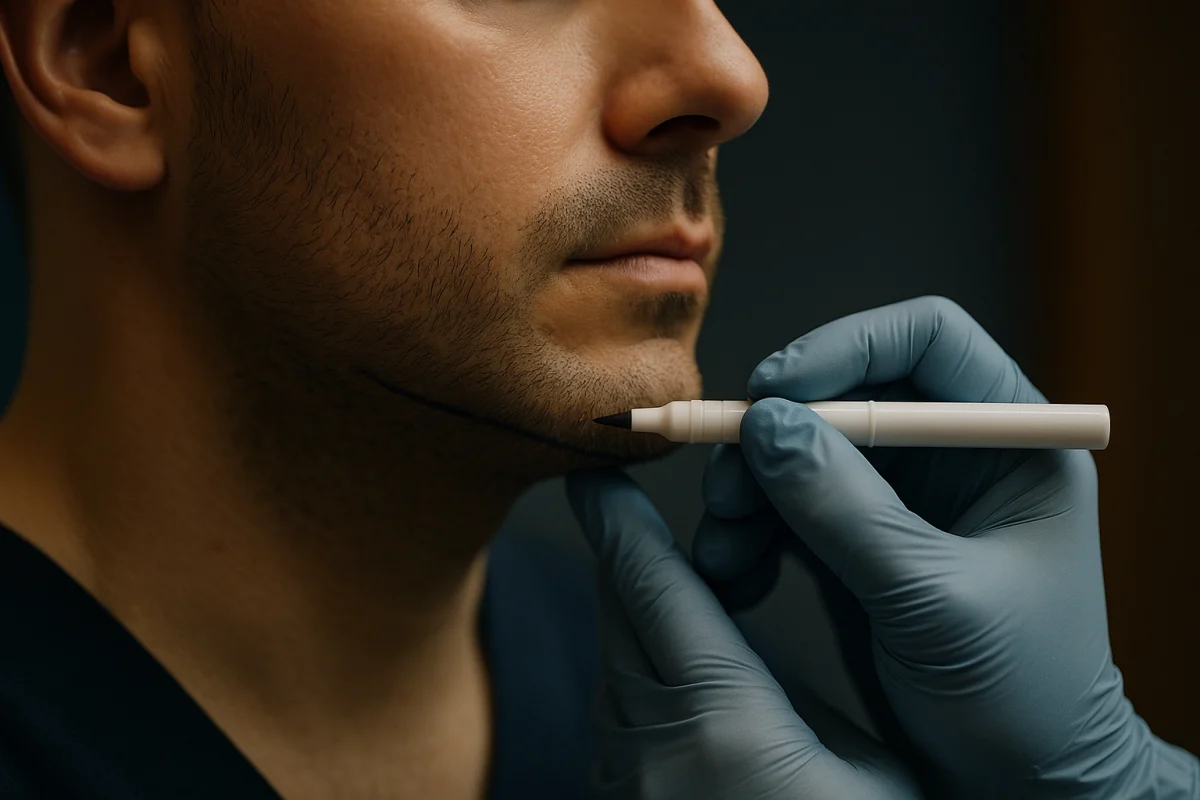
Facial-hair planning is one of the most important stages because the face is seen at close distance. The doctor normally maps the intended outline before graft placement, considering the cheek line, jawline, chin, moustache, lip border and sideburn connection. A conservative design can often look more natural over time than an overly sharp or dense outline. The plan should also fit your existing beard pattern rather than copy a style that may not suit your own facial structure.
Density is planned in zones rather than as one uniform number. For example, a patient may need more coverage in a visible patch while keeping the cheeks softer and less dense. Existing hair can be blended into the new area so that the transition is less noticeable. The doctor will explain that donor hair is limited and must be used thoughtfully. In most patients, a carefully distributed result is preferable to placing too many grafts in one small area.
Hair angle and direction matter as much as the number of follicles. Beard hairs often lie flatter against the cheeks and change direction around the chin, mouth and jaw. Each recipient site must be created to follow these natural patterns. Follicles that are placed at an unsuitable angle may still grow, but they can be harder to trim or style. For this reason, planning should be performed by an experienced medical team rather than based only on a reference photograph.
03Choosing and Preparing the Donor Area
For most facial-hair procedures, follicles are taken from the back or sides of the scalp because these areas often provide stable hair growth. The doctor will assess whether the donor hair has a suitable thickness, texture and colour for the planned facial area. Scalp hair does not exactly match every person’s beard hair, so the team considers how it may blend with existing facial hair. In selected cases, other donor sources may be discussed, but suitability must be confirmed medically.
Donor-area planning is also about protecting the appearance of the scalp. Follicles are generally selected in a spread-out pattern rather than removed from one concentrated spot. This approach aims to preserve a natural donor appearance after healing. The number of grafts that can be taken depends on your individual hair density, hair quality and the size of the facial area to be treated. A responsible plan should not compromise the donor area to pursue an unrealistic level of beard density.
Before the procedure, you may receive instructions about washing, smoking, alcohol, exercise, medicines and supplements. These instructions vary depending on your health history and the clinic’s protocol, so follow the advice given by your doctor. It is important to disclose all medicines, including non-prescription products. Do not stop prescribed medication without advice from the clinician who manages it. Good preparation supports safe surgery and makes the early recovery period easier to manage.
04What Happens on Beard Transplant Procedure Day
On procedure day, the treatment plan and facial design are normally reviewed once more before any grafts are placed. The donor area is prepared, and local anaesthesia is used to keep the procedure comfortable. At Acibadem Hair Transplant Center in Istanbul, Sapphire FUE and DHI techniques are available, and needle-free anaesthesia may also be available where clinically appropriate. Your medical team will confirm the technique and anaesthesia approach that best fits your treatment plan.
In a beard transplant, individual follicular units are carefully extracted from the donor area, prepared and then placed into tiny recipient sites in the face. The procedure can take several hours because each graft needs controlled handling and accurate positioning. You may be awake during treatment, but you should be able to rest while the team works. The exact duration varies with the number of grafts, the zones being treated and the complexity of the desired design.
After placement, the medical team checks the treated areas and explains your aftercare routine before you leave. Mild redness, swelling, tightness or tenderness can occur and is usually temporary. Small crusts will form around the implanted hairs as the skin heals. You should arrange your schedule so you can protect the area from friction, sweating and accidental contact in the first days. Your doctor will tell you which symptoms are expected and when to contact the clinic.
05The First Two Weeks: Healing, Scabs and Aftercare
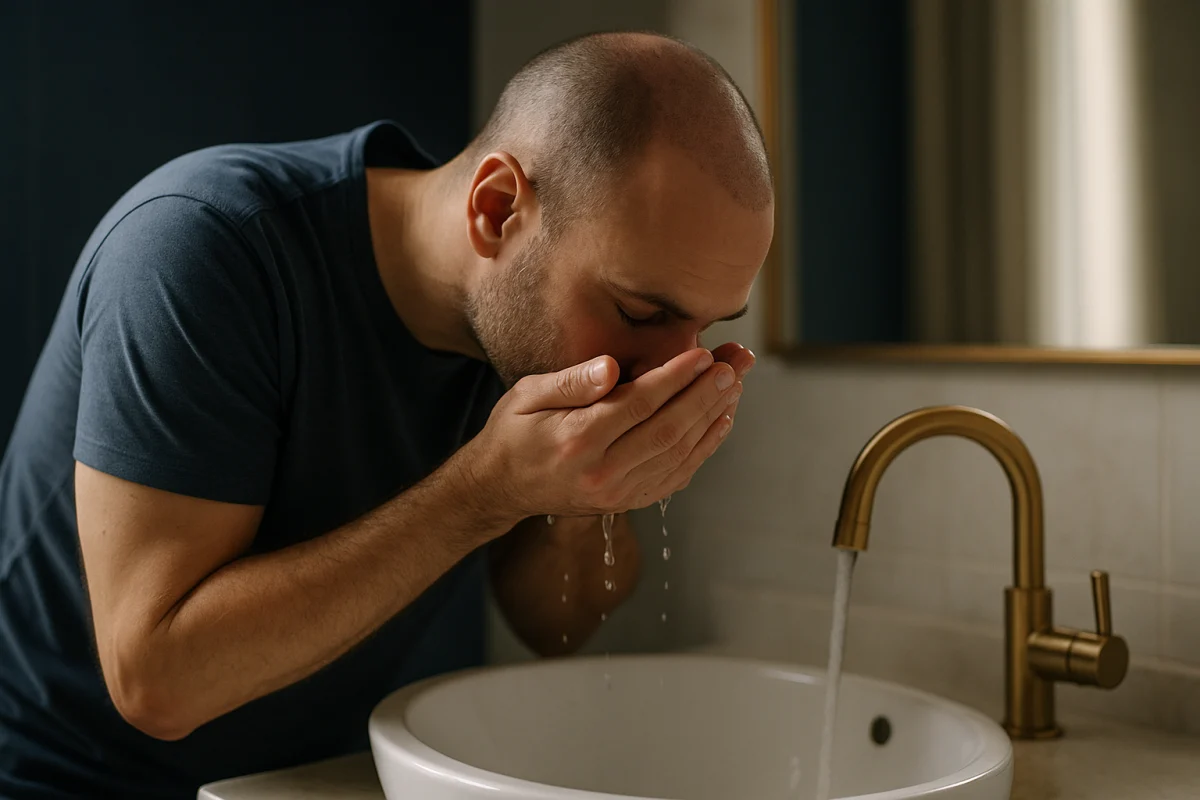
The first days require gentle care because the grafts are settling into the recipient skin. You will usually be asked not to touch, scratch, rub or shave the treated beard area. Sleeping with your head raised for the period advised by your clinic may help limit swelling. Avoid tight clothing that pulls across the face, and take care when washing, drying your face or using a phone. Even normal daily movements should be performed gently around the treated zones.
Small scabs commonly appear around each implanted follicle. These should not be picked, as pulling at scabs may disturb healing skin and, in the earliest period, potentially affect grafts. Your clinic will provide specific washing instructions, including when to begin washing and how to soften crusts safely. Use only the products and method recommended by your medical team. Do not apply beard oils, styling products, exfoliants or unapproved creams until you have been told it is safe.
Most patients can return to quiet daily activities relatively soon, but strenuous exercise, swimming, sauna use, direct strong sun exposure and contact sports are often restricted for a period. These activities can increase sweating, irritation or the risk of trauma while the skin is healing. Shaving is also delayed until the doctor confirms that the area is ready. If you develop increasing pain, spreading redness, pus, fever or any symptom that concerns you, contact your clinic promptly for guidance.
06Shedding After Surgery and the Start of New Growth
Many patients are surprised when the implanted hairs shed in the first weeks after treatment. This is commonly known as temporary shedding or shock loss, and it does not automatically mean that the follicles have failed. The visible hair shaft can fall out while the follicle remains beneath the skin and enters a resting phase. Your clinic should explain this stage before the procedure so that the early appearance does not create unnecessary worry.
After the shedding phase, there can be a period when little seems to change. Hair follicles grow in cycles, and new hairs do not all emerge at the same time. Fine new growth may become noticeable after several months, then gradually become longer and easier to style. The rate of growth can differ between patients and between different areas of the face. Existing beard hair may also make early changes harder to see in photographs or in the mirror.
A beard transplant should be judged over months rather than days or weeks. Newly growing hairs can initially look finer, straighter or less coordinated with the surrounding beard, especially while they are short. With time, repeated trimming and normal hair growth can make styling easier. Your doctor will schedule or recommend follow-up assessments to review healing and progress. Avoid comparing your timeline closely with another person’s, as donor hair characteristics and healing responses differ.
07Months Four to Twelve: How Results Mature
From around the middle months of recovery, many patients begin to see more noticeable coverage. The implanted hairs grow at their own pace and may initially require regular trimming because scalp-derived follicles can have a different growth cycle from natural beard hair. The appearance should improve gradually as more hairs enter an active growth phase. A fuller result is usually assessed closer to month 12, when the doctor can better evaluate coverage, direction and integration with the existing beard.
During this period, normal grooming can generally resume once your doctor confirms that healing is complete. You may trim, wash and style the beard according to the aftercare advice you receive. Gentle skincare can help maintain the condition of the surrounding skin, but no oil, supplement or grooming product can replace proper graft placement or change the biological growth cycle. If you are considering any topical hair-growth product, ask your doctor first because suitability and timing vary.
Follow-up is useful for more than checking photographs. It allows the clinic to review the donor area, recipient skin and the quality of new growth, while answering questions about shaving and styling. Acibadem Hair Transplant Center provides all-inclusive packages that may include a care kit and 12 months of follow-up, alongside VIP transfer and a 4-star hotel for eligible international patients. The exact services and medical plan should always be confirmed before travel.
08Long-Term Expectations and Making an Informed Choice
Transplanted follicles are generally intended to provide long-term hair growth because they are moved from a donor area selected for stable growth. However, no surgical result should be presented as identical for every patient. Long-term appearance depends on graft survival, healing, grooming, donor characteristics, skin health and changes in your natural facial hair over time. Your doctor can explain what is realistically achievable in your case and whether one session is likely to address the planned area.
Some patients may wish to consider an additional session if donor supply allows and if a meaningful area remains sparse after full maturation. This decision should not be made early in the recovery period, when growth is still developing. A medical review near the end of the expected growth timeline is the sensible time to discuss density, symmetry and any remaining concerns. The priority should be preserving donor hair and maintaining a result that remains natural as your style changes.
If you are researching treatment from abroad, choose a licensed medical provider that gives clear information about assessment, surgery, aftercare and follow-up. Acibadem Hair Transplant Center is a dedicated hair restoration clinic in Istanbul licensed by the Turkish Ministry of Health. You can request a free online hair analysis reviewed by doctors, with WhatsApp replies typically available within about two hours. An online review can guide the next step, while the final suitability decision remains a medical one.
09Frequently Asked Questions
How long can the results of a facial-hair transplant last?
The transplanted follicles are generally selected from a stable donor area and are intended to provide long-term growth. Individual results can vary because healing, graft survival, skin health and future changes in natural facial hair all affect the final appearance. Your doctor can explain the expected durability based on your donor assessment.
What determines the cost of a facial-hair restoration procedure?
The cost depends on factors such as the number of grafts needed, the areas being treated, the technique, the complexity of the design, medical services and follow-up arrangements. A reliable clinic should provide a clear written plan after reviewing your photographs or examining you. Avoid choosing based only on a low headline price, as medical oversight and aftercare are important parts of treatment.
When is facial-hair restoration worth considering?
It may be worth considering when sparse or uneven facial hair causes ongoing concern and you have suitable donor hair, healthy skin and realistic expectations. It may be less suitable when donor supply is limited, a skin condition is active or the desired density cannot be achieved safely. A doctor-reviewed consultation is the appropriate way to weigh potential benefits, limitations and recovery commitments.
Have any celebrities publicly confirmed having this procedure?
Many online claims about celebrities are based on before-and-after photos, rumours or changes in grooming, rather than verified medical information. A person’s treatment history is private unless they have clearly chosen to confirm it themselves. It is more helpful to assess your own donor hair, facial pattern and goals than to use celebrity speculation as a guide.
This article is for general information only and is not a substitute for professional medical advice.
 06
06 12
12