
Turkey hair surgery can be planned safely when you first receive a doctor-reviewed assessment, choose a properly licensed clinic, and allow enough time for recovery before travel. A good plan covers your medical suitability, the technique proposed, transparent package details, local transport, aftercare instructions, and long-term follow-up.
- Start with a medical assessment to confirm whether hair restoration surgery is suitable for your pattern of hair loss and donor area.
- Choose a Turkish Ministry of Health licensed clinic and ask who will perform each clinical stage of treatment.
- Plan to stay in Istanbul for the clinic visits and protect time for the early healing period after surgery.
- Hair transplant results develop gradually, and the final appearance is typically assessed around 12 months.
- A clear written treatment plan, realistic graft discussion, and organised aftercare can help patients travel with greater confidence.
01Turkey Hair Surgery: Start With a Medical Assessment
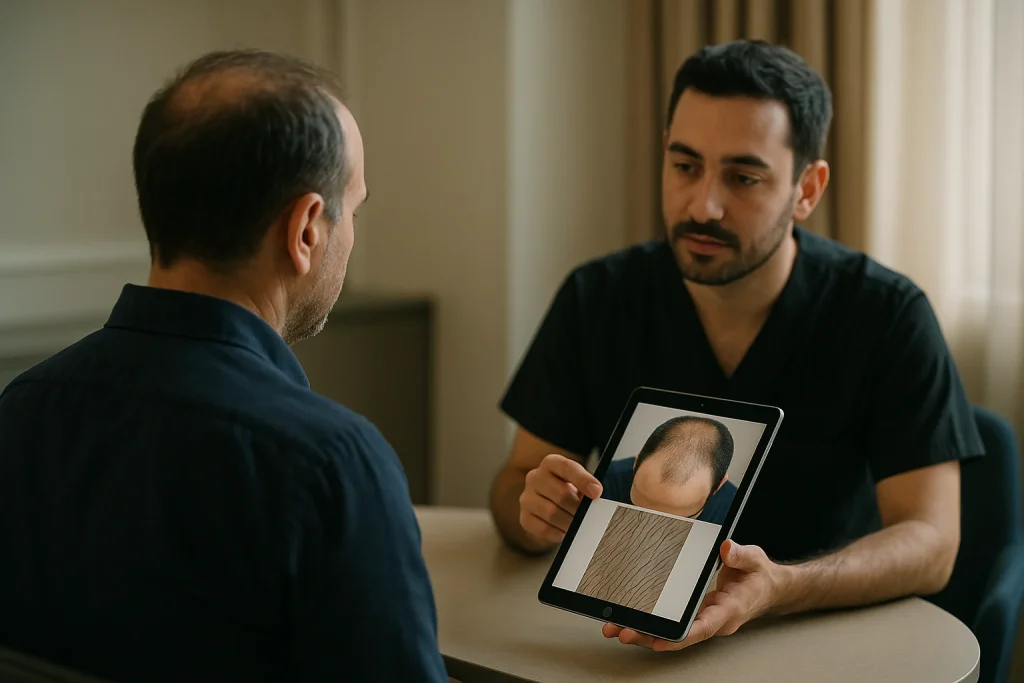
Turkey hair surgery should begin with an individual hair and scalp assessment rather than with a fixed graft number or a travel booking. Hair transplantation may be considered for people with stable pattern hair loss, some types of hairline recession, or certain areas of hair thinning. However, suitability depends on several factors, including the cause and progression of hair loss, scalp health, family history, medical background, medication use, and the availability of donor hair. Your doctor will confirm whether surgery is appropriate and whether another approach, or further investigation, should be considered first.
An online consultation can be a useful first step for international patients. Clear photographs of the hairline, top of the scalp, temples, crown, and donor zone can help the medical team make an initial review. At Acibadem Hair Transplant Center, a free online hair analysis is reviewed by doctors, with WhatsApp replies typically provided within about two hours. This early review cannot replace an in-person clinical examination, but it can help you understand the likely next steps before arranging flights.
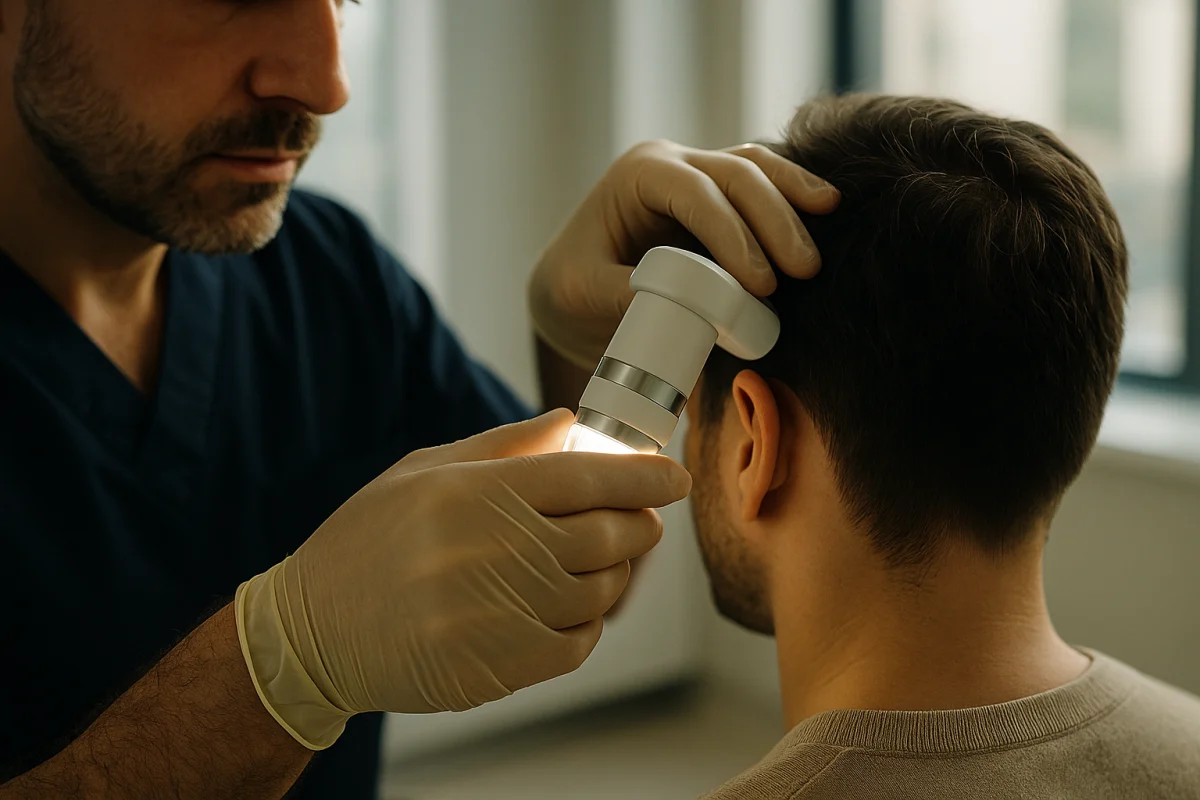
During assessment, it is important to discuss what you want to improve and what can be achieved responsibly with your available donor supply. A natural-looking result usually requires a conservative approach to the frontal hairline and careful planning for future hair loss. The doctor may explain that the crown can require many grafts and may not always be the first treatment priority. A responsible consultation should include realistic expectations about coverage, density, healing, and the time needed to see growth.
02Compare Clinics Beyond Before-and-After Photos
Before choosing where to travel, confirm that the clinic is licensed and that the treatment pathway is medically supervised. Turkey has a large number of hair restoration providers, and standards can vary. Ask direct questions about the clinic’s Turkish Ministry of Health licence, the doctor’s role in assessment and treatment planning, infection-control procedures, and how medical records are handled. Marketing images can be helpful, but they do not show every patient’s starting point, donor quality, health status, or the full course of healing.
You should also ask who performs each step of the procedure. Hair transplantation includes planning the recipient area, preparing the donor area, extracting follicular units, creating recipient sites, and placing grafts. Different teams may organise these stages differently, so a clear explanation helps you understand the clinical process. It is reasonable to ask about team experience, the planned technique, the daily number of patients, and how the clinic manages unexpected medical concerns. You should never feel pressured to make a fast deposit decision.
Written information is especially valuable when planning treatment abroad. Request a treatment outline that states what is included, what is not included, how the graft estimate was reached, and what follow-up is offered after you return home. Acibadem Hair Transplant Center is a dedicated hair restoration clinic in Istanbul, licensed by the Turkish Ministry of Health, and has welcomed patients from 38 countries over 12 years. These facts can be useful context, but your own decision should still be based on your medical review and comfort with the proposed plan.
03Choose the Technique and Understand the Graft Plan
The technique recommended for you should follow the assessment, not a general trend. Sapphire FUE is a form of follicular unit extraction in which grafts are individually removed from the donor area and transplanted into carefully prepared channels. DHI involves implantation with a specialised implanter tool and may be considered for selected areas and hair characteristics. Both approaches can be used in appropriate candidates, but neither technique is automatically better for every person. Your doctor will consider the recipient area, hair calibre, curl pattern, donor density, and desired hairstyle.
A graft is a naturally occurring group of one or more hairs, rather than a single hair in every case. This distinction matters when clinics discuss numbers. A large graft figure does not automatically mean a better result, because safe extraction must preserve the donor area and grafts must be placed in a way that supports natural direction and future planning. Ask whether the proposed number is an estimate, what area it covers, and whether the plan prioritises the hairline, mid-scalp, crown, or a combination of these zones.
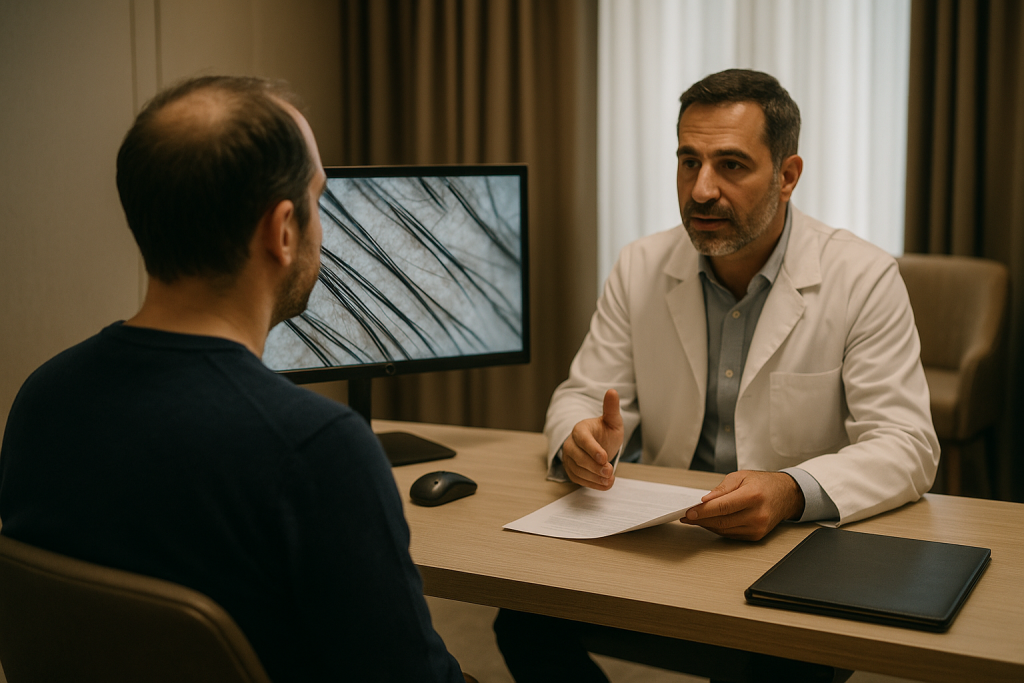
For turkey hair surgery, understanding the graft plan can prevent unrealistic expectations. Your doctor may advise that a staged approach is safer if hair loss is still progressing or if the donor area needs to be protected. It is also useful to ask how the clinic checks graft survival and documents outcomes. At Acibadem Hair Transplant Center, graft survival is measured trichoscopically at month 12, with a documented 98% rate under a written guarantee. Individual healing and cosmetic appearance can still vary between patients.

04Prepare for Treatment Before You Fly to Istanbul
Once your procedure is confirmed, prepare your medical and travel information well in advance. Tell the clinic about diagnosed medical conditions, allergies, previous scalp procedures, smoking or nicotine use, and all prescription medicines, non-prescription medicines, vitamins, and supplements. Do not stop or change prescribed treatment without advice from the clinician who prescribed it. The hair restoration team may provide pre-operative instructions, and it is important to follow them closely because some medicines and supplements can affect bleeding, anaesthesia, or healing.
Plan your arrival so that you are not rushing from the airport directly into treatment. International travel can be tiring, and a calm first evening may help you rest and attend your appointment on time. Check passport validity, visa requirements where relevant, airline baggage rules, travel insurance terms, and your accommodation details. Keep your clinic contact information available offline as well as on your phone. If you are travelling with a companion, share the early recovery instructions so they can assist if needed.
Many international patients prefer an all-inclusive arrangement because it can reduce the number of details they need to coordinate alone. Acibadem Hair Transplant Center provides packages that include VIP transfer, a 4-star hotel, a care kit, and 12 months of follow-up. Before travel, confirm the number of hotel nights, transfers included, appointment schedule, and what you should bring. Ask the clinic for guidance about food, clothing, washing preparation, and whether needle-free anaesthesia is available for your treatment.
05What Happens During the Procedure and First Days
On the treatment day, the clinical team will usually review your plan, examine your scalp, confirm the proposed hairline or treatment areas, and take photographs for the medical record. The donor and recipient areas are prepared before the procedure begins. Local anaesthesia is commonly used to make treatment more comfortable. Some patients may be suitable for needle-free anaesthesia, which is available at Acibadem Hair Transplant Center. Your clinician will explain the method, its suitability, and any relevant safety considerations before treatment.
The procedure can take several hours, depending on the number of grafts and the technique used. There may be periods of sitting or lying down, and the team will guide you about breaks, food, water, and movement. It is normal to have questions about what is happening, so ask them before or during the day when appropriate. A professional team should provide clear instructions without making promises about a particular density or exact cosmetic outcome. The goal is a medically appropriate, carefully planned restoration.
During the first days after treatment, mild swelling, redness, tenderness, scabbing, and temporary tightness can occur. These effects are usually managed with the aftercare plan given by the clinic, but patients should know when to seek medical advice. Follow instructions about sleeping position, touching the grafts, washing, sun exposure, exercise, and headwear. Do not rely on general online advice if it conflicts with your clinic’s instructions. Contact the medical team promptly if you have increasing pain, significant bleeding, fever, discharge, or any symptom that concerns you.
06Plan Your Return Journey and Protect Early Healing
Do not treat the procedure as a quick cosmetic appointment with no recovery period. Most patients need to protect the transplanted area carefully during the first days, when grafts are still settling. Your clinic will advise you on the timing of the first wash and check-up, as well as when it is reasonable to fly home. Keep your flight schedule flexible enough to attend all recommended appointments. Avoid carrying heavy luggage over your head or putting yourself in situations where the scalp may be bumped or rubbed.
For turkey hair surgery travel, choose loose, easy-to-remove clothing such as a shirt that opens at the front. Pulling a tight top over the head may disturb the newly treated area. During the journey home, follow the clinic’s advice on hydration, prescribed medication, and head positioning. Avoid alcohol, smoking, strenuous activity, swimming, and intense sun exposure for the period advised by your doctor. These practical steps do not guarantee an outcome, but they can support uncomplicated early healing.
When you arrive home, keep the care kit and written instructions accessible. It can be helpful to set reminders for washing, medication if prescribed, and follow-up photographs. Tell your local doctor or another healthcare professional that you have had a hair transplant if you need medical care soon after returning. If your clinic offers remote support, save the contact channel before you travel. Acibadem Hair Transplant Center provides 12 months of follow-up, which allows patients to share progress and ask aftercare questions as healing develops.
07Track Growth Realistically Over the First Year
Hair transplant growth is gradual. In the first weeks, transplanted hairs commonly shed as part of the normal cycle after surgery. This can feel discouraging, but shedding does not necessarily mean that the follicle has been lost. New visible growth often begins only after several months, and the pace differs between individuals. The scalp may also look uneven while existing hair and transplanted hair grow at different rates. Your doctor will explain what changes are expected at each stage and when a review may be needed.
In many patients, the appearance continues to mature through months 6 to 12, with texture, length, and visual density becoming easier to assess over time. Hairline work may appear earlier than the crown because of differences in growth patterns and existing hair coverage. Photographs taken in consistent lighting and from the same angles can make progress easier to review. Avoid judging your outcome against filtered social media images or another patient whose hair type, donor area, and hair loss pattern may be very different from yours.
Long-term planning remains important after a transplant because non-transplanted hair can continue to thin. Your doctor may discuss medical management options or future planning where clinically appropriate, but the choice depends on your health and diagnosis. A transplant is designed to redistribute available donor follicles; it does not stop the underlying cause of pattern hair loss. Attend scheduled follow-ups, raise concerns early, and give the result adequate time before drawing conclusions. Careful monitoring helps create a more realistic and safer long-term plan.
08Frequently Asked Questions
What does hair surgery in Turkey cost?
The cost of hair surgery in Turkey varies because each plan depends on the technique, estimated graft requirement, clinical assessment, package inclusions, and the level of follow-up provided. A reliable clinic should give you a clear quotation after reviewing your photos and medical information, rather than advertising one price for every patient. Ask for written confirmation of what the quote includes and whether there may be additional costs.
How long can a Turkey hair transplant last?
Transplanted follicles are typically taken from areas that are more resistant to pattern hair loss, so they can continue to grow for many years. However, individual results vary, and the surrounding non-transplanted hair may continue to thin over time. Long-term appearance depends on factors such as your diagnosis, donor planning, healing, age, and any ongoing hair loss management recommended by your doctor.
Do hair transplants performed in Turkey work?
A hair transplant can produce meaningful, natural-looking improvement when the patient is suitable, grafts are handled carefully, and the treatment plan is medically responsible. Turkey itself does not determine the result; clinic licensing, medical oversight, donor preservation, technique, aftercare, and your individual biology all matter. Choose a clinic based on clear clinical standards and realistic information rather than location or marketing alone.
What are the possible disadvantages of having a hair transplant in Turkey?
Travelling abroad for surgery can make it harder to compare providers, manage language differences, and attend in-person follow-up after returning home. There are also normal surgical considerations, including temporary swelling, scabbing, infection risk, uneven growth, shock loss, and the possibility that coverage may not meet expectations. Choosing a licensed clinic, allowing enough recovery time, and confirming remote follow-up arrangements can help reduce avoidable difficulties, although no procedure is risk-free.
This article is for general information only and is not a substitute for professional medical advice.
 06
06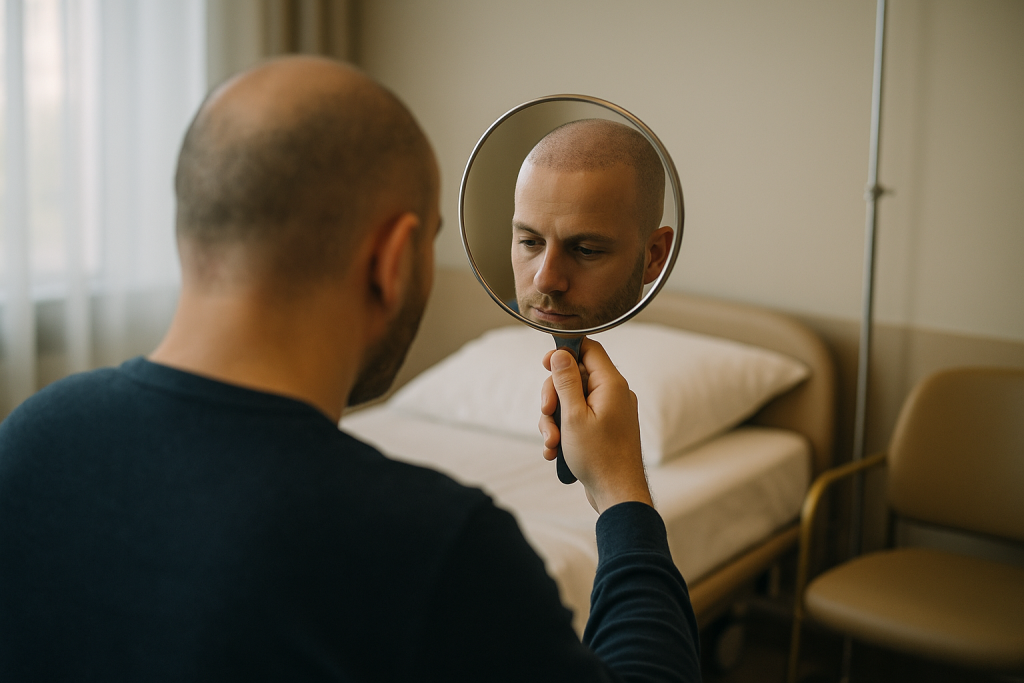 12
12