

Birth control can be linked with hair shedding in some people, particularly after starting, stopping, or changing a hormonal method, but it is not the only possible cause. A hair transplant is usually planned only after the cause and pattern of hair loss have been assessed and shedding is stable; your doctor will confirm the right timing.
- Hormonal birth control may affect the hair cycle in susceptible people, especially during a change in hormone exposure.
- Diffuse shedding after a contraceptive change is often temporary, but recovery can take several months.
- Persistent thinning may have other contributors, such as hereditary hair loss, low iron stores, thyroid conditions, illness, stress, or nutritional restriction.
- Stopping birth control is not automatically the best solution, because another hormonal change can also trigger shedding.
- Hair transplant planning should begin with a medical assessment and a stable, well-defined pattern of hair loss.
01Can Birth Control Affect Hair Loss and Transplant Timing?
Many patients ask, does birth control cause hair loss, when they notice more hair in the shower, on their brush, or on their pillow. The direct answer is that hormonal contraception can influence hair shedding in some people, but it does not cause hair loss in everyone who uses it. The relationship depends on the individual, the type of hormones involved, personal sensitivity, and whether the method was recently started, stopped, or changed. A careful assessment is important because hair shedding has many possible causes.
Hair grows in cycles. Most scalp hairs are normally in the growing phase, while a smaller number are resting or shedding. A significant hormonal shift may move more hairs into the resting phase at the same time. This can lead to diffuse shedding, meaning that hair seems to fall from all areas of the scalp rather than from one clearly defined patch. This type of change is commonly called telogen effluvium, although a clinician should make the diagnosis.
Birth control can also make an existing tendency to female pattern hair loss more noticeable in a susceptible person. This condition usually causes gradual thinning over the top of the scalp or a widening part, rather than only a short period of increased shedding. These two patterns can occur together. Understanding which pattern is present matters, particularly if you are considering a hair transplant, because transplantation does not treat every cause of diffuse hair loss.
02Does birth control cause hair loss? Understanding the hormonal link
Hormonal contraceptive methods work in different ways and do not have identical effects on the body. Some contain both oestrogen and progestin, while others contain progestin alone. Progestins vary in their hormonal activity, and some people may be more sensitive to androgen-related effects than others. This does not mean that a specific method will cause thinning, but it helps explain why one person may notice a change while another does not.
For many patients, the timing is more informative than the contraceptive method alone. Increased shedding may appear several weeks to a few months after starting a new pill, changing formulation, stopping a pill, removing a hormonal device, or having another major hormonal event. Because hair follicles respond slowly, the visible shedding may occur after the original trigger has already passed. Keeping note of dates, medication changes, illness, stress, weight changes, and menstrual changes can help a doctor review the pattern.
When people ask does birth control cause hair loss, it is also important to consider whether the hair loss started before contraception or continued unchanged across different methods. In that situation, birth control may not be the main explanation. Family history of gradual thinning, scalp inflammation, recent fever, restrictive eating, anaemia, thyroid disease, and some medicines are examples of factors that may need to be considered during a medical consultation.
03Recognising temporary shedding versus progressive thinning
Temporary shedding often feels sudden and widespread. You may see more full-length hairs coming out during washing and styling, while the scalp density may initially look similar. In many cases, there is no complete bald area. Telogen effluvium commonly becomes noticeable two to three months after a trigger and may continue for a number of months before settling. New short hairs around the hairline or part can sometimes be a sign of regrowth, but only an examination can confirm what is happening.
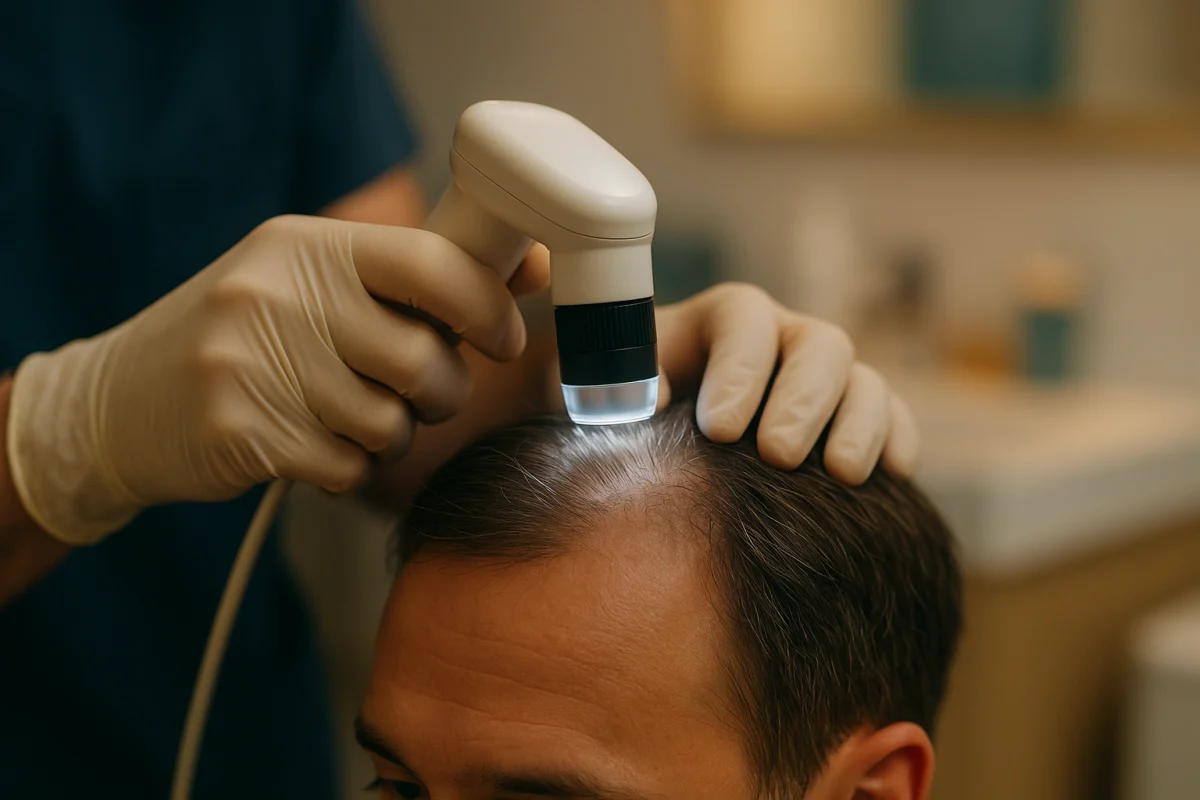
Progressive thinning tends to develop more slowly. The central part may appear wider, the ponytail may feel less dense, or the scalp may show more clearly under bright light. Hair strands can become finer over time, a process known as miniaturisation. This pattern can be associated with hereditary female pattern hair loss, which may be affected by hormonal changes but is not simply caused by birth control. Trichoscopic examination can help identify variation in hair shaft thickness and guide diagnosis.
Patchy loss, scalp pain, marked itching, scaling, redness, broken hairs, or sudden loss of eyebrows or body hair should not be assumed to be a contraceptive effect. These signs may indicate a different scalp or medical condition and should be assessed promptly by a qualified clinician. Similarly, heavy shedding with fatigue, changes in weight, or abnormal periods deserves medical review. Early assessment can help avoid unnecessary changes to contraception or hair treatments.
04What may happen after starting, stopping, or switching contraception
Starting hormonal contraception may be followed by a period of adjustment. In a person who is sensitive to a hormone change, increased shedding can occur after the hair cycle shifts. However, many people use hormonal birth control without any visible hair change. It is therefore not usually possible to predict an individual response from the method alone. Your prescribing clinician can explain the expected benefits, risks, and suitable alternatives based on your overall health and contraceptive needs.
Stopping birth control can also be followed by shedding. This may happen because the body is adjusting to the withdrawal of hormones, not necessarily because the birth control was damaging the hair. For this reason, stopping a method without medical guidance may not give an immediate improvement and can sometimes create another trigger for telogen effluvium. It may also create a risk of unintended pregnancy if another reliable method is not in place.
If a contraceptive change is being considered because of hair concerns, it is helpful to discuss the full timeline with both the prescribing clinician and a hair-loss doctor or dermatologist. The goal is to balance contraceptive safety with a careful evaluation of the scalp. A doctor may review your medical history, family history, medicines, dietary changes, and relevant blood tests where clinically appropriate. Decisions should not be based on hair shedding alone.
05How long can recovery take after hormone-related shedding?
Hair follicles work slowly, so visible recovery rarely happens overnight. When diffuse shedding is linked to a temporary hormonal trigger and the trigger has settled, shedding may gradually reduce over subsequent months. Density can take longer to improve because new hairs need time to grow to a noticeable length. In most patients with uncomplicated temporary shedding, improvement is gradual rather than dramatic, and the exact timeline differs from person to person.
Recovery may be less complete when another condition is present at the same time. For example, hereditary thinning can continue even after a temporary shedding episode settles. Low nutrient intake, ongoing stress, frequent illness, untreated scalp conditions, or continued hormonal changes can also affect the result. This is why a professional assessment focuses on the pattern of loss rather than assuming that all shedding is caused by one event.
Photos taken in similar lighting and with the same parting can be more useful than checking the scalp every day. Daily shedding naturally varies, and frequent checking can increase anxiety without showing the true trend. A clinician may use trichoscopy to examine hair density, shaft diameter, and signs of regrowth over time. At Acibadem Hair Transplant Center, a free online hair analysis can be reviewed by doctors before patients travel, although an online review cannot replace an in-person medical examination when one is needed.
06When hair transplant timing may need to be delayed
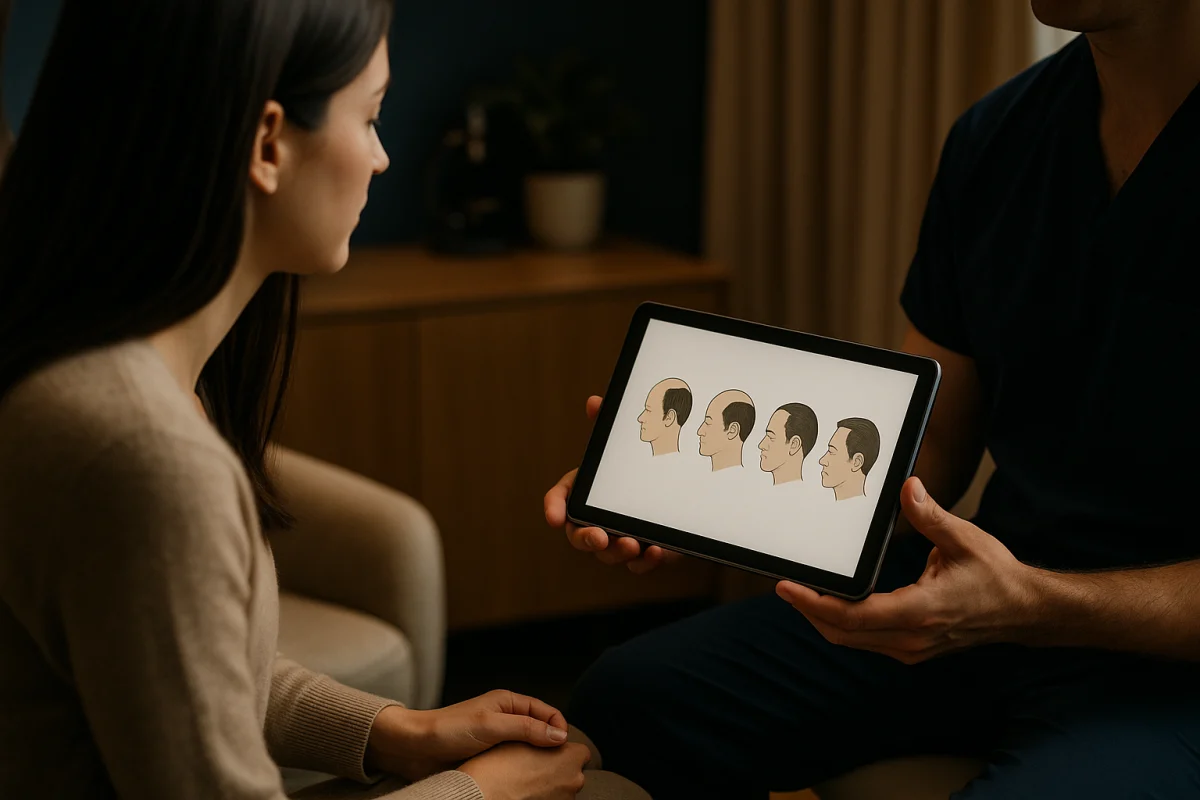
A hair transplant redistributes healthy follicles from a donor area to an area of established thinning. It is not usually the first step during active, unexplained diffuse shedding. If many hairs are actively entering the shedding phase, it can be difficult to define the true long-term pattern of hair loss and to plan a natural-looking distribution. In addition, existing native hairs around transplanted grafts may continue to thin if an underlying condition is not stabilised.
For this reason, doctors typically look for a stable diagnosis, a suitable donor area, and realistic treatment goals before recommending surgery. If hormonal contraception has recently been started, stopped, or changed, a period of observation may be appropriate. The length of this period is individual and depends on the cause, the degree of shedding, and whether progressive thinning is identified. Your doctor will confirm whether medical treatment, monitoring, or transplantation is the appropriate next step.
Does birth control cause hair loss in a way that prevents transplantation forever? Usually, no. A past episode of hormone-related shedding does not automatically rule out a future procedure. However, surgery should be based on a clear plan rather than on urgency caused by temporary shedding. Our dedicated hair restoration clinic in Istanbul offers Sapphire FUE and DHI techniques, with treatment suitability assessed by doctors. Patients may also receive 12 months of follow-up as part of all-inclusive packages, but candidacy must always be confirmed individually.
07Practical steps before changing contraception or booking surgery
Start by recording when the shedding began and any events in the previous few months. Include contraception changes, pregnancy-related events, fever or infection, operations, emotional stress, rapid weight change, new medicines, and dietary restriction. Note whether the loss is diffuse, whether the part is widening, and whether there are scalp symptoms. This information gives a clinician a clearer basis for deciding whether the pattern is likely temporary shedding, progressive thinning, or another condition.
Do not stop or change prescribed contraception solely because of online advice. A doctor who understands your contraceptive needs can discuss whether a different approach may be suitable and whether there are medical reasons to avoid particular options. A hair-loss assessment may also identify issues unrelated to hormones, such as scalp disease or nutritional deficiency. Treating the correct cause is more useful than trying multiple supplements, shampoos, or cosmetic products without a diagnosis.
For international patients considering surgery, an online review can be a useful first step. Acibadem Hair Transplant Center is licensed by the Turkish Ministry of Health and provides doctor-reviewed online hair analysis, with WhatsApp replies typically within about two hours. If transplantation is appropriate, all-inclusive arrangements can include VIP transfer, a 4-star hotel, a care kit, and 12 months of follow-up. The clinic measures results by trichoscopic graft survival at month 12 and documents a 98% rate under a written guarantee, while individual cosmetic outcomes and ongoing native-hair changes can vary.
08Frequently Asked Questions
Can hair lost after birth control grow back?
Hair shedding related to a temporary hormonal change may improve after the hair cycle settles, and regrowth is possible in many patients. Recovery is usually gradual and can take several months because new hair grows slowly. If thinning persists, progresses, or follows a patterned distribution, a doctor should assess for other causes.
Why am I shedding so much hair while using birth control?
Possible explanations include a recent start, stop, or switch in hormonal contraception, which may trigger temporary diffuse shedding in susceptible people. However, hair loss can also be related to hereditary thinning, illness, stress, iron deficiency, thyroid conditions, dietary restriction, scalp disease, or medicines. A clinician can review the timing and pattern to identify the most likely cause.
Will my hair become thicker if I stop birth control?
Stopping birth control does not reliably make hair thicker, and the hormonal change from stopping can itself be followed by temporary shedding. Whether density improves depends on the underlying cause of thinning and your individual hormone sensitivity. Discuss any change with the clinician who prescribed your contraception so that your health and pregnancy prevention needs are protected.
How can hormonal hair loss be prevented?
It is not always possible to prevent hair shedding after a major hormonal change, but avoiding unnecessary changes and seeking medical advice before switching contraception may help. Adequate nutrition, management of diagnosed medical conditions, and early evaluation of persistent thinning are also important. A doctor can recommend an appropriate plan after identifying whether the problem is temporary shedding, female pattern hair loss, or another condition.
This article is for general information only and is not a substitute for professional medical advice.
 06
06 12
12