
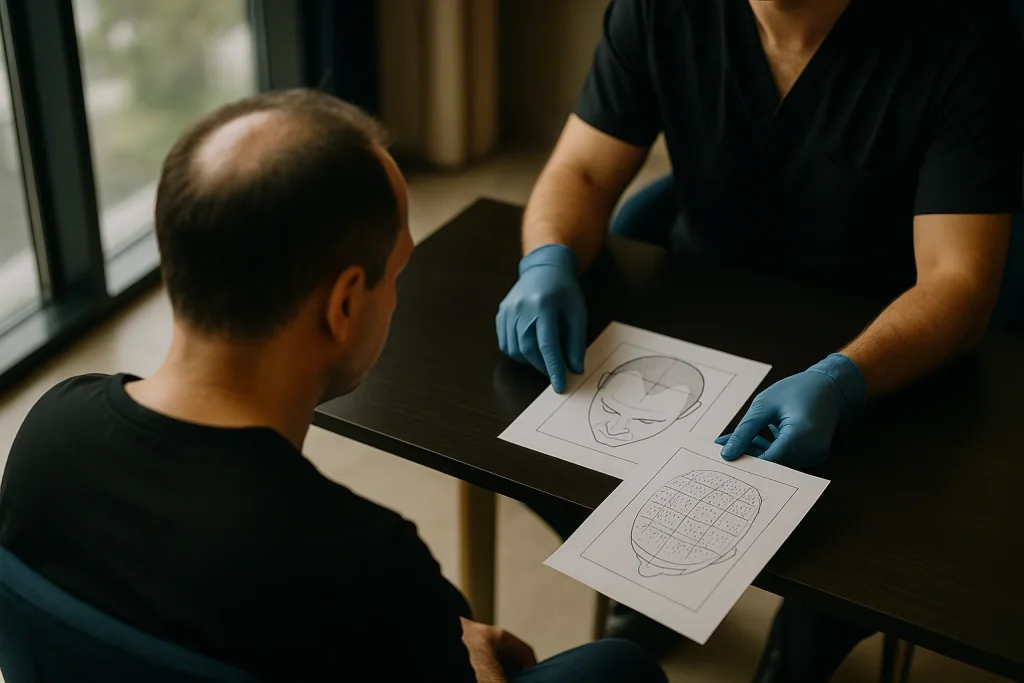
Follicular transplantation can create natural-looking density when the hairline, graft distribution, donor capacity and future hair loss are planned together. The goal is usually not to place the maximum possible number of grafts in one area, but to achieve balanced coverage that looks appropriate from different angles and continues to suit you over time.
- Natural-looking density depends on strategic graft placement, not simply the highest graft count.
- A careful donor-area assessment helps protect the hair available for future needs.
- The frontal hairline usually requires finer single-hair grafts and irregular placement.
- Crown restoration often needs a different density plan because of its circular growth pattern.
- Visible results develop gradually, and the final outcome is commonly assessed around 12 months.
01Follicular Unit Transplantation: Planning Natural-Looking Density
Follicular transplantation is a surgical approach that moves naturally occurring groups of hair from a stable donor area, usually at the back and sides of the scalp, to areas affected by thinning or baldness. Each group is called a follicular unit, or graft, and may contain one to several hair follicles. Planning natural-looking density begins before any graft is removed. Your doctor considers the pattern of hair loss, the thickness and colour of your hair, scalp characteristics, the donor supply and the possibility of future hair loss.
Natural density does not always mean reproducing the density of a teenage scalp. In many adults with established hair loss, that level of density is not medically realistic or may require more donor hair than can be safely taken. A well-planned transplant instead aims to create the visual impression of fuller hair while preserving donor reserves. This usually means focusing grafts where they make the greatest cosmetic difference, especially around the hairline and frontal zone.
Follicular unit transplantation is often used as a broad term for hair restoration with grafts, but the way grafts are harvested and implanted can differ. Traditional FUT involves removing a narrow strip of donor tissue and dissecting it into grafts. Modern FUE removes follicular units individually, while DHI is an implantation approach that uses a specialised implanter. At Acibadem Hair Transplant Center in Istanbul, Sapphire FUE and DHI techniques are available, and the most suitable approach should be confirmed after a doctor-led assessment.
02The Difference Between Graft Count and Visible Density
A graft count is important, but it does not tell the whole story. A graft is not the same as one hair follicle or one hair strand. Some grafts contain a single follicle, while others contain multiple follicles. For this reason, two patients receiving the same number of grafts may have a different number of transplanted hairs and a different visual result. Graft composition, hair calibre and placement all influence how full the result appears.
Hair diameter has a particularly strong effect on coverage. Coarser hair generally creates more scalp coverage per hair than very fine hair. Wavy or curly hair may also provide a fuller appearance because it lifts away from the scalp and creates more shadow. In contrast, straight, fine hair against a scalp with a strong colour contrast may require a more conservative but carefully designed strategy. Your doctor evaluates these features rather than using a standard graft number for every patient.
The distribution of grafts matters as much as the total. Placing every available graft into a small frontal area may create an initially strong look, but it can leave the middle scalp or crown unsupported if hair loss continues. A density plan normally divides the recipient area into zones and assigns priority according to the patient’s current pattern, likely progression and available donor hair. This is why an online photo assessment can be useful as an initial step, while an in-person examination remains important before surgery.
03Designing a Hairline That Ages Naturally
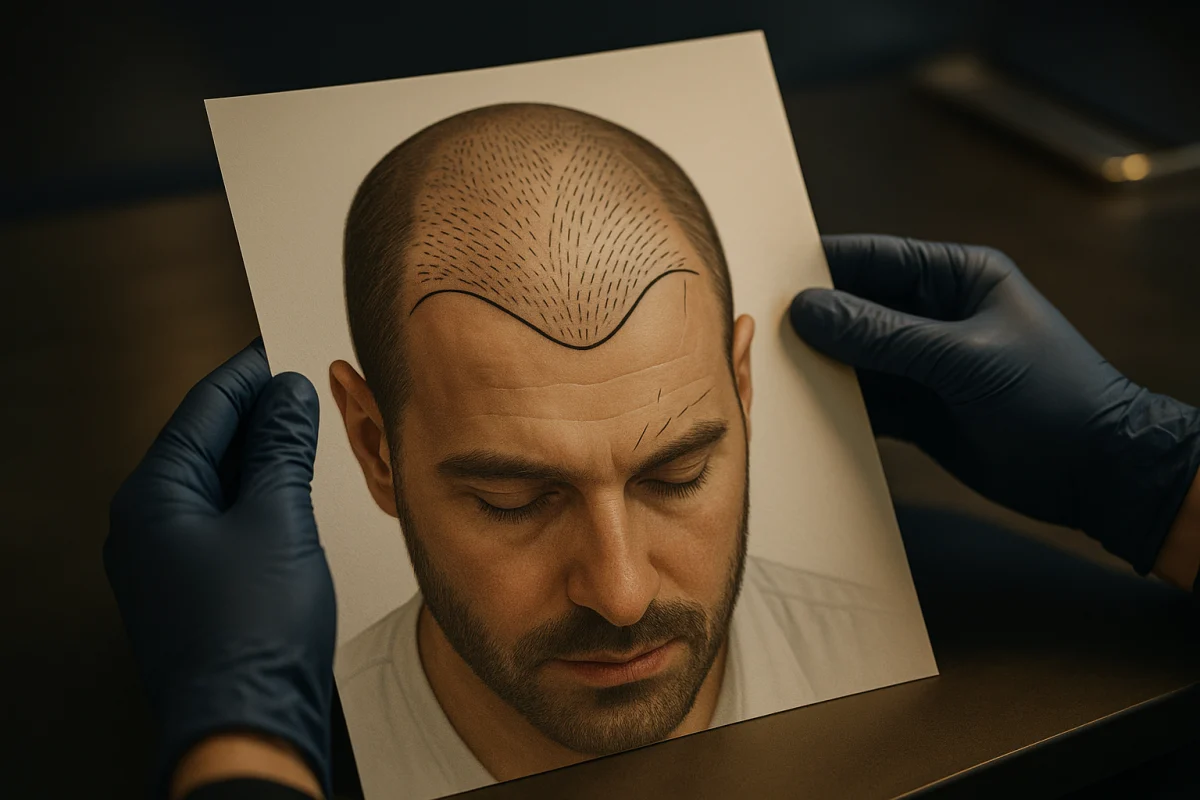
The hairline is usually the most visible part of a transplant, so it requires detailed planning. A natural adult hairline is rarely perfectly straight, sharply drawn or placed very low on the forehead. It typically has small irregularities, soft transitions and a shape that matches the person’s facial proportions. The aim is to avoid a uniform wall of hair that may look unnatural under bright light or as the patient gets older.
Single-hair grafts are generally selected for the leading edge of the hairline because they can create a softer, more gradual appearance. Behind this first line, grafts containing more hairs can add density. The surgeon also considers the angle and direction of each implanted graft. Native frontal hair tends to emerge at a low angle and follow a forward pattern, so incorrect angles can make even healthy growing grafts look less natural.
A mature hairline may be preferable for patients with a family history of progressive hair loss. Planning too aggressively can use donor grafts that may later be needed to blend or reinforce areas behind the hairline. In most patients, a slightly higher, age-appropriate design offers a more sustainable result. The final design should be discussed openly with the medical team, including what can reasonably be achieved now and how future changes might be managed.
04Building Coverage Across the Frontal Zone and Midscalp
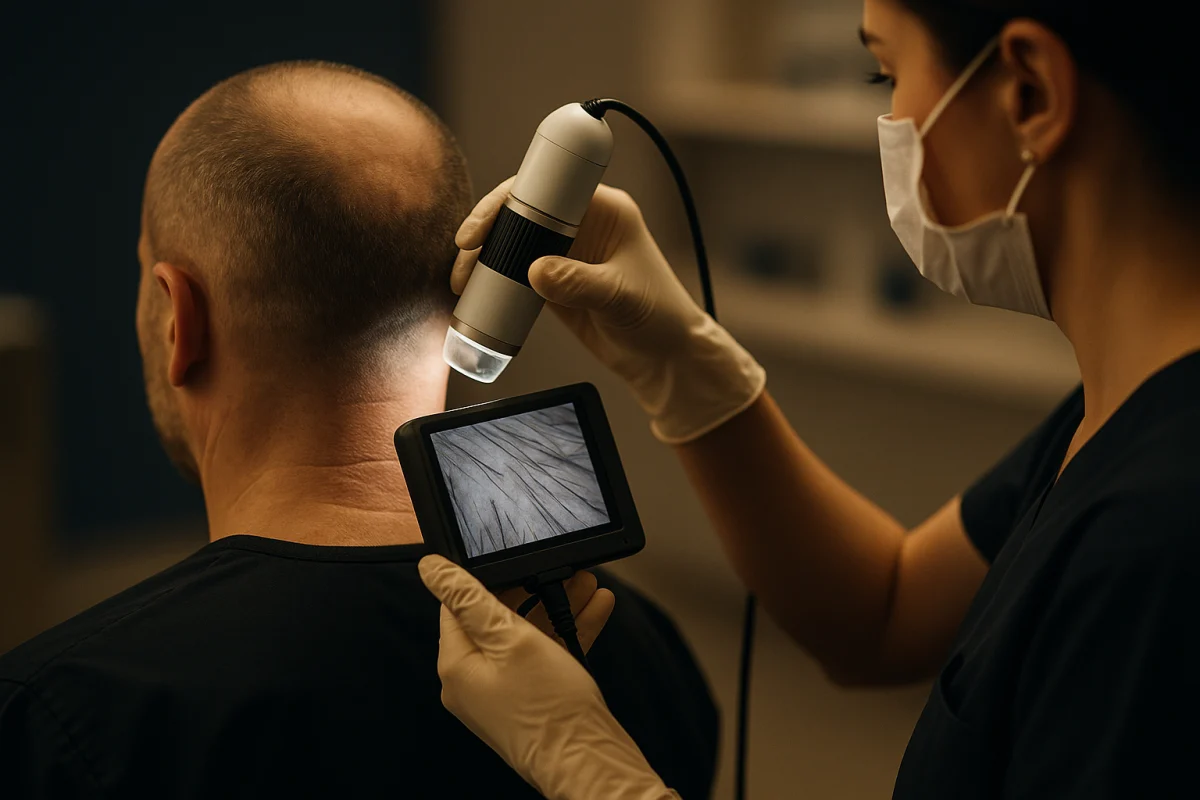
The frontal third of the scalp often receives priority because it frames the face and is seen directly in mirrors, photographs and conversations. Strengthening this area can improve the appearance of density even when the crown remains thinner. However, the frontal zone should blend naturally into the midscalp. A sudden change from dense transplanted hair to sparse native hair can be noticeable, particularly if existing hair continues to miniaturise.
In a follicular transplantation plan, doctors may create a graduated density pattern rather than placing grafts at one identical density throughout the scalp. This can use more refined graft selection in the front and progressively arranged grafts behind it. The exact plan depends on the size of the thinning area and the quality of existing hair. Native hair may provide valuable coverage, but it should not be assumed to remain unchanged without ongoing medical review.
Recipient-site spacing also needs careful attention. Grafts implanted too close together may place unnecessary stress on the scalp or affect blood supply during early healing. Sites that are too widely spaced may not provide enough visual coverage. Surgical teams balance these considerations by creating channels or sites at suitable angles, depths and spacing. The goal is healthy healing and an appearance that looks natural when hair grows, not simply a high number written on a treatment plan.
05Why Crown Restoration Requires a Separate Strategy
The crown, also called the vertex, often presents a different challenge from the hairline. Hair in this area grows in a spiral or whorl pattern, and the area can appear larger when viewed from above than it does from the front. Recreating this pattern requires attention to direction, rotation and the way hairs overlap. A crown can also consume a substantial number of grafts, especially when the thinning area is extensive.
For many patients, doctors recommend giving priority to the frontal zone before committing a large number of grafts to the crown. This is not a rule for every case, but it reflects the need to use donor hair carefully. If hair loss continues across the midscalp, an isolated dense crown may eventually look disconnected from the front. A balanced plan considers how all scalp zones may look together over the years.
Follicular transplantation for the crown is planned around the natural swirl, with grafts positioned to support the existing direction of growth. Density may be built more selectively than in the frontal hairline because the crown is usually viewed at a greater distance. Hair characteristics and lighting can strongly affect how much scalp is visible in this region. Your doctor can explain whether the available donor supply is likely to support the level of crown coverage you are considering.
06Protecting the Donor Area for Long-Term Planning
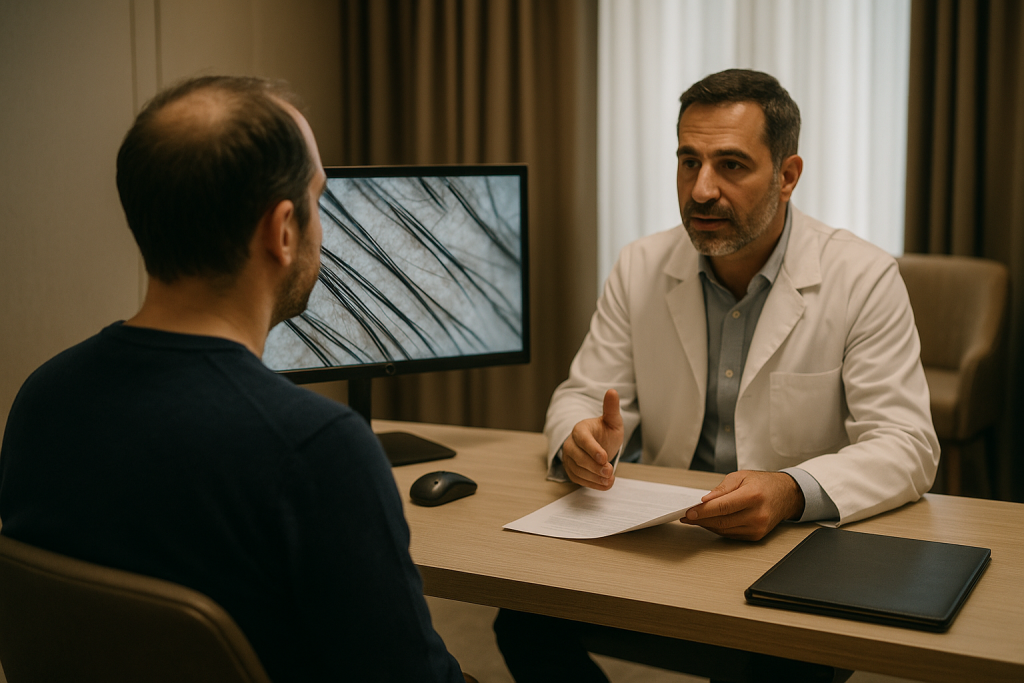
The donor area is a limited resource, which makes its assessment central to every hair transplant plan. The quality of donor hair is not judged only by how thick it looks. Doctors assess the density of follicular units, hair shaft thickness, scalp flexibility where relevant, the stability of hair growth and the size of the safe donor region. Hair from outside a stable zone may be more likely to thin later, so responsible harvesting should be conservative.
With FUE, individual grafts are extracted across the donor area in a dispersed pattern. Removing too many grafts from a concentrated location can leave visible thinning or an uneven appearance when the hair is cut short. A well-managed extraction pattern aims to preserve a natural donor look while obtaining suitable grafts for the recipient area. Sapphire FUE may be used to create recipient channels with sapphire blades, while DHI may be considered for selected implantation needs; technique choice is only one part of safe planning.
A long-term plan may reserve some donor capacity for a future procedure if progression of hair loss is possible. Not every patient will need a second session, but discussing the possibility is sensible before using a large number of grafts in one operation. Factors such as age, family pattern, medical history and the stability of current hair loss can affect this discussion. A doctor-reviewed assessment should set realistic priorities rather than make assumptions about future donor availability.
07Technique, Anaesthesia and the Day of Treatment
Once the plan is agreed, the treatment day follows a sequence designed to protect graft handling and placement. The donor and recipient areas are prepared, anaesthesia is provided and grafts are harvested using the selected method. The team then prepares the grafts and implants them according to the agreed design. Exact timing varies with the number of grafts, hair characteristics and surgical method, so your medical team will explain what to expect for your individual procedure.
Patient comfort is an important consideration. Local anaesthesia is commonly used for hair transplant procedures, and needle-free anaesthesia is available at Acibadem Hair Transplant Center for suitable patients. This option should be discussed with the medical team, as eligibility and the anaesthesia plan depend on individual health considerations. Patients should provide a complete medical history and follow pre-procedure instructions carefully to support safe treatment.
Graft survival depends on several clinical factors, including careful extraction, storage, handling and implantation. It is also influenced by appropriate aftercare during the healing period. At Acibadem Hair Transplant Center, results are measured by trichoscopic graft survival at month 12, with a documented 98% rate under written guarantee. This measure does not mean every patient will experience the same cosmetic density, because the visible outcome also depends on hair calibre, growth characteristics, scalp contrast and the original treatment plan.
08Healing Timeline and How Density Develops
After a transplant, the scalp usually needs time to heal before the visual result becomes clear. Small scabs and temporary redness can occur in the early period, and the transplanted hairs may shed after the first weeks. This shedding is commonly part of the normal cycle and does not necessarily mean the grafts have been lost. The follicles remain beneath the skin and may enter a resting phase before producing new hair.
New growth generally begins gradually rather than all at once. Early hairs can be fine and uneven, and density usually improves as more follicles enter their active growth phase. Many patients see meaningful change over several months, while the final result is commonly evaluated around month 12. Crown areas can sometimes appear slower to mature than frontal areas. Your doctor will confirm the follow-up schedule and assess healing based on your individual progress.
Aftercare supports healing and helps patients understand what is expected at each stage. Patients at Acibadem Hair Transplant Center receive a care kit and 12 months of follow-up as part of all-inclusive packages, which also include VIP transfer and a 4-star hotel. Before travelling, international patients can request a free online hair analysis reviewed by doctors. Replies on WhatsApp are typically provided within around two hours, although timing can vary depending on clinical availability.
09Frequently Asked Questions
How long can transplanted hair follicles continue to grow?
Hair transplanted from a stable donor area is typically expected to retain many of its original growth characteristics and can continue growing for many years. However, long-term appearance also depends on natural ageing, possible progression of non-transplanted hair loss, health factors and appropriate aftercare. Your doctor can explain what is realistic for your pattern of hair loss.
What is the cost of a 2,000-graft hair transplant?
The cost of a 2,000-graft procedure can vary depending on the technique, donor complexity, treatment plan, travel arrangements and the level of follow-up included. A graft number alone is not enough to give a responsible individual quote. A doctor-reviewed online hair analysis can help determine whether 2,000 grafts are appropriate and provide accurate package information.
What treatment did Elon Musk use to regrow his hair?
There is no confirmed public medical disclosure that reliably identifies which treatment, if any, Elon Musk used. Changes in a public figure’s appearance cannot establish a diagnosis or prove a specific procedure. It is better to discuss your own hair loss pattern with a qualified medical team rather than rely on speculation.
How many hair follicles are contained in 3,000 grafts?
There is no fixed answer because a graft can contain one hair follicle or several follicles. A 3,000-graft procedure includes 3,000 follicular units, but the total number of individual follicles depends on the patient’s natural graft composition. Your medical team can estimate this more accurately after assessing the donor area.
This article is for general information only and is not a substitute for professional medical advice.
 06
06 12
12