
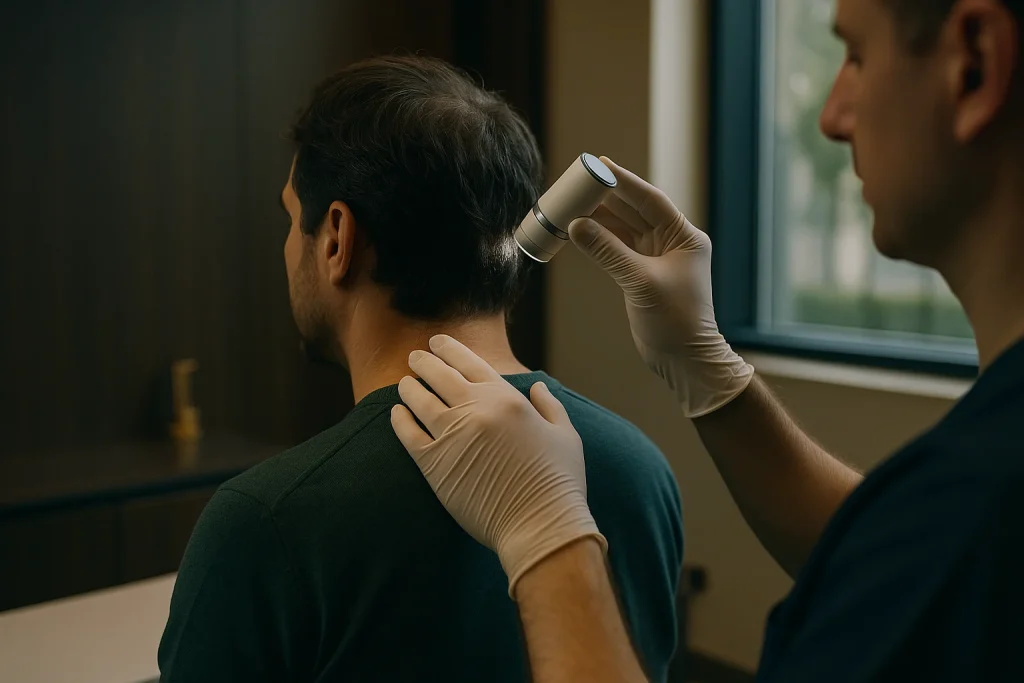
Shaveless fue may be an option for selected patients who want to keep their existing hairstyle during the early recovery period. It is usually most suitable when the treatment area is limited, the donor area is strong, and the patient understands that careful planning and a longer procedure time may be needed.
- A no-shave approach can preserve the appearance of existing hair, but it is not suitable for every transplant plan.
- Eligibility depends on donor density, the number of grafts needed, hair length, scalp characteristics and the treatment goal.
- The graft extraction and implantation principles are similar to standard FUE, although access and workflow can be more complex.
- A doctor-led assessment is needed to decide whether a fully shaveless or partly shaved approach is clinically appropriate.
- Cost should be confirmed after an individual assessment because procedure complexity and graft requirements vary.
01What Is Shaveless Fue and How Does It Work?
Shaveless fue is a follicular unit extraction approach in which the surgeon and clinical team aim to avoid shaving the entire scalp. Instead, donor hairs may be kept long, and very small areas may be trimmed selectively to allow follicular units to be extracted. The existing hair can then help cover the donor area and, in some cases, the recipient area while healing begins. This can appeal to people who would prefer a less noticeable change to their hairstyle immediately after treatment.
During FUE, naturally occurring follicular units are removed one by one from the donor region, usually at the back or sides of the scalp. These units are prepared and placed into carefully created recipient sites in areas affected by thinning or hair loss. In a no-shave plan, the core surgical principles remain the same. The main difference is the way the hair is prepared, separated and managed so the team can work around longer existing strands.
The term can describe more than one method. Some patients have only a narrow donor strip trimmed and concealed by longer surrounding hair. Others may have selected recipient areas trimmed while the rest of the scalp remains uncut. A fully no-shave procedure is technically possible in certain situations, but it is not automatically the best or safest choice. Your doctor will consider visibility, accuracy, graft handling and the overall treatment objective before recommending an approach.
02Who May Be Eligible for a No-Shave Approach?
People who need a relatively modest number of grafts may be potential candidates, particularly when they have a stable hairstyle that can cover a small trimmed donor zone. This can include patients seeking refinement of the hairline, treatment of a small area of recession, or additional density in a limited region. The final decision is not based on the desired hairstyle alone. Donor quality and the number of available grafts remain central to safe planning.
Candidates often have enough hair length in the donor area to conceal small prepared sections after the procedure. Hair texture, curl pattern, colour contrast between hair and scalp, and the way a person normally parts their hair can also affect whether concealment is practical. People with dense surrounding hair may find it easier to camouflage small trimmed areas, although density alone does not determine suitability.
A free online hair analysis can provide an initial view of the visible pattern of loss and the likely treatment area. At Acibadem Hair Transplant Center, this assessment is reviewed by doctors before a plan is discussed. However, photographs cannot replace an in-person scalp examination when that is clinically required. The doctor may need to assess donor density, hair shaft characteristics, scalp flexibility and the progression of hair loss before confirming eligibility.
03When Shaveless Fue May Not Be the Best Option
A no-shave technique may be less practical when a patient requires a large session covering a wide area of thinning. Harvesting and placing a high number of grafts around long existing hairs can take more time and may reduce visibility for the clinical team. In these cases, partial shaving or a standard shaved FUE plan can offer clearer access to the donor and recipient zones, supporting efficient graft extraction and precise placement.
Patients with very short hair may not have enough length to conceal a selectively trimmed donor area. Similarly, those who prefer very close-cut hairstyles may find that a no-shave plan offers little visual advantage. Some people also have scalp or hair characteristics that make separating longer strands more difficult. These factors do not necessarily prevent hair transplantation, but they can influence the most appropriate preparation method.
It is important not to choose a technique solely because it appears more discreet on social media or in photographs. The approach should support the medical plan, not override it. If a doctor believes that shaving a small area will improve graft safety, visibility or placement quality, that recommendation deserves careful consideration. A temporary change in appearance may sometimes support a more controlled procedure and a clearer long-term treatment strategy.
04Donor Area Assessment Comes First
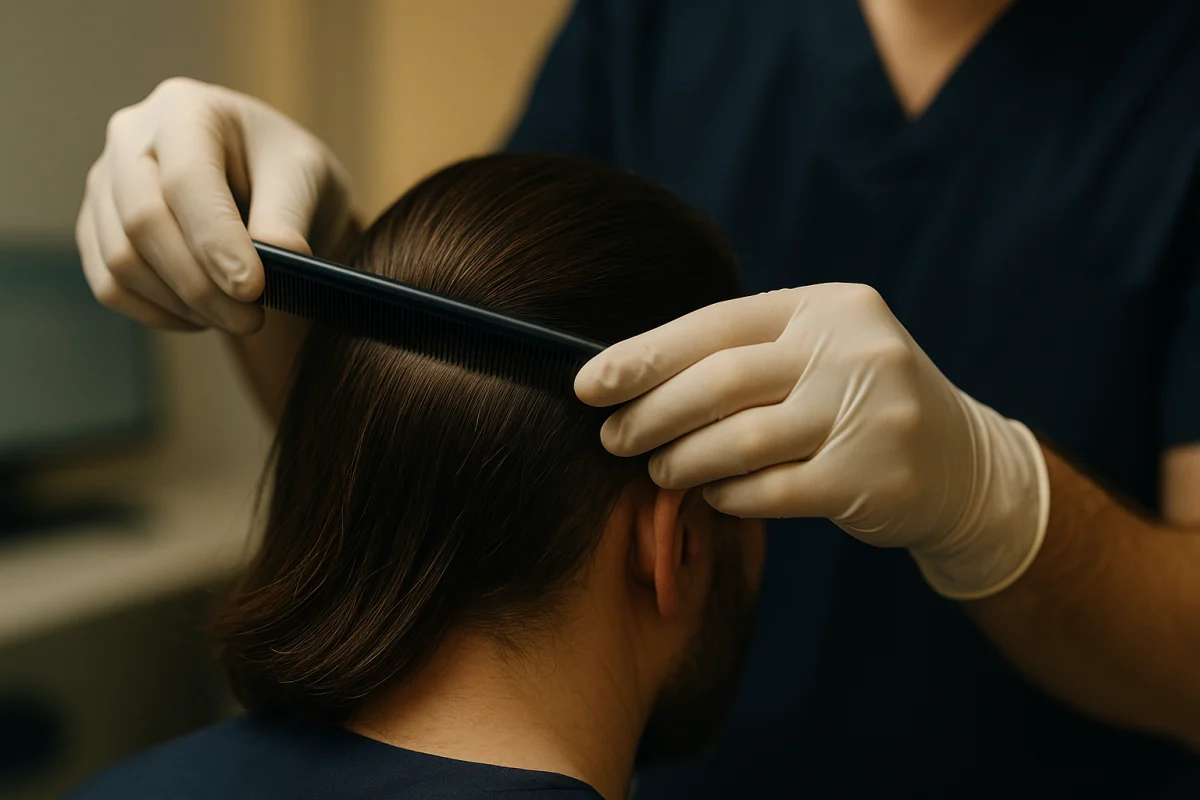
The donor area is the foundation of any FUE procedure. It contains hairs that are usually more resistant to the effects of pattern hair loss, but the supply is still limited. Before a transplant, the doctor will assess the distribution of donor follicles, density, hair calibre and the possible risk of overharvesting. A shaveless plan does not create more donor capacity; it only changes how the available donor hair is accessed and concealed.
Careful extraction spacing is especially important when longer hair remains around the working area. The team needs to avoid unnecessary trauma to nearby hairs and maintain a natural-looking donor appearance. If too many grafts are removed from a concentrated section, visible thinning can occur once the hair is washed, styled differently or cut shorter. For this reason, donor management should be conservative and based on long-term planning rather than an immediate cosmetic preference.
Patients should also tell the doctor about previous hair transplant procedures, scalp treatments, scarring, inflammatory scalp conditions and medications. Prior surgery may alter the donor pattern or affect how easily follicles can be accessed. In some cases, a partly shaved approach provides a more reliable way to evaluate and work within an already treated donor area. Your clinical team should explain why a certain donor preparation method is recommended.
05Recipient Area Planning Around Existing Hair
Working between existing hairs requires detailed recipient-area planning. The surgeon needs to create sites at angles, directions and densities that complement the patient’s native hair pattern. Longer surrounding hair can make the area look less exposed during the early stage, but it may also make site creation and graft placement more technically demanding. Good visibility is essential to avoid damaging existing follicles and to achieve an even distribution of transplanted grafts.
Shaveless fue can be considered for patients with early or localised thinning because the team may be able to work between existing hairs without preparing a large recipient zone. Nevertheless, the risk of temporary shedding of existing hair, sometimes called shock loss, should be discussed. This can occur after hair restoration procedures, particularly where native hairs are already fine or miniaturised. It is not possible to predict the degree of shedding with certainty for every patient.
A natural result depends on more than avoiding a shaved look. Hairline design, graft allocation, placement angle and realistic density goals are all important. The doctor may advise preserving grafts for possible future needs if hair loss is still progressing. For younger patients or those with an unstable pattern of loss, a conservative design may be more appropriate than using a large number of grafts in a single early procedure.
06How the Procedure and Early Recovery May Differ
On the day of treatment, the team will confirm the planned donor and recipient zones, take clinical photographs where appropriate and prepare the scalp. With a no-shave approach, additional time may be needed to separate, protect and organise longer hairs throughout extraction and implantation. The procedure length can therefore vary according to the number of grafts, the hair characteristics and the amount of trimming required. Patients should plan their travel and recovery time with the clinic in advance.
Anaesthesia is used to keep the procedure comfortable. Needle-free anaesthesia is available at Acibadem Hair Transplant Center for suitable patients, although the clinical team will explain whether this option is appropriate in an individual case. Following the procedure, small scabs and temporary redness are expected in most patients. Long surrounding hair may disguise parts of the treated areas, but it does not remove the need for careful aftercare.
Patients are typically asked to follow washing guidance, protect the scalp from friction and avoid activities that could disturb newly placed grafts during the early healing period. A no-shave method does not mean there is no visible recovery. Some signs of treatment can still be present, especially in the donor area or when hair is moved aside. Your team should provide clear written instructions and explain when normal washing, styling, exercise and travel routines can be resumed.
07Comparing No-Shave, Partial-Shave and Standard FUE
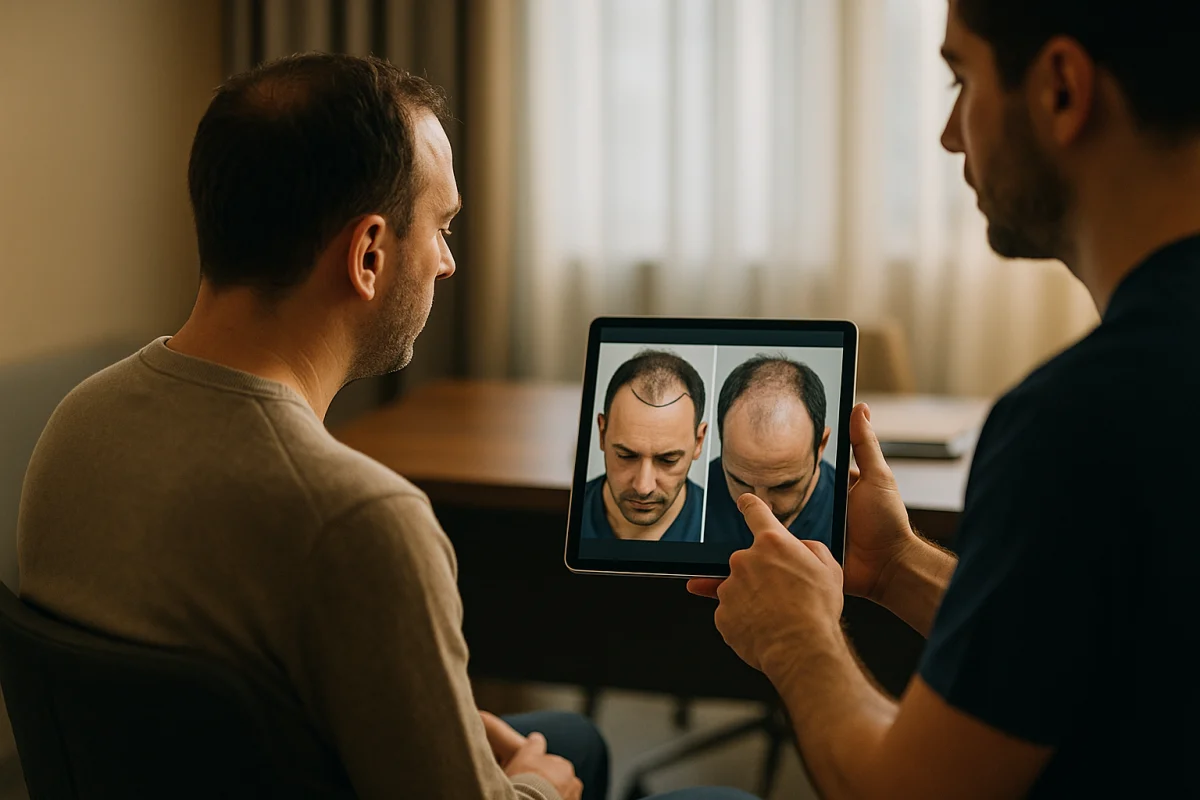
No-shave FUE, partial-shave FUE and standard shaved FUE are not separate measures of quality. They are different preparation strategies that may suit different clinical situations. A fully no-shave plan can be useful when discretion is a high priority and the graft requirement is limited. Partial shaving often offers a practical middle ground, allowing the team to access the donor area clearly while leaving enough surrounding hair to provide coverage.
Standard shaving may be recommended for larger procedures because it gives broad visibility of both donor and recipient areas. This can help the team manage a high number of grafts in a systematic way. It may also make post-procedure cleansing and monitoring easier in some cases. Although patients may understandably feel concerned about a temporary shorter hairstyle, hair normally grows back in the shaved areas over time, subject to individual growth patterns.
The best choice should reflect the balance between discretion, surgical access, graft requirement and future hair-loss planning. It is reasonable to ask why a clinic recommends one preparation style over another. A good consultation should include an honest discussion of the likely benefits and limits of each option. Patients should be cautious of any claim that one approach is universally superior for every hair type, hair-loss stage or session size.
08Choosing a Clinic and Preparing for Consultation
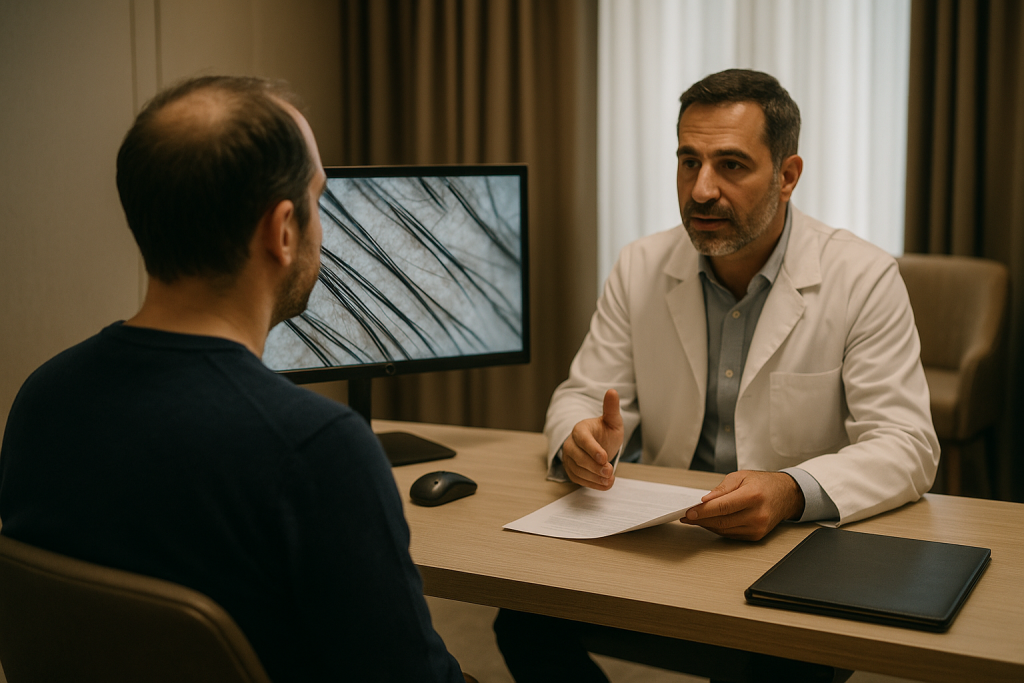
A useful consultation should begin with your hair-loss history, family pattern, general health information and expectations. Bring clear photos showing your current hair from the front, top, sides and donor area in good light if you are requesting an online review. Explain whether you are interested in keeping your hair unshaved and why this matters to you, such as work, travel, privacy or a planned event. This helps the doctor assess whether the request fits the treatment plan.
Ask how many grafts may be needed, whether the donor area must be trimmed, what proportion of the scalp can remain unshaved and what early recovery may look like. You can also ask how the clinic monitors graft handling and follow-up. Acibadem Hair Transplant Center is a dedicated hair restoration clinic in Istanbul licensed by the Turkish Ministry of Health. Its all-inclusive packages can include VIP transfer, a 4-star hotel, a care kit and 12 months of follow-up, depending on the agreed plan.
A responsible clinic will avoid confirming a technique before reviewing your case. At Acibadem Hair Transplant Center, doctors review free online hair analyses, and WhatsApp replies are typically provided within around two hours. If treatment is appropriate, the team can discuss Sapphire FUE or DHI options and the preparation method that may fit your needs. Results are assessed through trichoscopic graft survival at month 12, with a documented 98% rate under the clinic’s written guarantee; individual outcomes can still vary and depend on clinical factors and aftercare.
09Frequently Asked Questions
How much does a no-shave FUE procedure cost?
The cost of a no-shave FUE procedure varies because the number of grafts, donor-area complexity, technique, treatment duration and included services can differ. A no-shave or partly shaved plan may require additional time and detailed handling of longer hair. A clinic should provide a clear quote after a doctor-reviewed assessment rather than offering a fixed price without evaluating your needs.
Is no-shave FUE less effective than standard FUE?
No-shave FUE is not automatically less effective when it is appropriately selected and performed with careful graft handling. However, it can be more technically demanding, especially for large sessions or areas with substantial existing hair. The best approach is the one that allows safe extraction, precise placement and suitable long-term donor management for your case.
Can FUE be performed without shaving the head?
Yes, FUE can sometimes be performed without shaving the whole head. Depending on the treatment plan, the team may leave most hair long and trim only small donor or recipient sections. Fully no-shave treatment is not suitable for every patient, so your doctor will confirm whether it is practical and clinically appropriate.
What did Elon Musk use to regrow his hair?
There is no confirmed public medical information about the treatment Elon Musk may have used for his hair. Changes seen in public photographs cannot reliably identify a procedure, medication or other intervention. If you are considering hair restoration, it is safer to base decisions on a personal medical assessment rather than celebrity speculation.
This article is for general information only and is not a substitute for professional medical advice.
 06
06 12
12