
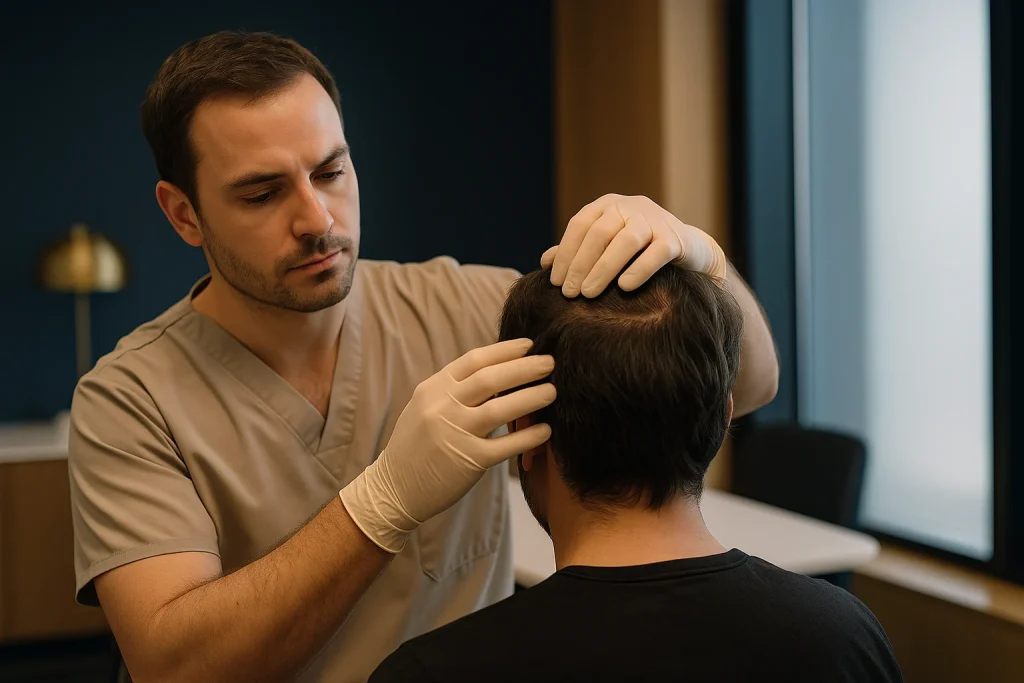
What is fut? FUT is a hair transplant method in which a narrow strip of scalp is removed from the donor area, usually at the back of the head, and divided into individual grafts for implantation. It may suit selected patients who need a larger number of grafts and accept a linear donor scar, but a doctor should confirm whether it is appropriate for your hair and scalp.
- FUT stands for Follicular Unit Transplantation and is also commonly called the strip method.
- The procedure collects grafts from a surgically removed donor strip, leaving a fine linear scar after healing.
- FUT may be considered for some patients with stable donor hair who require a substantial graft number.
- Recovery involves protecting both the transplanted area and the stitched donor area while it heals.
- FUE and DHI use a different graft-harvesting approach and may be discussed during a medical assessment.
01What Is FUT Hair Transplant Surgery and Who May Suit It?
What is fut hair transplant surgery? FUT is a surgical hair restoration technique that removes a narrow strip of hair-bearing scalp from the donor zone, most often from the back and sides of the head. The removed tissue is carefully separated into naturally occurring follicular units, which may contain one to several hairs. These grafts are then placed into small recipient sites in areas affected by thinning or baldness.
FUT may suit some patients with a good donor-hair reserve, a relatively flexible scalp, and a treatment plan that requires a larger number of grafts. It can be particularly relevant when the person usually wears their hair long enough to cover a linear donor scar. However, suitability is never based on one point alone. A doctor will assess the pattern and stability of hair loss, scalp condition, donor density, hair characteristics, previous procedures, general health, and the person’s expectations.
The central difference between FUT and extraction-based methods is how the grafts are collected. In FUT, the surgeon removes a strip and closes the donor area with stitches or staples, depending on the clinical plan. In FUE, follicular units are extracted one by one from the donor area. Both approaches aim to relocate permanent donor hairs, but they create different healing patterns and have different practical considerations.
02How the FUT Strip Method Is Performed
A FUT procedure begins with planning the donor and recipient areas. The medical team examines the donor zone to identify hair that is likely to remain stable over time. The recipient hairline and placement pattern are designed conservatively, taking account of the patient’s age, facial proportions, existing hair, future hair-loss risk, and available graft supply. A natural-looking result depends not only on graft numbers but also on careful direction, angle, spacing, and distribution.
After local anaesthesia is given, a narrow strip of scalp is removed from the donor area. The size of the strip is determined by the required graft number and the safe capacity of the donor scalp. The donor wound is then closed. Under magnification, trained technicians or clinical staff divide the strip into individual follicular unit grafts while aiming to protect the delicate structures around each hair follicle.
The surgeon creates recipient sites in the thinning area before the prepared grafts are placed. Single-hair grafts are often used near the frontal hairline where a softer transition is needed, while grafts containing more hairs may help build density behind it. The exact order and distribution differ from person to person. A careful team will also avoid taking or placing more grafts than can be safely supported by the scalp and long-term treatment plan.
03The Donor Scar: A Key Consideration With FUT
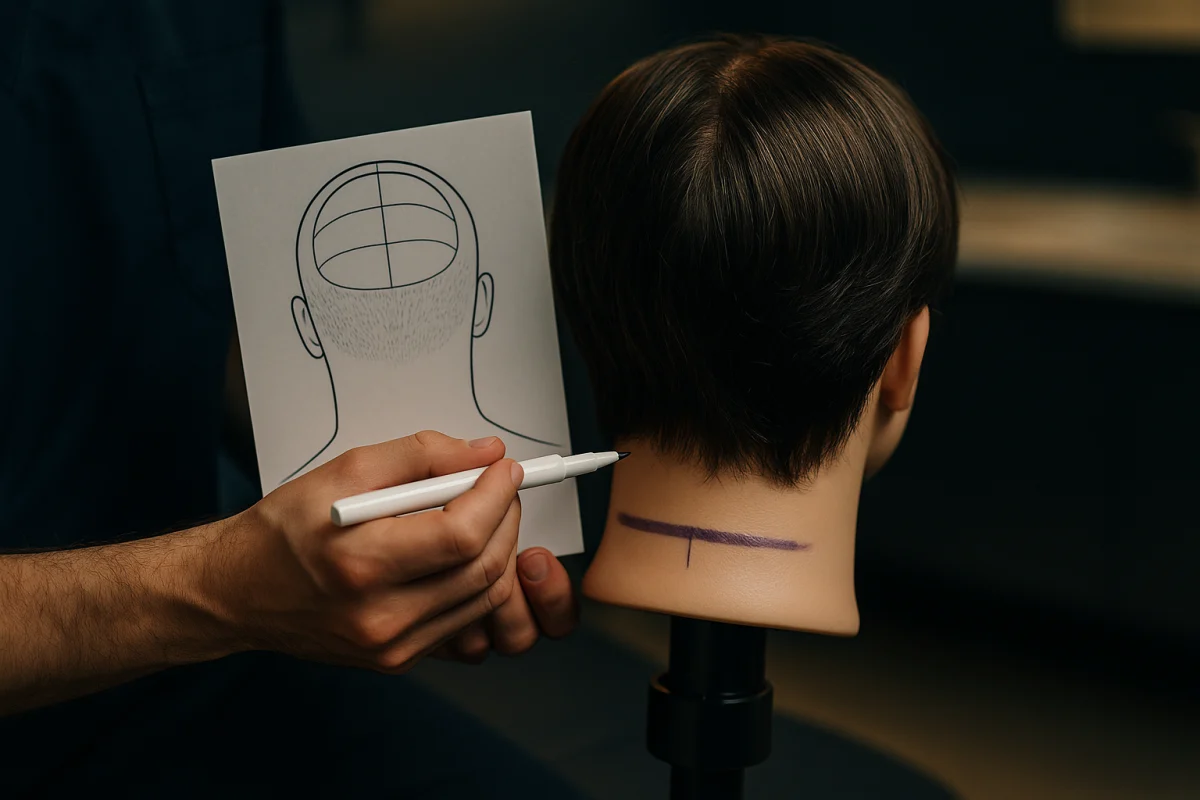
The most important feature to understand before choosing FUT is the linear scar left in the donor area. Because a strip of scalp is removed and the skin edges are brought together, healing usually produces a line across part of the back of the head. In many patients, the scar becomes less noticeable over time and can be covered by surrounding hair, especially when hair is kept at a moderate length. Its final appearance can vary considerably.
Scar visibility may be influenced by scalp tension, skin quality, individual healing, the width of the strip, closure technique, aftercare, infection risk, and whether the person later chooses very short haircuts. Some people develop wider or more visible scars than expected, while others heal with a relatively fine line. A history of unusual scarring, poor wound healing, or certain scalp conditions should be discussed clearly during the consultation.
People who prefer a close fade, a shaved head, or a very short hairstyle may find the FUT scar less acceptable. Those who already have a linear scar from a previous procedure may also need a more detailed assessment. For this reason, a good consultation should include an honest conversation about hairstyle preferences now and in the future. The donor scar is not a minor detail; it is part of the long-term decision.
04Who May Be a Suitable Candidate for FUT?
FUT may be considered when a patient needs a significant number of grafts and has sufficient donor density in the back and sides of the scalp. Since grafts are harvested from a strip, this method can allow efficient collection without creating numerous small extraction points across a wide donor area. In selected cases, this may help preserve parts of the donor region for possible future planning, although each patient’s donor capacity remains limited.
Patients with longer hairstyles may be more comfortable with the trade-off of a linear scar because it can often be hidden by their hair. Some patients who have had a previous FUT procedure may also be assessed for another strip procedure, but this depends on scalp laxity, scar quality, remaining donor hair, and overall safety. A second surgery is not automatically suitable, and it should never be planned only around a desired graft count.
What is fut likely to offer in practical terms? It may offer a way to obtain and prepare many follicular-unit grafts during one surgical session for appropriately selected people. Yet it is not automatically the best choice for extensive hair loss or for every person seeking high density. A doctor must balance the immediate cosmetic goal against the need to manage donor hair responsibly for the years ahead.
05When FUT May Not Be the Preferred Option
FUT may be less suitable for people who strongly prefer very short hairstyles or who do not want a linear donor scar. It may also be less appropriate when the scalp is tight, donor density is limited, or there are signs that hair loss is still progressing quickly. In these situations, removing a strip could create unnecessary tension or reduce flexibility for future treatment planning.
People with active scalp inflammation, uncontrolled medical conditions, certain bleeding risks, or a history of problematic scarring may need additional medical review before any hair transplant is considered. Some medications and lifestyle factors can also affect surgical planning or healing. Your doctor will take a medical history and may advise delaying treatment, seeking further medical input, or considering non-surgical management first where appropriate.
Young patients deserve especially careful assessment because their future pattern of hair loss may not yet be clear. Creating a low or dense hairline too early can lead to an unnatural appearance if surrounding native hair continues to thin. Whether FUT, FUE, or another approach is discussed, conservative planning and realistic expectations are essential. A hair transplant moves existing hair; it does not stop future hair loss in untreated areas.
06FUT Recovery, Healing and Early Aftercare
Recovery after FUT involves two separate areas: the recipient area, where grafts have been placed, and the donor area, where the strip was removed and closed. In the first days, patients commonly experience mild swelling, tenderness, tightness, crusting, or temporary numbness. The donor area may feel tight while the wound heals. The degree of discomfort differs between individuals and should be managed according to the instructions provided by the treating medical team.
Stitches or staples are usually removed at a scheduled follow-up visit, often after the initial healing period determined by the surgeon. Patients are generally asked to avoid stretching the scalp, heavy exercise, swimming, direct friction, and activities that may pull on the donor wound until they are medically cleared. Sleeping position, hair washing, headwear, and return to work should also follow the clinic’s specific aftercare guidance.
Transplanted hairs often shed in the weeks after surgery, which can be a normal part of the growth cycle and does not necessarily mean the grafts have failed. New growth is gradual rather than immediate. Visible changes commonly develop over several months, while the final maturation of hair texture and density can take longer. Follow-up allows the medical team to review healing, answer concerns, and monitor the progress of both donor and recipient areas.
07Is FUT More Painful Than FUE?
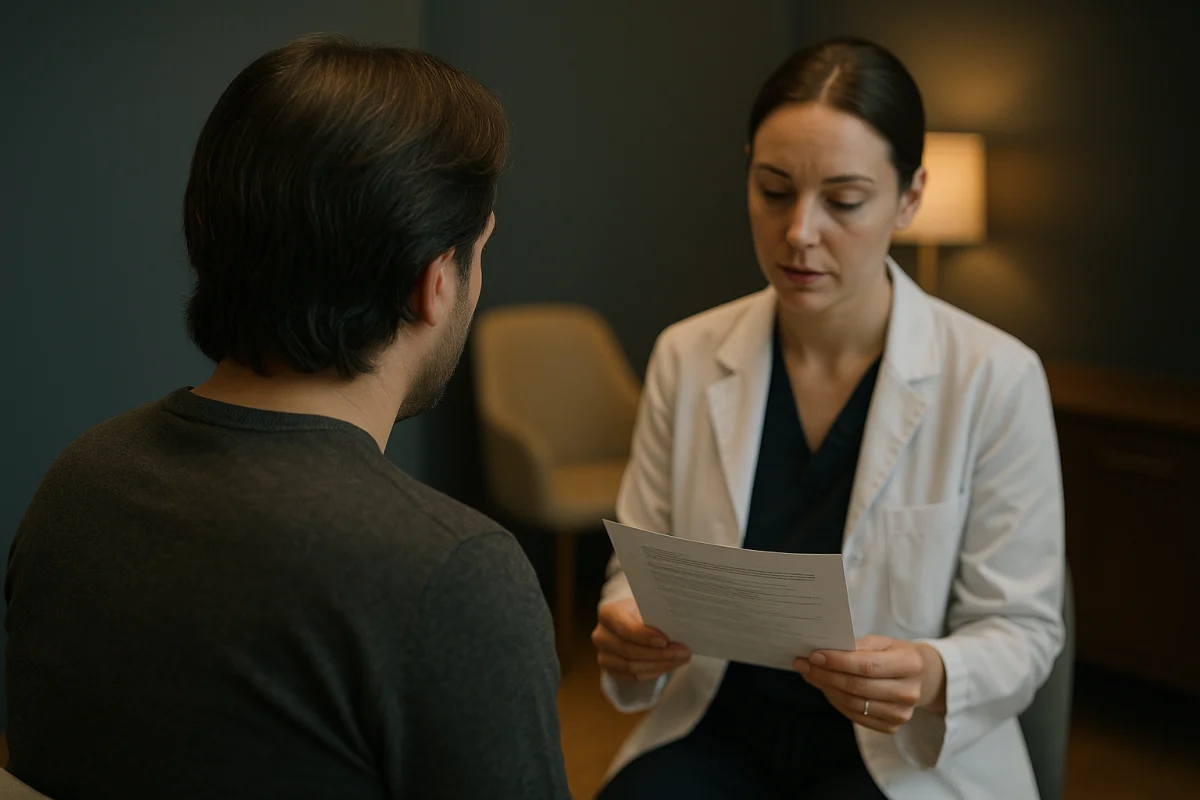
FUT is not necessarily painful during surgery because local anaesthesia is used, but patients may experience a different type of post-procedure discomfort compared with FUE. The donor area in FUT has a closed incision, so tightness, pulling, or tenderness can be more noticeable during early healing. In contrast, FUE creates many small extraction sites rather than one linear wound. Individual pain sensitivity, the size of the procedure, anaesthesia method, and aftercare can all affect the experience.
It is not clinically accurate to say that one method is always more painful for every patient. Some people find the donor tightness after FUT more challenging, while others consider it manageable with prescribed care. A discussion with the doctor should cover what to expect during the procedure, the available pain-control plan, and the activities that should be avoided while the donor area heals.
At Acibadem Hair Transplant Center in Istanbul, needle-free anaesthesia is available for eligible treatment plans. The doctor and clinical team will explain the anaesthesia approach before a procedure. Patients should tell the medical team about previous reactions to anaesthesia, regular medication, allergies, and medical conditions so that safe planning can be made.
08FUT Compared With Sapphire FUE and DHI
FUT, Sapphire FUE, and DHI differ mainly in graft harvesting and implantation processes. FUT obtains grafts from a donor strip. Sapphire FUE extracts follicular units individually, with recipient channels created using sapphire blades. DHI also involves individual graft extraction, and graft placement is performed with a specialised implantation tool. The most suitable method depends on the patient’s donor area, hair-loss pattern, scalp features, desired hairstyle, and clinical goals.
What is fut compared with FUE or DHI? It is a strip-based harvesting method that may be useful in selected cases, but it involves a linear scar and a donor-wound recovery period. FUE and DHI may be preferred by patients who want to avoid a linear scar, although they have their own limitations and do not guarantee a specific density or outcome. Technique names alone do not determine quality; safe donor management and precise surgical planning matter greatly.
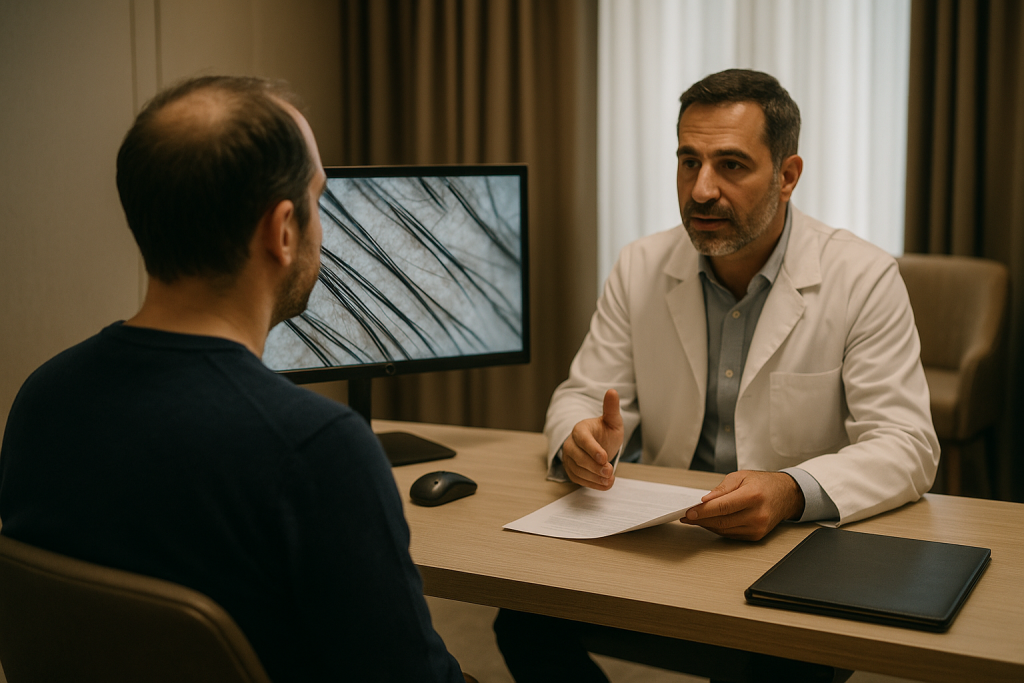
Acibadem Hair Transplant Center is a dedicated hair restoration clinic in Istanbul, licensed by the Turkish Ministry of Health, and provides Sapphire FUE and DHI techniques. An online hair analysis can be reviewed by doctors to help explain suitable options based on photographs and medical information. This initial review cannot replace an in-person examination, but it can help international patients understand the next steps before travelling.
09Frequently Asked Questions
What does FUT mean in hair transplantation?
FUT stands for Follicular Unit Transplantation. It is also called the strip method because a narrow strip of hair-bearing scalp is removed from the donor area and divided into individual follicular-unit grafts.
Is FUT generally more painful than FUE?
Both procedures are typically performed with local anaesthesia, so significant pain during surgery is not expected. FUT may cause more donor-area tightness or tenderness during early recovery because it involves a closed linear incision, but experiences vary and your doctor will explain the pain-management plan.
What is a FUT procedure?
A FUT procedure is a hair transplant operation that harvests grafts from a strip of donor scalp, usually taken from the back of the head. The strip is dissected into grafts, and these grafts are implanted into areas of thinning or hair loss.
What happens during FUT surgery?
During FUT surgery, the surgeon plans the donor and recipient zones, removes a narrow donor strip under local anaesthesia, and closes the donor area. The strip is prepared into follicular-unit grafts, which are then placed into carefully created recipient sites. The procedure leaves a linear donor scar, so hairstyle preferences and healing factors should be discussed before treatment.
This article is for general information only and is not a substitute for professional medical advice.
 06
06 12
12