
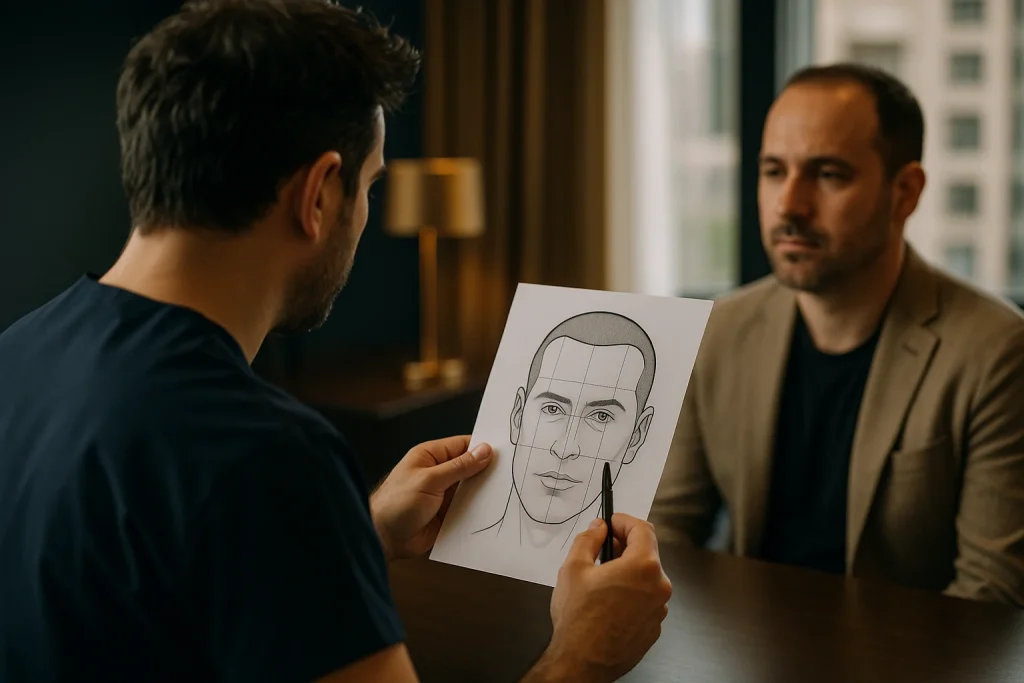
forehead reduction surgery is a surgical method that lowers a high hairline by advancing the scalp forward, when scalp flexibility and hair-loss patterns make this appropriate. A careful assessment of facial proportions, hairline stability, skin quality and future hair-loss risk is essential before planning treatment.
- Scalp laxity, a stable hairline and realistic expectations are central to candidacy assessment.
- A natural plan considers facial balance, hair density, hair direction and the possibility of future hair loss.
- The procedure leaves an incision at the hairline, and scar maturation usually takes many months.
- Recovery involves temporary swelling, numbness and activity limits, while your surgical team monitors healing.
- Hair transplantation, medical management or no treatment may be more suitable options for some patients.
01What the Procedure Changes and What It Does Not
forehead reduction surgery, also called hairline-lowering surgery or scalp advancement, is designed to reduce the vertical distance between the eyebrows and the hairline. During the procedure, a surgeon removes a measured strip of forehead skin near the hairline and advances the scalp forward. The amount of movement that may be possible depends mainly on the natural looseness, or laxity, of the scalp. It is not a one-size-fits-all procedure, and a surgeon must assess whether the desired change can be made safely without placing excessive tension on the incision.
This operation changes the position of the existing hair-bearing scalp. It does not create new hair follicles, stop genetic hair thinning or guarantee that the hairline will remain unchanged over time. For this reason, an assessment should look beyond the current forehead height. It should also consider family history, current shedding, the density behind the hairline and whether future hair loss could make a surgical scar more visible.
Forehead height is only one part of facial balance. Brow position, forehead shape, the distance from the nose to the chin, temple contour and hairline density can all influence how a result appears. A smaller numerical measurement is not automatically a more natural result. In most patients, the aim is a balanced hairline that suits their individual facial features rather than the lowest possible hairline.
Hairline lowering is different from a hair transplant, although the two approaches can sometimes be planned together or at different stages. A transplant places follicles into selected areas to soften a hairline or add density, while scalp advancement physically moves the hairline forward. Your doctor will explain the practical differences, expected timelines and limitations of each option after examining your scalp.
02Candidacy for forehead reduction surgery
The most suitable candidates typically have a naturally high but stable hairline, healthy scalp skin and enough scalp laxity for advancement. Some people have had a high forehead since childhood, while others notice it after a change in hairstyle or as their facial features mature. A consultation should clarify whether the concern is mainly forehead height, temple recession, diffuse thinning or another pattern, because these concerns may require different treatment plans.
Hair-loss stability is particularly important. If a person has active or progressive thinning, lowering the hairline may not address the long-term issue and could leave the incision more exposed later. The doctor may ask about recent shedding, previous hair procedures, family patterns of hair loss, hormonal changes, medications and relevant medical history. In some cases, delaying surgery and monitoring the pattern may be the more cautious choice.
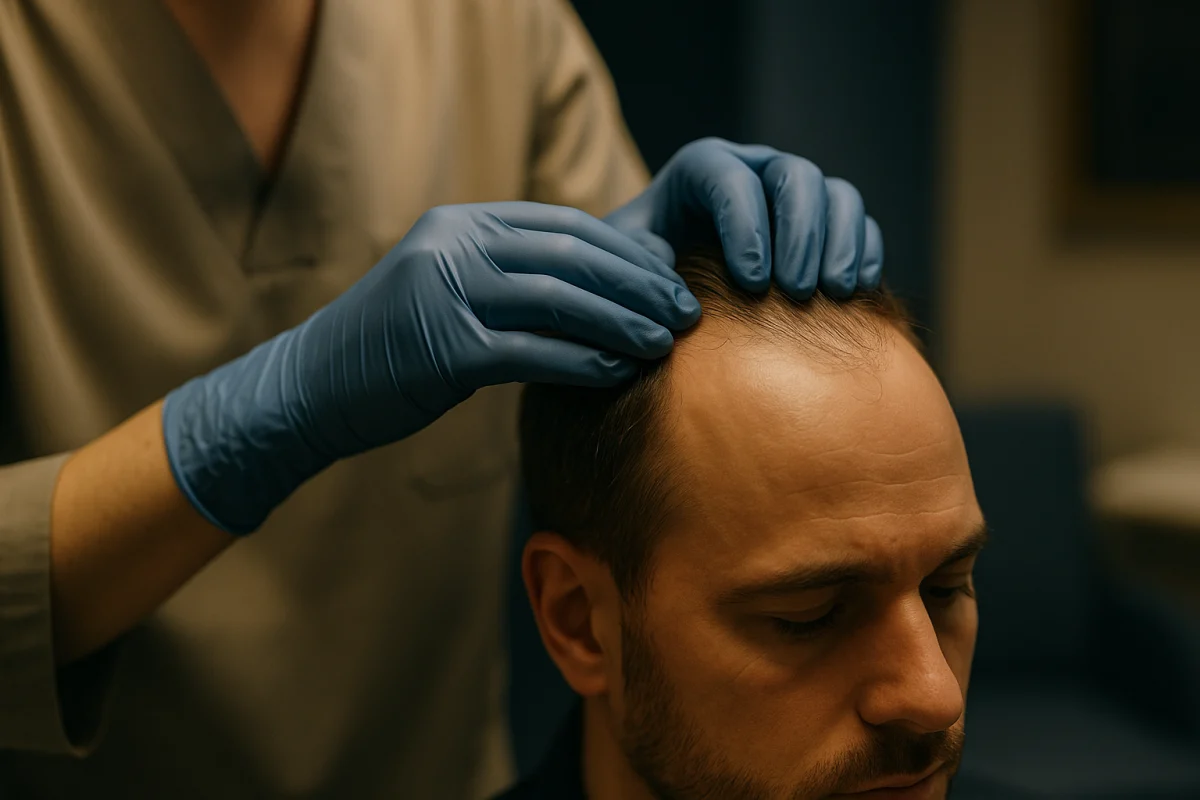
Scalp flexibility is examined during an in-person evaluation. A surgeon gently assesses how far the scalp can move and whether the tissues can close without undue tension. Skin quality, prior scars, previous forehead or scalp surgery, inflammatory skin conditions and a history of poor wound healing can also affect suitability. People who smoke or use nicotine products may be asked to stop before and after surgery because nicotine can interfere with healing.
Age alone does not determine candidacy, but a stable, mature hairline is generally more predictable than a changing one. People who are pregnant, have uncontrolled medical conditions, take medicines that affect bleeding or have certain healing concerns need an individual medical review. Your surgeon and anaesthesia team will confirm whether an elective procedure is appropriate and what preparation may be required.
03Planning a Hairline That Looks Balanced, Not Artificial
A thoughtful hairline plan starts with the face in its natural position, not only with a single measurement. The surgeon may evaluate the forehead while you sit upright, raise your eyebrows, relax your forehead muscles and move your hair as you normally would. These observations help distinguish a true high hairline from one that appears higher because of brow movement, hairstyle, temple recession or low hair density at the front.
Natural hairlines are rarely perfectly straight. They usually have small irregularities, gentle changes in density and a soft transition into the temples. When planning forehead reduction surgery, the surgeon considers these features as well as the existing direction in which the hairs emerge. A very low, sharply defined or overly symmetrical line may not suit every face and can appear less natural as a person ages.
The temples deserve special attention. A central hairline may be lower than the corners, or the temples may be naturally recessed. Advancing the scalp does not always correct temple shape in the same way as the central forehead. If temple density is limited, a staged hair transplant may sometimes be discussed as a possible way to refine the transition after healing, although this is not necessary or suitable for everyone.
Photographs and measurements are useful planning tools, but they cannot predict healing with complete precision. Swelling, scar maturation, skin elasticity and future hair changes all influence the final appearance. It is helpful to discuss not only the preferred hairline position but also the acceptable range of change, the appearance of the scar and what could be done if a later refinement is considered.
04Consultation, Medical Review and Preoperative Preparation
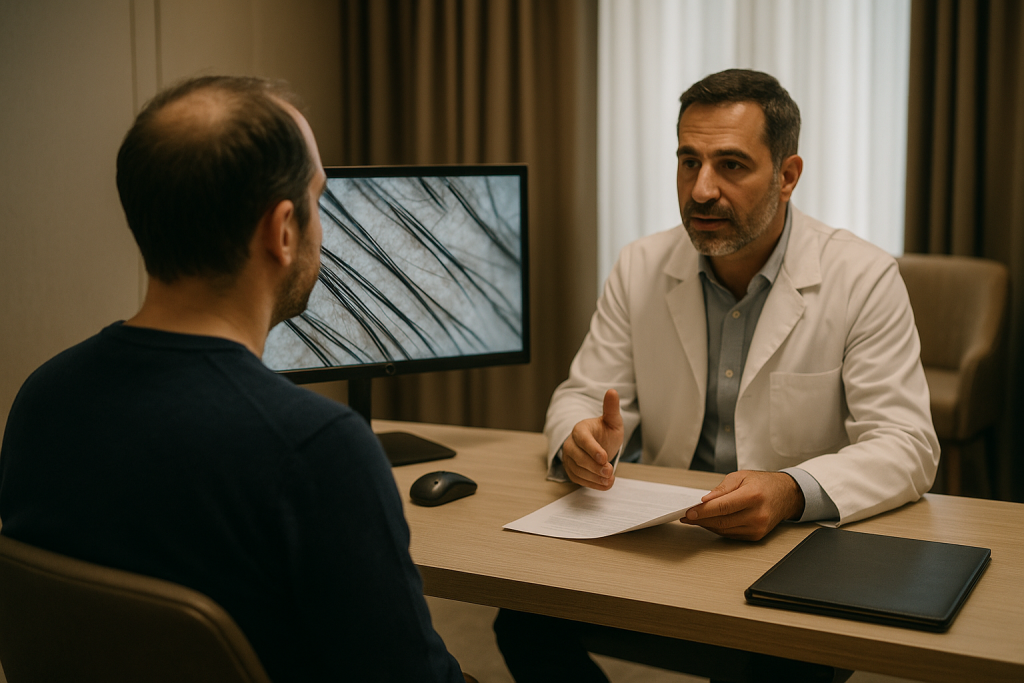
A detailed consultation should include a medical history, scalp examination and an open discussion of goals. Patients are usually asked when they first noticed a high forehead, whether the hairline has changed, what hairstyles they prefer and whether they have tried other treatments. Clear photographs from earlier years can sometimes help the clinician understand whether the hairline has been stable or gradually receding.
Your surgical team may review allergies, prescription and non-prescription medicines, supplements, previous anaesthesia experiences and conditions that affect clotting, immunity or healing. Do not stop prescribed medication without instructions from the clinician who manages it. If changes are needed before surgery, the treating teams should coordinate them carefully.
Preparation commonly includes practical arrangements for recovery, such as having an adult escort when required, allowing time away from strenuous work and avoiding activities that could pull on the incision. The team will give specific instructions about washing the hair, eating and drinking before anaesthesia, and which products to avoid. Following these instructions closely helps reduce avoidable risks.
It is also important to discuss emotional expectations. Many people seek a lower hairline because it affects confidence, but surgery cannot resolve every concern about appearance. A good consultation allows time for questions and does not pressure a person to make a rapid decision. If the expected improvement and the surgical trade-offs do not feel acceptable, choosing an alternative or postponing treatment is reasonable.
05Procedure Day, Early Recovery and Healing Milestones
On the day of surgery, the team confirms the planned hairline, reviews consent and checks that it is safe to proceed. The exact anaesthesia approach varies according to the procedure and the patient’s medical assessment. Once the scalp has been advanced and the incision closed, the dressing method and postoperative plan will be explained. The details of the technique may differ between surgeons and should be discussed directly with the operating team.
In the first days, swelling around the forehead and upper face, bruising, tightness and temporary numbness are commonly reported after this type of surgery. These effects are often most noticeable early in recovery and then improve gradually. Your team may recommend head elevation, cold compresses used as instructed and prescribed or approved pain relief. Contact the clinic promptly if symptoms are worsening rather than improving or if you are concerned about healing.
Most patients need to protect the incision while it begins to heal. Instructions commonly cover when to wash the hair, how to sleep, when sutures or clips may be removed and when it is safe to return to exercise, swimming, colouring the hair and direct sun exposure. Timelines vary, so the operating surgeon’s instructions should take priority over general online guidance.
The scar usually changes over a long period rather than settling immediately. It can initially look pink, firm or more noticeable before it gradually matures. Nearby hairs may temporarily shed after surgery in some patients, and regrowth patterns can take time to assess. Follow-up visits allow the team to examine the incision, answer questions and identify any issue that may need treatment.

06Risks, Scarring and When to Contact Your Surgical Team
Like all elective operations, forehead reduction surgery has risks. These may include bleeding, infection, fluid collection, delayed wound healing, asymmetry, persistent numbness, changes in sensation, hair shedding near the incision, an unfavourable scar and dissatisfaction with the cosmetic result. Anaesthesia also carries its own potential risks. A qualified surgeon will explain which risks are more relevant to your individual health and anatomy before you decide.
The hairline incision is placed where it can be partly concealed by hair growth, but no surgeon can promise an invisible scar. Scar appearance varies with skin characteristics, wound tension, healing response, sun exposure and any tendency to form raised or widened scars. If there is concern about future hair loss, this should be discussed carefully because thinning behind the incision may change how easily the scar is hidden.
Certain symptoms should be reported without delay, including fever, increasing redness or warmth, pus-like drainage, severe or escalating pain, sudden swelling, wound separation or bleeding that does not stop with the instructions provided. These signs do not always mean a serious complication, but they require timely clinical assessment. Emergency symptoms should be managed through local emergency services rather than waiting for an online reply.
Risk reduction begins with appropriate selection and continues through careful aftercare. Choosing a properly licensed setting, sharing an accurate medical history and attending planned follow-up appointments are important steps. It is equally important to understand that even with sound planning and careful surgery, healing and aesthetic outcomes cannot be guaranteed.
07Alternatives When Scalp Advancement Is Not the Best Match
Hair transplantation can be an alternative for people who want to soften or lower the hairline without removing forehead skin. It may be particularly relevant when scalp laxity is limited or when temple filling and irregular hairline design are the main priorities. However, transplantation depends on donor hair availability and does not stop further hair loss. It also requires patience, because transplanted follicles grow through a gradual cycle.
At Acibadem Hair Transplant Center in Istanbul, doctors review free online hair analyses to help patients understand options such as Sapphire FUE and DHI hair transplantation. An online review can provide useful initial guidance, but it cannot replace a physical examination or confirm candidacy for a surgical forehead-lowering procedure. If surgery is being considered, a qualified surgeon should assess scalp laxity, skin and medical suitability in person.
Other approaches may include medical evaluation for active shedding, styling changes that suit the natural hairline or simply observing the pattern over time. For patients with a changing hairline, waiting can provide valuable information before any permanent aesthetic procedure. The best choice is usually the one that fits the person’s anatomy, health, future hair-loss risk and comfort with recovery.
A well-informed decision is not only about how much the hairline may move. It is about whether the procedure’s benefits, scar, recovery period, risks and long-term maintenance align with your priorities. Ask for a clear explanation of the proposed plan, alternatives and follow-up process, and give yourself enough time to decide.
08Frequently Asked Questions
What determines the cost of forehead reduction surgery?
The cost of forehead reduction surgery varies by country, surgical facility, anaesthesia requirements, surgeon experience, complexity of the plan and the level of postoperative care included. A reliable quote should follow a medical assessment and clearly state what is and is not included. It is sensible to prioritise safety, licensing and appropriate follow-up rather than choosing on price alone.
How risky is forehead reduction surgery?
It is an elective surgical procedure, so it has meaningful risks, including bleeding, infection, visible scarring, numbness, hair changes around the incision, asymmetry and anaesthesia-related complications. For appropriately selected patients treated in a qualified surgical setting, risks are managed through planning and follow-up, but they cannot be removed completely. Your surgeon can explain your individual risk factors after reviewing your health and scalp.
Is plastic surgery becoming safer and more advanced?
Surgical techniques, anaesthesia, imaging, scar management and safety protocols continue to develop, which can support more precise planning and safer care in suitable patients. However, newer technology does not make every procedure right for every person or eliminate complications. Careful patient selection, a licensed facility and realistic planning remain as important as the technique used.
How painful is forehead reduction surgery and recovery?
Comfort levels vary, but patients commonly describe pressure, tightness and soreness rather than severe pain during the early recovery period. Anaesthesia prevents pain during the operation, and the surgical team usually provides a plan for managing discomfort afterward. Increasing pain, pain with fever or redness, or pain that feels unusual should be reported to the treating team promptly.
This article is for general information only and is not a substitute for professional medical advice.
 06
06 12
12