
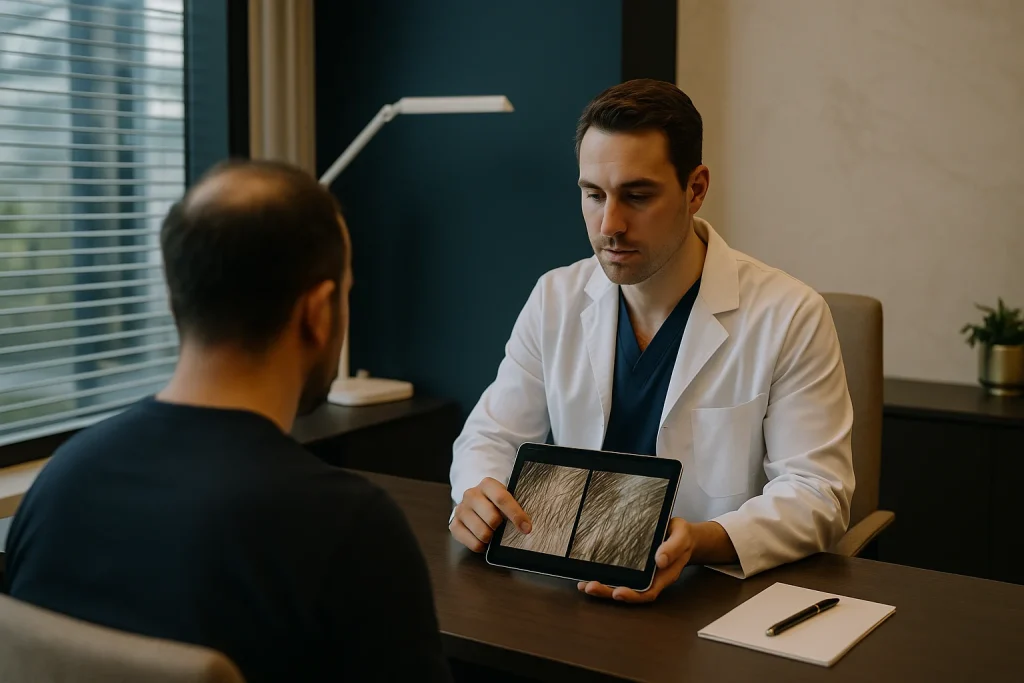
Choose a hair transplant clinic by confirming its legal licence, the doctor’s role in your care, transparent treatment planning, patient safety procedures and structured follow-up. Ask for clear written information before booking, including who performs each step, what is included and how results will be assessed.
- A valid healthcare licence is the starting point, but you should also check medical oversight and safety processes.
- Ask who will assess your donor area, design the hairline, make clinical decisions and perform each stage of treatment.
- A responsible clinic explains graft estimates, possible limitations, recovery and follow-up without guaranteeing a particular cosmetic result.
- Do not choose based on price alone; compare what is medically included, how aftercare works and whether costs are explained in writing.
- Your suitability for surgery depends on your hair loss pattern, donor supply, general health and realistic treatment goals.
01How to Choose a Licensed Hair Transplant Clinic
Choosing a hair transplant clinic is an important medical and financial decision. A well-presented website, attractive package or many online reviews may be useful starting points, but they do not replace proper checks. First, confirm that the facility is legally allowed to provide healthcare in its country and that qualified medical professionals are involved throughout your treatment. Then look closely at how the clinic assesses suitability, protects patient safety, plans the procedure and supports recovery. A reliable provider should answer reasonable questions clearly before asking you to commit.
Licensing requirements differ between countries, regions and cities. In general, a legitimate clinic should be able to explain which health authority regulates it and provide verifiable registration details when requested. This matters because licensing usually involves standards for premises, hygiene, equipment, patient records and professional practice. If information is difficult to obtain, unclear or inconsistent, consider this a reason to pause and investigate further. Independent checks are more valuable than statements made only in advertisements or social media posts.
A good choice is rarely based on one feature. It is the combination of legal status, medical assessment, trained staff, appropriate facilities, realistic communication and continuing care that gives patients a stronger basis for confidence. Take time to compare written information from more than one provider if needed. Surgery should not feel rushed. You should have enough time to understand the proposed plan, ask questions and decide whether the clinic’s approach matches your priorities and comfort level.
02Verify the Clinic Licence and Medical Accountability
Ask the clinic directly which national, state or local authority licenses its premises. You can then check that information through the regulator’s official website, register or contact channel where available. Confirm the legal name and address match the details you have been given. A genuine healthcare facility should not rely only on vague phrases such as “internationally approved” without identifying the approving body. It should also explain whether the location where surgery takes place is the same licensed facility advertised during your consultation.
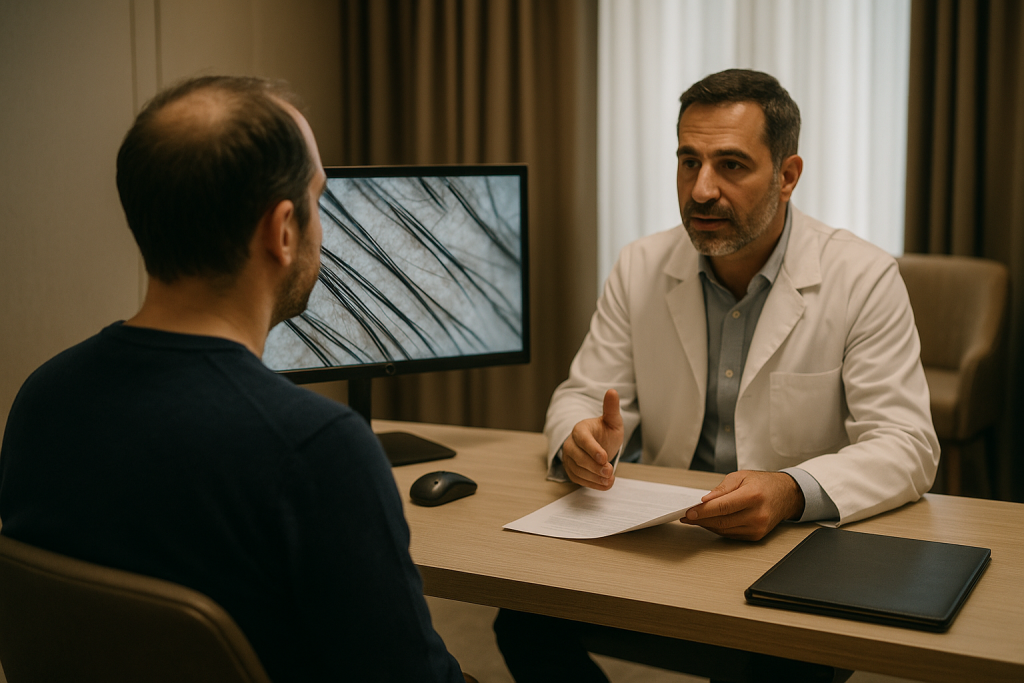
Medical accountability is equally important. Find out which doctor is responsible for your clinical evaluation and treatment plan, and ask how you can confirm that person’s professional registration in the relevant jurisdiction. Depending on local law and the clinic’s model, clinical tasks may be shared among a doctor, nurses and trained technicians. What matters is that roles are transparent, delegated appropriately and supervised according to applicable medical standards. You should never feel uncertain about who is providing care or who to contact if a medical concern occurs.
At Acibadem Hair Transplant Center, patients are treated at a dedicated hair restoration clinic in Istanbul licensed by the Turkish Ministry of Health. The clinic offers doctor-reviewed online hair analysis before travel, helping patients discuss their hair-loss history, photographs and initial concerns in advance. This early review does not replace an in-person clinical assessment, but it can help clarify whether an appointment may be appropriate. Patients should still expect their doctor to confirm suitability and the final treatment plan after direct evaluation.
03Understand Who Does What During the Procedure
Hair transplantation involves several stages, including consultation, donor-area assessment, hairline planning, local anaesthesia, graft extraction, recipient-site preparation and graft placement. The exact division of tasks varies by country, technique and clinic policy. Before booking, ask for a simple step-by-step explanation of who performs or supervises each part. This question is not impolite; it is a sensible way to understand the clinical model and make an informed decision about your care.
The doctor’s involvement should be meaningful, especially during decisions that affect safety and the long-term appearance of the result. These may include confirming candidacy, reviewing medical history, evaluating donor capacity, discussing hairline design and deciding whether the planned graft number is appropriate. A responsible team will not treat grafts as a sales target. They should explain that donor hair is limited and that preserving it for possible future needs can be important, particularly for younger patients or those with progressive hair loss.
When comparing a hair transplant clinic, look for clear answers rather than promotional language. Ask whether the doctor will examine you on the day of surgery, whether the clinical plan can change after assessment, and what happens if the donor area is weaker than expected. Clarifying these details may also help you compare seemingly similar packages. A lower headline cost can mean different levels of doctor involvement, aftercare, accommodation, transfers or post-procedure support, so it is useful to compare the full scope of care.
04Look for a Personalised Graft and Hairline Plan
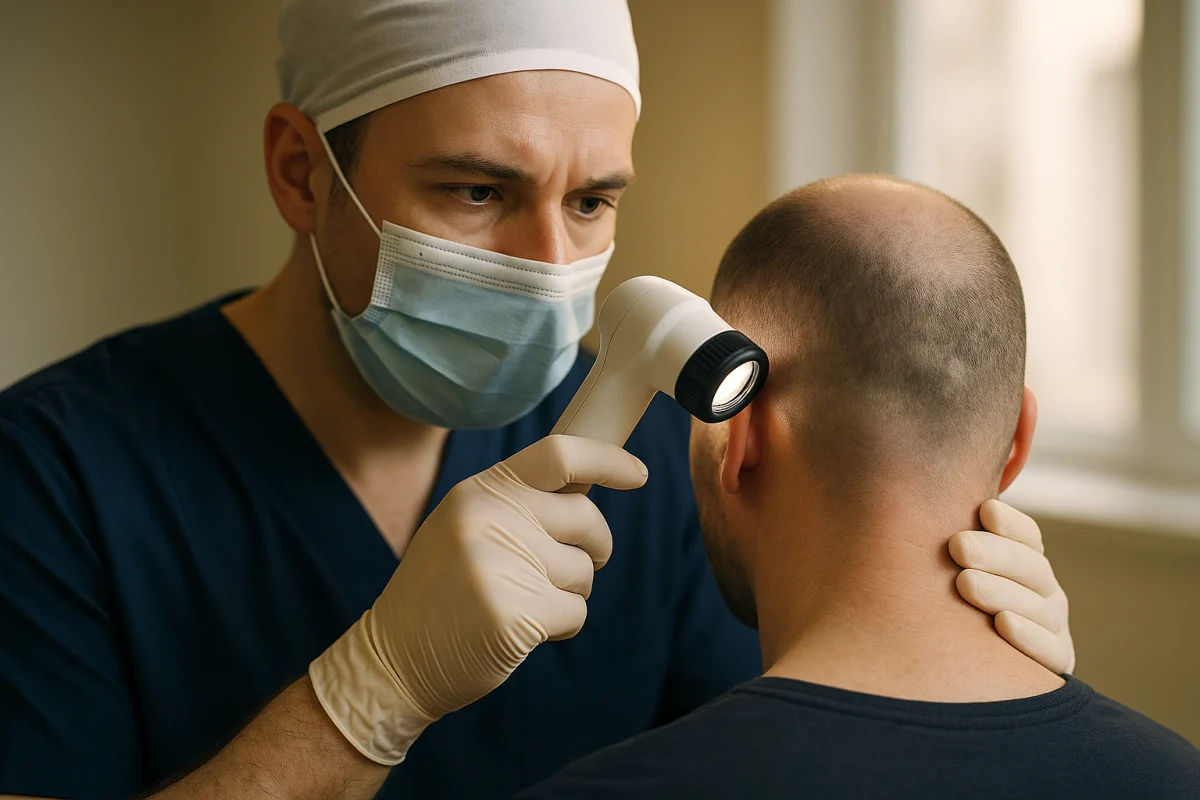
The number of grafts needed cannot be determined accurately from a single standard package. It depends on the size of the thinning area, hair characteristics, donor density, scalp condition, existing hair, age, future hair-loss risk and the desired coverage. A careful consultation should discuss these factors in understandable terms. The goal is generally to create a balanced result that respects the available donor supply, rather than trying to promise maximum density in every area during one procedure.
Hairline design deserves particular attention because it is visible and difficult to change. A natural-looking plan usually considers facial proportions, age, ethnic features, the pattern of hair loss and the likelihood that hair loss could continue. An extremely low or overly dense hairline may not remain appropriate over time and can use a large number of grafts. Your doctor should explain the reasoning behind the proposed design and invite you to discuss your expectations before treatment begins.
Ask how the clinic documents the plan. Helpful records may include clinical photographs, a donor-area assessment, an estimated graft range and a written summary of the proposed procedure. Estimates can change after direct examination or during surgery, but changes should be explained. Be cautious if a provider gives the same graft number to every patient without asking about medical history, hair-loss progression or future goals. Careful planning is a clinical process, not simply an online transaction.
05Compare Techniques, Anaesthesia and Safety Protocols
Sapphire FUE and DHI are commonly discussed methods, but neither should be presented as automatically best for every person. In Sapphire FUE, follicular units are typically extracted individually and placed into recipient sites prepared with a sapphire blade. DHI generally uses an implanter device for placement after graft extraction. The most suitable approach depends on the individual assessment, the area being treated, hair characteristics, the planned density and the medical team’s clinical judgement. Your doctor should explain why a method may be recommended in your case.
Ask about infection-control procedures, sterile instruments, emergency readiness, medical history screening and post-operative instructions. You can also ask what type of anaesthesia is planned and how the team monitors your comfort and wellbeing during treatment. Some patients may be interested in needle-free anaesthesia, which is available at Acibadem Hair Transplant Center. However, the doctor must determine whether a particular anaesthesia approach is suitable, and patients should disclose allergies, medications and relevant health conditions honestly before any procedure.
A safe hair transplant clinic should not minimise possible side effects or recovery needs. Temporary swelling, redness, crusting, discomfort and shedding of transplanted hairs can occur, while less common complications may also be possible. The team should explain when to contact them after surgery and what symptoms require prompt medical attention. Written aftercare instructions are helpful, especially for international patients who will travel home. Clear safety communication is a positive sign of professional practice, not a reason for alarm.

06Evaluate Results Evidence and Long-Term Follow-Up
Before-and-after photographs can help you understand a clinic’s aesthetic style, but they should be reviewed carefully. Look for consistent lighting, similar angles, clear time points and results that show a range of hair-loss patterns rather than only exceptional cases. Natural results usually reflect thoughtful planning, donor management and gradual growth, not instant transformation. Be cautious of edited images, photographs without dates or claims that do not explain how outcomes are measured. Individual results vary, and no photograph can predict your own outcome.
Ask how the clinic follows patients after they return home. Hair transplantation is not complete when the procedure ends. In most patients, transplanted hairs initially shed before new growth develops, and the visual result continues to mature over many months. Regular guidance can help patients understand normal recovery, care for the scalp and raise concerns at an appropriate time. For people travelling abroad, it is particularly useful to know how follow-up will take place, whether remotely or in person, and who will respond to questions.
Acibadem Hair Transplant Center provides all-inclusive packages that can include VIP transfer, a 4-star hotel, a care kit and 12 months of follow-up. The clinic documents graft survival with trichoscopic assessment at month 12 and reports a documented 98% rate under its written guarantee. This measurement describes the clinic’s documented protocol and guarantee terms; it should not be understood as a promise of an identical cosmetic outcome for every patient. Your doctor will explain the relevant terms, expected timeline and limitations of treatment.
07Review Costs, Travel Details and Written Terms Before Booking
Cost matters, but it should be assessed alongside clinical quality and what is actually included. Ask for a written quotation that identifies the treatment method, estimated graft range, medical assessment, anaesthesia, medicines or care kit, hotel, transfers, follow-up and any possible additional charges. A very low price may not reflect the same level of clinical supervision or aftercare as another offer. Conversely, a higher price alone does not prove better care. Transparent explanations allow for a more meaningful comparison.
International patients should also ask about the practical parts of travel. Confirm the surgery location, arrival schedule, hotel arrangements, transfer details, expected length of stay and the timing of return flights. Ask whether you will receive a contact number for post-operative concerns once you are back home. Acibadem Hair Transplant Center has welcomed patients from 38 countries over 12 years, and its team can provide information about the logistics included in its packages. Travel planning should always leave room for the clinic’s medical instructions and your own recovery needs.
Finally, read all written terms before paying a deposit or arranging travel. Check cancellation and rescheduling policies, guarantee conditions, what follow-up covers and how concerns are handled. Do not feel pressured by limited-time offers or messages that suggest you must decide immediately. A reputable provider should respect your need to review information and make a considered choice. You can begin with a free online hair analysis reviewed by doctors at Acibadem Hair Transplant Center; replies on WhatsApp are typically provided within about two hours.
08Frequently Asked Questions
What does a 3,000-graft hair transplant usually cost?
The cost of 3,000 grafts varies widely by country, clinic licence, medical team involvement, technique, package inclusions and the complexity of the treatment. A graft number alone does not show the full quality or safety level of care. Request a written quotation that explains all inclusions and any possible additional costs before making a decision.
What can make someone unsuitable for a hair transplant?
Possible reasons include an insufficient or unstable donor area, certain scalp conditions, uncontrolled medical conditions, active infection, unrealistic expectations or hair loss that may still be progressing significantly. Some medications, smoking status and previous procedures may also need consideration. Your doctor will review your medical history and scalp assessment to confirm whether surgery is appropriate.
Is a hair transplant always successful?
No medical procedure can be described as 100% successful for every patient. Graft survival, healing, hair growth, density and the cosmetic appearance can vary because of individual biology, donor quality, technique, aftercare and future hair loss. A responsible clinic will discuss realistic expectations and explain how it measures and follows outcomes.
Where can I have a hair transplant if I live in Michigan?
You may seek treatment in Michigan or travel to another location, provided you choose a properly licensed healthcare facility and verify the credentials of the professionals involved. For a local option, check the relevant Michigan health and professional licensing authorities and arrange a medical consultation before committing. International treatment can also be considered, but travel, aftercare access and follow-up should be planned carefully.
This article is for general information only and is not a substitute for professional medical advice.
 06
06 12
12