
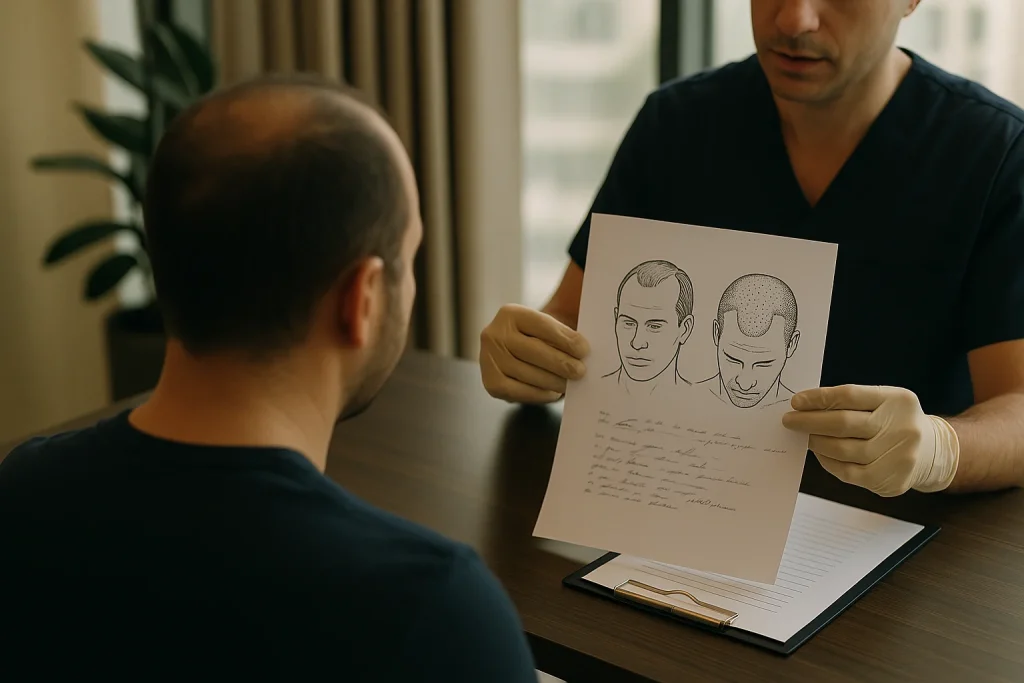
Hair graft cost can vary because a transplant is not priced only by the number of grafts used. The treatment technique, medical team, donor-area planning, clinic standards, destination, aftercare and the complexity of your hair-loss pattern can all affect the final treatment plan and price.
- Hair transplant pricing may be quoted per graft, per session or as an all-inclusive treatment package.
- The number of grafts needed depends on hair loss, donor capacity, hair characteristics and the coverage goal.
- Lower advertised prices may not include medical supervision, anaesthesia, aftercare, medicines, accommodation or follow-up.
- Sapphire FUE and DHI may have different planning requirements, so the technique can influence the overall cost.
- A doctor-reviewed assessment is the safest way to receive a realistic graft estimate and understand what is included.
01Hair Graft Cost: Why Treatment Prices Can Vary
A hair graft cost is influenced by much more than a simple graft count. Hair transplantation is a medical procedure that requires assessment, donor-area management, local anaesthesia, graft extraction, recipient-site planning, implantation and follow-up. For this reason, two clinics may advertise very different figures even when they refer to a similar number of grafts. The important question is not only what the quoted amount is, but also what level of medical planning, safety and support is included in that amount.
A graft is a naturally occurring group of one to several hairs removed from the donor area, usually at the back or sides of the scalp. It is not the same as one hair. A treatment plan based on 2,000 grafts may therefore involve a substantially higher number of individual hairs, depending on each person's hair characteristics. Your doctor will consider the quality of the donor hair, the size of the thinning area, existing hair density and the desired result before recommending a graft range.
Price differences can also reflect whether a clinic plans the procedure around the individual or uses a standard package for every patient. A carefully designed hairline, balanced distribution through the frontal area and crown, and protection of the donor area take time and clinical judgement. In most patients, a sensible plan prioritises natural-looking coverage and long-term donor preservation rather than attempting to place the highest possible number of grafts in one session.
02What Is Included in a Hair Transplant Quote?
Before comparing quotes, ask for a clear written list of what is included. Some providers quote only for the surgical day, while others include consultations, blood tests where appropriate, anaesthesia, post-procedure medicines, a care kit, washing instructions and follow-up appointments. Travel-related services can also be included in international treatment packages, but these details should always be confirmed in writing before you make arrangements.
The experience and structure of the clinical team matter as well. A responsible treatment pathway generally includes a medical review, a donor-area examination, planning of the hairline and recipient area, and supervision during key stages of the procedure. It should also include clear instructions about recovery and access to support if you have routine questions after returning home. These elements may not be obvious in a short online advertisement, yet they are part of the overall value and safety of treatment.
At Acibadem Hair Transplant Center, patients can request a free online hair analysis that is reviewed by doctors. The clinic is a dedicated hair restoration clinic in Istanbul and is licensed by the Turkish Ministry of Health. Its all-inclusive packages can include VIP transfer, a 4-star hotel, a care kit and 12 months of follow-up, but the exact plan should be confirmed after medical review because treatment needs and travel arrangements vary.
03How Graft Number Changes the Treatment Plan
The number of grafts is one of the main factors behind a hair transplant quote, but it should not be viewed as a shopping quantity. A small procedure to refine a hairline may require a very different approach from a larger procedure for advanced frontal and crown thinning. Graft estimates are usually based on the surface area to be treated, the degree of miniaturisation, the density of existing hair and the cosmetic priority of each area.
A person with early hair loss may need grafts mainly in the front to frame the face, while someone with more extensive loss may need a staged strategy. In the latter situation, the doctor may recommend concentrating available grafts in the frontal and mid-scalp areas first because these zones often have the greatest visual effect. The crown can require many grafts due to its circular growth pattern, so it may need to be addressed separately or with lower density depending on donor availability.
It is also important to understand that a higher graft count is not automatically better. The donor area has a limited lifetime supply of follicles. Removing too many grafts, placing them too close together, or using grafts without a long-term plan can affect the appearance of the donor area and may limit future options. A suitable graft number should be based on donor safety and realistic coverage, not on a promotional maximum.
04Why Technique Can Affect the Overall Price
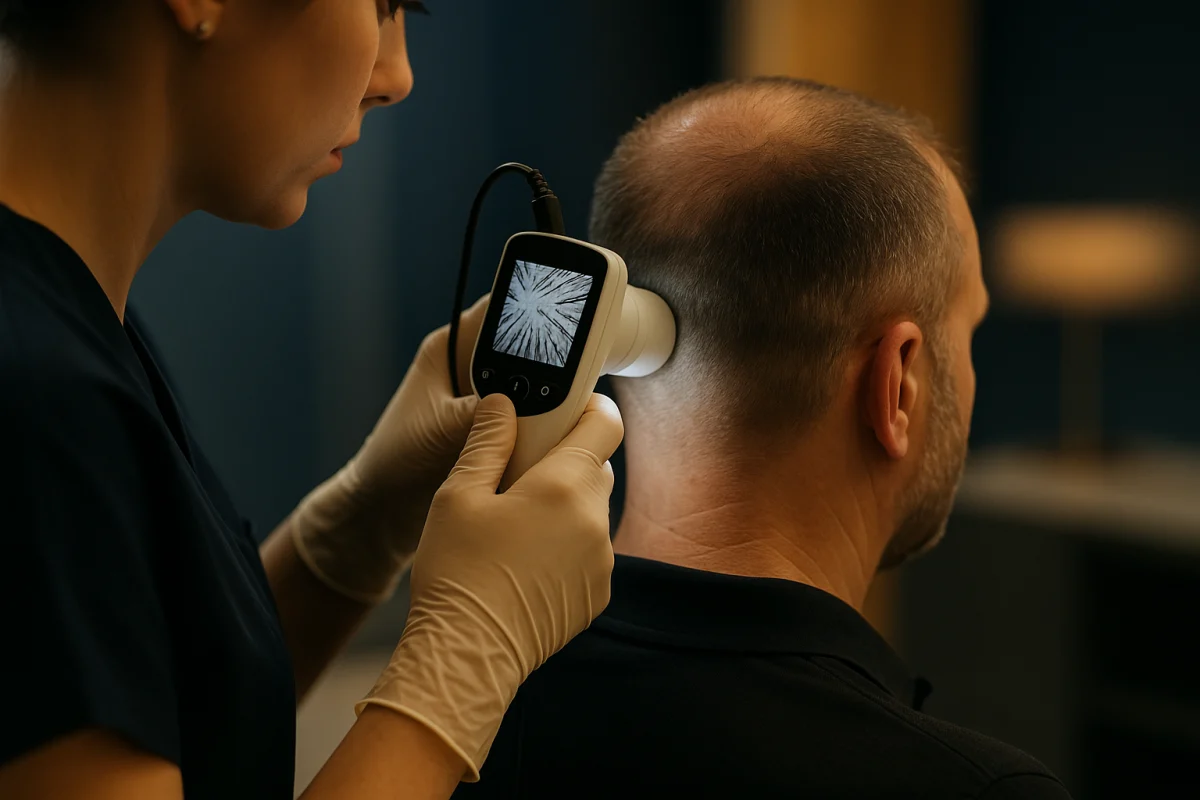
Hair transplant technique can influence planning time, instruments, implantation methods and the clinical workflow. Sapphire FUE involves extracting individual follicular units and creating recipient channels with sapphire blades. DHI also uses individual graft extraction, followed by implantation with a specialised implanter tool. Both techniques can be appropriate in selected patients, but the best option depends on the scalp, hair characteristics, existing hair and the treatment objective.
DHI may be considered when precise placement around existing hair is important, although it is not automatically the right choice for every pattern of hair loss. Sapphire FUE may be suitable for broad coverage and carefully planned channel creation. Your doctor will confirm which approach is clinically appropriate after assessing your images or examining you in person. A reliable clinic should explain the reason for the recommendation rather than presenting one technique as universally superior.
The hair graft cost may therefore differ between techniques because the procedure involves different equipment, preparation and implantation processes. However, technique names alone do not tell you whether a quote represents good value. Ask who performs each stage, how the donor area is protected, how grafts are handled and what follow-up is offered. These practical details are often more meaningful than a technique label on its own.
05Medical Standards, Anaesthesia and Graft Handling
Safety standards are a fundamental part of treatment cost. A hair transplant should take place in an appropriately licensed clinical setting with a clear process for medical assessment, hygiene, infection control and emergency preparedness. Although patients may focus first on the number of grafts, careful graft handling is equally important. Follicles are delicate and should be extracted, stored and implanted in a controlled manner to support their survival.
Comfort during the procedure is another consideration. Local anaesthesia is commonly used for hair transplantation, and patients may feel brief discomfort during the numbing stage. Once the area is numb, most people describe pressure, movement or a pulling sensation rather than sharp pain. Needle-free anaesthesia may be available for patients who are concerned about injections, but suitability should be discussed with the medical team because each person's medical history and needs are different.
At Acibadem Hair Transplant Center, results are measured by trichoscopic graft survival at month 12, with a documented 98% rate under a written guarantee. This type of stated quality measure reflects attention to the full clinical process, not simply to extraction or implantation alone. It remains important to remember that final cosmetic appearance can vary between patients because hair growth, scalp condition, healing and ongoing hair loss are individual factors.
06Location, Travel and Package Structure
Where you receive treatment can change the overall budget. In some destinations, patients may find lower operating costs than in their home country. However, international travel adds practical questions about transfers, hotel stays, recovery time, communication, post-treatment washing and access to follow-up. Comparing only the procedure fee may lead to an incomplete comparison if transport, accommodation or aftercare must be arranged separately.
Istanbul is a well-known destination for international hair restoration patients. Acibadem Hair Transplant Center has welcomed patients from 38 countries over 12 years. For people travelling from abroad, an organised package can make the experience easier to manage, particularly when it includes airport-related transfers, accommodation and a clear plan for the days immediately after the procedure. Patients should still check what is included, whether flights are excluded and whether any extra costs could apply.
Distance should not replace medical assessment. A convenient package is helpful only when it is paired with suitable clinical standards and clear communication. Before travelling, make sure you understand the proposed graft range, recommended technique, number of treatment days, recovery guidance and the method for contacting the clinic after you return home. A written plan helps prevent misunderstandings and allows you to compare options fairly.

07How to Compare Hair Transplant Prices Responsibly
When comparing hair graft cost estimates, begin by comparing like with like. Ask whether the quote is based on an exact graft count, an estimated range or an unlimited-graft package. Then ask what happens if the doctor determines that fewer grafts are safer or more appropriate on the day. A medically responsible plan should remain flexible enough to protect the donor area and respond to the findings of the in-person examination.
It is useful to request answers to several practical questions: Is the clinic licensed? Is a doctor involved in assessment and planning? Which steps are performed by the clinical team? Is local anaesthesia included? Are post-procedure medicines and washing instructions included? How long is follow-up available? These questions are not meant to make the process complicated. They help you understand whether you are looking at a complete care pathway or only an advertised starting price.
Be cautious with claims that focus only on very low cost, very high graft numbers or instant transformations. Hair transplantation is a long-term process. New growth usually develops gradually, and the result is commonly assessed over many months rather than days. The right decision is usually based on medical suitability, natural design, donor management, transparent inclusions and reliable aftercare, not on the lowest figure alone.
08Getting a Personalised Graft and Cost Estimate
The most accurate way to understand your likely treatment cost is to have your hair loss reviewed by a qualified medical team. Clear photographs of the hairline, top, crown, sides and donor area can help the initial assessment. The team may ask about your age, previous procedures, medications, medical conditions, family history of hair loss and your expectations. This information helps identify whether a hair transplant may be suitable and whether further evaluation is needed.
An online assessment can provide a useful preliminary graft range, but it is not the final treatment plan. The in-person examination remains important because the doctor needs to assess donor density, scalp quality, hair calibre and the pattern of thinning directly. In some cases, the safest recommendation may be to delay surgery, treat an underlying scalp concern first, or plan a conservative approach. This is a sign of careful practice rather than a limitation.
Patients considering Acibadem Hair Transplant Center can send a free online hair analysis for doctor review and typically receive a WhatsApp reply within around two hours. The response can help explain the likely treatment approach and package inclusions. Your final plan, technique and graft estimate will be confirmed by the doctor, with the aim of creating an appropriate and realistic strategy for your hair restoration journey.
09Frequently Asked Questions
What might a 3,000-graft hair transplant cost?
There is no single standard cost for 3,000 grafts because clinics may use different pricing models and include different services. The final quote can depend on the technique, donor-area complexity, medical team, anaesthesia, aftercare and whether travel services are included. A doctor should first confirm that 3,000 grafts are suitable and safe for your donor area.
How long do transplanted hair grafts usually last?
Transplanted follicles are typically taken from donor areas that are more resistant to pattern hair loss, so they can continue growing long term in many patients. However, ongoing thinning of non-transplanted hair may still occur over time. Your doctor can discuss long-term planning and whether medical management may be relevant in your situation.
What is the cost of 1,000 hair grafts?
The cost of 1,000 grafts varies by clinic, country, technique and what is included in the treatment pathway. Some clinics quote per graft, while others offer a session or package price, so direct comparison can be misleading. Ask for a written breakdown that covers the procedure, medical support and aftercare.
How painful is a hair graft procedure?
Hair transplantation is typically performed with local anaesthesia. The numbing stage may cause brief discomfort, while most patients feel pressure or movement rather than significant pain once the scalp is numb. Some clinics offer needle-free anaesthesia, and the medical team can explain the available comfort options and their suitability.
This article is for general information only and is not a substitute for professional medical advice.
 06
06 12
12