
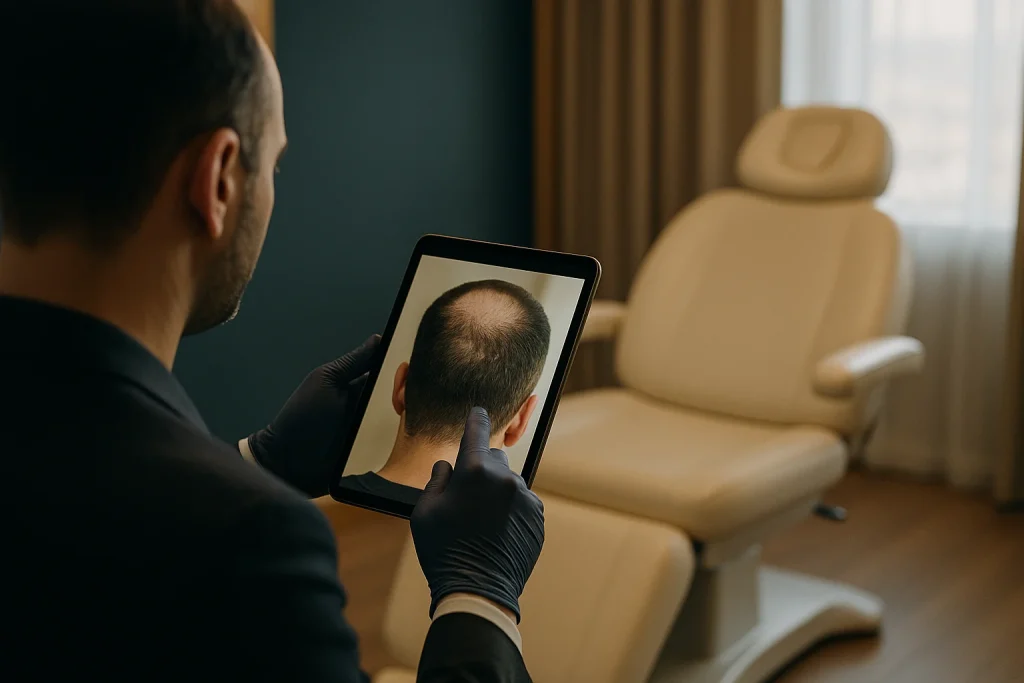
Hair transplant surgery is a planned medical procedure that moves healthy follicles from a donor area to areas of thinning or hair loss. The journey usually includes a medical assessment, hairline and graft planning, extraction and implantation, early aftercare, temporary shedding, and gradual growth over several months.
- A doctor-led consultation helps confirm whether a hair transplant is suitable and how many grafts may be needed.
- Sapphire FUE and DHI are implantation approaches that may be selected according to the hair-loss pattern, donor supply, and treatment plan.
- The first two weeks are important for protecting newly implanted grafts and following the clinic's washing instructions.
- Temporary shedding and itchiness can occur during healing, while visible growth usually develops gradually over several months.
- Long-term results depend on factors such as donor hair quality, future hair loss, technique, aftercare, and medical follow-up.
01Hair transplant surgery consultation and suitability assessment
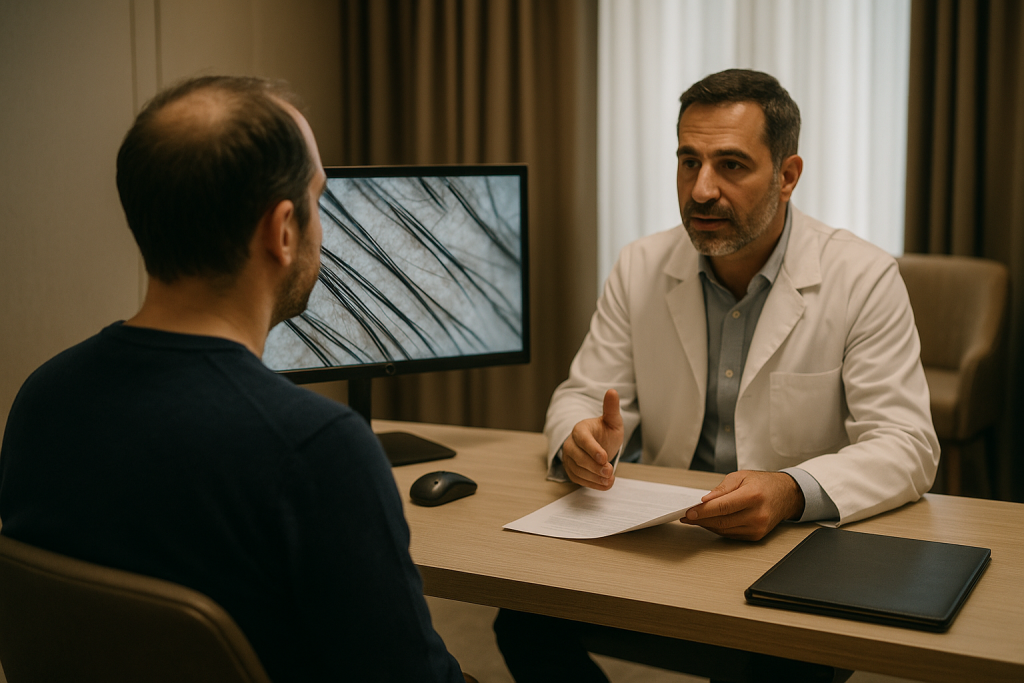
A hair transplant surgery journey normally begins with a detailed consultation rather than an immediate procedure booking. The medical team reviews your hair-loss history, current pattern of thinning, scalp condition, family history, general health, and expectations. This assessment is important because transplantation does not stop future hair loss in untreated areas. Your doctor will confirm whether surgery is appropriate, whether another approach should be considered first, or whether a combined long-term plan may be more suitable.
The donor area is examined carefully during this stage. For most patients, the donor zone is located at the back and sides of the scalp, where follicles are often more resistant to the hormonal factors linked with common pattern hair loss. However, donor hair is limited. The team considers density, hair calibre, curl, scalp flexibility, and the size of the area to be treated before estimating a safe graft range.
International patients can often start with an online hair analysis by sending clear photographs in good light. At Acibadem Hair Transplant Center, this free initial analysis is reviewed by doctors, and WhatsApp replies are typically provided within around two hours. An online review can help with early planning, but the in-person assessment and medical checks remain important before treatment is confirmed.
02Creating a natural hairline and realistic graft plan
A treatment plan is about more than filling an empty area. The clinician considers your facial proportions, age, current hair-loss pattern, likely future progression, hair texture, and available donor reserve. A lower or very dense hairline may seem attractive in the short term, but it may not be appropriate for every person. Planning conservatively can help preserve donor follicles for possible future needs.
Grafts are small naturally occurring groups of one to several hairs. The number of grafts needed varies widely because coverage depends on the size of the thinning area, existing hair, desired density, and the characteristics of each graft. A graft estimate is therefore not the same as a guaranteed result. Your doctor will explain what level of coverage is clinically realistic with the available donor supply.
During hair transplant surgery planning, the frontal hairline is usually designed with irregularity and softness in mind. Single-hair grafts may be placed at the leading edge to avoid a harsh line, while grafts containing more hairs can contribute to density behind it. The angle and direction of each implanted follicle also matter, particularly around the temples, crown, and any existing hair that must blend naturally with transplanted growth.
03Preparing safely before procedure day
Once a procedure is planned, the clinic will provide instructions based on your health information and treatment details. You may be asked to share information about medicines, supplements, allergies, previous operations, smoking, and medical conditions. It is important to answer accurately and to ask the medical team before stopping or changing any prescribed medication. Do not make medication changes based only on general online guidance.
Preparation also includes practical arrangements. Wear a comfortable top that does not need to be pulled over the head after the procedure, and plan for a calm recovery period. Patients travelling to Istanbul may appreciate having transport, accommodation, and early aftercare organised in advance. Acibadem Hair Transplant Center offers all-inclusive packages that can include VIP transfer, a 4-star hotel, a care kit, and 12 months of follow-up.
On the day, the team usually confirms the planned hairline, takes clinical photographs, reviews consent, and answers final questions. The scalp is then prepared for treatment. Local anaesthesia is commonly used to numb the relevant areas, and needle-free anaesthesia is available at the clinic. You should still tell the team about any anxiety, sensitivity, or previous reaction to anaesthesia so they can guide you appropriately.
04Extraction and implantation with Sapphire FUE or DHI
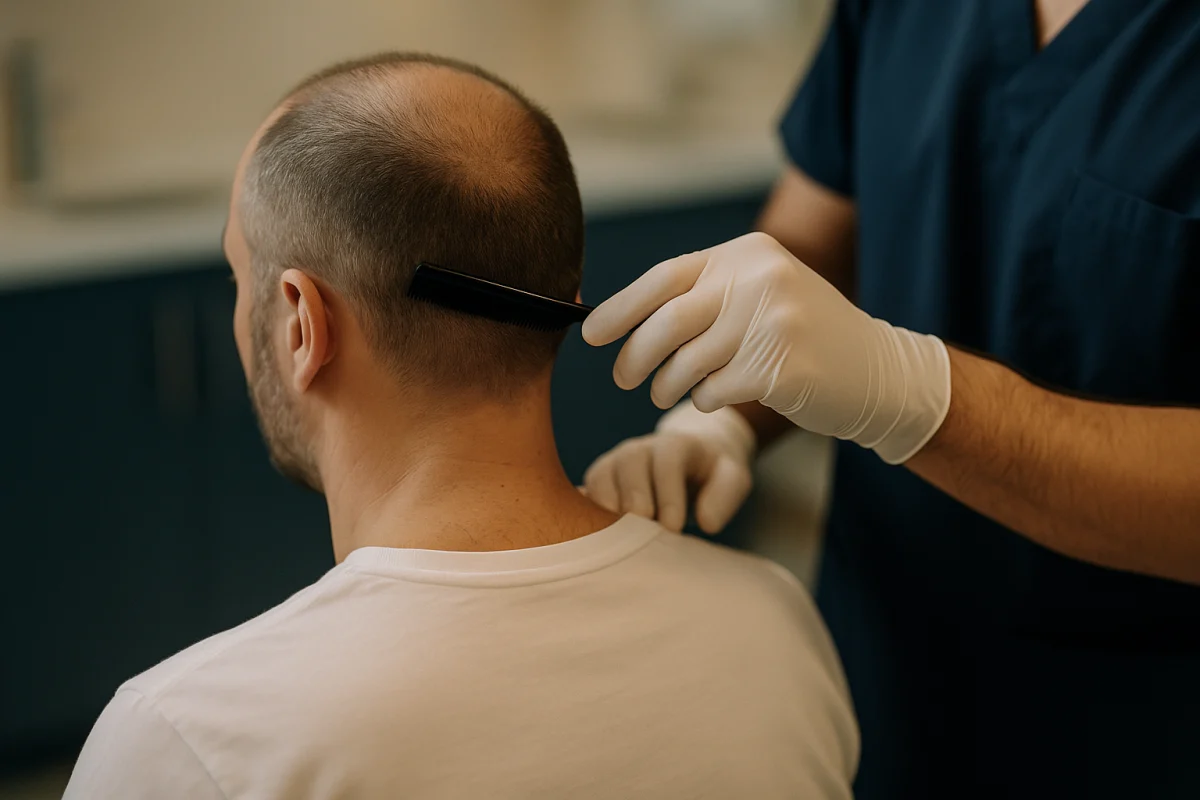
The main procedural stages are donor preparation, follicle extraction, recipient-site preparation or implantation, and careful graft placement. In FUE, individual follicular units are extracted from the donor area using a small punch. The units are handled under controlled conditions and are then placed into the areas of thinning according to the surgical plan. The procedure can take several hours, depending on the number of grafts and the treatment area.
Sapphire FUE uses sapphire blades to create recipient channels before graft placement. DHI uses a specialised implantation tool that can place grafts directly into the recipient area. Neither method is automatically best for every patient. The choice is typically based on the area being treated, the desired placement control, the existing hair, the graft characteristics, and the doctor's assessment of what is safest and most suitable.
During hair transplant surgery, correct handling of the grafts is as important as the extraction method. Follicles need to be protected from unnecessary trauma and placed at appropriate depth, angle, and direction. At Acibadem Hair Transplant Center, results are measured by trichoscopic graft survival at month 12, with a documented 98% rate under a written guarantee. Individual cosmetic appearance may still vary because hair quality, scalp condition, healing, and future hair loss differ from person to person.
05The first 14 days: protecting grafts and caring for the donor area
The first days after treatment are focused on protecting the newly implanted grafts. Mild swelling, redness, small crusts, tightness, or tenderness can occur in many patients. The clinic will explain how and when to begin washing, how to apply any recommended products, and how to sleep in a way that reduces pressure on the treated area. Follow those specific instructions closely, as they are tailored to the technique and your procedure.
It is usually important not to rub, scratch, pick, or press the recipient area while crusts are present. Picking may disturb healing skin and, in the early stage, may risk affecting graft placement. Avoiding strenuous activity, direct sun exposure, swimming, and situations that cause heavy sweating may also be advised for a period set by your clinical team. If you accidentally hit the area or notice unexpected bleeding, contact the clinic for guidance rather than guessing what to do.
The donor area has many tiny extraction sites after FUE. These generally form small scabs and heal over the following days to weeks. Surrounding hair often helps cover the area as it grows, but visible short-term changes can depend on the haircut, skin tone, density, and number of grafts removed. Contact the clinic promptly if pain increases rather than improves, or if you have marked redness, warmth, discharge, fever, or another symptom that concerns you.
06Shedding, itching, and the quiet growth phase
Many patients see the implanted hair shafts shed within the first several weeks. This is commonly called shock shedding or temporary shedding, and it can be worrying if you are not expecting it. In most cases, the follicle remains beneath the scalp and enters a resting phase before beginning a new growth cycle. Your clinic can explain the expected timeline for your own case and review any change that seems unusual.
Itchiness can also be part of normal healing, especially as scabs loosen and the skin recovers. It should be managed gently and not by scratching the scalp. Your care team may recommend a washing approach or other suitable measures based on your stage of recovery. Strong pain, a spreading rash, pus, significant swelling, or persistent symptoms should be assessed by the clinic or an appropriate healthcare professional.
Between the second and third month, the treated area can look relatively unchanged because early new hairs may be fine and slow to emerge. Existing non-transplanted hair can also continue to thin if the underlying hair-loss process is active. This is why follow-up and a long-term hair-management discussion are valuable. The aim is not only to monitor transplanted follicles, but also to consider how the overall appearance may change over time.

07Months 3 to 12: when hair growth becomes more visible
New growth often begins to become more noticeable from around month three or four, although this varies. Early hairs can appear finer, lighter, or uneven before they mature. Density usually builds gradually rather than all at once. Photographs taken under similar lighting and angle can be more useful than checking the mirror every day, because day-to-day changes are subtle.
From the middle months onward, many patients notice better coverage and easier styling. Crown areas may appear slower than the frontal region because of their size, natural whorl pattern, and the visual effect of surrounding hair. The final cosmetic impression depends not only on the number of surviving grafts, but also on hair shaft thickness, curl, contrast between hair and scalp, and the continued stability of native hair.
A 12-month review is commonly a meaningful point for assessing the outcome, although some patients may continue to see maturation after that point. Acibadem Hair Transplant Center provides 12 months of follow-up as part of its all-inclusive package structure. Follow-up gives patients an opportunity to share progress photographs, ask recovery questions, and receive guidance on when an in-person review may be needed.
08Long-term planning after your transplant
Transplanted follicles from a suitable donor area are generally expected to retain many of their donor characteristics after they are moved. This means they can provide long-lasting growth in many patients. However, no procedure can guarantee that every transplanted hair will remain unchanged for life, and it cannot prevent ongoing thinning of native, non-transplanted hair. Long-term expectations should be discussed before surgery, not only after it.
A well-planned approach protects the donor area from overharvesting. Removing too many grafts may make the donor zone look less dense, especially with very short hairstyles. For this reason, a responsible plan balances current cosmetic goals with donor preservation and possible future hair loss. A second procedure may be considered for some people later, but it should never be assumed as necessary or suitable without a new assessment.
Choosing a licensed clinic and maintaining communication through recovery are practical parts of safe care. Acibadem Hair Transplant Center is a dedicated hair restoration clinic in Istanbul licensed by the Turkish Ministry of Health, with patients from 38 countries over 12 years. A consultation can clarify the treatment pathway, but the final plan should always be based on a doctor's examination, your health information, and realistic goals.
09Frequently Asked Questions
What is the cost of 3,000 hair grafts?
There is no single reliable price for 3,000 grafts because the final cost can depend on the technique, donor assessment, treatment complexity, medical services included, and travel arrangements. More grafts are not automatically better or suitable for every patient. A doctor-reviewed hair analysis is the appropriate way to receive a treatment recommendation and an individual quote.
How long can transplanted hair last?
Hair transplanted from a suitable donor area can be long-lasting in many patients because those follicles often retain their donor characteristics. However, results vary, and native hair around the transplant may continue to thin over time. Your doctor can discuss long-term planning, donor preservation, and appropriate follow-up for your hair-loss pattern.
What happens to the donor area after a hair transplant?
After FUE extraction, the donor area has many small temporary extraction sites that usually form tiny scabs and heal over the following days to weeks. Hair around the area typically grows and can help provide coverage, but the visible result depends on donor density, the number of grafts extracted, healing, and hairstyle. Careful graft planning is important to reduce the risk of an overharvested appearance.
Is itching normal after a hair transplant?
Mild itchiness can be common during the healing period, particularly while scabs are loosening and the scalp is recovering. Avoid scratching, rubbing, or picking the area because this may irritate the skin and could affect early healing. Contact your clinic if itching is severe or occurs with increasing pain, rash, discharge, fever, or other concerning symptoms.
This article is for general information only and is not a substitute for professional medical advice.
 06
06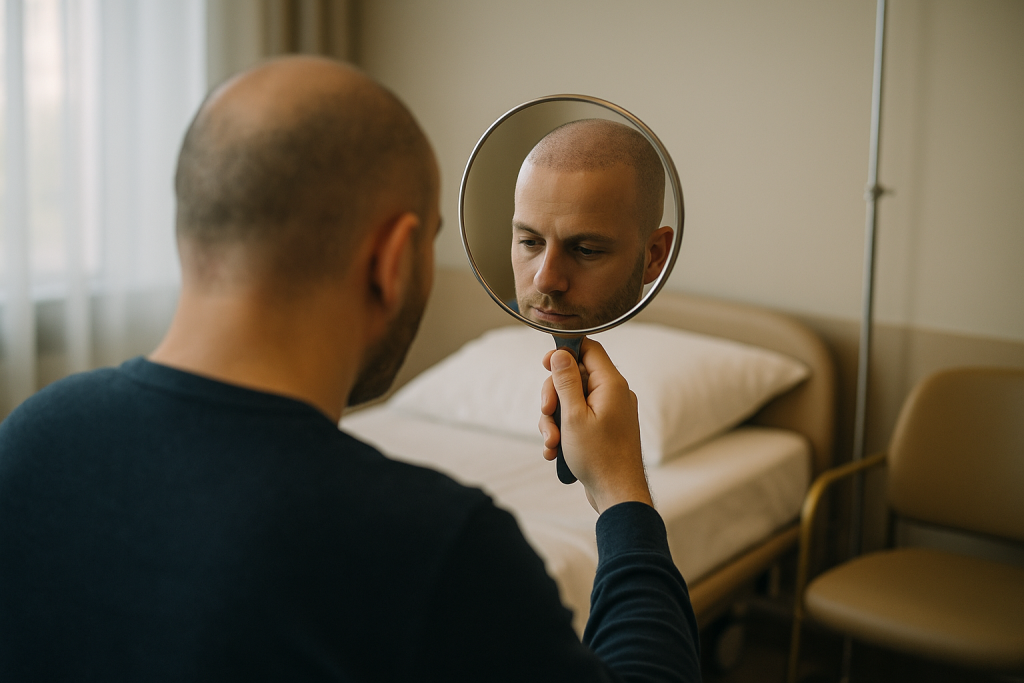 12
12