
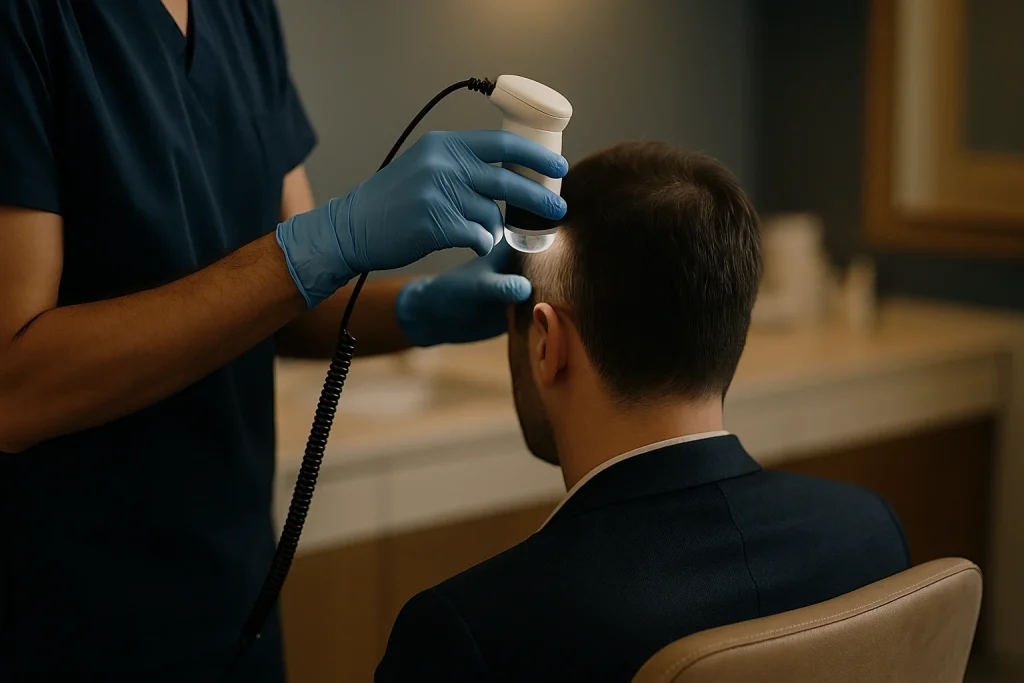
A hair graft transplant uses naturally occurring follicular units, usually taken from the back and sides of the scalp, to improve coverage in areas affected by hair loss. Each graft may contain one to several hairs, so doctors plan graft placement, direction, and density together to create a balanced, natural-looking result.
- A graft is a follicular unit and may contain more than one individual hair.
- Coverage depends on available donor hair, the size of the thinning area, hair characteristics, and long-term hair-loss planning.
- The hairline usually needs finer single-hair grafts, while multi-hair grafts can support density behind it.
- Sapphire FUE and DHI are placement approaches that may be selected according to the treatment plan and scalp needs.
- Transplanted hair typically needs several months to grow, with results commonly assessed around month 12.
01What a Hair Graft Transplant Means
A hair graft transplant is a surgical hair restoration procedure that moves healthy follicular units from a donor area to areas with thinning or no visible hair. In most patients, the donor area is at the back and sides of the scalp, where hair is often more resistant to the pattern of hair loss. The purpose is not simply to place the highest possible number of hairs. It is to use the available follicles carefully, so the scalp can look balanced both soon after growth begins and as natural hair changes over time.
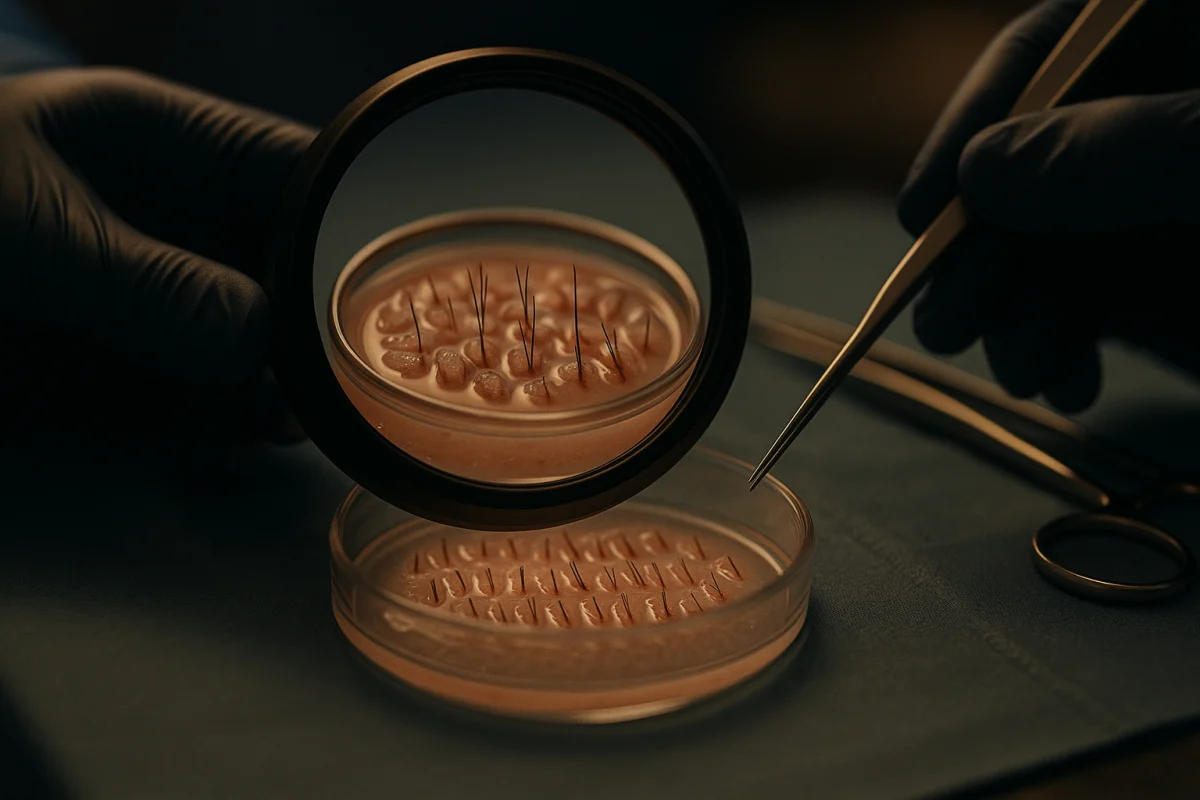
A graft is a small piece of tissue containing one naturally grouped follicular unit. These units are removed and transplanted as intact groups to protect their structure. Once placed, the follicles continue their normal hair-growth cycle after an adjustment period. Because transplanted follicles are living tissue, handling, storage, implantation technique, scalp condition, and post-procedure care can all influence how they settle and grow.
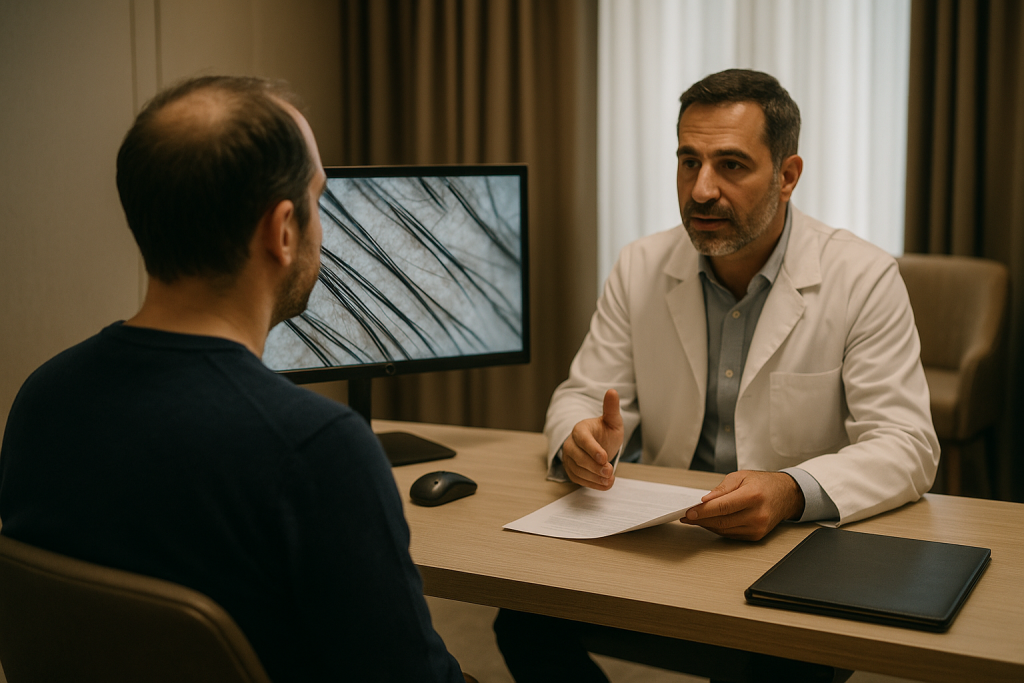
Hair transplantation can help selected people with pattern hair loss, some forms of stable hair loss, or hairline and crown thinning. However, it is not suitable for every cause of shedding. Sudden diffuse shedding, active scalp inflammation, scarring conditions, or an unstable hair-loss pattern may need medical assessment first. A doctor should confirm whether transplantation is appropriate and discuss what level of coverage is medically realistic.
02Follicular Units: Why a Graft Is Not One Hair
The words graft, follicle, and hair are often used as if they mean the same thing, but they do not. A graft commonly contains one, two, three, or sometimes more individual hairs. The exact distribution differs between people and between areas of the donor scalp. Therefore, a plan described in graft numbers cannot be understood as an identical number of hairs placed into the recipient area.
Single-hair grafts are particularly useful at the front of the hairline, where a soft and irregular transition can look more natural. Grafts containing two or more hairs are often placed behind the hairline or within the mid-scalp, where they can contribute more visual fullness. This arrangement follows the way natural scalp hair is usually organised: finer definition at the leading edge and greater density farther back.
Hair characteristics also affect the appearance of coverage. Coarse hair may create more visual volume than fine hair, while wavy or curly hair can cover more scalp surface than very straight hair. Contrast matters as well. A strong difference between hair colour and scalp colour can make thinning more visible. For this reason, doctors assess more than graft count when discussing what a procedure may achieve.
03Planning Coverage in a Hair Graft Transplant
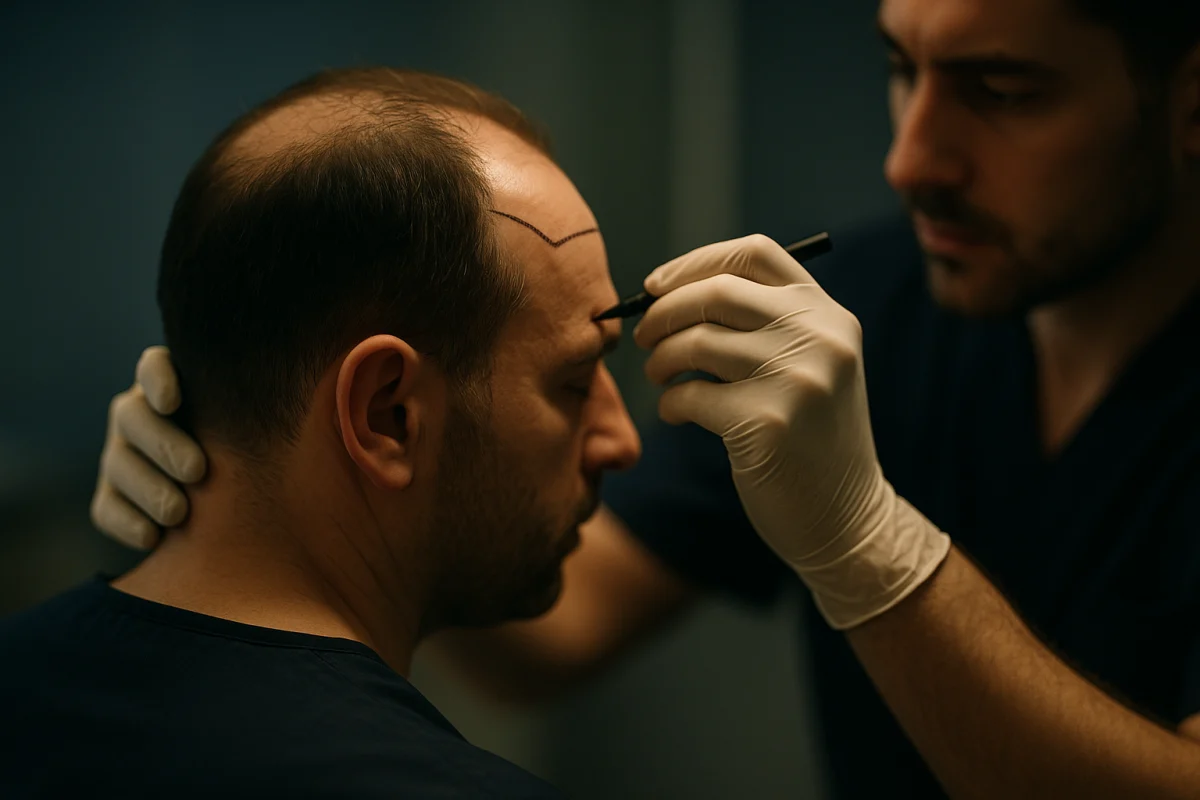
Planning coverage in a hair graft transplant begins with mapping the recipient area and evaluating the donor supply. Doctors consider the current pattern of thinning, possible future hair loss, scalp flexibility, hair calibre, curl pattern, and the quality of the donor zone. This broader assessment helps avoid concentrating too many grafts in one small area while leaving insufficient donor hair for future needs.
The hairline is often the most visible part of the design. A very low or overly dense hairline may not remain balanced if hair loss continues behind it. In many cases, a conservative, age-appropriate hairline is designed to frame the face while preserving grafts for the frontal zone, mid-scalp, or crown. Your doctor will confirm which areas should be prioritised based on your individual pattern and donor capacity.
The crown can require a large number of grafts because it is a broad area with a circular growth pattern. When donor resources are limited, surgeons may recommend focusing first on the frontal and mid-scalp regions, which are normally seen most directly in conversation. This does not mean the crown is ignored; it means coverage is planned strategically, with realistic expectations about density and the possibility of future treatment.
04Donor Area Assessment and Safe Extraction
The donor area is a central part of every hair restoration plan because its follicles are limited. Before extraction, the team assesses donor density, hair thickness, scalp health, and the distribution of stable-looking hairs. The aim is to remove follicles in a dispersed pattern rather than overharvesting one location. When donor management is careful, the remaining hair can usually maintain a more even appearance.
With FUE, individual follicular units are extracted using a small punch tool. The extracted grafts are then inspected and prepared for implantation. The technique requires precision because follicles can be delicate, and unnecessary trauma may affect graft quality. The exact extraction approach, punch size, and number of grafts should be determined clinically rather than chosen from a standard package or a fixed online number.
A good donor assessment also considers future options. Hair loss may progress in untreated areas, and a person may later wish to improve density or address another zone. Preserving donor hair can therefore be as important as achieving an immediate cosmetic change. During a doctor-reviewed consultation, patients should share their family history of hair loss, previous procedures, medical conditions, and expectations for future hairstyle choices.
05Sapphire FUE and DHI Placement Approaches
Sapphire FUE and DHI are two approaches that may be used during a hair graft transplant, depending on the clinical plan. Sapphire FUE refers to creating recipient channels with sapphire blades before graft placement. The channels help define the angle, direction, and distribution of the transplanted follicles. This can be particularly important in visible areas, where hair needs to follow a natural pattern.
DHI generally uses an implantation tool to place grafts into the recipient area. In some situations, this method may support controlled placement without preparing all channels in advance. However, neither technique is automatically best for every patient. The right approach depends on factors such as the target area, the number and type of grafts, scalp condition, desired hairstyle, and the medical team's assessment.
At Acibadem Hair Transplant Center in Istanbul, patients can be assessed for Sapphire FUE and DHI techniques. Needle-free anaesthesia is also available for eligible patients who are concerned about injections. The treatment approach should always be based on a medical evaluation, not on marketing terms alone. An online hair analysis can give an initial indication, while the final plan is confirmed by doctors after appropriate assessment.
06From Procedure Day to Month 12
On the day of the procedure, the scalp is prepared, local anaesthesia is administered, and grafts are extracted from the donor area before they are implanted into the planned recipient sites. Most people remain awake throughout the procedure. Sensations can vary, but patients often report pressure, movement, or brief discomfort during certain stages rather than continuous pain. The medical team will explain the anaesthesia and comfort options before treatment.
In the first days after transplantation, small crusts, redness, and temporary sensitivity are common. Patients are normally given instructions on sleeping position, gentle washing, activity limits, and protecting the scalp from rubbing or impact. It is important to follow the clinic's aftercare guidance closely. Scratching, picking crusts, exposing the scalp to trauma, or returning too quickly to strenuous activity may interfere with the healing process.
Transplanted hairs often shed during the early weeks, which is a commonly expected part of the cycle and does not necessarily mean the follicles have failed. New growth usually begins gradually over the following months, and the texture and density can continue to develop. Final maturation takes time, so results are commonly assessed around month 12. At Acibadem Hair Transplant Center, trichoscopic graft survival is measured at month 12, with a documented 98% rate under a written guarantee. Individual appearance and growth timing can still vary.
07Long-Term Appearance, Care, and Expectations
Transplanted follicles are generally selected from areas that are more resistant to common pattern hair loss, so they can provide long-lasting growth in many patients. However, the surrounding non-transplanted hair may continue to thin over time. This is why a successful-looking result is not only about the procedure itself; it also involves a plan for protecting and monitoring existing hair where medically appropriate.
Doctors may discuss medical management of hair loss, scalp care, lifestyle factors, and follow-up reviews as part of long-term planning. Any medication or treatment should be discussed with a qualified doctor, especially for people with health conditions, allergies, pregnancy plans, or previous side effects. No topical product, supplement, or surgical technique should be viewed as a guaranteed solution for every type of hair loss.
International patients may benefit from organised travel and follow-up support, but clinical safety should remain the priority. Acibadem Hair Transplant Center is a dedicated hair restoration clinic in Istanbul licensed by the Turkish Ministry of Health. Its all-inclusive packages can include VIP transfer, a 4-star hotel, a care kit, and 12 months of follow-up. Patients can request a free online hair analysis reviewed by doctors, with WhatsApp replies typically provided within around two hours.
08Detailed Aftercare: Protecting Grafts During the First Two Weeks
The first two weeks are an important protection period because the transplanted grafts are still settling into the recipient scalp. Patients are usually advised to avoid touching the implanted area except when washing it exactly as instructed. Rubbing with a towel, scratching with fingernails, wearing a tight hat, or allowing a helmet to press on the scalp can disturb healing. If itching occurs, it is best to contact the clinic for guidance rather than trying to remove crusts manually.
Sleeping arrangements also matter in the first several nights. Many patients are asked to sleep with the head elevated and to avoid direct pressure on the recipient area. A clean travel pillow or the pillow arrangement recommended by the clinical team may help reduce accidental rubbing while asleep. Mild swelling can occur around the forehead or upper face in some patients during the early days. Following the prescribed aftercare plan, resting, and avoiding unapproved remedies are sensible steps; worsening swelling, severe pain, increasing redness, discharge, or fever should be reported to the medical team promptly.
Hair washing normally starts according to the clinic's schedule, often using a gentle technique rather than normal shower pressure. Patients may be asked to apply the provided lotion or foam, rinse carefully with lukewarm water, and use a mild shampoo without rubbing. Crusts commonly soften and clear gradually during the healing period. They should not be picked, even if they appear noticeable. The care kit provided in Acibadem Hair Transplant Center all-inclusive packages is intended to support the instructions given after treatment, but patients should use each item only as directed by their medical team.
Exercise, swimming, sun exposure, and work conditions should be discussed before travel. Heavy exercise can increase sweating and friction, while pools, seawater, saunas, steam rooms, and dusty environments may create avoidable risks during early healing. The exact return date for these activities varies according to the procedure and individual recovery. Patients with physically demanding jobs should ask in advance how much time away from work may be sensible and whether protective equipment could place pressure on the scalp.
09Hair Growth Timeline: What Changes May Be Seen Month by Month
The appearance of the scalp changes several times after a hair graft transplant, and these changes can be easier to manage when they are expected. During the first week, the recipient area may look red and have small crusts around the implanted hairs. The donor area may also look short-haired or temporarily uneven while it heals. These early visible signs are part of recovery and do not show the final result.
Between the second week and the first few months, many transplanted hair shafts shed. This is often called shedding or shock loss and is usually related to the normal adjustment of the hair-growth cycle after transplantation. The follicle remains beneath the scalp, but the visible shaft can fall out before new growth begins. Some patients may also notice temporary shedding among nearby existing hairs. Because every scalp responds differently, patients should contact their clinic if they are concerned rather than judging graft survival from early shedding alone.
New hairs commonly start to become noticeable gradually from around the third or fourth month, although timing differs. Early growth can look fine, light, or uneven because follicles do not all enter the growth phase at the same time. From approximately months 5 to 8, many patients begin to see a more meaningful improvement in coverage, while the hairline and crown may mature at different speeds. Hair often continues to gain length, calibre, and visual density in the later months.
Around month 12, doctors can make a more reliable assessment of growth, direction, coverage, and the relationship between transplanted and existing hair. Acibadem Hair Transplant Center measures trichoscopic graft survival at month 12 and has a documented 98% rate under a written guarantee. This measurement does not mean that every patient will have the same cosmetic density, because donor supply, hair characteristics, treatment area, and ongoing native-hair loss all affect the final appearance.
10Travel Planning for an Istanbul Hair Transplant
International patients should plan their trip around both the procedure and the early recovery period, rather than treating treatment day as a routine sightseeing day. Before booking flights, patients should confirm the recommended arrival time, procedure schedule, required health information, and the timing of their first wash or post-procedure review. It is also helpful to allow enough flexibility in travel arrangements in case the medical team recommends an additional check before departure.
Choose loose, front-opening clothing for procedure day and the following days. A button-up or zip-front top can be removed without passing fabric over the scalp, which helps avoid contact with the grafts. Patients should also bring any regularly prescribed medicines in their original packaging and tell the clinic about medications, allergies, previous surgeries, smoking, and relevant medical conditions before the procedure. Medication changes should only be made with advice from the prescribing doctor or treating medical team.
Air travel itself should be discussed with the clinic in relation to the planned schedule and each patient's health status. During the journey home, patients should avoid resting their head against surfaces that could rub the recipient area, keep their aftercare instructions and contact details accessible, and follow the clinic's guidance about hats or head coverings. It is sensible to prepare a clean place to sleep at home before travelling, as this makes the first nights after the procedure easier to manage.
Acibadem Hair Transplant Center offers all-inclusive packages that can include VIP transfer, a 4-star hotel, a care kit, and 12 months of follow-up. These arrangements can reduce practical stress for patients travelling to Istanbul, but they do not replace preparation or medical disclosure. A free online hair analysis reviewed by doctors can help patients understand the likely process before travel, and WhatsApp replies are typically provided within around two hours. The final treatment decision and procedure plan remain subject to medical assessment.
11Frequently Asked Questions
What does 3,000 hair grafts usually cost?
The cost of 3,000 grafts can vary widely because clinics may structure pricing differently and include different levels of medical care, accommodation, transfers, medicines, and aftercare. The appropriate graft number should also be based on donor assessment and coverage goals, not selected only to match a price. Request a written treatment plan that clearly explains what is included and what your doctor recommends.
How long can transplanted hair grafts last?
In many patients, transplanted follicles from the stable donor area continue to grow for many years and may be long-lasting. However, untreated native hair can still thin as hair loss progresses, which can change the overall appearance over time. Your doctor can discuss long-term planning and whether monitoring or additional treatment may be appropriate.
Does one graft equal one hair?
No. One graft is usually a follicular unit that may contain one, two, three, or occasionally more individual hairs. This is why 3,000 grafts does not necessarily mean 3,000 hairs. The mix of single- and multi-hair grafts helps doctors create a softer hairline and more efficient coverage behind it.
How painful is a hair graft procedure?
Hair grafting is usually performed with local anaesthesia, so most patients should not feel sharp pain during the main extraction and implantation stages. Some brief discomfort can occur during anaesthesia or from pressure and scalp sensitivity afterward. Pain tolerance varies, and your medical team will explain available comfort measures, including whether needle-free anaesthesia is suitable for you.
This article is for general information only and is not a substitute for professional medical advice.
 06
06 12
12