
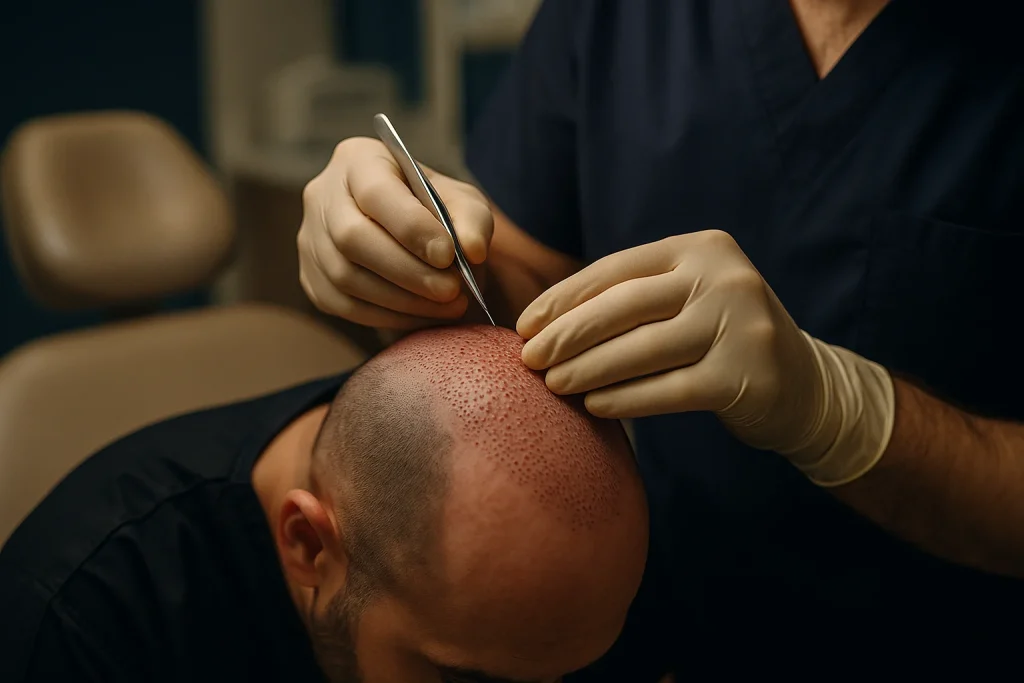
Hair implantation surgery places individual follicular grafts into carefully prepared recipient sites in areas affected by thinning or hair loss. The surgeon plans the hairline, angle, direction, and distribution before placing each graft to support a natural-looking pattern as the transplanted hair grows.
- Follicular grafts are naturally occurring groups of one to several hairs taken from the donor area.
- Recipient sites are planned before placement to guide the hairline, growth direction, and visual density.
- Grafts must be handled gently and placed at an appropriate depth to protect the follicles.
- Sapphire FUE and DHI are two techniques that may be used for extraction and graft implantation.
- Early aftercare helps protect both the donor area and newly placed grafts during healing.
01Hair Implantation Surgery: How Follicular Grafts Are Placed
Hair implantation surgery is a procedure in which healthy follicular grafts are moved from a donor area, usually the back or sides of the scalp, to areas with hair thinning or hair loss. The placement stage is highly detailed. Each graft is positioned to follow the planned hairline and the natural direction of the surrounding hair. Although graft placement may appear simple from a distance, it requires careful preparation, controlled handling, and a clear understanding of scalp anatomy.
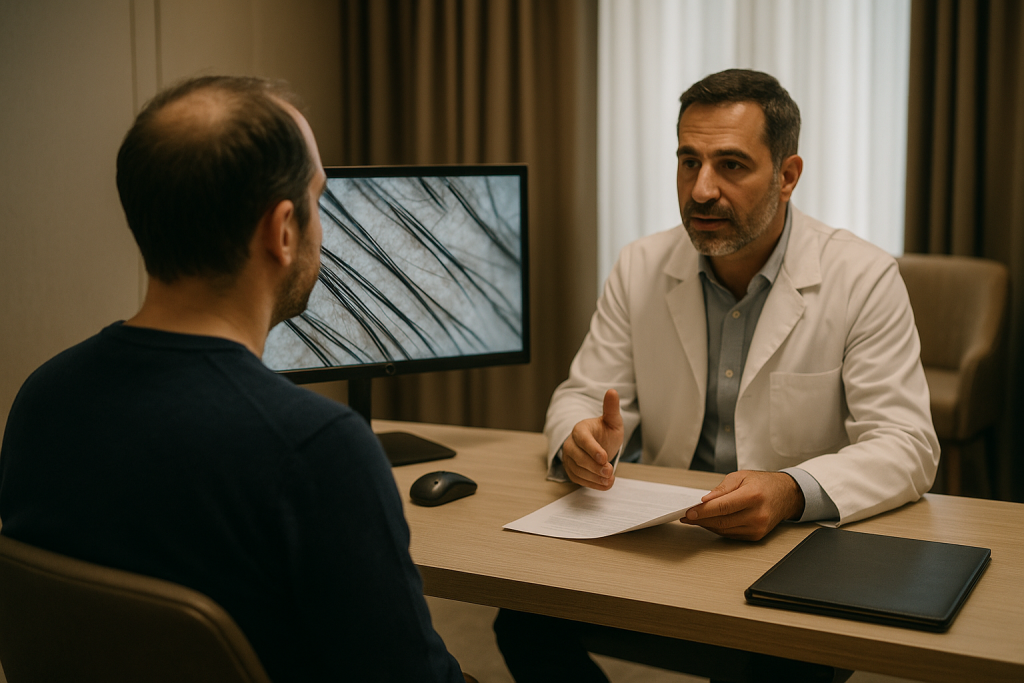
Before the grafts are placed, the medical team assesses the donor supply, the recipient area, hair characteristics, and the patient’s goals. The plan usually considers the shape of the face, existing hairline, hair thickness, curl pattern, and the likely future pattern of hair loss. A conservative and well-balanced design can be important because transplanted grafts are a limited resource and may need to blend with native hair over time.
On the day of the procedure, grafts are extracted, sorted, and kept protected until they are ready for implantation. The surgeon or trained clinical team then places them in the recipient area according to a structured pattern. The aim is not simply to fill empty spaces. The goal is to create a distribution that looks appropriate from the front, sides, and top while respecting the scalp’s natural growth angles.
02The Follicular Graft: What Is Actually Transplanted
A follicular graft is a small tissue unit containing one or more hair follicles. Hair on the scalp usually grows in natural groups called follicular units, rather than as completely separate single hairs. Some grafts contain one hair, while others may contain two, three, or occasionally more hairs. The number of hairs in each graft can influence where it is placed during the procedure.
Single-hair grafts are often useful in the front of a reconstructed hairline because they can create a softer transition between the forehead and denser hair behind it. Grafts containing more hairs may be placed further back, where they can add visual fullness. This does not mean every patient receives the same pattern. The graft plan depends on the donor characteristics, recipient area, and medical assessment.
During hair implantation surgery, graft quality is protected from the moment of extraction. Follicles should not be crushed, dried out, or left outside a controlled environment for longer than necessary. The team may separate grafts according to the number of hairs they contain and inspect them before placement. Gentle handling is important because the follicle is delicate, especially when it has been removed from the scalp.
03Selecting and Preparing the Donor Area
The donor area is the part of the scalp where grafts are collected. In many patients, it is located around the back and sides of the head because hair in this zone can be more resistant to common pattern hair loss. However, donor suitability varies. A doctor should assess the density, hair shaft quality, scalp condition, and available donor reserve before recommending a procedure.
With follicular unit extraction, often called FUE, individual follicular units are removed one by one using a small extraction tool. The donor hair is typically trimmed to allow the team to see the direction of each follicular unit. The extraction process is designed to spread harvesting across the donor zone rather than remove too many grafts from one small area. This can help maintain a more even appearance as the area heals.
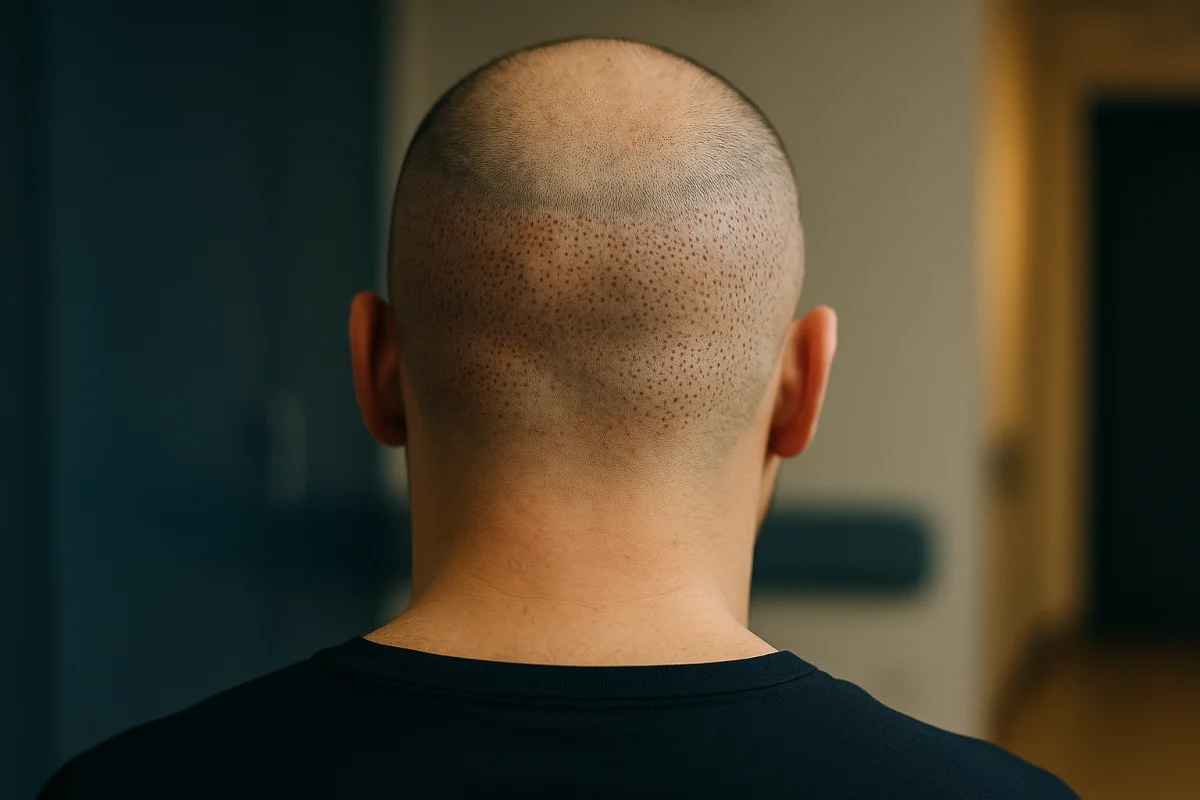
After extraction, small temporary marks are present in the donor area. These usually form tiny scabs as part of normal healing. The area may appear red or feel tender for a short period, depending on the individual and the number of grafts removed. Your medical team will provide instructions for washing, sleeping, activity, and signs that should be reported during the early recovery period.
04Designing the Hairline and Recipient-Site Pattern
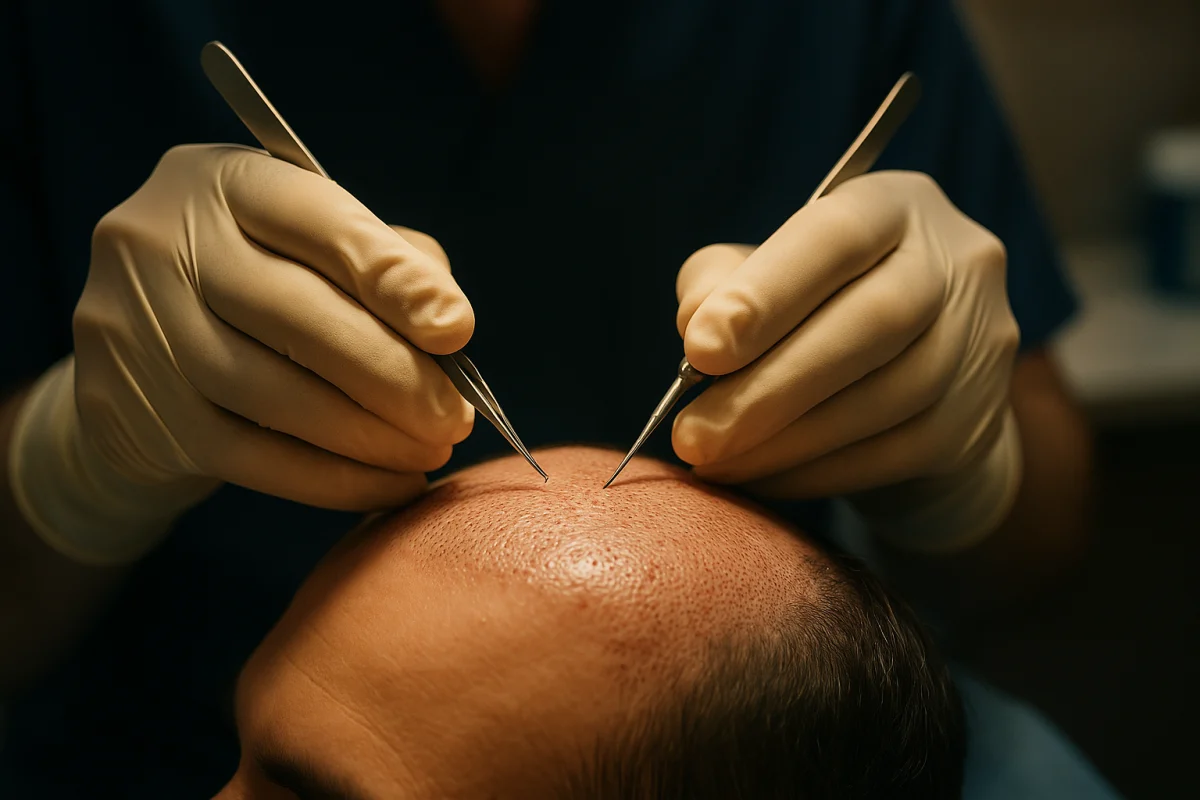
In hair implantation surgery, the recipient-site plan guides every graft that follows. Before implantation begins, the surgeon marks the proposed hairline and identifies areas where additional coverage may be needed. A natural design generally avoids an overly straight or very low hairline. Instead, it considers facial proportions, age, existing hair, and the possibility that hair loss may continue in untreated areas.
Recipient sites are small openings made in the scalp to receive the grafts. Their size, depth, spacing, and orientation should match the graft and the intended result. If sites are too close, there may be unnecessary stress on the local tissue. If they are too far apart, coverage may look sparse. The placement plan therefore balances visual density with scalp safety and the available donor supply.
The front hairline usually needs the greatest level of detail because it is highly visible. Hair naturally grows forward at the front before changing direction across the top and crown. The surgeon plans these transitions in advance, including small irregularities that can prevent the hairline from looking artificial. Existing native hairs are also considered so that transplanted grafts can blend with them as growth progresses.
05Placing Grafts at the Right Angle, Direction, and Depth
Once recipient sites are ready, the grafts are placed one at a time. Implantation tools are used to hold the graft gently and position it without putting pressure on the follicle itself. The graft must enter the recipient site at a suitable depth. Placement that is too shallow or too deep may affect healing and the appearance of the emerging hair, so this stage requires precision.
Angle and direction play a major role in how transplanted hair will sit after it grows. At the hairline, hairs generally emerge at a low, forward-facing angle. On the temples, crown, and upper scalp, the direction changes according to the natural hair pattern. The crown can be especially complex because the hair often forms a swirl. Placing grafts without respecting these patterns may create an unnatural result.
Density is also planned rather than applied evenly everywhere. In most cases, grafts are distributed to create the greatest visual benefit in priority areas. Hair shaft thickness, colour contrast between hair and scalp, curl, and the amount of existing hair can all influence how much coverage is seen. A doctor will confirm what level of coverage is clinically realistic for the available donor area.
06Sapphire FUE and DHI Placement Approaches
Sapphire FUE and DHI are techniques that may be used during a hair restoration procedure, but they describe different parts of the workflow. In Sapphire FUE, individual grafts are typically extracted using the FUE method, and recipient channels may be created with a sapphire blade. The blade is shaped to create precise recipient sites, which are then filled with prepared follicular grafts.
DHI generally refers to implantation with a specialised pen-like device that places a graft into the recipient area. The graft is loaded into the device and implanted with controlled direction and depth. As with other approaches, the outcome depends on more than the tool used. Appropriate planning, careful graft handling, donor management, and the experience of the clinical team remain essential considerations.
Neither technique is automatically the best choice for every person. The appropriate approach may depend on the treatment area, hair characteristics, degree of thinning, scalp condition, and donor availability. At Acibadem Hair Transplant Center, doctors review free online hair analysis submissions before discussing whether Sapphire FUE or DHI may be suitable. An online review is informative, while an in-person clinical assessment confirms the final plan.
07Protecting Newly Placed Grafts After Surgery
After hair implantation surgery, newly placed grafts need time to settle into the recipient sites. During the first days, the scalp may have redness, mild swelling, sensitivity, or small scabs. These effects can be part of the normal healing process, but every patient should follow the specific aftercare instructions given by their medical team. The recipient area should be protected from rubbing, scratching, pressure, and accidental contact.
Washing instructions are usually introduced in stages. Patients are often asked to use a gentle method and avoid direct high-pressure water on the grafts during the earliest period. Picking at scabs should be avoided because it can irritate the scalp and may disturb healing tissue. Sun exposure, intense exercise, swimming, and headwear may also need temporary adjustment based on the clinic’s guidance.
It is common for transplanted hairs to shed in the weeks after a procedure. This early shedding can be expected and does not necessarily mean that the follicles have been lost. The follicles remain beneath the skin and enter a resting phase before new growth begins. Growth timing and visible density vary between individuals, so follow-up reviews are useful for monitoring recovery and answering concerns.
08Healing in the Donor and Recipient Areas
The donor and recipient areas heal in different ways because they have undergone different steps. The donor area contains small extraction sites, while the recipient area contains the implanted grafts and newly created channels or implantation points. Both areas may develop small scabs and temporary redness. In most patients, the early visible signs reduce gradually as the scalp recovers, although healing speed can vary.
The donor area may feel tight, tender, numb, or itchy for a period after FUE extraction. Short hairs around the donor zone can make the area look thinner at first, especially while surrounding hair is still growing back. Because grafts are removed individually and distributed across the donor area, the aim is to preserve an even overall look. The final appearance should be assessed only after adequate healing and hair regrowth time.
Patients should contact their clinic if they experience symptoms that seem unusual, severe, or worsening, such as increasing pain, marked swelling, discharge, fever, or spreading redness. A qualified team can advise whether an assessment is needed. Acibadem Hair Transplant Center is a dedicated hair restoration clinic in Istanbul, licensed by the Turkish Ministry of Health, and provides 12 months of follow-up as part of its all-inclusive patient care pathway.
09Frequently Asked Questions
Is a hair transplant procedure painful?
Local anaesthesia is typically used so that patients should not feel sharp pain during the main extraction and implantation stages. Some people may feel brief discomfort during the anaesthesia process or pressure while the procedure is being performed. Needle-free anaesthesia is available at Acibadem Hair Transplant Center, and your medical team can explain the options and what to expect.
What does the donor area look like after a hair transplant?
After FUE extraction, the donor area usually has small temporary marks and scabs, along with possible redness or tenderness. These signs generally improve during the healing period, while the surrounding trimmed hair grows back. The final donor appearance depends on factors such as donor density, the number of extracted grafts, healing, and aftercare.
Is itching after a hair transplant normal?
Mild itching can occur as the donor and recipient areas heal, particularly when scabs are forming or loosening. Scratching or picking should be avoided because it can irritate the skin and may affect healing. If itching is intense, persistent, or accompanied by unusual redness, pain, or discharge, patients should contact their clinic for guidance.
Can I sleep on the donor area after a hair transplant?
Whether contact with the donor area is acceptable depends on the technique used, the stage of recovery, and your clinic’s instructions. In the early period, sleeping guidance usually focuses on avoiding pressure or friction on the newly implanted recipient grafts. Your medical team will confirm the safest sleeping position and when normal sleeping habits can be resumed.
This article is for general information only and is not a substitute for professional medical advice.
 06
06 12
12