
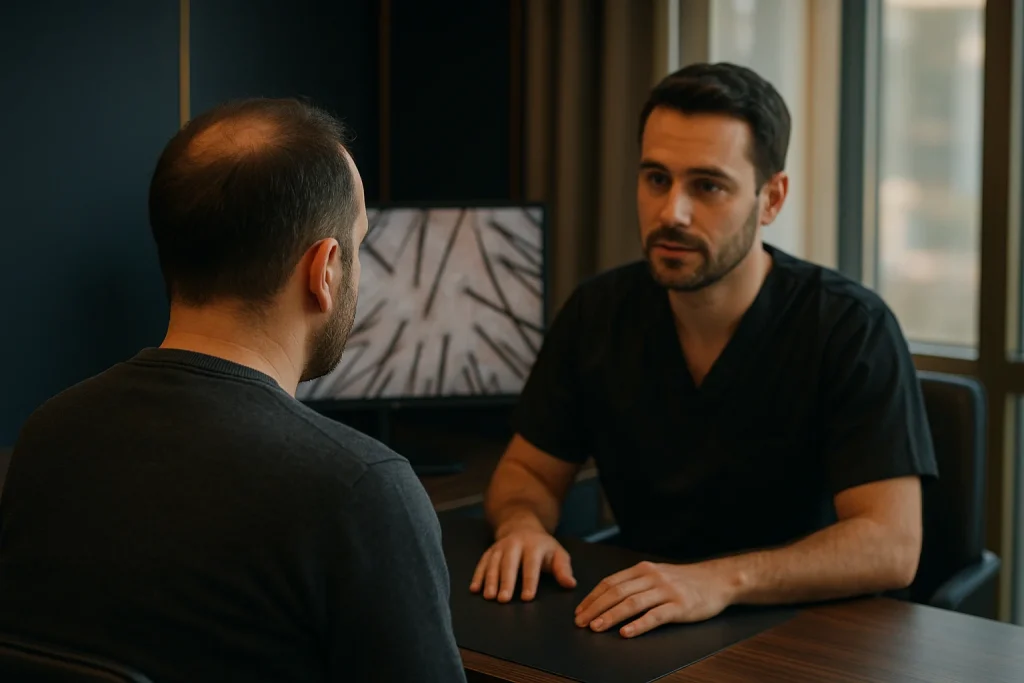
Hair implants for men can be an option for restoring areas affected by male pattern hair loss when the donor area has enough healthy follicles. Sapphire FUE and DHI are commonly considered techniques, but the most suitable approach depends on your hair-loss pattern, donor supply, goals, and doctor-led assessment.
- Male pattern hair loss usually needs a long-term plan that protects both the donor area and future appearance.
- Sapphire FUE and DHI can both be used to transplant healthy follicles, with the technique selected after assessment.
- A natural result depends on careful hairline design, appropriate graft distribution, and realistic density planning.
- Early shedding after a transplant is typically expected, while visible growth develops gradually over several months.
- A doctor-led consultation and ongoing hair-loss management can help support a well-planned result.
01Understanding Male Pattern Hair Loss and Candidacy
Male pattern hair loss is the most common reason international patients explore hair implants for men. It typically follows a recognisable pattern, such as recession at the temples, thinning through the front, or gradual loss around the crown. The process can continue over time, so treatment planning should consider not only the area that is thin today, but also how the hair may change in the years ahead.
A hair transplant moves follicles from a donor area, usually the back and sides of the scalp, to areas with reduced density. These donor follicles are generally more resistant to the effects associated with pattern hair loss. However, a transplant does not create new follicles or stop further thinning in untreated areas. Your doctor will assess whether the available donor supply can support your goals safely.
Good candidacy is based on several factors rather than age alone. These include the stability and pattern of hair loss, the quality and density of donor hair, scalp condition, medical history, hair characteristics, and expectations. Men with very early or rapidly progressing loss may need a staged plan, particularly if future thinning could affect the appearance of transplanted and non-transplanted hair together.
02Hair Implants for Men: Choosing Sapphire FUE or DHI
At Acibadem Hair Transplant Center, Sapphire FUE and DHI are available options for suitable patients. With Sapphire FUE, individual follicular units are extracted from the donor area and placed into carefully prepared recipient channels. Sapphire blades may allow precise channel creation, while the direction, angle, and placement plan remain central to the visual result.
DHI also involves extracting individual follicles, followed by implantation using a specialised implanter tool. This approach can offer controlled placement in selected areas, including zones where detailed direction and density work are needed. It is not automatically better for every person; the appropriate method depends on the scalp, hair type, treatment area, graft requirement, and the clinical plan created by the medical team.
The name of a technique is only one part of the decision. A well-executed procedure requires gentle graft handling, sensible extraction limits, and placement that follows the natural flow of existing hair. During an online analysis or consultation, doctors can discuss which option may be appropriate and whether one session, a future second session, or a conservative approach is more suitable.
03Designing a Natural Hairline and Using Grafts Wisely
Successful hair implants for men are usually designed around balance rather than simply creating the lowest possible hairline. A very low or overly straight hairline may look unnatural as a man ages, and it can use donor grafts that may be needed later. Doctors generally consider facial proportions, previous hairline position, age, hair calibre, and the likely progression of hair loss when creating the design.
The frontal hairline often receives the most attention because it frames the face. It normally needs a softer, irregular transition with finer single-hair grafts placed at the leading edge. Behind this zone, naturally occurring follicular groups can gradually build density. The temples, frontal forelock, mid-scalp, and crown each require different placement angles to reflect normal growth patterns.
Graft distribution is especially important when donor resources are limited. Restoring the front may create the greatest visible change for some patients, while others may prioritise the mid-scalp or crown. Dense packing across every area is not always possible or advisable. A responsible plan explains what can reasonably be covered now and how the donor area will be preserved for the future.
04What Happens Before a Male Hair Transplant
The process should begin with a medical review rather than a simple booking decision. A free online hair analysis at Acibadem Hair Transplant Center is reviewed by doctors, and WhatsApp replies are typically provided within around two hours. Clear photographs can help the team make an initial assessment, although an in-person evaluation and clinical examination remain important before treatment is confirmed.
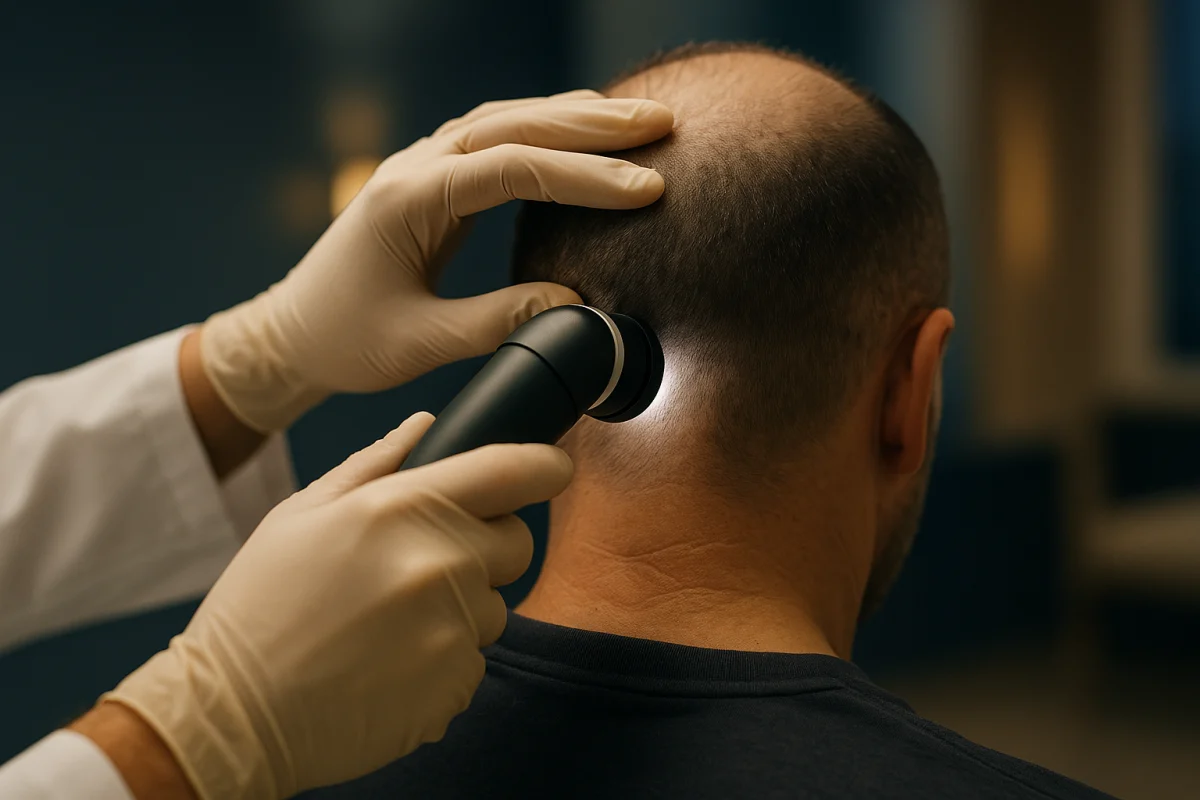
Your assessment may include examination of the donor area, recipient area, scalp health, hair shaft characteristics, and the pattern of miniaturisation. The clinician will also ask about health conditions, medicines, allergies, previous scalp procedures, and factors that could influence healing. Patients should disclose all relevant information honestly and follow pre-procedure instructions provided by their medical team.
Before surgery, the team normally discusses the treatment design, estimated graft range, expected coverage, and recovery requirements. This is a useful time to ask about incision placement, shaving requirements, anaesthesia, aftercare, and what the result may realistically achieve. Needle-free anaesthesia is available at the clinic for eligible patients, but your doctor will confirm whether it is appropriate in your case.
05The Procedure Day: Extraction, Placement, and Comfort
On the procedure day, the donor and recipient areas are prepared according to the agreed plan. Follicular units are extracted one at a time from the donor region, then sorted and kept under controlled conditions before implantation. The team aims to protect the grafts throughout each stage, as careful handling is important for their survival and later growth.
Local anaesthesia is commonly used so that patients are comfortable during the procedure. You may feel pressure, movement, or periods of stillness, but the experience varies between individuals. The clinical team will explain the expected schedule, breaks, and comfort measures. A long procedure can require patience, particularly when a large area needs grafts, so patients should arrive prepared to follow the team's instructions closely.
Implantation is performed according to the planned hairline, density, and direction. Each recipient site should be placed with attention to the existing hair and the local scalp angle. The goal is not merely to fill an area with grafts, but to create growth that blends as naturally as possible when the hair is worn in everyday styles.
06Recovery After Surgery and the Hair Growth Timeline
In most patients, the scalp has small scabs, redness, and temporary swelling during the early recovery period. These effects usually improve with time, but the exact course varies. The clinic provides a care kit and 12 months of follow-up as part of its all-inclusive packages, and patients should follow the washing, sleeping, activity, and scalp-protection guidance given by their medical team.
Transplanted hairs commonly shed during the first weeks after surgery. This temporary phase can be worrying, but it is typically part of the normal growth cycle and does not necessarily indicate that the follicles have been lost. New growth often begins gradually after several months, then becomes more noticeable as hair length, thickness, and coverage develop.
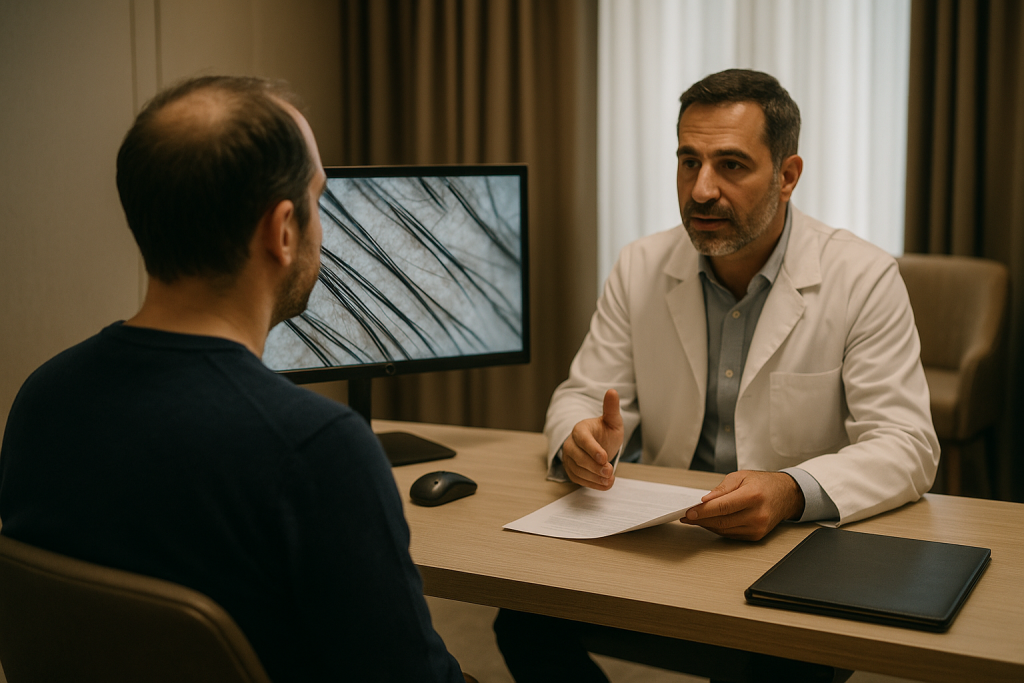
Final maturation takes time. Many patients see continued changes through the first year, and some areas can mature later than others, particularly the crown. At Acibadem Hair Transplant Center, graft survival is measured trichoscopically at month 12, with a documented 98% rate under written guarantee. Individual cosmetic appearance can still vary according to hair characteristics, healing, and ongoing native hair loss.
07Protecting Existing Hair After Hair Implants for Men
Hair implants for men address transplanted zones, but they do not automatically protect the original hair around them. If pattern hair loss continues, the difference between transplanted and native hair may become more visible over time. This is why a long-term plan often includes monitoring the existing hair and discussing clinically appropriate options with a qualified doctor.
Your doctor may recommend follow-up assessments to review scalp health, hair density, and the progress of native hair. Any medical or non-surgical treatment should be discussed individually because suitability depends on your health history and risk factors. It is important not to start, stop, or combine treatments based only on online advice or another person's experience.
Daily habits can also support recovery and general hair care. Patients are usually advised to avoid smoking, protect the scalp from strong sun exposure during the recommended period, and follow specific washing and activity instructions. Good nutrition and management of underlying health conditions may be relevant to overall wellbeing, although they cannot replace a carefully planned transplant or medical evaluation.
08Planning Your Istanbul Visit and Follow-Up Care
For international patients, practical arrangements can make the treatment experience less stressful. Acibadem Hair Transplant Center is a dedicated hair restoration clinic in Istanbul and is licensed by the Turkish Ministry of Health. The clinic has welcomed patients from 38 countries over 12 years, with care pathways designed to support patients travelling for treatment.
All-inclusive packages include VIP transfer, a 4-star hotel, a care kit, and 12 months of follow-up. Exact schedules depend on the treatment plan and travel arrangements, so patients should confirm how long they need to stay in Istanbul before booking flights. It is also sensible to allow enough time after the procedure before returning to demanding work, sports, or social commitments.
Choosing a clinic should involve more than comparing a procedure name or a headline offer. Ask who will review your case, how the donor area is assessed, what aftercare is included, and how results are monitored. A clear clinical explanation, transparent written terms, and realistic discussion of limitations can help you make an informed decision about treatment for pattern hair loss.
09The First 14 Days: Practical Aftercare Priorities
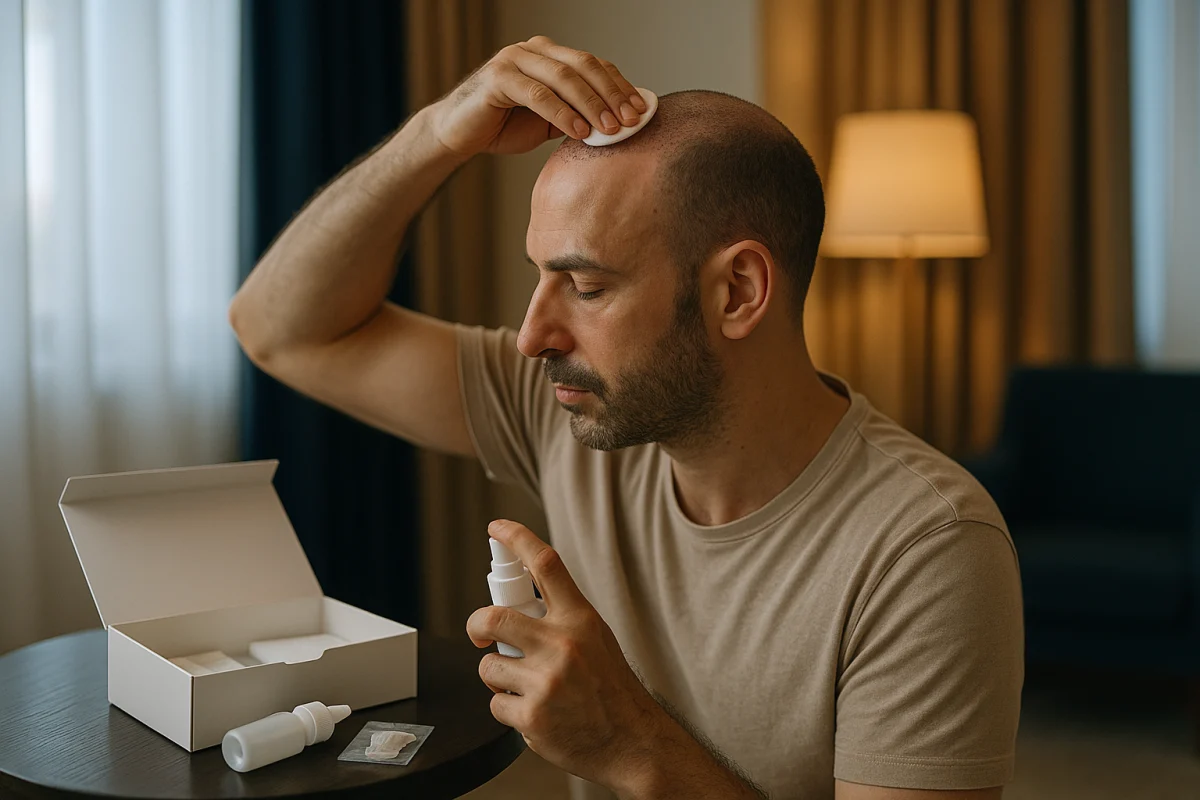
The first two weeks are mainly about protecting the implanted grafts while the scalp settles. Patients are usually asked to avoid rubbing, scratching, picking scabs, or allowing direct pressure on the recipient area. Clothing that can be opened at the front may be more practical than tops pulled over the head. Your clinical team will provide individual instructions on washing, moisturising or spraying the scalp if required, and handling the donor area.
Sleeping position matters during the early recovery period, especially if swelling is a concern. Patients may be advised to keep the head elevated and avoid contact between the grafted area and pillows for a specified number of nights. It is also sensible to plan a quiet start to the trip home, rather than arranging activities that require carrying heavy luggage, bending repeatedly, or rushing through a busy schedule.
Scabbing is a common part of healing. It should normally soften and clear gradually with the clinic’s recommended washing routine rather than being manually removed. Contact the medical team promptly if you have increasing pain, spreading redness, persistent bleeding, discharge, fever, or any concern that does not seem consistent with the recovery guidance you received. Remote follow-up can help international patients ask questions after they return home, but urgent symptoms should also be assessed locally when advised.
10Candidacy Nuances: Diffuse Thinning, Curly Hair, and Limited Donor Supply
Not every form of thinning is managed in the same way. Some men have a clearly defined receding hairline or crown pattern, while others have diffuse thinning across the top of the scalp. Diffuse thinning can require particularly careful assessment because existing hairs may still be fragile in the proposed recipient area. A doctor will examine the distribution and quality of these hairs before confirming whether transplantation, non-surgical management, delayed treatment, or a combined long-term plan is appropriate.
Hair characteristics can also affect planning. Fine hair may need more strategic placement to create the appearance of coverage, while thicker hair may provide greater visual volume with fewer grafts. Curly or wavy hair can offer useful coverage but may require specific extraction and placement considerations. Contrast between hair colour and scalp colour, the size of the thinning area, and the way a patient normally styles their hair may all influence the density goal and the expected cosmetic effect.
A limited donor area does not always mean that treatment is impossible, but it can change the priorities. The doctor may recommend concentrating grafts in the frontal zone, keeping the hairline higher and more conservative, or preserving donor reserves for a later stage. Extracting too aggressively can make the donor region look visibly thin, particularly when the hair is cut short. Responsible planning aims to improve the recipient area without creating a new aesthetic concern at the back or sides of the scalp.
11Travel Planning After a Hair Transplant in Istanbul
International patients should organise travel around recovery rather than treating the procedure as a short sightseeing visit. Before booking flights, confirm the recommended length of stay with the clinic, including any planned post-procedure check, first wash, or review appointment. Acibadem Hair Transplant Center’s all-inclusive packages include VIP transfer and a 4-star hotel, which can reduce the need to navigate Istanbul transport immediately after treatment.
For the return journey, choose comfortable clothing that will not touch or catch on the scalp when changing. Keep the care instructions, prescribed or recommended items, and the clinic’s contact details easy to access in hand luggage. If airport staff, security queues, or baggage handling create practical concerns, allow extra time and avoid lifting or forcing heavy cases when possible. The clinic can explain the travel precautions relevant to your treatment plan.
It is helpful to tell work, family, or travel companions that you may need a calm schedule for the first days after surgery. Visible redness, scabbing, or short donor-area hair can be noticeable temporarily, so some patients prefer to plan remote work or private time after returning home. Strong sun, swimming, high-intensity exercise, steam rooms, and activities with a risk of impact to the scalp are commonly restricted for a period set by the medical team. Always follow the specific timing given in your aftercare plan rather than relying on a general online timetable.
12Frequently Asked Questions
What does a hair transplant for men cost?
The cost of a male hair transplant varies because treatment needs differ widely. Factors can include the number of grafts, the technique selected, the size and complexity of the area, donor characteristics, and what is included in the care plan. A clinic should provide a personalised quotation after reviewing your hair-loss pattern and treatment goals rather than offering a universal price.
How long can a male hair transplant last?
Transplanted follicles from a suitable donor area are generally selected because they tend to be more resistant to pattern hair loss. For many patients, these hairs can continue growing long term, but no result can be described as permanent in exactly the same way for every individual. Native hair may still thin over time, so follow-up and a long-term management plan remain important.
What is the cost of 5,000 hair grafts?
A 5,000-graft treatment cannot be priced reliably without a clinical assessment, and not every patient is suitable for this number of grafts in one session. The cost may depend on donor safety, the area being restored, the method used, the clinical complexity, and included travel or aftercare services. Your doctor should first confirm whether this graft range is appropriate and safe for your donor area.
Do hair transplants for men really work?
A hair transplant can produce growing hair in areas affected by pattern loss when suitable donor follicles are transplanted and the procedure is appropriately planned. Results depend on graft survival, surgical technique, healing, hair characteristics, and continued loss of native hair, so outcomes vary between patients. At Acibadem Hair Transplant Center, graft survival is assessed with trichoscopy at month 12, with a documented 98% rate under written guarantee.
This article is for general information only and is not a substitute for professional medical advice.
 06
06 12
12