
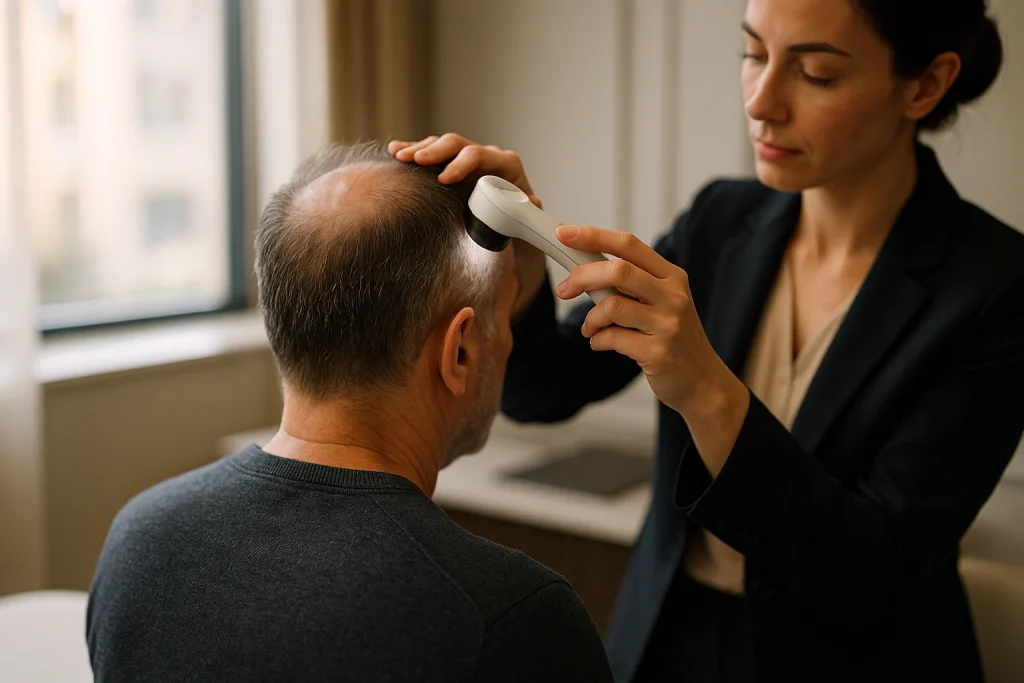
How long do hair transplants last? In most suitable patients, transplanted follicles from the permanent donor area can continue growing for many years and may last for life. However, a transplant does not stop future thinning in non-transplanted hair, so long-term planning, good donor management, and medical follow-up are important.
- Transplanted donor follicles are typically resistant to the pattern of hair loss affecting the scalp’s thinning areas.
- Visible growth usually begins gradually, while a more mature result is commonly assessed around 12 months after surgery.
- Native, non-transplanted hair can continue to thin over time, even when transplanted grafts remain healthy.
- A realistic hairline and careful donor-area planning can help preserve options for the future.
- Your surgeon can assess whether treatment for ongoing hair loss may support the long-term appearance of your result.
01How Long Do Hair Transplants Last? Growth and Longevity
How long do hair transplants last? The short answer is that transplanted hair commonly lasts for many years and, in many patients, can continue to grow throughout life. Hair transplantation moves follicles from a donor area, usually at the back and sides of the scalp, to areas affected by thinning. These donor follicles are selected because they are generally less sensitive to the hormonal process behind pattern hair loss. Once they have healed and established a blood supply in their new location, they usually keep the characteristics they had in the donor area.
It is important to understand what “lasting” means. A successful transplant does not create new follicles or permanently stop the cause of hair loss elsewhere on the scalp. It redistributes a limited supply of stronger donor follicles. This means the transplanted hair and your existing native hair may follow different paths over the years. The grafts may remain stable, while surrounding natural hair gradually becomes finer or thinner.
Long-term satisfaction therefore depends on more than whether grafts grow. It also depends on a well-designed hairline, an appropriate number of grafts, careful distribution of density, and a plan that considers possible future hair loss. A conservative approach can be especially important for younger patients or people whose pattern of thinning is still changing. Your doctor will review these factors before recommending treatment.
The final appearance is also influenced by hair calibre, curl pattern, colour contrast between the hair and scalp, the size of the thinning area, and the quality of the donor supply. Two people with the same number of grafts may see different-looking coverage because their hair characteristics differ. For this reason, an honest consultation should focus on what is realistically achievable over the long term rather than promising a fixed cosmetic outcome.
02Why donor-area follicles can keep growing
Most hair transplants for pattern hair loss use the principle of donor dominance. Follicles taken from the permanent zone at the back and sides of the scalp tend to retain their relative resistance after they are moved. In simple terms, the follicle carries much of its biological behaviour with it. This is why hair from the donor area can continue to produce hair in the recipient area after transplantation.
Resistance does not mean that every graft behaves identically forever. Hair growth is biological, and individual factors can affect the appearance and performance of transplanted hair. Ageing, inflammatory scalp conditions, illness, nutritional problems, smoking, trauma, and some medications may affect the hair or scalp environment. A doctor should review relevant health information before surgery and during follow-up if there are concerns about unexpected shedding or poor growth.
The donor area must be assessed carefully because it is not unlimited. Overharvesting can make the donor zone look thinner and can reduce the available supply for any future procedure. An experienced surgical plan considers the density and stability of the donor hair, the likely progression of hair loss, and the amount of coverage needed. The aim is typically to create a natural-looking improvement while protecting the donor area.
At Acibadem Hair Transplant Center in Istanbul, doctor-reviewed planning is part of the process before a procedure is considered. The clinic offers Sapphire FUE and DHI techniques, which are methods for extracting and placing follicles. The right technique depends on the patient’s scalp, hair characteristics, recipient-area needs, and the doctor’s assessment; no technique can guarantee the same result for every person.
03The hair transplant growth timeline from surgery to month 12
The first days after a transplant are focused on healing rather than visible growth. Tiny scabs may form around the implanted grafts, and temporary redness or swelling can occur. Following the post-procedure washing and protection instructions is important during this stage. Patients should not judge the result by how the scalp looks in the first few weeks, because the grafts are still settling into the recipient area.
A temporary shedding phase is common after transplantation. The visible hair shafts in the grafts may fall out during the first weeks, while the follicles remain beneath the skin and enter a resting phase. This can be worrying if it is unexpected, but it is usually a normal part of the growth cycle. Your clinical team can explain what is typical for your individual recovery and when a review is needed.
New hairs often begin to emerge gradually over the following months. Early growth may look fine, uneven, or less dense than expected because follicles do not all wake up at the same time. As the hair shafts mature, they can become thicker and easier to style. Most patients see progressive changes rather than a sudden final result, so patience is an important part of the process.
A more meaningful assessment is commonly made at around month 12, although some areas and some patients may continue maturing beyond this point. At Acibadem Hair Transplant Center, graft survival is measured by trichoscopic assessment at month 12, with a documented 98% rate under its written guarantee. This documented clinic measure should not be interpreted as a promise that every individual will have the same cosmetic density or long-term hair-loss pattern.
04What can affect the long-term appearance of your result
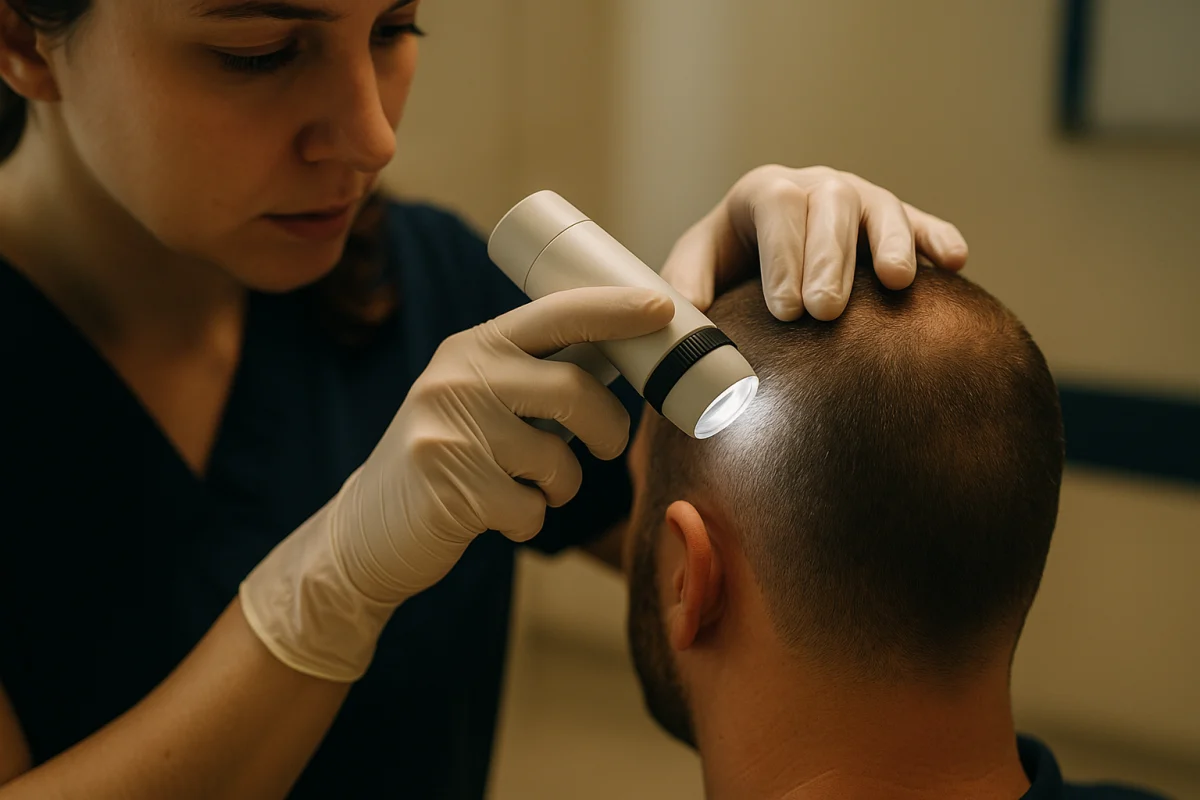
The quality of the surgical plan has a major influence on longevity. Grafts need to be placed at suitable angles, directions, and densities so that the hair blends naturally with existing growth. The front hairline needs particular care because it remains visible as a person ages. A hairline that is too low or too dense for future hair loss may look less natural later and may use donor grafts that could be needed elsewhere.
Ongoing pattern hair loss is one of the most important long-term factors. A transplant fills selected thinning areas, but it does not stop genetically susceptible native hair from miniaturising. If the hair behind or around the transplanted area continues to thin, the contrast between transplanted and native hair can become more noticeable. This is why surgeons often discuss both the current hair loss pattern and the possible future pattern before recommending surgery.
Your general health and scalp health also matter. Conditions that cause hair shedding, active scalp inflammation, or poor wound healing may need medical attention before a procedure. Maintaining a balanced diet, avoiding smoking where possible, protecting the scalp from injury, and following aftercare instructions may support recovery. These steps support healing, but they cannot replace appropriate clinical planning or change the natural limits of the donor area.
Some patients may be suitable for doctor-prescribed or doctor-recommended approaches intended to support native hair. Whether any treatment is appropriate depends on medical history, the cause of hair loss, potential side effects, and personal goals. Do not start or stop any medical treatment based only on general information online. A qualified doctor should confirm which options, if any, are suitable for you.
05Can a hair transplant look good decades later?
How long do hair transplants last in practical, cosmetic terms? Many transplanted follicles may still be growing 10, 20, or more years later, but the overall appearance at that time depends on how the rest of the scalp has changed. A person can have durable transplanted hair while also developing further thinning in untreated zones. This is why the longevity of grafts and the longevity of the hairstyle are related but not exactly the same question.
Twenty years after a hair transplant, the result may still look natural if the original design respected the patient’s future hair-loss risk and donor supply. The hairline may have been placed conservatively, the grafts may have been distributed in a way that creates useful coverage, and native hair loss may have been managed where medically appropriate. However, some people may choose an additional procedure later if there is enough safe donor hair and if further thinning changes the balance of the result.
Age-related changes can also alter the appearance of hair without meaning the transplant has failed. Hair shafts may become finer with age, grey hair can change perceived density, and the scalp may become more visible under bright light. Styling choices and haircut length can influence the look of coverage as well. These changes are normal considerations in long-term planning and should be discussed openly before a first procedure.
A long-term strategy is especially valuable for patients with extensive loss or a strong family history of progressive balding. It may be better to prioritise the frontal hairline and mid-scalp rather than attempt maximum density across a very large area in one session. Your doctor will confirm what can be achieved safely based on your donor assessment and the pattern of loss visible at consultation.

06How to protect grafts and support native hair after surgery
The period immediately after surgery is important because the grafts are vulnerable to friction, pressure, and accidental removal. Patients are typically given instructions on sleeping position, washing, physical activity, headwear, sun exposure, and when to return to normal routines. Following these instructions carefully may reduce avoidable complications. If you notice unusual pain, increasing redness, discharge, fever, or other concerning symptoms, contact your clinical team promptly.
After the early healing stage, ongoing care focuses on scalp health and monitoring hair loss. Gentle cleansing, protection from strong sun exposure, and sensible lifestyle habits can support the condition of the scalp and hair. There is no single shampoo, supplement, or cosmetic product that can guarantee the survival of grafts or prevent genetic hair loss. Be cautious about products that make claims that sound certain or immediate.
Regular photo comparisons or clinical reviews can help show whether native hair is changing over time. This may be useful because gradual thinning is not always obvious day to day. If a patient notices new recession, widening of the crown, or increased shedding, a doctor can assess possible causes. Early review may provide more choices than waiting until the thinning becomes advanced.
For international patients, continuity of care is important even after returning home. Acibadem Hair Transplant Center includes 12 months of follow-up in its all-inclusive packages, alongside VIP transfer, a 4-star hotel, and a care kit. The clinic also provides a free online hair analysis reviewed by doctors, with WhatsApp replies typically within around two hours, helping patients begin the discussion before travelling to Istanbul.
07Choosing a plan that respects your future donor supply
A hair transplant should be viewed as a long-term restoration plan, not simply a one-day procedure. The number of grafts required depends on the size of the thinning area, the desired coverage, hair characteristics, donor density, and whether future loss is likely. A larger graft number does not automatically mean a better or longer-lasting result. Using grafts wisely is often more valuable than placing the maximum possible number at the first session.
FUE and DHI are both established placement approaches, but longevity is not determined by a technique name alone. It depends on the quality of follicle extraction, graft handling, recipient-site planning, implantation, post-procedure care, and the patient’s biological response. Sapphire FUE may be selected for its recipient-channel approach, while DHI may be considered for controlled implantation in certain cases. Your doctor will explain the recommended method and its limitations.
Cost should also be considered carefully, but it should not be the only deciding factor. A quote for a procedure may vary according to the graft requirement, the level of hair loss, the technique, the clinical plan, and what services are included. Patients should ask what is included in writing, who performs each stage of care, how graft numbers are assessed, and what follow-up is available. A reliable clinic should provide clear answers without promising a guaranteed cosmetic result.
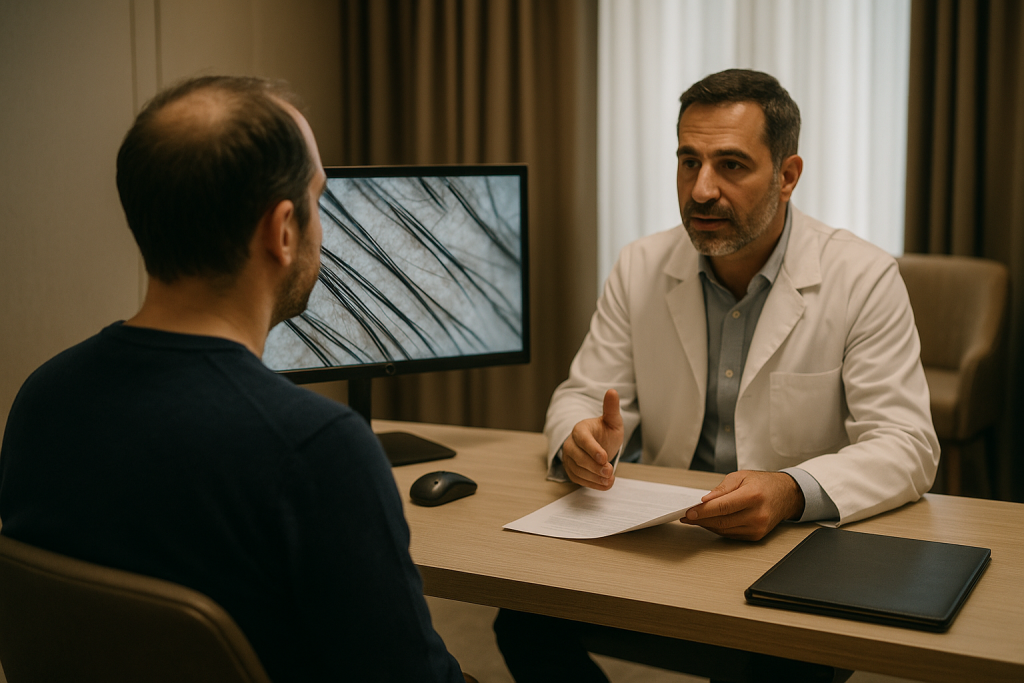
Before deciding, arrange a professional assessment and discuss your expectations honestly. Bring information about previous treatments, family hair-loss patterns, medical conditions, and medications. The goal is to understand whether transplantation is suitable now, what level of coverage is realistic, and how the plan could continue to look balanced if your native hair changes in the years ahead.
08Frequently Asked Questions
What may happen 20 years after a hair transplant?
In many patients, transplanted follicles can still be growing 20 years later because they were taken from a relatively hair-loss-resistant donor area. However, non-transplanted hair may continue to thin, and age-related changes can affect overall density. A well-planned hairline and careful use of donor grafts can help the result remain balanced over time.
What is the cost of 3,000 hair grafts?
The cost of 3,000 grafts varies between clinics and depends on the surgical plan, technique, included services, donor assessment, and follow-up arrangements. It is not safe to estimate a personal price without an assessment, as 3,000 grafts may not be appropriate or sufficient for every patient. A doctor-reviewed consultation can confirm the likely graft range and provide a clear written quote.
Can I still become bald after having a hair transplant?
You can continue to lose native, non-transplanted hair after a transplant if pattern hair loss progresses. The transplanted donor hair is typically more resistant, but it does not protect the rest of the scalp from thinning. Your doctor may discuss a long-term monitoring plan and, where appropriate, options to support native hair.
What are the possible disadvantages of a hair transplant?
Possible downsides include cost, recovery time, temporary shedding, visible redness or scabbing, and the risk that the result may not meet expectations. There are also clinical risks such as infection, swelling, scarring, uneven growth, donor-area thinning, or a look that becomes less balanced if native hair loss continues. A careful assessment, qualified clinical care, and realistic planning can help reduce risks, but no procedure is risk-free.
This article is for general information only and is not a substitute for professional medical advice.
 06
06 12
12