
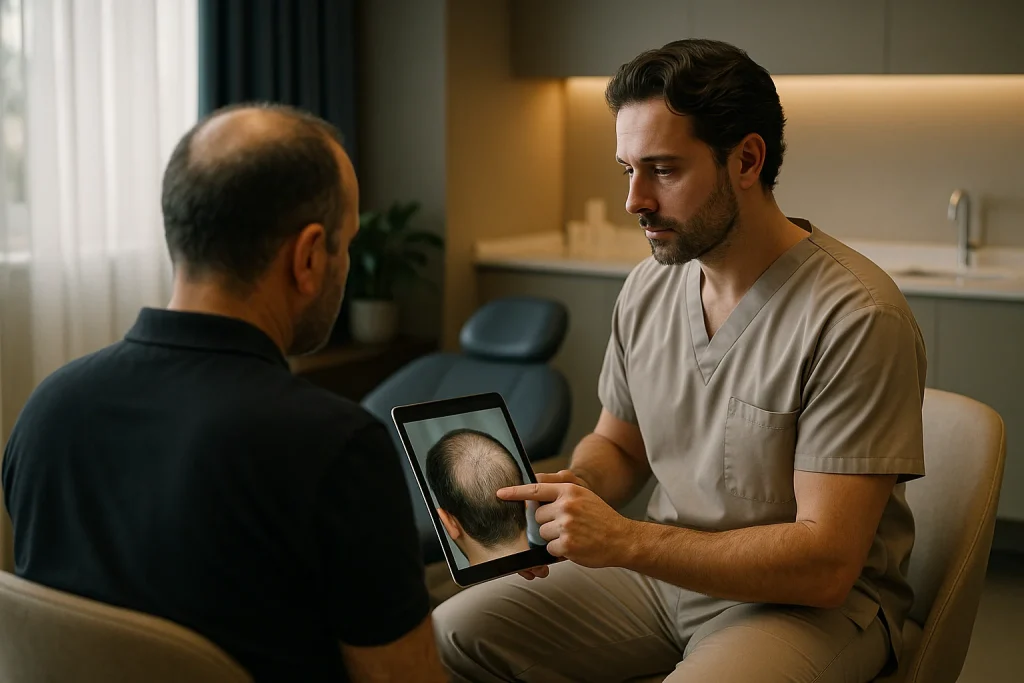
Hair implants usually refer to surgical hair transplantation, where healthy follicles are moved from a donor area to thinning or bald areas. Modern methods such as Sapphire FUE and DHI can create natural-looking growth when the procedure is planned carefully and performed for a suitable candidate. Your doctor will confirm the most appropriate technique, graft plan, and expected result after assessing your hair and scalp.
- Hair transplantation redistributes your own permanent donor follicles rather than creating new hair follicles.
- Sapphire FUE and DHI are modern implantation approaches, but the best choice depends on your donor area, hair loss pattern, and goals.
- Transplanted hairs commonly shed first and then begin growing again, so visible change develops gradually over several months.
- A transplant can have limitations and risks, including temporary shock loss, scarring, uneven density, and the possible need for future treatment.
- A safe plan includes a medical assessment, realistic graft planning, clear aftercare, and long-term monitoring of ongoing hair loss.
01Hair Implants: Understanding Modern Hair Transplant Methods
Hair implants are commonly used to describe a hair transplant procedure. In clinical practice, this treatment involves taking naturally growing hair follicles from a donor area, usually the back and sides of the scalp, and placing them into areas affected by thinning or baldness. The follicles are your own tissue, which is why the treatment is different from an artificial implant or a removable hair system. When the transferred follicles establish a blood supply and continue their normal growth cycle, they can produce hair in their new location.
Modern hair transplantation is based on careful follicular unit handling. A follicular unit is a small natural group of one to several hairs. The medical team removes, prepares, and places these units with attention to direction, angle, spacing, and the quality of the recipient scalp. These details influence whether the result blends naturally with existing hair. A hairline also needs individual planning because its shape, density, and position should suit the person’s facial features, age, and likely future hair loss pattern.
The term can cause confusion because there is no single procedure called a hair implant. Patients may be offered follicular unit extraction, often called FUE, or direct hair implantation, often called DHI. Both methods use the patient’s own follicles. The difference is mainly in how grafts are extracted and how they are placed. A consultation should explain the method in simple terms rather than presenting one technique as automatically right for every person.
Hair loss may have many causes, including hereditary pattern hair loss, hormonal changes, inflammation, nutritional factors, traction, stress-related shedding, and some medical conditions. A transplant is generally considered for stable or reasonably predictable hair loss when a person has a suitable donor supply. It may not be the first step for sudden shedding, an active scalp disease, or hair loss caused by an untreated medical issue. Your doctor may recommend further evaluation before discussing surgery.
02How follicular grafts are taken and placed
Every transplant plan begins with the donor area. For most patients, this is the hair around the lower back and sides of the scalp, where follicles are often more resistant to hereditary thinning. The donor area is assessed for density, hair thickness, curl, colour contrast with the scalp, and the number of grafts that can be removed conservatively. Protecting the appearance of this area is important because overharvesting can leave it looking sparse.
In FUE, individual follicular units are removed with a small punch instrument. With Sapphire FUE, sapphire blades may be used to create recipient channels before the grafts are placed. These channels are designed according to the intended direction and angle of growth. The technique can be useful when a doctor wants detailed control over site creation across a wider thinning area. The exact tools and sequence vary according to the surgical plan.
In DHI, extracted grafts are generally implanted with a specialised placement device that can create the recipient site and place the graft in one controlled movement. This approach may be considered when precise placement is needed between existing hairs or in selected areas such as the frontal zone. However, DHI is not simply a better version of FUE. Extraction is still typically performed using FUE principles, and the appropriate method depends on the scalp, graft characteristics, planned density, and the clinician’s approach.
The number of grafts is not the only measure of a successful procedure. A high graft count does not always mean a denser or more natural outcome. The safe donor limit, the surface area to cover, the size of the hair shaft, and the patient’s future hair loss all matter. A responsible plan aims to balance cosmetic improvement today with the need to preserve donor hair for the future.
03Choosing between Sapphire FUE and DHI
Sapphire FUE and DHI are both established modern options, but they are used for different planning needs. Sapphire FUE may be suitable for patients who need coverage over a broader area or who require carefully prepared channels for a structured placement pattern. DHI may be useful for selected patients who need controlled graft placement in a smaller area or around existing native hairs. Your doctor will confirm whether either method is medically and cosmetically appropriate.
The choice should not be based only on a technique name, social media images, or a promise of a certain density. A reliable assessment looks at the cause and stage of hair loss, the health of the scalp, the donor reserve, previous procedures, and the patient’s expectations. For example, a person with advanced hair loss may need a staged approach, while someone with early thinning may first benefit from diagnosis and non-surgical management.
Hair calibre can also affect planning. Thick, wavy, or curly hair may create more visual coverage than fine, straight hair, even when a similar number of grafts is used. Skin-to-hair colour contrast, crown swirl direction, and the presence of existing miniaturising hair can change how a surgeon distributes grafts. These factors explain why two people with the same graft number may not have the same visual result.
At Acibadem Hair Transplant Center, a dedicated hair restoration clinic in Istanbul licensed by the Turkish Ministry of Health, patients can receive a free online hair analysis reviewed by doctors. Photos are useful for initial planning, but they cannot replace an in-person assessment on the procedure day. Questions about technique, graft range, hairline design, and long-term hair loss should be discussed clearly before treatment begins.
04Who may be a suitable candidate for hair restoration
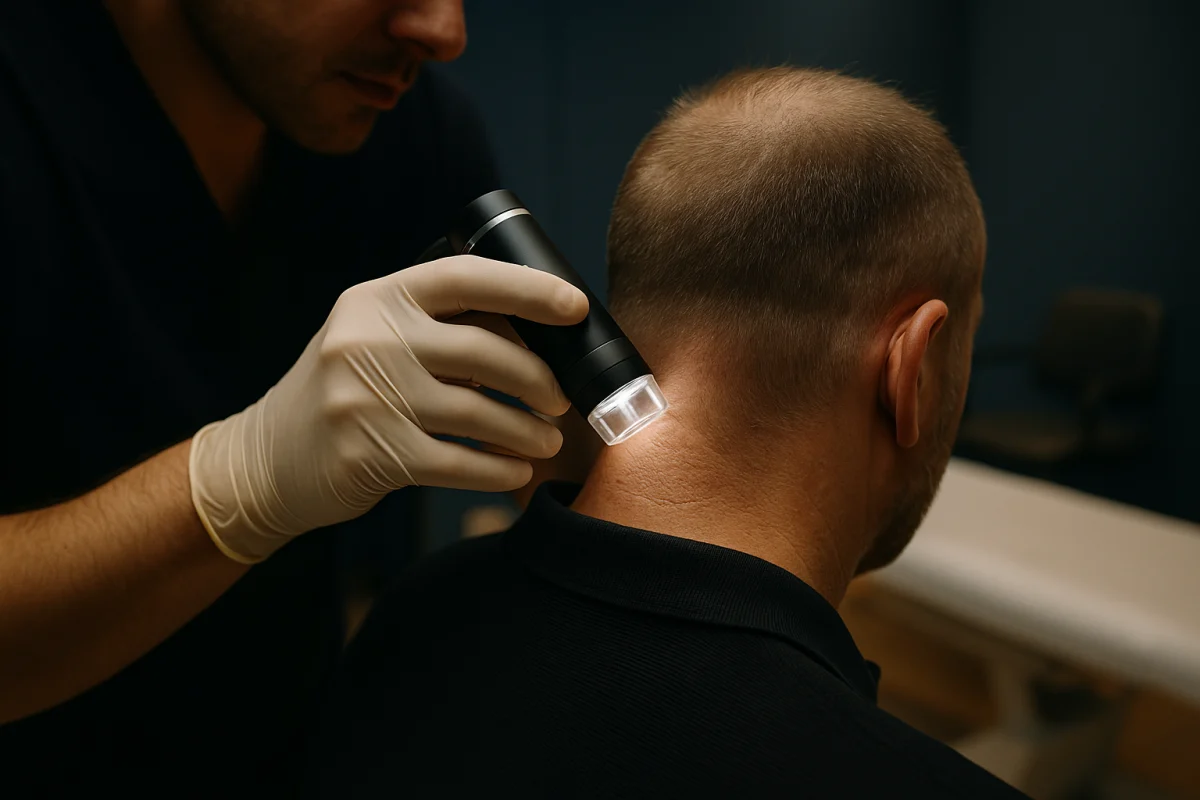
A suitable candidate usually has a clear diagnosis, a healthy enough scalp for surgery, and sufficient donor hair for the area they hope to improve. Hereditary pattern hair loss is one of the most common reasons people explore transplantation. In these cases, donor follicles may retain their growth characteristics after relocation. Even so, the native hair around them may continue to thin over time, which is why long-term planning is essential.
Age alone does not determine suitability. What matters more is whether the hair loss pattern appears stable enough to design a sensible hairline and graft distribution. In younger adults, particularly those with rapidly changing hair loss, an overly low or dense frontal hairline may not remain appropriate in later years. A conservative plan can help preserve grafts and create a result that ages more naturally.
Some people may need to postpone treatment. Active scalp infection, uncontrolled health conditions, certain bleeding risks, recent acute shedding, or untreated inflammatory scalp disorders can require medical attention first. People who have had prior transplants also need a careful donor review, because the available reserve may be reduced. Full medical history and any regular medicines should be disclosed during the assessment.
Candidates should also be ready for the recovery period and gradual timeline. A transplant does not immediately create a full head of visible hair. It requires aftercare, patience, and realistic expectations about density. Hair implants can improve the appearance of thinning areas, but they cannot always restore the density someone had before hair loss began.
05What happens on treatment day and during recovery
On the day of treatment, the team usually reviews the agreed plan, takes clinical photographs, prepares the scalp, and confirms the hairline and recipient areas. Local anaesthesia is commonly used so that the patient is awake but the treatment areas are numb. Needle-free anaesthesia may be available for patients who are anxious about injections, although your medical team will explain whether it is suitable for you. The procedure duration depends on the treatment area and graft plan.
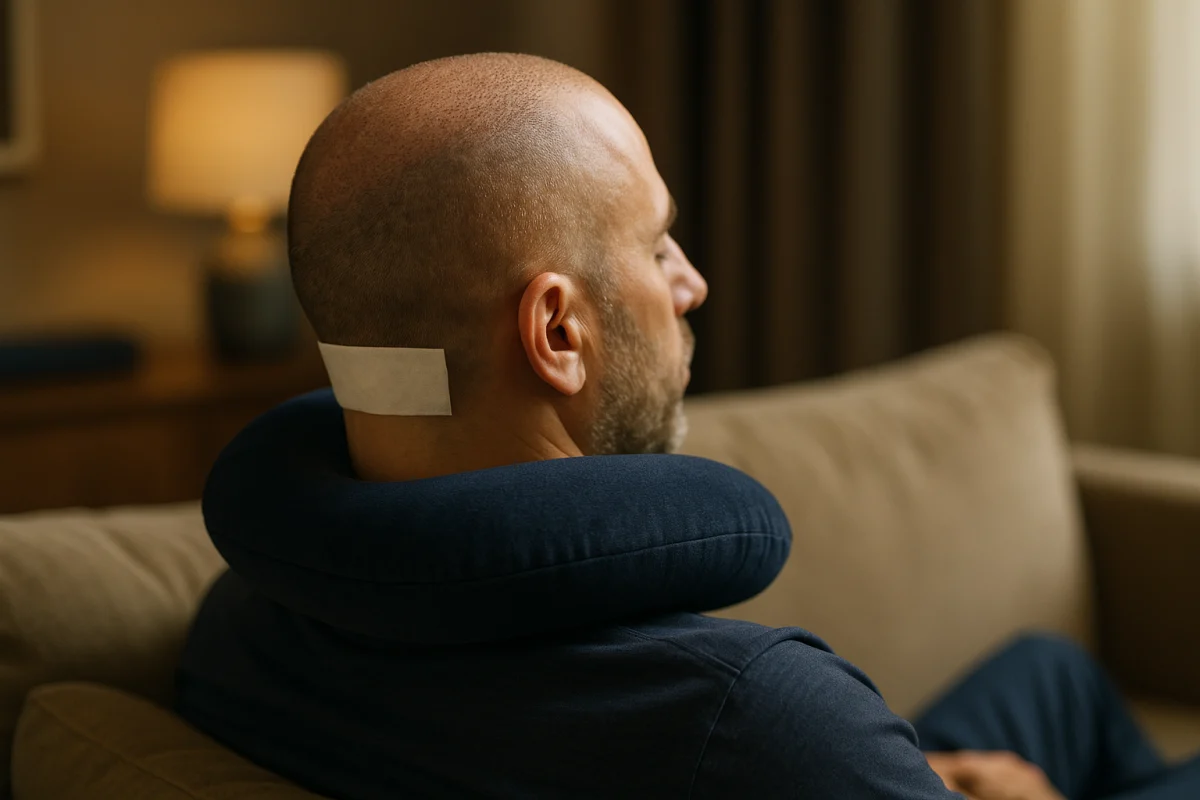
After extraction, grafts are kept in controlled conditions while the recipient sites are prepared and implantation takes place. The team gives instructions on how to protect the grafts in the first days. This normally includes guidance on sleeping position, washing, touching the scalp, physical activity, sun exposure, and when to return to routine activities. Following these instructions carefully can support normal healing and reduce avoidable trauma to newly placed grafts.
Small crusts, redness, swelling, tightness, itching, and tenderness can occur during early recovery. These effects are often temporary, but each person heals differently. It is important not to pick crusts or rub the recipient area. Patients should contact their medical team promptly if they have significant pain, increasing redness, discharge, fever, or any concern that does not match the post-procedure guidance they received.
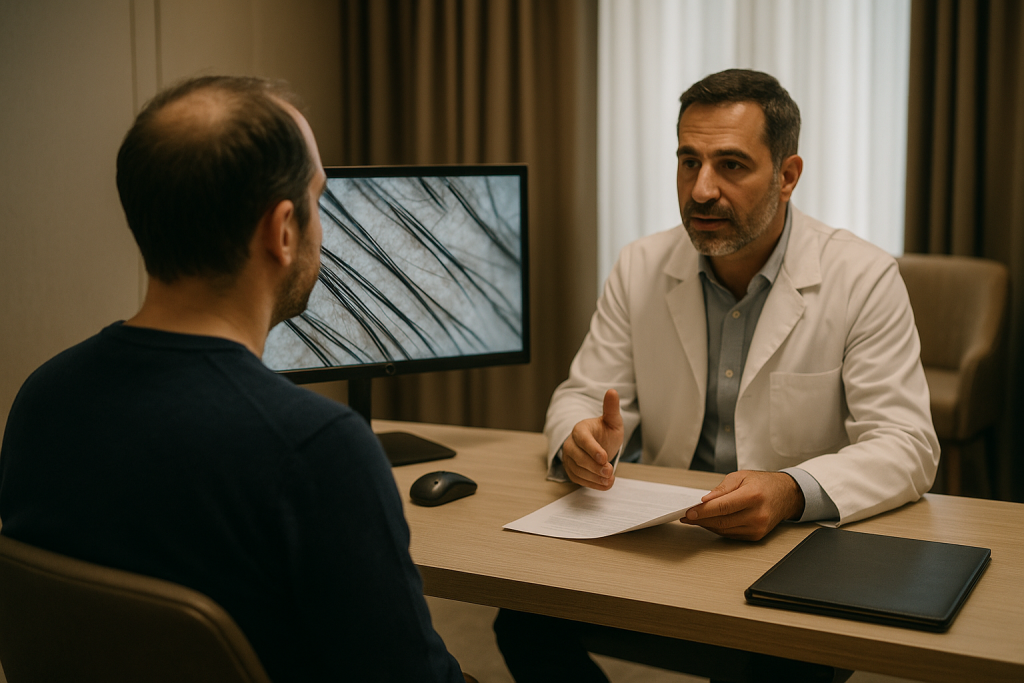
Transplanted shafts often shed within the first weeks after surgery. This stage can be concerning, but it is commonly part of the normal cycle while the follicle remains beneath the skin. New growth generally begins gradually after several months. Hair quality and coverage continue to mature over time, with assessment often taking place around month 12. At Acibadem Hair Transplant Center, results are measured through trichoscopic graft survival at month 12, with a documented 98% rate under written guarantee.
06Benefits, limits, and possible downsides
The main potential benefit of a transplant is that it uses your own growing follicles to improve coverage in a chosen area. When placement follows the natural direction of hair growth and the donor area is managed carefully, the result can look subtle rather than obviously surgical. It can also reduce the daily effort associated with camouflage methods. However, the procedure is best viewed as a long-term appearance treatment rather than a cure for every type of hair loss.
There are important limits. A transplant does not stop hereditary hair loss in non-transplanted hair, and it does not increase the total number of donor follicles available. If hair loss progresses, the contrast between transplanted and native hair may change. Some patients may need medical management, styling changes, or a future procedure, depending on their individual condition. Your doctor can discuss options, but no approach can guarantee that future hair loss will not occur.
Possible downsides include temporary swelling, discomfort, itching, crusting, numbness, and temporary shedding of existing hair, sometimes called shock loss. Less common but clinically relevant risks can include infection, prolonged redness, scarring, poor growth, an unnatural hairline, uneven density, or donor-area thinning if planning is not conservative. The likelihood of specific complications depends on individual health, scalp condition, technique, and aftercare.
A thoughtful conversation about hair implants should include these limitations before any decision is made. Ask who will assess you, what part of the procedure is performed by the medical team, how the donor area will be protected, and what follow-up is provided. Clear consent means understanding both the potential benefits and what may not be achievable with your available donor hair.
07Planning costs, travel, and long-term follow-up
The cost of a hair transplant varies widely between countries and clinics. It can be influenced by the number of grafts, the complexity of the case, the technique used, the clinical team, aftercare, and what is included in the treatment package. A price alone does not show whether a plan is medically suitable or whether the donor area is being managed safely. It is better to request a written outline of what is included and how the graft plan was determined.
For international patients, travel arrangements and continuity of care are practical considerations. Acibadem Hair Transplant Center offers all-inclusive packages that include VIP transfer, a 4-star hotel, a care kit, and 12 months of follow-up. The clinic has welcomed patients from 38 countries over 12 years. These services can make the travel process easier, but they do not replace the importance of medical suitability and clear communication with the treating team.
Before booking, patients should ask about consultation arrangements, the expected treatment timeline, the washing and recovery instructions, and how follow-up questions will be handled after returning home. At Acibadem Hair Transplant Center, WhatsApp replies to free online hair analysis requests are typically provided within around two hours. A doctor-reviewed analysis can give an initial indication of options, while the final clinical decision is confirmed through medical assessment.
Long-term follow-up is especially valuable because the visible outcome develops slowly. Comparing standardised photographs and, where appropriate, trichoscopic measurements can help the team monitor graft survival and ongoing native hair changes. A good plan focuses not only on the procedure day, but also on healing, realistic timing, and protecting the appearance of both the donor and recipient areas over the years.
08Frequently Asked Questions
How long do transplanted hair implants last?
Transplanted follicles are usually taken from donor areas that are more resistant to hereditary thinning, so they may continue growing for many years. However, results vary, and the surrounding non-transplanted hair can still thin over time. Long-term appearance depends on donor quality, surgical planning, healing, and the progression of your underlying hair loss.
How much do hair implants usually cost?
There is no single usual price because treatment costs vary by country, clinic, graft plan, technique, medical support, and included services. A meaningful quote should explain what it covers rather than focusing only on a graft number. Your clinic should assess your donor area and goals before confirming a plan and cost.
What are the potential disadvantages of a hair transplant?
A transplant involves a recovery period and may cause temporary redness, swelling, crusting, itching, numbness, or shedding. Other possible risks include scarring, infection, uneven density, poor graft growth, donor-area thinning, or an unnatural-looking result if the plan is unsuitable. It also does not stop future loss of existing hair, so long-term planning remains important.
What does 5,000 hair grafts cost in the USA?
The cost for 5,000 grafts in the USA can vary substantially because clinics may charge differently by graft, session, technique, location, and level of medical support. A large graft number is not appropriate for every patient and should not be selected by price alone. Ask for an itemised written quote and a medical explanation of whether that graft count is safe for your donor area.
This article is for general information only and is not a substitute for professional medical advice.
 06
06 12
12