

pregnancy hair loss during or after pregnancy is often temporary, particularly when it is linked to hormonal changes, physical stress, or a recent birth. Hair transplantation is typically postponed until after pregnancy, breastfeeding where relevant, and the active shedding phase, so a doctor can confirm that hair loss has stabilised and assess the underlying cause.
- Pregnancy-related shedding can have several causes, including hormonal changes, nutritional concerns, thyroid conditions, illness, and stress.
- Postpartum shedding commonly becomes noticeable a few months after delivery and usually improves gradually over time.
- Hair loss can also occur after miscarriage because hormonal change and emotional or physical stress may shift hairs into the shedding phase.
- A hair transplant is generally considered only after temporary shedding has settled and medical causes have been reviewed.
- A doctor-reviewed hair analysis can help distinguish diffuse shedding from longer-term pattern hair loss before any procedure is planned.
01Hair Loss During Pregnancy and Transplant Timing
Hair changes are common around pregnancy, but the pattern is not the same for everyone. Some people notice fuller-looking hair during pregnancy, while others experience diffuse shedding, reduced density, or a wider parting. The phrase pregnancy hair loss during this period can describe several different situations, so it is important not to assume that every type of shedding has the same cause or needs the same response. A medical assessment is especially useful when hair loss is sudden, patchy, severe, or associated with other symptoms.
For most patients, a hair transplant is not the first step when shedding starts in pregnancy or soon after birth. Transplantation redistributes existing permanent donor hairs; it does not correct a temporary shedding trigger, replace all lost density, or treat an untreated medical condition. During an active shedding phase, it can also be difficult to judge the long-term pattern of hair loss and to plan a natural distribution of grafts.
Timing matters because many pregnancy-related changes improve without surgery. Doctors will usually want to understand whether the hair loss is diffuse across the scalp, concentrated at the temples or crown, or present in distinct patches. They may also ask about childbirth, miscarriage, breastfeeding, recent illness, medications, weight changes, dietary intake, family history, and symptoms that could suggest an underlying condition. This approach helps protect both health and realistic expectations about any future procedure.
02Understanding pregnancy hair loss during pregnancy
In uncomplicated pregnancies, hormonal changes may keep more hairs in the growing phase for longer. This is one reason some people feel that their hair is thicker or sheds less while pregnant. However, this is not universal. pregnancy hair loss during pregnancy can occur when another trigger affects the normal hair cycle, such as significant nausea and reduced food intake, iron deficiency, thyroid imbalance, infection, high fever, major emotional stress, or a pre-existing hair condition.
Hair shedding should be assessed in context. A few hairs lost while washing or brushing is part of the normal hair cycle, while noticeable thinning, a rapidly widening part, or hair coming out in larger amounts may feel alarming. The scalp itself can provide useful clues. Itching, scaling, redness, pain, broken hairs, or clearly round bald areas are not typical descriptions of simple diffuse postpartum shedding and should be discussed with a qualified clinician.
Pregnancy is not the right time to begin elective hair transplantation. In addition to the need for careful medical decision-making, elective procedures and non-essential medicines are commonly deferred during pregnancy. Your doctor will confirm what is appropriate for your health situation. The priority is to identify potentially reversible causes, support overall wellbeing, and monitor whether the shedding pattern changes after delivery.
03Telogen effluvium: the temporary shedding pattern
Telogen effluvium is a form of diffuse shedding that occurs when more hairs than usual shift from the active growth phase into the resting, or telogen, phase. The hairs do not usually fall out immediately after the trigger. Instead, shedding often becomes visible around two to three months later, which can make the connection with childbirth, illness, surgery, stress, or hormonal change less obvious.
After a triggering event, people may notice increased hair on their pillow, in the shower drain, or in their brush. The loss is usually spread across the scalp rather than confined to one sharply defined area. Although the volume of shedding can be distressing, follicles generally remain present. In many cases, the cycle gradually normalises once the trigger has passed, though visible improvement in density can take longer than the shedding itself.
Telogen effluvium can sometimes reveal an underlying tendency toward pattern hair loss that had previously been less noticeable. For example, shedding may make a genetically sensitive parting or crown appear more visible. This does not mean that every patient will develop permanent thinning. It does mean that a doctor’s examination, and sometimes trichoscopic scalp assessment, can be helpful before deciding whether the condition is temporary, ongoing, or combined with another type of hair loss.

04Postpartum shedding: when it starts and peaks
Postpartum hair shedding is often linked to the fall in pregnancy hormones after birth. Many patients begin to notice it between two and four months after delivery. It commonly peaks around three to four months postpartum, but the exact timing and intensity can vary. Starting to shed at two months can therefore be within the expected range, particularly if hair seemed fuller or less prone to shedding during pregnancy.
The process may continue for several months before it slows. In most patients, visible recovery is gradual rather than immediate, because hair grows slowly and short regrowing hairs need time to add coverage. Some people notice fine new hairs along the hairline or parting as the cycle restarts. Changes in sleep, recovery from delivery, breastfeeding demands, stress, illness, and nutritional needs may also affect how this period feels.
It is sensible to seek medical advice rather than simply wait when shedding is extreme, lasts longer than expected, leaves obvious bald patches, or comes with fatigue, palpitations, unexpected weight change, menstrual concerns after recovery, or scalp symptoms. These features do not diagnose a particular problem on their own, but they may lead a clinician to consider iron status, thyroid function, nutritional factors, inflammatory scalp conditions, or other causes.
05Hair loss after miscarriage or pregnancy loss
Hair loss can occur after miscarriage or another pregnancy loss. A rapid hormonal change, physical recovery, blood loss where applicable, illness, disrupted sleep, and emotional stress can all act as possible triggers for diffuse shedding. The experience can be particularly difficult because it may arise while a person is already coping with grief. Seeking support from a healthcare professional is appropriate both for physical symptoms and for emotional wellbeing.
As with postpartum telogen effluvium, shedding after a loss may not appear immediately. It can become noticeable several weeks or a few months after the event because of the normal delay in the hair cycle. The hair loss is often temporary, but its course differs between individuals. A clinician can help determine whether the pattern fits temporary diffuse shedding or whether another condition needs to be excluded.
Avoiding blame is important. Hair shedding after pregnancy loss is not a sign that someone has done something wrong, and it does not automatically indicate a permanent hair problem. Gentle hair care can reduce avoidable breakage, but it will not change the underlying hair-cycle timing. A medical review is advisable if the loss is patchy, severe, prolonged, or accompanied by symptoms such as significant tiredness, dizziness, scalp irritation, or signs of hormonal imbalance.
06When a hair transplant may be considered
A hair transplant may be considered later if hair loss proves stable and there is a suitable donor area, but it is typically not planned during pregnancy, in the early postpartum shedding period, or while the cause of hair loss remains uncertain. The safest timing depends on the individual pattern, general health, current medications, breastfeeding status where relevant, and whether active shedding has stopped. Your doctor will confirm whether surgery is medically appropriate.
For patients who have experienced pregnancy hair loss during the postpartum period, a waiting period can be valuable. It allows time to see how much density returns naturally and prevents planning a procedure around a temporary low point. Surgeons also need to assess the likely future pattern of hair thinning, as graft placement should be designed with long-term coverage in mind rather than only the appearance of the scalp on one difficult day.
If longer-term pattern hair loss is identified after recovery, a consultation can discuss non-surgical and surgical options in a medically responsible order. A transplant is not always necessary, and it may not be suitable for everyone. Good planning includes checking donor hair quality, reviewing scalp health, discussing realistic density, and explaining that existing non-transplanted hair can continue to change over time.

07What happens in a responsible transplant assessment
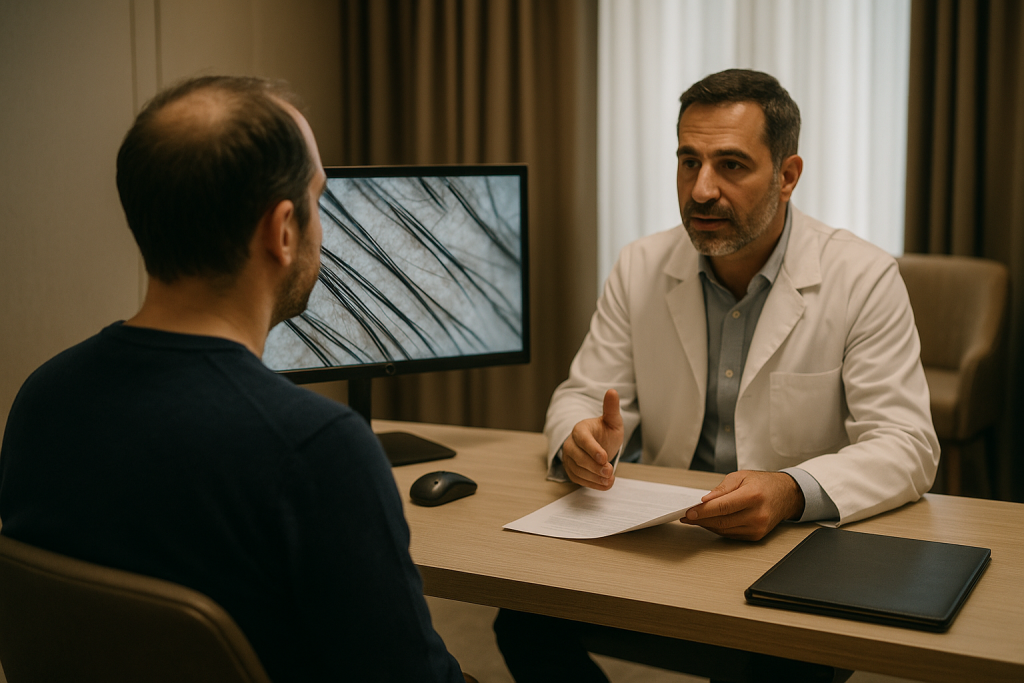
A responsible assessment starts with diagnosis rather than graft numbers. The clinician will review the timing of shedding, the areas affected, previous hair density, family history, health history, and any recent events that could alter the hair cycle. Close scalp examination or trichoscopy may help identify differences in hair shaft thickness, follicle activity, inflammation, scarring, or miniaturisation. This information is important because transplant surgery is planned differently for diffuse shedding than for stable pattern hair loss.
At Acibadem Hair Transplant Center in Istanbul, patients can request a free online hair analysis that is reviewed by doctors. Images and medical history shared remotely can provide an initial direction, although an online review cannot replace an in-person medical examination when one is needed. The team typically replies on WhatsApp within about two hours, helping international patients understand what information may be required before considering travel or treatment.
When transplantation is appropriate, the clinic offers Sapphire FUE and DHI techniques, with needle-free anaesthesia available. Treatment planning should still be individual rather than based only on a technique name. Acibadem Hair Transplant Center is licensed by the Turkish Ministry of Health and provides all-inclusive packages that can include VIP transfer, a 4-star hotel, a care kit, and 12 months of follow-up. The clinic documents trichoscopic graft survival at month 12, with a written guarantee describing a 98% rate under its stated conditions.
08Practical care while waiting for the hair cycle to recover
While waiting for a clearer pattern, focus on scalp comfort and overall recovery rather than urgent cosmetic decisions. Use gentle washing and brushing habits, limit tight styles that pull on the hair, and reduce unnecessary heat or chemical processing if the hair feels fragile. These steps cannot stop telogen shedding, because those hairs have already entered a resting phase, but they may reduce breakage and make the hair easier to manage.
Nutrition is important during pregnancy recovery and after pregnancy loss, but supplements should not be started simply because hair is shedding. Excessive or unsuitable supplementation can be unhelpful, and some products are not appropriate during pregnancy or breastfeeding. A doctor can advise whether blood tests, dietary review, or treatment for a confirmed deficiency is needed. It is also important to discuss any topical or oral hair-loss treatment with a qualified clinician before use.
Taking regular photographs in consistent lighting and with the same hair part can be more informative than checking the scalp repeatedly throughout the day. Monthly images may help show whether the parting is stabilising, whether short regrowth is appearing, or whether the affected area is expanding. If you are concerned about future transplant timing, save these observations for your consultation. They can help the doctor distinguish a temporary shedding episode from a more persistent pattern and advise on the next sensible step.
09Frequently Asked Questions
What is telogen effluvium, and can it happen while pregnant?
Telogen effluvium is diffuse hair shedding caused by more hairs than usual moving into the resting phase of the hair cycle. The shedding commonly becomes visible two to three months after a trigger. It can occur during pregnancy if there is a trigger such as illness, nutritional deficiency, thyroid imbalance, or major stress, although many people instead notice reduced shedding during pregnancy.
At what point is postpartum hair loss usually at its strongest?
Postpartum shedding often starts between two and four months after delivery and typically peaks around three to four months postpartum. The timing and amount of shedding vary, and recovery is usually gradual. A clinician should assess severe, patchy, or persistent hair loss.
Is shedding hair after a miscarriage considered normal?
Diffuse shedding can occur after miscarriage or pregnancy loss because hormonal changes, physical recovery, blood loss where applicable, and stress may affect the hair cycle. It may not become noticeable until weeks or months later. Medical advice is recommended if shedding is severe, prolonged, patchy, or associated with other symptoms.
Can postpartum hair loss begin two months after giving birth?
Yes, postpartum hair loss can begin at around two months after delivery. This timing can fit the delayed shedding pattern seen after hormonal changes following birth. If you have concerns about the amount or pattern of loss, a doctor can check for other contributing causes.
This article is for general information only and is not a substitute for professional medical advice.
 06
06 12
12