

Hair fall and vitamin d can be connected when a true vitamin D deficiency is present, but low vitamin D is not the only possible cause of shedding or thinning. Before hair transplant surgery, your doctor may recommend blood tests and correction of any confirmed deficiency so your scalp and general health can be assessed properly.
- Vitamin D deficiency may contribute to diffuse shedding in some patients, but it does not explain every type of hair loss.
- A blood test is the reliable way to identify vitamin D deficiency; symptoms alone cannot confirm it.
- Vitamin D supplements should be taken only at a dose advised by a qualified clinician, especially if you take regular medicines.
- Correcting a deficiency may support healthier hair growth over time, but it does not replace treatment for genetic hair loss.
- Hair transplant planning should include a review of the cause, pattern, stability, and medical factors behind hair loss.
01Why vitamin D matters before hair transplant surgery
Many people research hair fall and vitamin d when they notice extra hairs on their pillow, in the shower, or while brushing. Vitamin D has an important role in general health and is involved in normal skin and hair follicle function. A low level may be one factor that contributes to diffuse shedding in some people. However, hair loss is complex, and vitamin D is rarely the only explanation for thinning hair.
Before a hair transplant, the main clinical question is not simply whether your vitamin D level is low. Your doctor will consider the pattern of hair loss, how long it has been happening, your family history, scalp findings, medical history, medicines, nutrition, and the quality of the donor area. This broader assessment helps distinguish temporary shedding from progressive conditions such as androgenetic alopecia, also called pattern hair loss.
A confirmed deficiency is usually worth addressing as part of good pre-operative care. It may support overall wellbeing and remove a possible contributor to shedding. Still, taking vitamin D should not be seen as a way to create new follicles in areas where follicles have permanently miniaturised or disappeared. A transplant consultation should remain focused on realistic goals, donor preservation, and a safe surgical plan.
02Hair fall and vitamin d: what the evidence can tell us
Researchers have identified associations between low vitamin D levels and certain hair and scalp conditions, including some cases of diffuse shedding and autoimmune hair loss. An association does not always prove that one factor directly causes the other. People with hair loss may also have stress, illness, dietary changes, hormonal factors, inflammatory scalp problems, or inherited sensitivity of hair follicles at the same time.
Vitamin D receptors are found in the skin and play a role in the normal cycling of hair follicles. This biological link helps explain why doctors may check vitamin D in selected patients with unexplained shedding or recognised risk factors for deficiency. The test result must always be interpreted alongside the clinical picture. A mildly low result does not automatically mean that it is the main reason for hair loss.
Pattern hair loss is one of the most common reasons people seek transplantation. In this condition, genetically susceptible follicles gradually become finer under hormonal influence. Correcting vitamin D deficiency can be sensible for general health where needed, but it typically does not stop this inherited process on its own. Your doctor may discuss medical management and long-term planning before deciding whether a transplant is suitable.
03When low vitamin D may be relevant to shedding
Diffuse shedding means hair appears to come out from many areas of the scalp rather than mainly from the temples, hairline, or crown. Some people notice a wider parting, lower ponytail volume, or more visible scalp without clear bald patches. This pattern can occur with telogen effluvium, a condition in which more follicles than usual move into the shedding phase after a trigger such as illness, major stress, rapid weight change, surgery, childbirth, or nutritional imbalance.
Low vitamin D can be more likely in people with limited sun exposure, darker skin living in regions with less sunlight, certain digestive or absorption disorders, dietary restrictions, obesity, or some long-term medical conditions. These factors do not diagnose deficiency. They simply help a clinician decide whether testing may be appropriate. A laboratory blood test is more reliable than trying to judge vitamin D status by scalp symptoms.
Other deficiencies and health conditions may also be relevant when shedding is widespread. Depending on your history, a doctor may consider iron stores, thyroid function, vitamin B12, zinc, protein intake, and other factors. Testing should be targeted rather than automatic. Unnecessary supplements can be unhelpful, and high doses of some nutrients may cause side effects or interfere with the interpretation of your health concerns.

04How doctors assess vitamin D and hair loss
The standard way to assess vitamin D status is a blood test for 25-hydroxyvitamin D, often written as 25(OH)D. The laboratory result is reviewed using its reference range, your symptoms, your medical background, and the season or circumstances in which the sample was taken. Your doctor will confirm whether a result represents deficiency, insufficiency, or an adequate level for you.
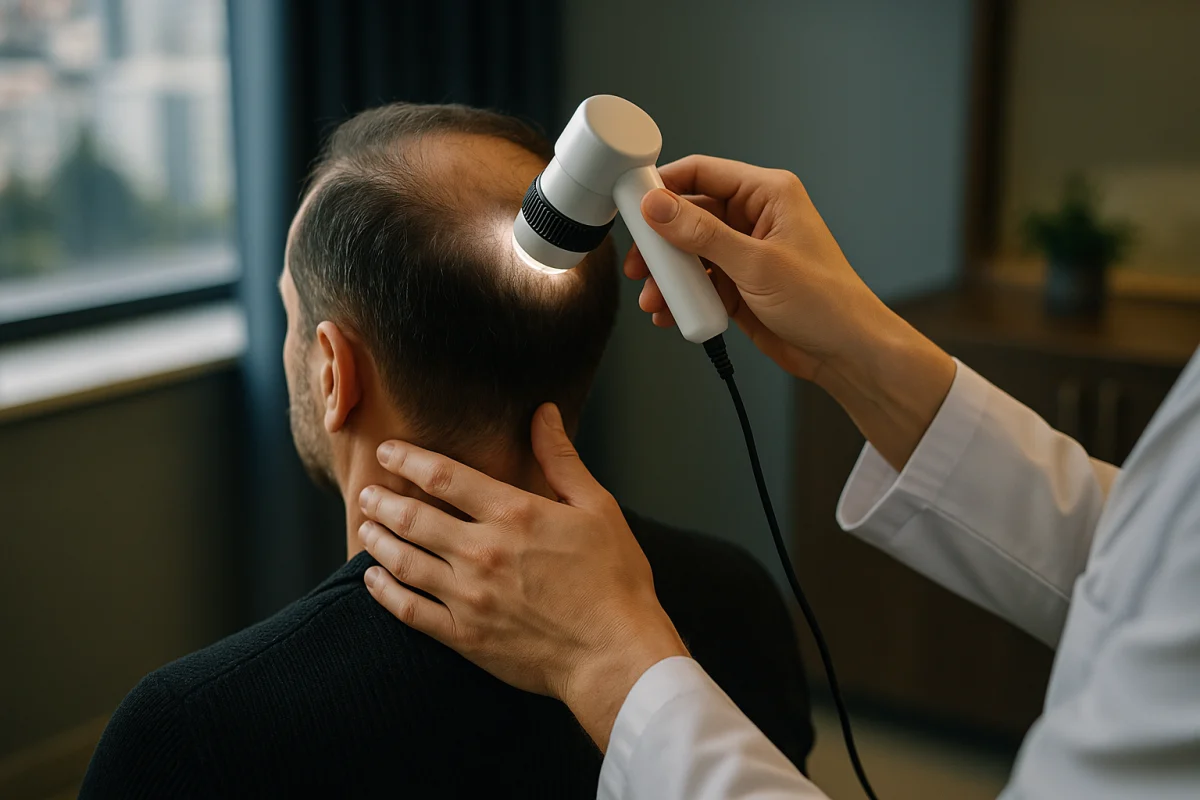
At a hair consultation, scalp examination is equally important. The clinician may assess the distribution of thinning, hair shaft diameter variation, signs of inflammation, the density of the donor zone, and whether follicles appear stable. Trichoscopic examination can provide a closer view of hair and scalp features. It cannot replace blood testing, but it can help identify whether the pattern looks more consistent with genetic thinning, diffuse shedding, alopecia areata, or another condition.
For patients concerned about hair fall and vitamin d, it is useful to bring previous blood results, a list of supplements, and details of regular medicines to the consultation. Mention recent illnesses, operations, major emotional stress, restrictive diets, and changes in weight. These details can help the doctor make a safer and more meaningful assessment than relying on a single vitamin result.
05Correcting vitamin D deficiency safely before surgery
If a qualified clinician confirms vitamin D deficiency, they may recommend a supplement plan and, in some cases, dietary or lifestyle measures. The appropriate dose, formulation, and duration vary according to the blood level, medical history, kidney function, calcium status, absorption issues, and other medicines. Some people need a short correction phase followed by a maintenance dose, while others require a different approach.
It is important not to self-prescribe very high doses because vitamin D is fat-soluble and can build up in the body. Excess vitamin D may raise calcium levels and can lead to symptoms such as nausea, constipation, thirst, frequent urination, weakness, or confusion. In more serious cases, high calcium can affect the kidneys and heart rhythm. A clinician may recommend repeat testing to check that treatment is working safely.
Food sources and sensible daylight exposure can contribute to vitamin D intake, but they may not be enough to correct a confirmed deficiency in every patient. Dietary sources include oily fish, egg yolk, and fortified foods, depending on local availability and dietary preference. Avoid using sun exposure as a reason to skip scalp protection. Excess ultraviolet exposure can damage the skin, and a hair transplant recipient should follow specific post-procedure sun-care instructions.
06Vitamin D, medicines, and diltiazem
People who take diltiazem should not start high-dose vitamin D without discussing it with the clinician who manages their medication. Diltiazem is commonly prescribed for heart-rate, blood-pressure, or heart-rhythm conditions. Although a major direct interaction is not typically expected with standard vitamin D replacement, your full medical situation matters, particularly if you have calcium problems, kidney disease, or are taking other medicines or supplements.
Vitamin D can affect calcium balance, and calcium levels may be especially important for patients with certain medical conditions. Your prescribing doctor or pharmacist can check your medicine list, including calcium products, diuretics, antacids, multivitamins, and herbal supplements. They can advise whether blood monitoring or a specific vitamin D dose is appropriate. Never stop diltiazem or change its dose because of hair loss concerns without medical guidance.
Before hair transplant surgery, disclose diltiazem and every other regular medication to the medical team. This allows the team to review your medical suitability and provide instructions that are appropriate for the procedure. Medication decisions are individual and should be confirmed by the doctor responsible for your care. A hair transplant clinic should not replace follow-up with your cardiologist, general practitioner, or prescribing clinician.
07Can restoring vitamin D reverse hair loss?
If low vitamin D is contributing to temporary diffuse shedding, correcting the deficiency may support recovery of the normal growth cycle. Hair growth is slow, so visible improvement usually takes time. It is common for shedding patterns to change gradually rather than immediately after starting treatment. Your doctor may recommend follow-up based on the original result and the likely cause of the hair loss.
Reversibility depends on the diagnosis. Follicles that are resting after a temporary trigger may begin producing hair again once the trigger is corrected and the body recovers. In contrast, long-standing genetic pattern loss may continue without dedicated treatment because the follicles are affected by inherited sensitivity. Scarring alopecias can permanently damage follicles and need early specialist assessment. This is why a diagnosis matters more than choosing a supplement alone.
Hair fall and vitamin d may therefore be part of the same conversation, but they should not be treated as a simple cause-and-effect rule. A normal vitamin D level does not rule out all other causes of shedding, and a low level does not prove it is solely responsible. A careful review gives you a more realistic idea of whether regrowth is likely and whether surgery should be delayed, considered, or avoided at that stage.
08Planning a hair transplant after a vitamin D review
A hair transplant moves healthy follicles, usually from the donor area at the back and sides of the scalp, into thinning areas. It does not stop future loss in non-transplanted native hair. For this reason, surgeons generally assess whether the hair-loss pattern is sufficiently understood and stable before surgery. Active diffuse shedding may make density planning more difficult and may lead the team to recommend further assessment first.
At Acibadem Hair Transplant Center in Istanbul, a free online hair analysis can be reviewed by doctors before travel planning. Patients can share clear scalp photographs and relevant health information, including recent blood test results when available. The clinic provides Sapphire FUE and DHI techniques, and needle-free anaesthesia is available for suitable patients. Your doctor will confirm the technique, candidacy, and whether any medical issue needs attention before a procedure.
Good preparation includes following the pre-operative instructions provided by your medical team, reporting supplements and medicines honestly, and avoiding last-minute changes to treatment without advice. Acibadem Hair Transplant Center is licensed by the Turkish Ministry of Health and offers all-inclusive packages with VIP transfer, a 4-star hotel, a care kit, and 12 months of follow-up. The final plan should always be based on a proper medical review, not on a vitamin result alone.
09Frequently Asked Questions
Can vitamin D supplements stop ongoing hair shedding?
Vitamin D may help address shedding when a confirmed deficiency is one contributing factor, but it does not stop every form of hair loss. Genetic pattern hair loss, thyroid conditions, stress-related shedding, scalp inflammation, and other causes may need different management. A blood test and clinical assessment can help identify the likely cause.
Is it safe to take vitamin D while using diltiazem?
Standard vitamin D replacement may be appropriate for some people taking diltiazem, but you should check with your prescribing doctor or pharmacist first. They can consider your dose, calcium level, kidney health, other medicines, and supplements. Do not change diltiazem treatment or begin high-dose vitamin D without professional advice.
Could excessive vitamin D lead to hair loss?
Too much vitamin D is not a typical direct cause of hair loss, but excessive intake can cause vitamin D toxicity and high calcium levels. This can make you unwell and may affect overall health. Use only the dose recommended by a qualified clinician and attend repeat testing if it is advised.
Can hair loss linked to low vitamin D grow back?
Hair may regrow if the shedding is temporary and low vitamin D is a meaningful contributing factor that is corrected. Recovery is usually gradual because hair follicles need time to return to their growth phase. Regrowth is less predictable when hair loss is genetic, long-standing, scarring, or caused by another untreated condition.
This article is for general information only and is not a substitute for professional medical advice.
 06
06 12
12