
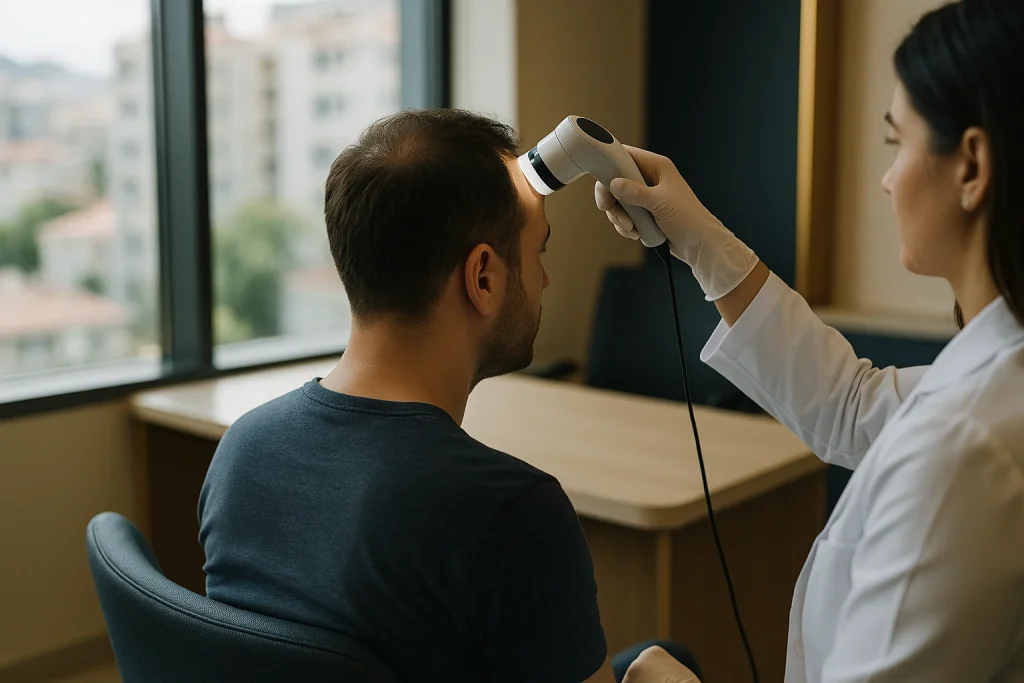
How to stop receding hairline begins with confirming the cause early, because treatment options differ for genetic hair loss, inflammation, traction and temporary shedding. A doctor can assess your scalp and hair pattern, discuss evidence-based medical options where suitable, and help you decide whether it is better to stabilise loss before considering a transplant.
- A receding hairline is commonly linked to genetic pattern hair loss, but other scalp and health factors should be excluded.
- Early medical assessment may help protect vulnerable existing hairs and clarify whether hair loss is active.
- Hair transplantation redistributes permanent donor follicles; it does not stop future thinning in untreated native hair.
- Lifestyle measures support scalp and general health, but they usually cannot reverse genetic hair loss alone.
- A long-term transplant plan should consider your age, family pattern, donor supply and likely future hair loss.
01How to Stop Receding Hairline: Start With Diagnosis
A search for how to stop receding hairline should begin with a proper diagnosis rather than a quick product choice. A higher forehead is not always a medical problem: some people naturally have a mature hairline that remains stable over time. However, gradual recession at the temples, finer hairs around the frontal edge, or a widening area of thinning may suggest androgenetic alopecia, also called genetic pattern hair loss. Your doctor will look at the shape of the hairline, the scalp, the density behind it, and your family history before discussing next steps.
A hairline can also move back for reasons other than genetic hair loss. Tight hairstyles, repeated tension from extensions or headwear, inflammatory scalp disorders, nutritional deficiency, illness, stress-related shedding, and certain medicines can affect hair growth. Sudden shedding, patchy loss, itching, pain, scaling, redness, or pustules should be assessed promptly. These signs may point to an underlying condition that needs treatment before any cosmetic procedure is considered.
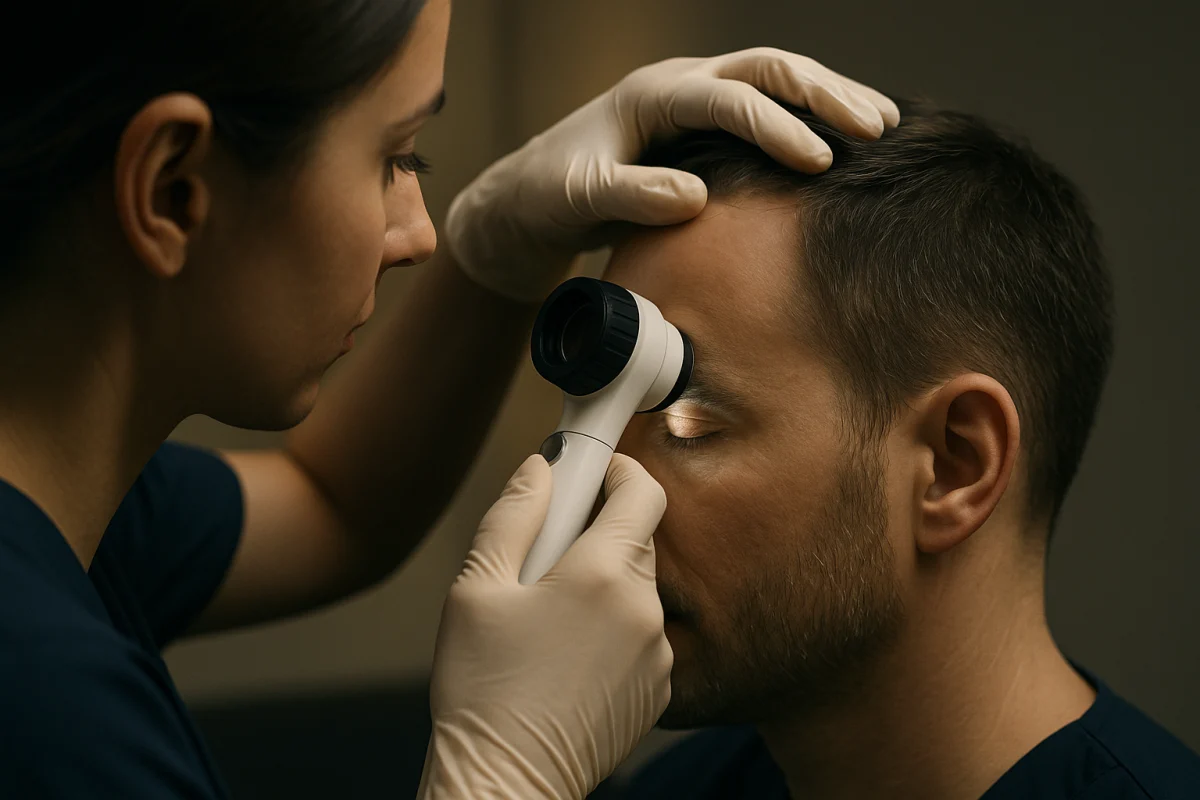
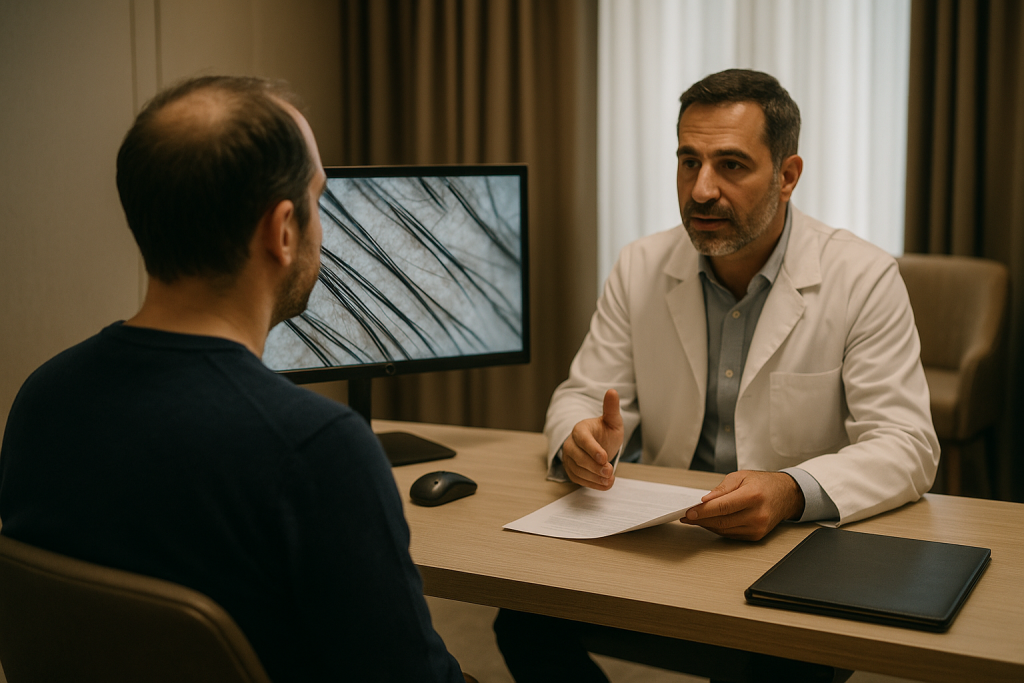
A clinical examination may include close scalp assessment and trichoscopy, which magnifies the hairs and follicles. This can help identify miniaturisation, where hairs become progressively finer and shorter, and can distinguish it from some other forms of shedding. In selected cases, a doctor may suggest blood tests or further dermatological assessment. Clear diagnosis is important because a transplant placed into an actively unhealthy scalp may not address the main cause of loss.
02Tell a Maturing Hairline From Active Hair Loss
Knowing how to stop receding hairline also means understanding whether the change is progressing. A mature hairline often settles slightly higher after adolescence and then remains broadly similar for years. In contrast, active pattern hair loss may show increasing temple recession, an M-shaped outline, reduced density behind the hairline, or more scalp visibility in photographs. Comparing consistent photographs taken every few months can be more useful than judging your hairline from day to day.
Hair shedding and hair thinning are not exactly the same. After fever, major stress, rapid weight change, surgery, or other physical events, some people experience diffuse shedding several weeks later. This type of shedding can be temporary, although it may uncover an existing tendency towards genetic thinning. Pattern hair loss is usually slower and more focused on particular areas, such as the temples, frontal scalp, or crown. A doctor can help determine whether one or both processes may be present.
It is also useful to consider the pattern in close relatives, but family history is not a diagnosis by itself. Genetic hair loss can be inherited from either side of the family and can progress differently from one person to another. Age, hormonal factors, scalp health, and general health can influence what you see. A careful assessment avoids making assumptions based only on social media images, lighting, or a single family member’s experience.
03Discuss Evidence-Based Ways to Protect Existing Hair
For genetic pattern hair loss, doctors may discuss medical treatments intended to slow miniaturisation and help maintain existing follicles. The right option depends on factors including your sex, medical history, current medicines, pregnancy plans where relevant, and the type of hair loss identified. Some topical or prescription treatments may be considered, but they require regular use and medical guidance. Your doctor should explain expected benefits, possible side effects, limitations, and when progress is usually reviewed.
Medical treatment is often most valuable for the hair behind a receding hairline. A transplant can add follicles to selected areas, but it cannot prevent untreated native hairs around the transplanted zone from becoming thinner later. When appropriate, stabilising ongoing loss may help create a more consistent long-term appearance. It can also provide a clearer picture of how much transplantation, if any, is likely to be needed in the future.
Be cautious with claims that oils, shampoos, massage tools, or supplements can reliably restore a genetically receding hairline. Gentle hair care and treating dandruff or scalp irritation can support scalp comfort, but cosmetic products do not usually change the underlying genetic process. Supplements may be useful when a confirmed nutritional deficiency exists, yet taking high doses without assessment can be unnecessary or unsafe. A doctor or qualified healthcare professional can advise what is relevant to your situation.
04Reduce Avoidable Stress on the Hairline and Scalp
Daily habits rarely cause genetic hair loss on their own, but they can make a vulnerable hairline look worse or contribute to breakage. Repeated traction from very tight braids, ponytails, buns, extensions, or headwear can pull on frontal follicles. If tension is ongoing, it may lead to traction alopecia, particularly around the temples and edges. Choosing looser styles, changing the direction of pulling, and giving the scalp regular breaks are sensible protective measures.
When people ask how to stop receding hairline, they may focus only on products and overlook scalp symptoms. Persistent itching, burning, flaking, tenderness, or visible inflammation is worth discussing with a clinician. Scratching and untreated inflammatory conditions can damage the scalp environment and complicate hair loss assessment. A calm, clean scalp and gentle washing routine are generally preferable to frequent harsh treatments or vigorous rubbing.
General health matters because hair growth depends on normal nutrition and recovery. A varied diet with adequate protein and essential nutrients supports normal hair production, while extreme restriction and rapid weight loss may contribute to shedding. Managing sleep, stress, smoking, and chronic health conditions can also support overall wellbeing. These measures are supportive rather than a replacement for diagnosis or medically guided treatment when pattern hair loss is present.
05Know When a Hair Transplant May Be Appropriate
A hair transplant may be considered when the cause of hair loss is understood, the scalp is healthy, and there is enough suitable donor hair. In FUE procedures, individual follicles are extracted from a donor area, usually at the back and sides of the scalp, and placed into thinning areas. DHI is another implantation approach that may be discussed for selected patients. Neither method creates new follicles, so donor resources need to be planned carefully.
For many patients with ongoing hair loss, transplantation is not the first or only step. It may be better to monitor the pattern, consider medical management where appropriate, and plan conservatively before lowering a youthful hairline. A very low or dense frontal design can use a large number of grafts and may look less natural if hair loss continues behind it. Your surgeon should discuss a hairline that suits facial proportions while allowing for possible future change.
The best timing varies. Someone with rapid recent loss, diffuse thinning, a poorly controlled scalp condition, or uncertainty about the diagnosis may need further assessment before surgery. Conversely, a stable pattern with realistic goals and adequate donor density may make transplant planning more straightforward. A consultation should include donor examination, discussion of existing hair protection, and an honest explanation of what can reasonably be achieved in one or more sessions.
06Plan the Hairline for Future Change, Not Just Today
A natural-looking hairline is more than a straight line drawn at the front of the scalp. It usually has small irregularities, softer single-hair grafts at the leading edge, and a density pattern that blends into the native hair. Hair direction, angle, curl, colour contrast, and facial shape all influence the visual result. An experienced team plans these details with the aim of avoiding an artificial or overly abrupt transition.
Learning how to stop receding hairline before surgery also helps protect the investment in a transplant. If surrounding native hair continues to miniaturise, the transplanted hairs may remain while nearby areas thin, creating a need for future treatment or another procedure. This does not mean every person must have medical therapy, but it does mean future loss should be part of the conversation. Your doctor will confirm whether there are options suitable for you.
Donor management is equally important. The donor area has a limited number of follicles that can be harvested safely while preserving a natural appearance. Grafts used aggressively at the front may not be available later for the mid-scalp or crown if those areas thin. A responsible plan considers the whole scalp, not only the hairline visible in a mirror. It should also account for the possibility that the pattern may develop over time.
07Prepare for a Meaningful Hair Loss Consultation
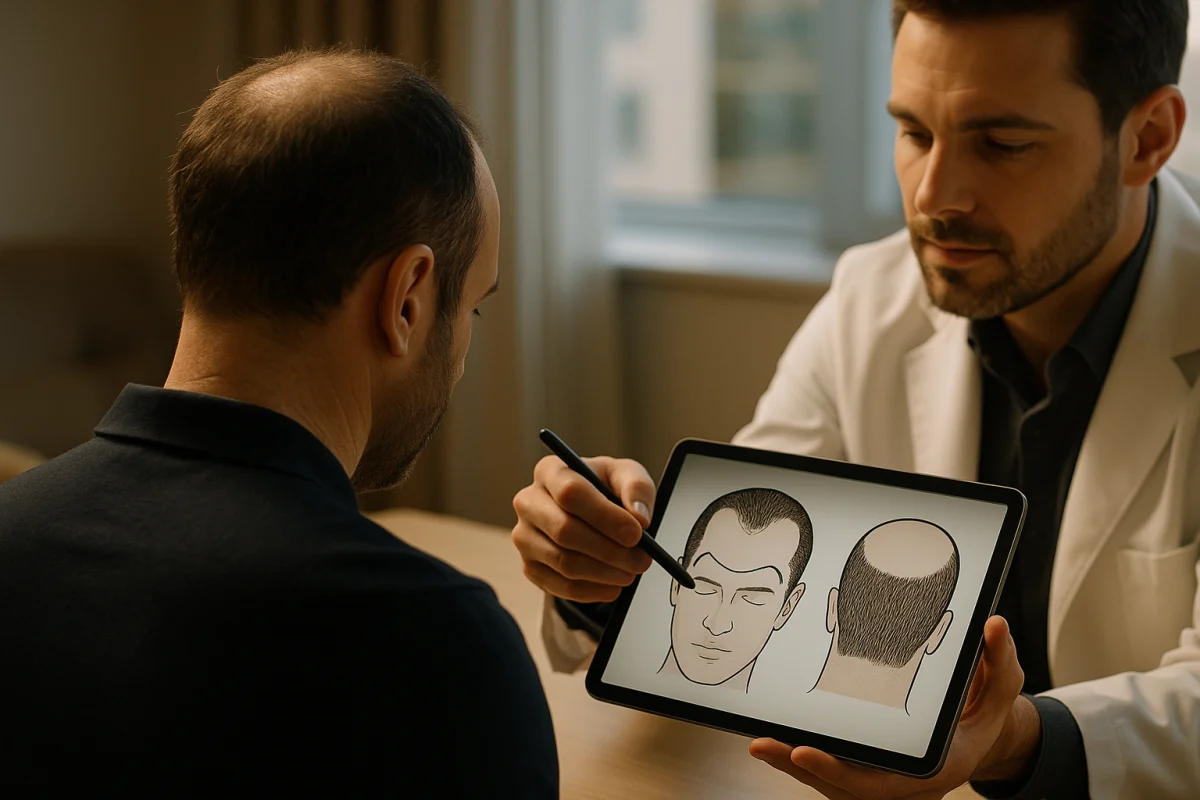
Before a consultation, gather useful information rather than trying multiple unproven remedies at once. Note when you first noticed recession, whether it changed suddenly or gradually, any scalp symptoms, recent illness or weight changes, family hair patterns, and current medicines or supplements. Clear photographs taken in similar lighting from the front, temples, top, and donor area can help show the pattern. Do not hide information about previous procedures or treatments, as this may affect safe planning.
Ask direct questions about diagnosis, likely progression, non-surgical options, donor suitability, and the expected role of a transplant. You can also ask how the proposed hairline is designed, whether existing hair may continue to thin, what follow-up is included, and what signs would mean surgery should be delayed. A good consultation should leave room for questions and should not pressure you into an immediate decision. Realistic expectations are central to patient safety and satisfaction.
At Acibadem Hair Transplant Center, international patients can request a free online hair analysis reviewed by doctors before travelling to Istanbul. The clinic is licensed by the Turkish Ministry of Health and provides Sapphire FUE and DHI techniques, with needle-free anaesthesia available for suitable patients. An online review cannot replace an in-person medical examination, but it can help you understand the information needed for a more focused consultation and long-term plan.
08Act Quickly for Warning Signs and Avoid Self-Diagnosis
Some types of hair loss need early medical attention because follicles can be permanently damaged by inflammation or scarring. Seek assessment for sudden round patches, rapidly progressing loss, scalp pain, burning, marked redness, thick scale, pus-filled bumps, or loss of eyebrows or body hair. These signs are not typical of uncomplicated genetic recession and should not be managed by booking a transplant alone. A dermatologist or doctor can investigate the cause and recommend appropriate care.
Avoid starting prescription hair loss medicines, hormone-related treatments, or high-dose supplements based only on online recommendations. Treatments that are suitable for one person may not be suitable for another, and interactions or side effects can occur. Similarly, camouflage fibres, styling changes, and hair systems may improve appearance temporarily, but they do not establish a diagnosis. Use them gently and avoid anything that causes tension or irritation at the hairline.
A receding hairline can affect confidence, especially when changes happen at a young age. It is understandable to want a fast solution, but thoughtful assessment usually leads to better decisions than reacting to every shed hair. Focus on documenting change, identifying the cause, protecting existing hair where possible, and planning any surgical treatment conservatively. With the right information, you can discuss options with a doctor in a calm and realistic way.
09Frequently Asked Questions
Can a receding hairline regrow?
Regrowth depends on the cause and how long follicles have been miniaturising. Temporary shedding or an underlying scalp or nutritional issue may improve when the cause is addressed, while genetic pattern hair loss usually needs ongoing medical management to protect vulnerable hairs. Areas where follicles are no longer active may not regrow fully, and a doctor can assess what is realistic.
Will a receding hairline grow back on its own?
A mature hairline that has stabilised may simply remain unchanged, but genetic recession does not typically return to its earlier position without treatment. Temporary shedding can sometimes recover after the trigger resolves, although recovery may take time. Sudden, patchy, or symptomatic loss should be assessed medically rather than assumed to be permanent.
Why does hair loss seem so common in Gen Z?
Gen Z may appear to experience hair loss more often because social media, high-resolution photos, and earlier awareness make subtle hairline changes more visible. Genetic pattern hair loss can begin in the late teens or twenties in some people, while stress, restrictive dieting, illness, traction hairstyles, and scalp conditions can also contribute to shedding. An individual assessment is needed because age alone does not explain the cause.
Why do hairlines recede?
The most common reason is genetic sensitivity of frontal follicles to hormonal influences, which causes hairs to become finer over time. Other possible causes include traction, inflammatory or scarring scalp disorders, temporary shedding after physical stress, nutritional deficiencies, and some medical conditions or medicines. A doctor can distinguish these causes through history, scalp examination, and, when needed, further tests.
This article is for general information only and is not a substitute for professional medical advice.
 06
06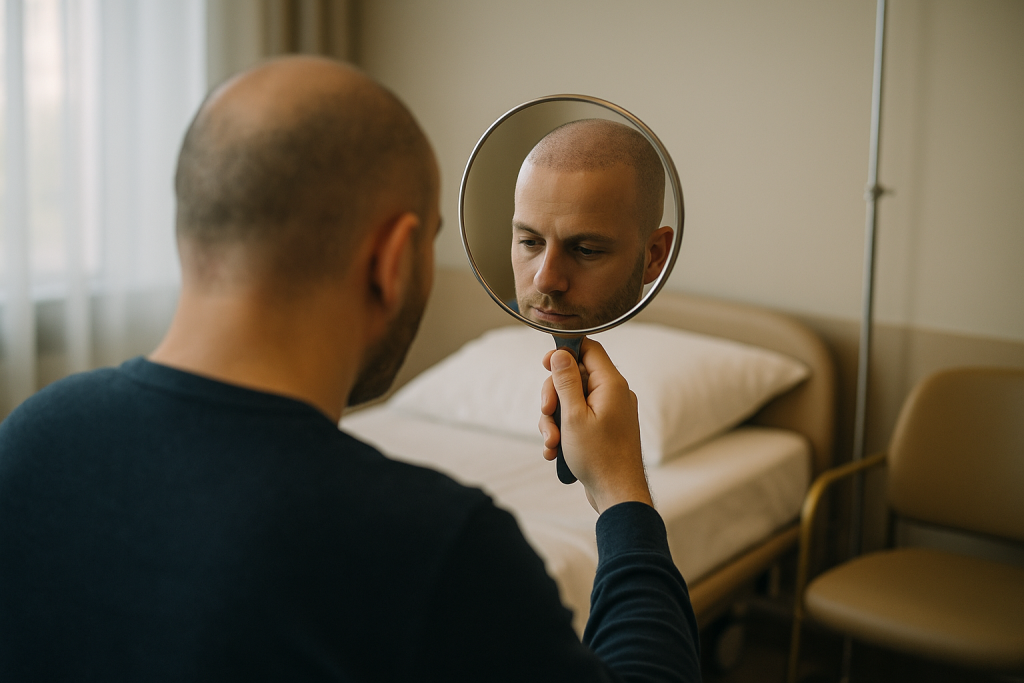 12
12