
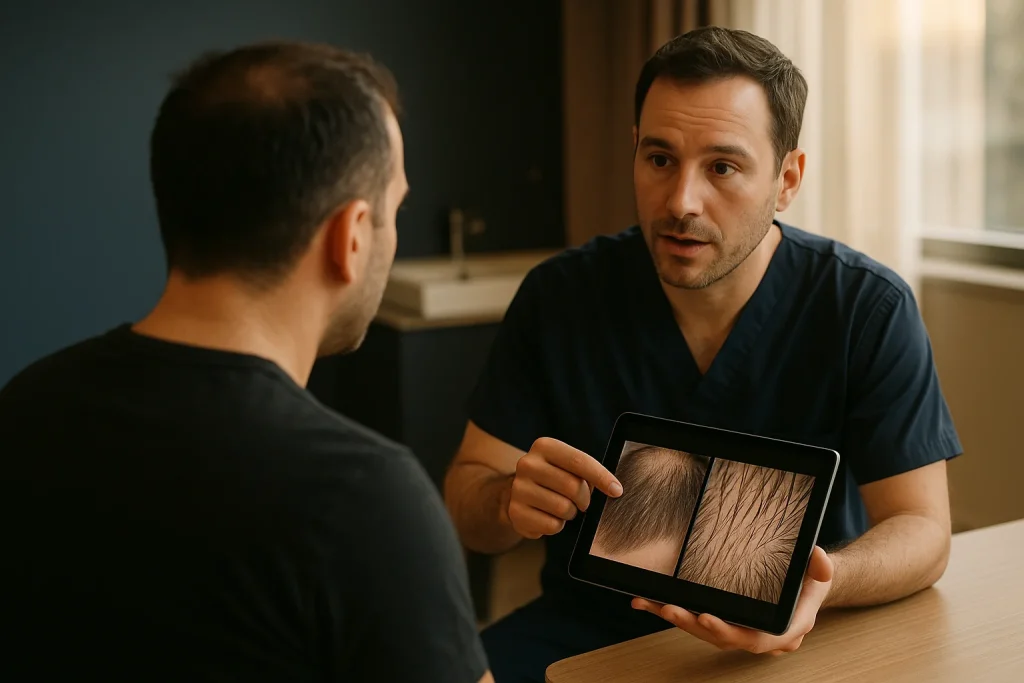
Hair restoration for men can include medical treatment, supportive non-surgical procedures, cosmetic solutions and hair transplant surgery. The right approach depends on the cause and pattern of hair loss, the quality of the donor area, your health history and your expectations, so a doctor-led assessment is important.
- Male pattern hair loss is common, but sudden or patchy loss should be medically assessed before treatment.
- Medication may help slow further thinning and maintain existing hair, while surgery can redistribute permanent donor hair.
- FUE and DHI are surgical implantation approaches; the best choice depends on an individual treatment plan.
- A hair transplant does not create new hair and requires a healthy donor area with sufficient available grafts.
- Long-term planning, realistic density expectations and follow-up care are important for a natural-looking result.
01Hair Restoration for Men: Surgical and Non-Surgical Options
Hair restoration for men is not one single treatment. It is a group of medical, surgical and cosmetic options designed to address thinning hair, receding hairlines, crown loss or more advanced baldness. Some options aim to slow future loss, some improve the appearance of existing hair, and a transplant moves follicles from a stable donor area to areas with low density. A good plan begins with understanding why the hair loss is happening and what can realistically be improved.
In many men, hair loss follows a gradual genetic pattern called androgenetic alopecia, also known as male pattern hair loss. It often starts with recession at the temples, thinning at the crown, or both. The hair follicles become smaller over time, producing finer and shorter hairs before they may stop producing visible hair. This process can be influenced by family history and hormones, but the speed and pattern vary widely from person to person.
Not every form of hair loss is genetic. Stress, illness, nutritional problems, scalp inflammation, certain medicines and autoimmune conditions may also affect hair growth. Sudden shedding, scalp pain, redness, scaling or round patches of hair loss need medical attention before any cosmetic or surgical decision. A doctor can review your history, examine the scalp and, when appropriate, recommend further tests or referral.
02Understanding the Cause and Pattern of Male Hair Loss
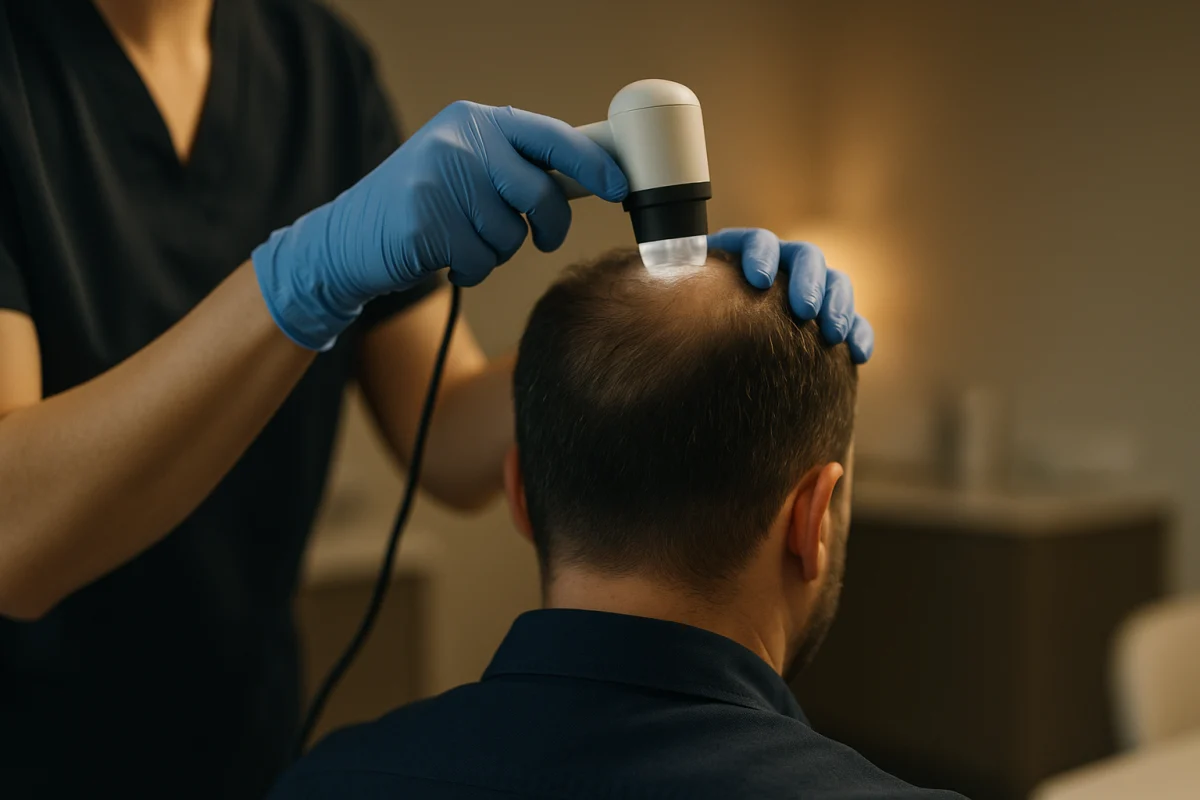
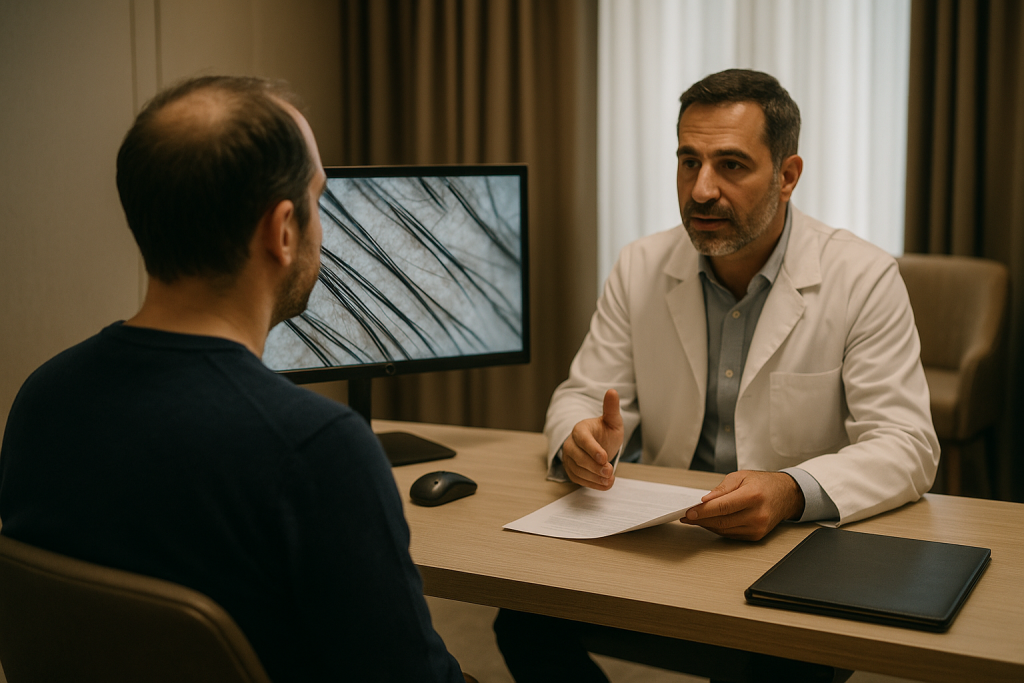
A careful assessment is the foundation of safe treatment. Doctors usually look at the shape of the hairline, the degree of crown thinning, the thickness of hairs across the scalp and the density in the donor zone at the back and sides of the head. Trichoscopic examination can help show miniaturised hairs and reveal whether active thinning is still progressing. This information supports a more accurate long-term plan.
Male pattern hair loss may continue after treatment, especially in areas that have not been transplanted. For this reason, a plan that only focuses on rebuilding a low hairline may not be suitable for every patient. Preserving donor hair for possible future needs is often important. Your doctor will consider your age, current pattern of loss, likely progression and family history when discussing a sensible hairline design.
The donor area is equally important. Hair transplant surgery relies on follicles that are resistant to the effects of genetic hair loss in most patients. However, donor hair is limited, and not everyone has enough density for high coverage across a large bald area. Fine hair, low donor density, a large area of loss or diffuse thinning can affect the possible result. An honest assessment should explain both the opportunities and the limitations.
03Medical Treatments That May Help Preserve Existing Hair
Medical treatment is commonly considered when hair loss is early or still progressing. Depending on the diagnosis and medical suitability, a doctor may discuss prescription medicines that can support hair retention or encourage thicker growth in miniaturised follicles. These treatments generally need consistent, long-term use, and results can take several months to assess. They are not suitable for everyone, and side effects or medical contraindications must be reviewed by a qualified clinician.
Topical treatments may also be considered as part of a non-surgical approach. They are usually applied regularly to the scalp and may help some men maintain existing hair or improve the appearance of thinning areas. However, response differs between individuals, and stopping treatment may allow the underlying hair-loss process to continue. A doctor or pharmacist can explain correct use, possible irritation and when a different approach may be needed.
For many patients, hair restoration for men is most effective when it is viewed as a long-term strategy rather than a one-time solution. Medical treatment may be used before or after surgery to help protect non-transplanted native hair, where medically appropriate. It cannot replace lost follicles in a completely bald area, but it may help maintain the surrounding hair and support a more stable overall appearance.
04PRP, Scalp Care and Other Non-Surgical Support
Platelet-rich plasma, often called PRP, is a procedure that uses a concentrated portion of a patient’s own blood and injects it into the scalp. It is sometimes offered as supportive care for thinning hair. Some patients report improvement in hair quality or shedding, but outcomes vary, and it should not be presented as a guaranteed way to regrow hair. A clinic should explain the planned treatment schedule, expected limits and whether it is appropriate for your diagnosis.
Scalp health also matters. Conditions such as dandruff, dermatitis, infection or inflammation can make the scalp uncomfortable and may complicate hair care. Treating an underlying scalp condition can be important before considering procedures. Gentle hair care, appropriate cleansing and avoiding repeated traction, harsh chemical processing or excessive heat may help reduce unnecessary breakage, although these measures do not reverse genetic follicle miniaturisation.
Low-level light devices, camouflage fibres, scalp micropigmentation and hair systems are additional non-surgical choices. These options may improve the visual appearance of density without moving or regrowing follicles. They can be useful for men who are not ready for surgery, have limited donor hair or want an immediate cosmetic change. Each option has different maintenance needs, costs and practical considerations that should be discussed clearly.
05When a Hair Transplant May Be Considered
A hair transplant may be considered when hair loss is sufficiently stable, the donor area is healthy and the patient understands the long-term nature of the decision. During surgery, follicular units are taken from the donor zone and placed into thinning or bald areas. Because the follicles are relocated rather than newly created, the procedure is best understood as redistribution of available hair.
A transplant can be used to restore a receding hairline, add density through the frontal area, improve the crown or address selected areas such as scars, depending on clinical suitability. It may not be possible to recreate the density of teenage hair, particularly when the area of loss is extensive. Natural-looking planning usually prioritises an age-appropriate hairline, suitable graft distribution and protection of the donor reserve.
Before surgery, patients should disclose medical conditions, current medicines, smoking status, allergies and previous scalp procedures. The surgical team should also explain recovery, temporary shedding, possible risks and the expected growth timeline. Most transplanted hairs shed during the early recovery phase before new growth begins. Visible improvement commonly develops gradually, and final evaluation is generally made around month 12.
06FUE and DHI: How the Surgical Techniques Differ
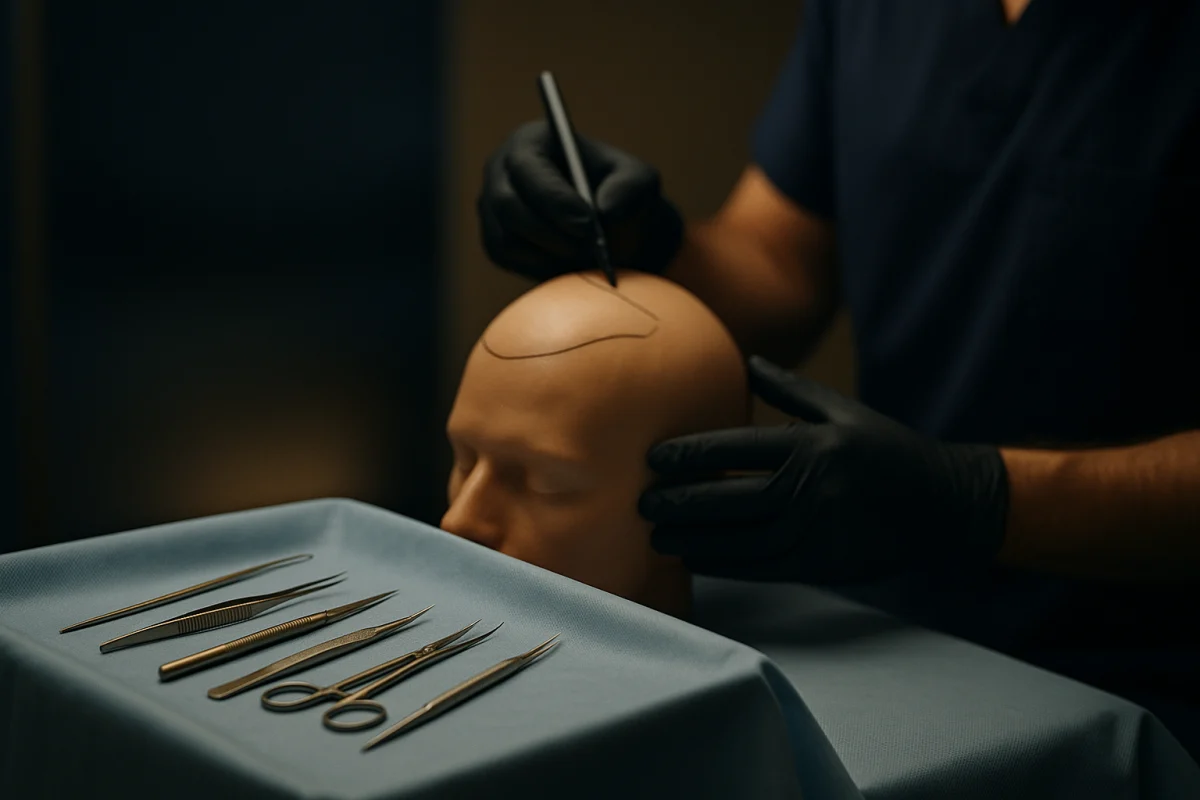
Follicular unit extraction, or FUE, involves removing individual follicular units from the donor area and implanting them into recipient sites prepared in the thinning area. Sapphire FUE uses sapphire blades to create recipient channels. Channel direction, angle and spacing are important because they influence how the new hairs sit and how natural the result appears as they grow.
Direct hair implantation, or DHI, is another implantation approach in which follicles are placed with a specialised implantation tool. It may allow the team to control placement during implantation in selected cases. Neither FUE nor DHI is automatically best for every man. The right technique depends on the recipient area, the number and quality of grafts, hair characteristics, scalp condition and the surgeon’s treatment plan.
At Acibadem Hair Transplant Center, a dedicated hair restoration clinic in Istanbul licensed by the Turkish Ministry of Health, Sapphire FUE and DHI techniques are available after clinical assessment. Needle-free anaesthesia is also available for suitable patients. Technique names alone do not determine a result; careful donor management, appropriate graft handling, realistic planning and aftercare remain central to a responsible procedure.
07Planning Graft Numbers, Density and a Natural Hairline
Grafts are follicular units, not individual hairs. One graft may contain one, two, three or sometimes more hairs, so graft numbers do not directly equal the number of visible hairs. A discussion about graft needs should include the size of the area to be covered, hair thickness, curl, colour contrast between hair and scalp, donor density and the desired style. These factors can change the visual effect of the same graft number.
A request for 3,000 grafts is common, but it is not a universal treatment target. For one patient, this number may be appropriate for a frontal area and mid-scalp plan; for another, it may be too many or too few. Taking more grafts than the donor area can safely provide may create visible thinning in the donor zone. A responsible clinic should recommend only the number that is clinically suitable.
Hair restoration for men should also consider future hair loss. A very low or sharply defined hairline can look unnatural if surrounding native hair recedes later. Conservative, age-appropriate design often gives a more sustainable result. During a free online hair analysis at Acibadem Hair Transplant Center, doctors review submitted information and photographs to provide preliminary guidance, while an in-person evaluation confirms final suitability and planning.
08Recovery, Growth Timeline and Choosing a Responsible Clinic
After a hair transplant, small scabs, redness and temporary swelling can occur during the initial healing period. Patients are normally given instructions about washing, sleeping position, physical activity and protecting the grafts. It is important to follow the clinic’s guidance closely and to contact the medical team if there are signs of unusual pain, increasing redness, discharge, fever or other concerns. Recovery instructions may vary according to the procedure and individual health factors.
Newly transplanted hairs often shed within the first weeks, which can be worrying but is usually part of the normal cycle. Early regrowth may begin after several months, then gradually becomes more noticeable. Hair grows at different rates, and the final cosmetic result takes time to develop. At Acibadem Hair Transplant Center, results are measured by trichoscopic graft survival at month 12, with a documented 98% rate under written guarantee; individual appearance and density can still vary.
When choosing a clinic, ask who assesses you, who performs each stage of the procedure, how donor-area safety is protected and what aftercare is included. Acibadem Hair Transplant Center has treated patients from 38 countries over 12 years and offers all-inclusive packages with VIP transfer, a 4-star hotel, a care kit and 12 months of follow-up. Patients can request a free doctor-reviewed online hair analysis, with WhatsApp replies typically available within about two hours.
09Frequently Asked Questions
Can men regrow hair that has already been lost?
It depends on the cause and how long the follicles have been affected. Medical treatment may help some men retain hair and improve miniaturised follicles, while a hair transplant can move healthy follicles into areas where hair is no longer growing. Completely inactive follicles in a bald area do not usually regrow on their own, so a doctor should confirm the diagnosis and realistic options.
What is the best hair restoration option for men?
There is no single best option for every man. Early or ongoing thinning may be managed with medically appropriate treatment, while a transplant may be considered for stable loss with a strong donor area. The best plan is based on the cause of loss, donor capacity, age, health history, future hair-loss risk and personal goals.
How much do 3,000 hair grafts cost in the USA?
The cost of 3,000 grafts in the USA varies significantly by city, clinic, technique, the clinical team involved and what is included in aftercare. Clinics may quote per graft or offer procedure-based pricing, so it is important to request a written, itemised estimate. Price should not be the only factor; medical licensing, team experience, donor-area planning and follow-up are also important.
What did Matthew McConaughey reportedly do to regrow his hair?
Matthew McConaughey has publicly spoken about using a non-surgical topical hair-care approach, but his individual medical history and results have not been independently verified in a way that can guide another person’s treatment. Hair changes in public figures may also be affected by styling, lighting, hair length or other factors. A doctor can assess which evidence-based options may be suitable for your own type of hair loss.
This article is for general information only and is not a substitute for professional medical advice.
 06
06 12
12