
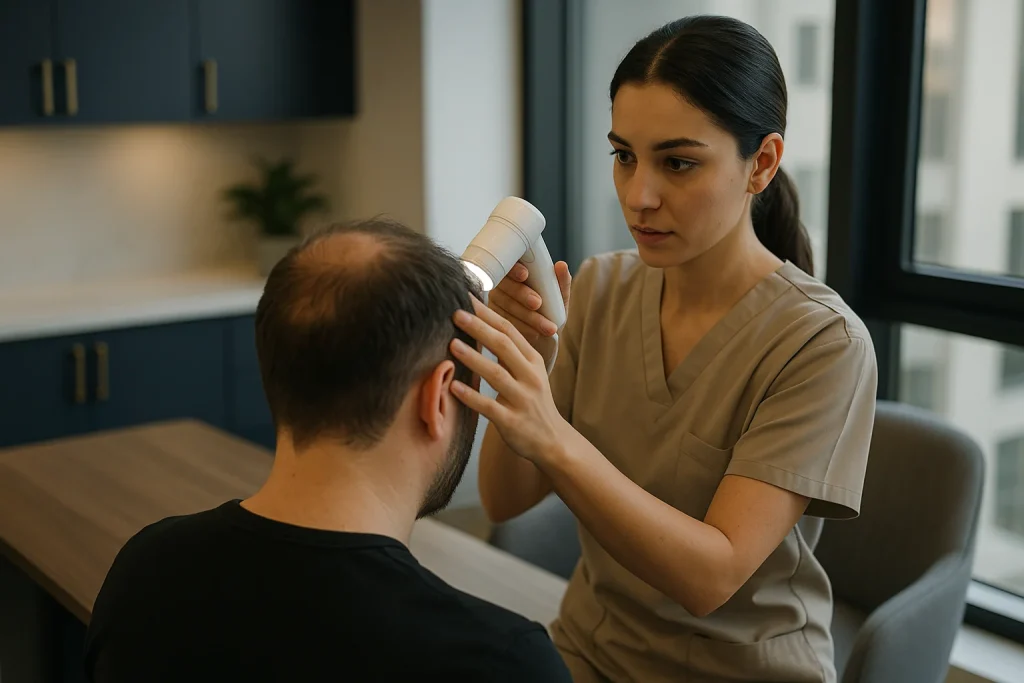
Hair restoration may include medical treatment, lifestyle support, cosmetic camouflage, and transplant surgery. A transplant may help when hair loss is stable enough, the donor area is suitable, and a doctor confirms that moving healthy follicles is a reasonable option.
- Hair loss has different causes, so a medical assessment is an important first step before choosing treatment.
- Non-surgical care may help protect existing hair, but it does not always replace follicles that have been permanently lost.
- Transplant surgery redistributes resistant follicles from a donor area to thinning areas rather than creating new hair.
- Sapphire FUE and DHI are modern implantation approaches that may be selected according to the hair pattern, graft needs, and clinical plan.
- A realistic plan should consider donor capacity, future hair loss, recovery, long-term follow-up, and transparent costs.
01Understanding Hair Restoration and the Hair Growth Cycle
Hair restoration is a broad term for approaches that aim to slow hair loss, support existing follicles, improve the appearance of thinning, or surgically move healthy follicles to an area with less hair. The right approach depends on why hair is shedding, how long it has been happening, the pattern of loss, and the quality of the donor hair. It is important to understand that not every form of thinning has the same cause or responds to the same treatment.
Hair normally grows in repeating phases. Most visible scalp hair is in a growing phase, while a smaller number of hairs are resting or shedding at any one time. Changes in hormones, genetics, illness, stress, nutritional status, scalp inflammation, medications, and certain hair practices can affect this cycle. Some shedding is temporary, while other forms of hair loss gradually reduce the size of individual follicles over time.
A change in density does not automatically mean that transplant surgery is needed. For example, diffuse shedding after a physical or emotional stressor may improve when the underlying trigger is addressed. In contrast, a stable pattern of recession or crown thinning may be more consistent with hereditary hair loss. A doctor can examine the scalp, review your health history, and determine whether further evaluation is appropriate before a treatment plan is considered.
02Why an Accurate Hair Loss Diagnosis Comes First
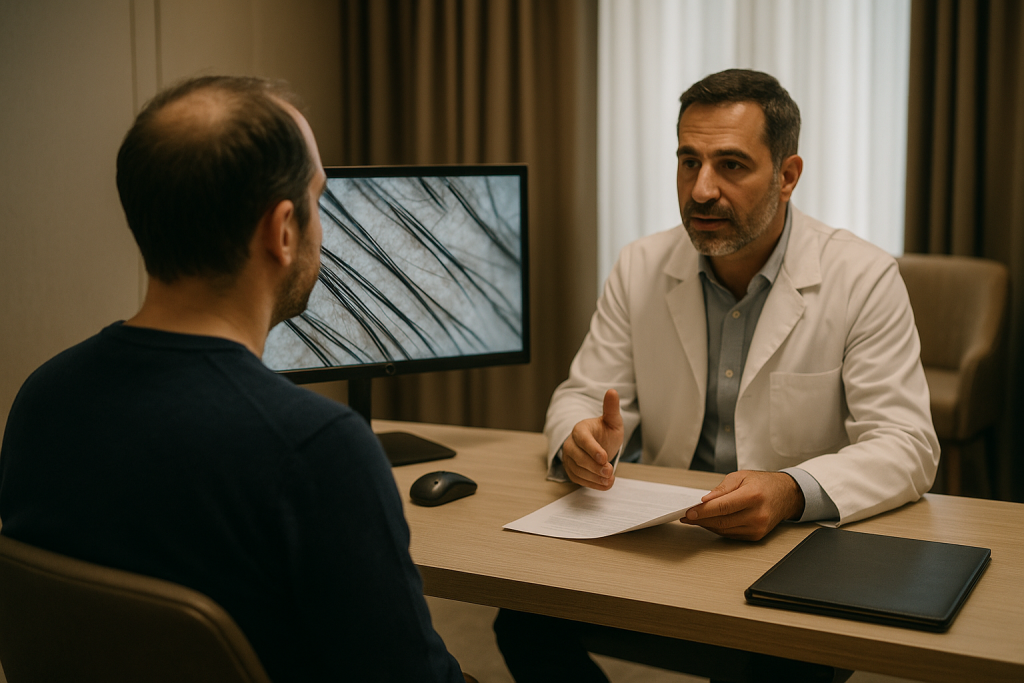
Before choosing a procedure, the first clinical question is what type of hair loss is present. A consultation commonly includes a review of when the thinning began, whether shedding was sudden or gradual, family history, general health, medications, scalp symptoms, and previous treatments. This information helps distinguish between conditions that may settle over time and conditions that may need ongoing management.
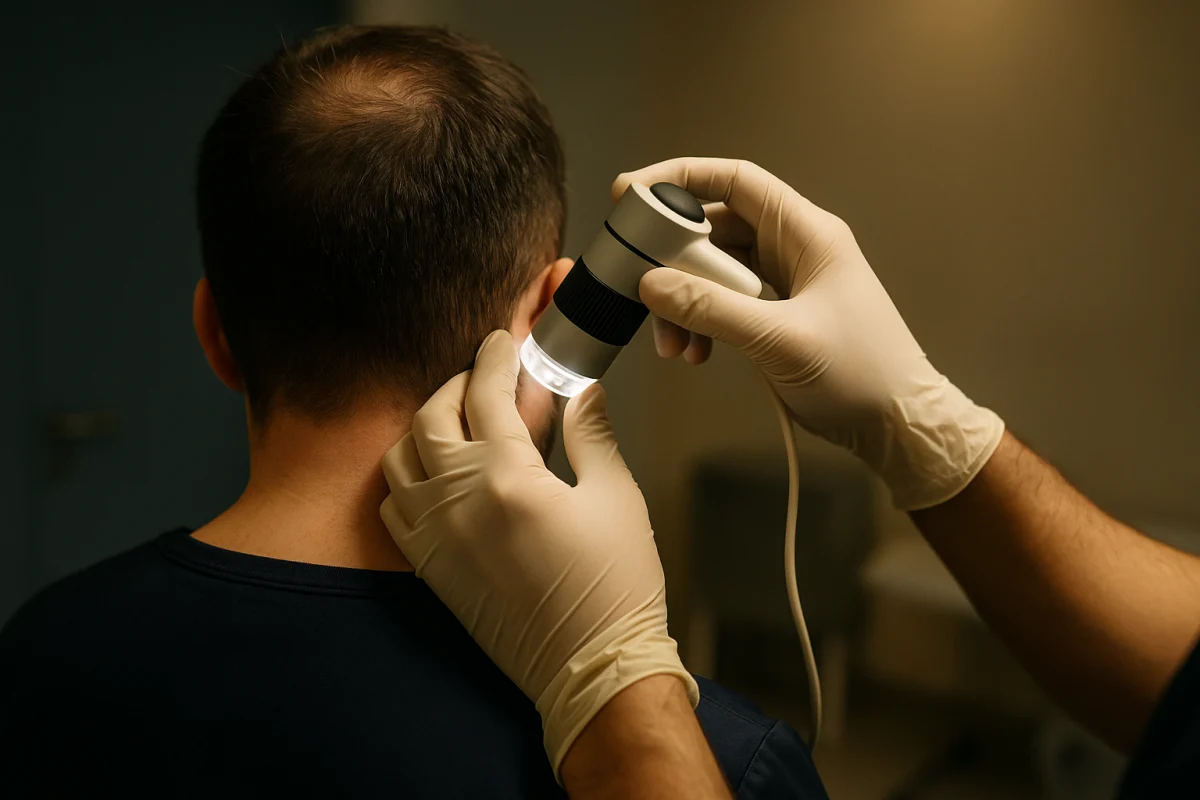
The scalp examination is also important. A clinician may assess hair shaft thickness, density, distribution, skin condition, and the presence of inflammation or scarring. In some cases, blood tests or a review by another medical specialist may be advised. These steps are not a delay for its own sake; they can help avoid starting a cosmetic procedure when a treatable medical factor may be contributing to hair loss.
People often seek help after noticing a wider parting, a receding hairline, more scalp visibility in photographs, or increased hair in the shower. These signs can be upsetting, but they should be interpreted carefully. A doctor will consider whether the current pattern is likely to progress, whether existing hair can be supported, and whether the donor area has enough stable follicles for a conservative, long-term plan.
03Non-Surgical Options That May Support Existing Hair
For many patients, hair restoration begins with protecting the hair that is still present. Depending on the diagnosis, a doctor may discuss topical or oral medical options, treatment for scalp conditions, nutritional correction when a documented deficiency exists, or adjustments to practices that place traction or chemical stress on the hair. These options are selected individually and may not be suitable for everyone.
Medical treatment usually needs time and consistent use before changes can be assessed. In most patients, the goal is often to reduce further thinning or improve the quality of miniaturised hair, rather than to recreate a completely dense hairline. Results can vary, and any medicine may have possible side effects or restrictions. Your doctor should explain the expected benefits, limitations, monitoring needs, and reasons to stop or avoid a treatment.
Non-surgical approaches can also include styling changes, hair fibres, scalp micropigmentation, wigs, or hair systems. These may be useful for people who do not want surgery, are not currently suitable candidates, or prefer an immediate visual solution. They do not transplant living follicles, but they can be part of a practical plan while the cause and future course of hair loss are being assessed.
04When Hair Restoration Surgery May Be Considered
A hair transplant may be considered when there is an area of reduced density and a dependable supply of healthy donor follicles, usually from the back and sides of the scalp. The procedure works by relocating follicles that are relatively resistant to the pattern of hair loss. It does not stop future thinning in untreated areas, so surgical planning should always take the likely long-term pattern into account.
Suitable candidates often have a reasonably stable hair loss pattern, realistic expectations, and enough donor density to support the proposed design. Age alone does not determine eligibility. However, in younger patients or people whose loss is actively changing, doctors may recommend caution because a low, dense hairline or an overly large coverage plan may not look balanced if thinning continues later.
A transplant may be less appropriate when the donor area is weak, hair loss is caused by an active inflammatory or scarring condition, or a medical issue has not been addressed. It may also be better to postpone surgery after recent sudden shedding until the pattern is clearer. A responsible assessment should explain not only whether surgery is possible, but also whether it is sensible at this stage and what alternatives are available.
05How Sapphire FUE and DHI Transplant Techniques Differ
Follicular unit extraction, commonly called FUE, involves removing individual follicular units from the donor area and placing them into small recipient sites. Sapphire FUE uses sapphire blades to create the recipient channels. The choice of channel size, angle, direction, and distribution is important because these details influence how naturally the transplanted hair may sit as it grows.
DHI is another implantation approach in which extracted follicles are placed with a specialised implanter tool. In some cases, this can allow the medical team to control placement without creating all recipient channels in advance. Neither technique is automatically best for every person. The appropriate approach depends on factors such as the recipient area, existing hair, graft characteristics, desired density, scalp condition, and the clinical team's assessment.
At Acibadem Hair Transplant Center in Istanbul, Sapphire FUE and DHI techniques are available following doctor review. Needle-free anaesthesia is also available for suitable patients who are concerned about injections. The technique should not be chosen from marketing alone; your doctor will confirm which method, if any, fits the planned graft placement and your overall medical assessment.
06Building a Natural-Looking Transplant Plan
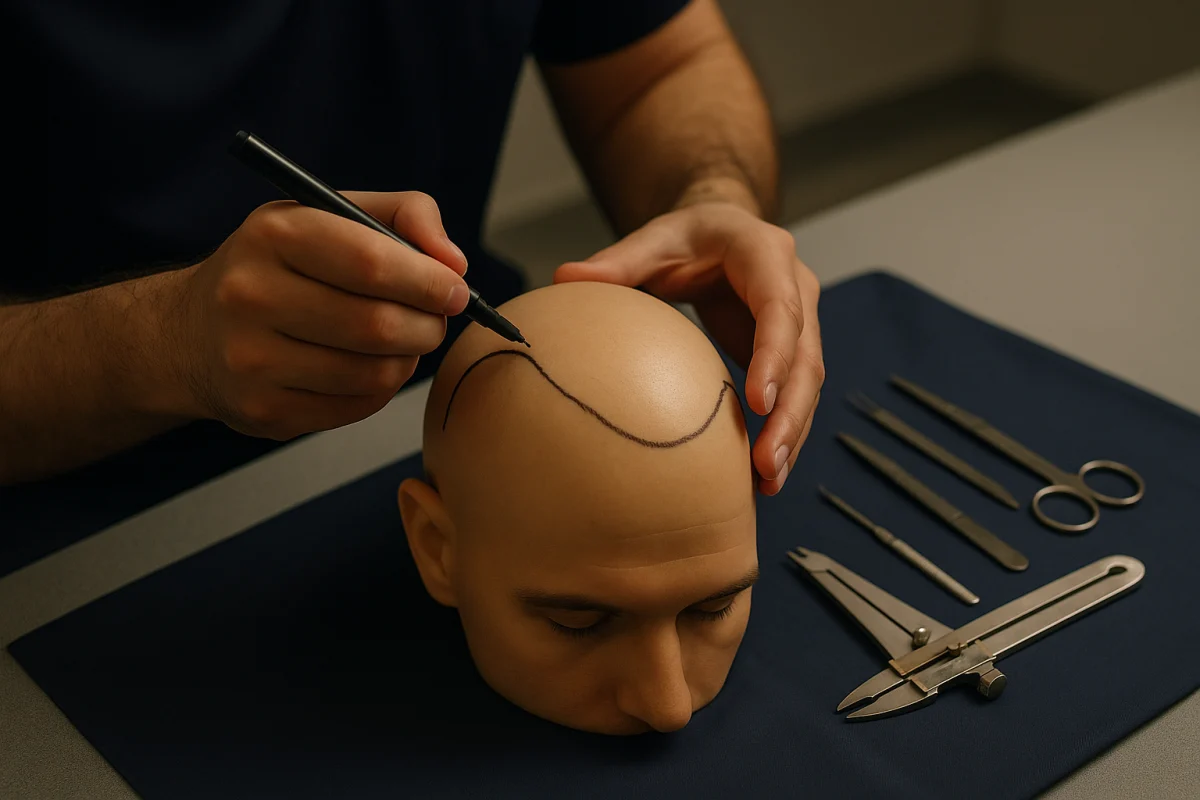
Natural-looking results usually begin with careful restraint. The hairline must be designed in a way that suits facial proportions, age, sex, ethnicity, current hair pattern, and the possibility of future loss. A very low or sharply defined hairline may use too many grafts and can become difficult to maintain if surrounding native hair becomes thinner. A mature, appropriately irregular hairline often looks more believable than a perfectly straight line.
Graft allocation is another key decision. The front hairline, frontal zone, mid-scalp, and crown compete for a limited donor supply. A doctor may recommend prioritising the areas that frame the face before attempting broad crown coverage, especially when donor reserves are limited. Fine single-hair grafts are often useful at the front, while naturally occurring multi-hair grafts may contribute more coverage behind the hairline.
A good hair restoration plan should include the future, not only the first procedure. Some patients may eventually need additional treatment if hair loss progresses, while others may not. The goal is to use donor hair thoughtfully and avoid promises of unlimited density. During a free online hair analysis at Acibadem Hair Transplant Center, doctors review submitted information and images before discussing whether an in-person evaluation and procedure plan may be appropriate.
07Recovery, Growth Timeline, and Follow-Up After Surgery
Hair transplant surgery is usually performed as an outpatient procedure, but recovery continues after you leave the clinic. The recipient area may look red and develop small crusts for a short period, while the donor area can feel tender or tight. Your care team will give instructions about washing, sleeping position, activity, sun exposure, headwear, and when to contact the clinic. Following these instructions carefully helps protect the newly placed grafts.
It is common for transplanted hairs to shed in the weeks after surgery. This can be alarming, but shedding of the visible hair shaft does not necessarily mean the follicle has been lost. New growth typically begins gradually after a resting period, and the appearance changes over several months. Final maturation takes time, so photographs taken very early after surgery do not show the eventual result.
Follow-up is valuable because it allows the team to check healing, answer practical questions, and review growth over time. Acibadem Hair Transplant Center provides 12 months of follow-up as part of its all-inclusive packages, which also include VIP transfer, a 4-star hotel, and a care kit. The clinic measures results through trichoscopic graft survival at month 12 and documents a 98% rate under its written guarantee; individual healing and cosmetic appearance can still vary.
08Costs, Travel Planning, and Questions to Ask Before Booking
The cost of a transplant should be assessed as part of the whole treatment plan, not only by the number of grafts quoted. Pricing can vary according to the country, clinic licensing, medical team, technique, donor complexity, number of sessions, accommodation, transfers, aftercare, and follow-up. A low headline price may not show what is included, so patients should ask for a clear written outline before making travel arrangements.
International patients should also check how consultation, pre-operative review, the procedure day, recovery support, and communication after returning home will be handled. Acibadem Hair Transplant Center is a dedicated hair restoration clinic in Istanbul licensed by the Turkish Ministry of Health. It has welcomed patients from 38 countries over 12 years, and its all-inclusive packages are designed to simplify practical elements of the visit without replacing individual medical assessment.
Useful questions include who will assess you, which parts of the procedure are performed by the medical team, how many grafts are realistically recommended, what technique is proposed and why, what aftercare is included, and how complications are managed. You can request a free online hair analysis reviewed by doctors through WhatsApp, where replies are typically provided within around two hours. A written, personalised quote should only follow an appropriate review of your hair characteristics and treatment needs.
09Frequently Asked Questions
Can lost hair really grow back?
It can be possible to improve growth when follicles are still present and the cause of hair loss can be treated or controlled. However, follicles that have been permanently lost do not usually regrow on their own. A transplant can redistribute healthy follicles to a thinning area, but it does not create new follicles.
How much does it cost to restore your hair?
The cost depends on the cause of hair loss and the type of plan needed. Non-surgical care, cosmetic solutions, and transplant surgery have different costs, while transplant quotes also depend on graft needs, technique, location, aftercare, and travel arrangements. A clinic should provide a written estimate after a proper assessment rather than offering a one-size-fits-all price.
What is the best method for restoring hair?
There is no single best method for every patient. Medical treatment may be more appropriate for some forms of thinning, while a transplant may help people with stable loss and suitable donor hair. Your doctor will confirm the safest and most realistic option after examining the pattern, scalp, and donor area.
What do 3,000 hair grafts cost in the USA?
There is no fixed national price for 3,000 grafts in the USA, and clinics may calculate fees per graft, per session, or as a package. The total can vary widely based on the city, technique, team, complexity of the case, and included aftercare. Ask for a detailed written quote that confirms the graft estimate and every included service before comparing options.
This article is for general information only and is not a substitute for professional medical advice.
 06
06 12
12