
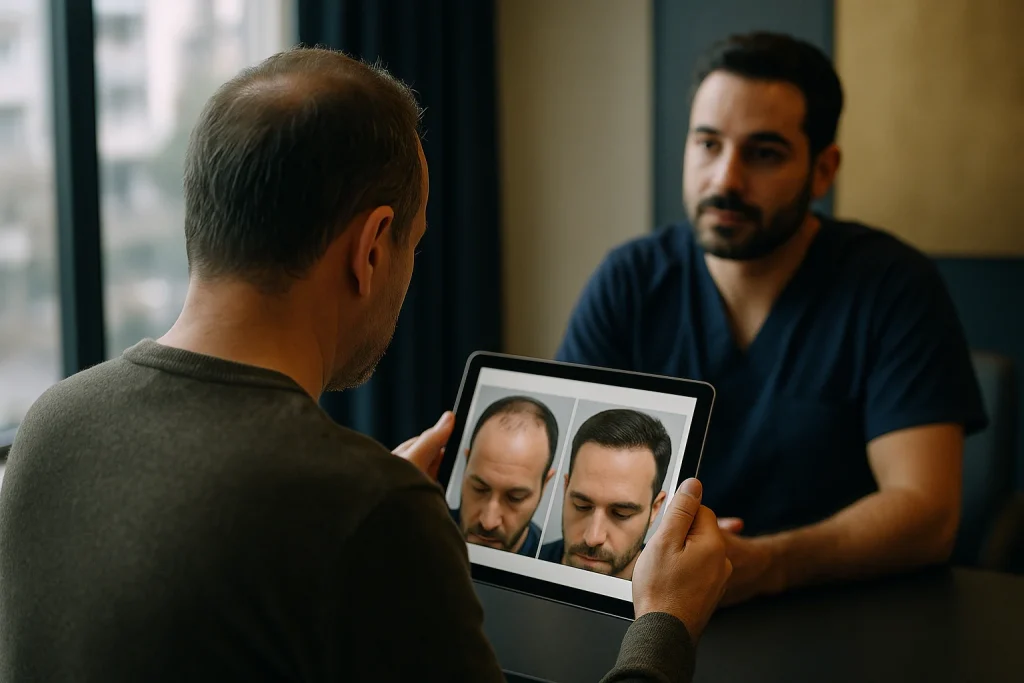
Hair transplant before and after results can show a fuller-looking hairline, improved density in selected areas, and a more balanced overall appearance when the procedure is planned well. Final growth is typically assessed around 12 months, although the result depends on donor supply, hair characteristics, scalp health, and ongoing hair loss.
- Before-and-after images are most useful when they show comparable lighting, angles, hair length, and a clear time point after surgery.
- Visible change develops gradually, with early shedding followed by new growth that commonly matures over 9 to 12 months.
- The number of grafts needed depends on the treatment area, donor capacity, hair thickness, curl pattern, and the density goal.
- A transplant moves resistant donor follicles but does not stop future thinning in untreated native hair.
- A medical assessment should confirm whether a person has a suitable donor area and a realistic long-term plan.
01How to read hair transplant before and after results
A hair transplant before and after comparison can show how carefully placed grafts may improve the shape of a receding hairline, fill selected thinning areas, or create better visual balance across the scalp. However, photos should be read as examples of possible outcomes rather than a prediction for every patient. Natural hair characteristics, the extent of hair loss, donor availability, healing, and future hair thinning all influence what can be achieved.
The most reliable comparisons use the same camera angle, distance, lighting, hairstyle, and hair length. A before image taken under strong overhead light and an after image taken with styled hair in softer light may make density look more different than it truly is. Clear views of the frontal hairline, temples, mid-scalp, crown, and donor area provide a more complete picture than a single front-facing photograph.
Timing is equally important. Images taken only a few weeks after surgery mainly show healing, while photos at three or four months may show only early new growth. In most patients, a meaningful final comparison is made at month 12, when the transplanted hairs have had time to grow, thicken, and blend with surrounding hair. Your doctor will explain which stages are relevant to your individual treatment plan.
02What changes are realistic in the first 12 months
The first year after a transplant is a gradual process rather than an immediate transformation. During the early recovery period, small crusts and temporary redness can occur, especially around the recipient area. These changes typically settle as the scalp heals. Following the clinic’s washing, protection, and activity instructions is important because the newly placed grafts need time to stabilise.
Many patients experience shedding of the transplanted hair shafts in the weeks after the procedure. This can be worrying when viewed without context, but it is commonly part of the normal cycle: the follicles remain under the skin while new hairs prepare to grow. Early growth often begins over the following months and may appear fine, uneven, or lighter in texture at first.
From approximately month 6 onward, the cosmetic improvement often becomes easier to see. Hair may continue to gain length, thickness, and improved coverage through months 9 to 12. Hair transplant before and after photographs should therefore state how many months have passed since the procedure. A mature result may look different from an early result, particularly in areas where density needs time to build.
03Why graft numbers do not equal guaranteed coverage
A graft is a naturally occurring follicular unit that may contain one, two, three, or sometimes more hairs. For this reason, 3,000 grafts does not automatically mean 3,000 individual hairs or a fixed amount of scalp coverage. The visible effect depends on the number of hairs per graft, the contrast between hair and scalp, hair shaft thickness, curl pattern, and the size of the area being treated.
For some people, around 3,000 grafts may be planned for a frontal hairline and mid-scalp restoration. For others, the same number may be distributed across a larger area, producing a lighter coverage effect. Trying to cover the hairline, mid-scalp, and crown in one session may require compromises if the donor supply is limited. A responsible plan protects donor resources rather than aiming for an unrealistic density in every area.
Hairline design also changes the way coverage appears. A lower, denser hairline can use a substantial number of grafts, while a mature and age-appropriate design may reserve more grafts for the areas behind it. During a doctor-reviewed assessment, the team should consider current loss, likely progression, donor quality, and the possibility that additional treatment may be needed in the future.
04The donor area matters as much as the recipient area
Most hair transplant procedures use follicles from the permanent or relatively resistant zone at the back and sides of the scalp. These donor hairs are selected because they are commonly less affected by pattern hair loss than the hairs on the top of the scalp. Yet the donor area is not unlimited, and the number of grafts that can be safely extracted differs from one person to another.
A good before-and-after evaluation includes the donor area, not only the new hairline. After healing, the donor zone should look balanced at normal hair length. Overharvesting may make the back or sides look thinner, especially with short hairstyles. This is why graft planning should be based on a careful examination rather than on a requested graft number alone.
At Acibadem Hair Transplant Center, doctors review a free online hair analysis before advising on potential suitability and planning. The dedicated hair restoration clinic in Istanbul is licensed by the Turkish Ministry of Health and offers Sapphire FUE and DHI techniques. The technique selected should be based on clinical needs, scalp characteristics, and the agreed treatment goals, not simply on a trend or a photograph.
05What technique and hair characteristics can change
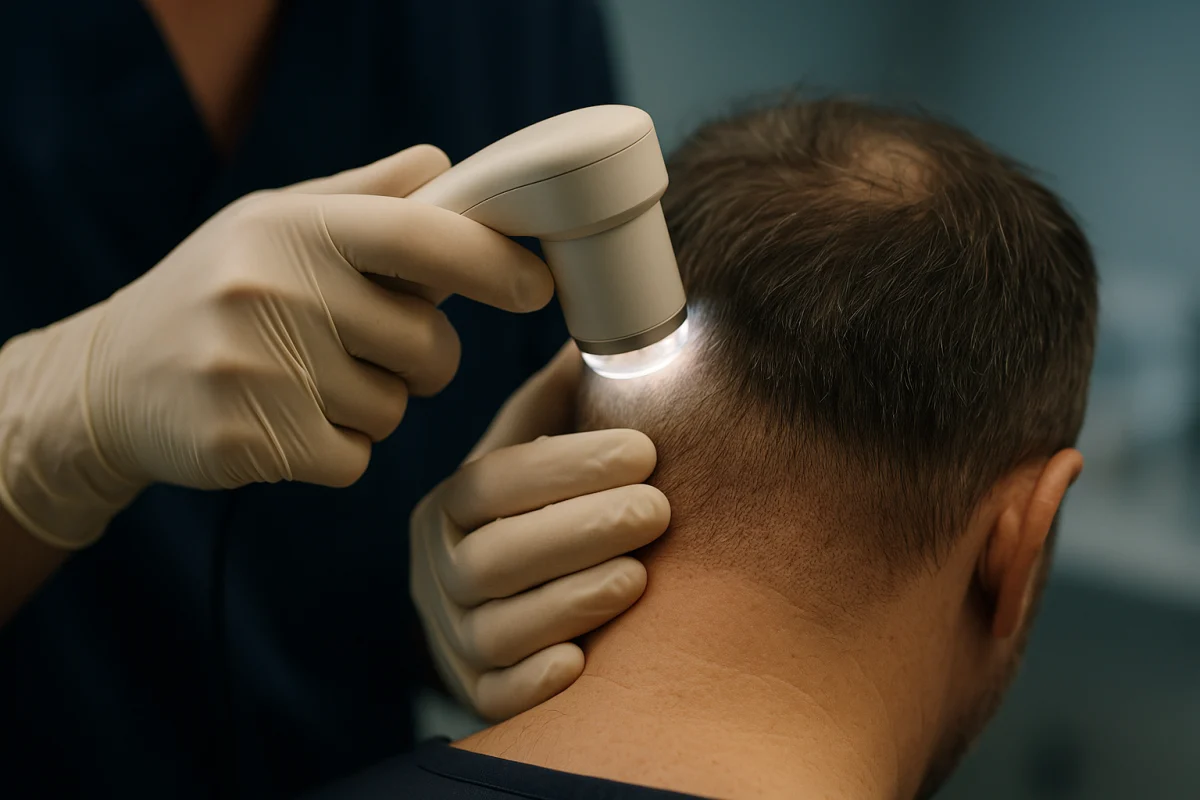
Sapphire FUE involves individual follicular unit extraction and recipient-site creation using sapphire blades, while DHI uses an implantation approach designed to place grafts with a specialised implanter. Both can be appropriate in selected cases, but neither technique alone guarantees a particular density or hairline. The final appearance depends strongly on graft handling, placement direction, graft quality, healing, and the patient’s own hair characteristics.
Fine, straight hair may need more visual density to cover the scalp than thick or curly hair. Dark hair against a light scalp can create more visible contrast, while lighter hair or lower contrast may make a similar graft count appear fuller. A person with naturally high hair density in the donor area may have different options from someone with limited donor reserves. These details explain why two results with the same graft number may look very different.
Comfort arrangements can also vary. Needle-free anaesthesia is available at the clinic for suitable patients, and your medical team will explain the anaesthesia approach and any relevant limitations. The goal of planning is not to copy another person’s hair transplant before and after result, but to create an appearance that is medically appropriate, natural-looking, and sustainable for the individual patient.
06Limits, risks, and decisions to consider before surgery
A hair transplant is a surgical procedure, so it has limitations and possible disadvantages. It requires a suitable donor area, a recovery period, and patience during the growth cycle. Temporary swelling, redness, scabbing, itching, or numbness can occur. Less common complications may include infection, prolonged inflammation, poor growth, noticeable scarring, or an unnatural-looking result if planning or technique is inadequate.
The procedure does not stop the underlying process of hair loss in native, non-transplanted hair. If thinning continues behind a newly restored hairline, the overall appearance can change over time. Some patients may discuss medical management for ongoing loss with a qualified doctor, but suitability depends on medical history, diagnosis, and individual factors. A transplant should be viewed as one part of a long-term hair restoration strategy rather than a universal cure.
There are also practical considerations for international patients, including travel planning, time away from work, aftercare, and follow-up. Acibadem Hair Transplant Center provides all-inclusive packages that can include VIP transfer, a 4-star hotel, a care kit, and 12 months of follow-up. The clinic has treated patients from 38 countries over 12 years, but every patient should still receive clear information about expected recovery, possible risks, and realistic limitations before deciding to proceed.
07Looking beyond the first result for lasting confidence
Transplanted follicles that establish and grow successfully are generally expected to retain many of the donor area’s characteristics over the long term. This is why hair transplants can provide a durable improvement for suitable candidates. However, durability does not mean that the appearance will remain unchanged forever, because native hair may continue to thin with age or due to progressive pattern hair loss.
Twenty years after surgery, a person may still have much of the transplanted hair, but the surrounding native hair can look different from how it did at the time of treatment. The pattern may become less balanced if future loss was not considered in the original design. Conservative hairline planning, sensible graft distribution, and protecting donor reserves can help create options for the years ahead, although no future outcome can be guaranteed.
At Acibadem Hair Transplant Center, results are measured by trichoscopic graft survival at month 12, with a documented 98% rate under written guarantee. This measurement relates to graft survival at that defined follow-up point and should not be interpreted as a promise of identical cosmetic results for all patients. A free online analysis reviewed by doctors can help establish whether transplantation may be appropriate; WhatsApp replies are typically provided within about two hours.
08Practical aftercare in the first two weeks
The first two weeks are mainly about protecting the recipient area while the scalp settles. Your clinic will provide a washing schedule, usually beginning with gentle cleansing rather than rubbing or direct pressure on the grafts. Patients are commonly asked to use lukewarm water, apply any recommended lotion or foam carefully, and let water run over the treated area rather than using strong shower pressure. Do not pick, scratch, or manually remove crusts, even if itching occurs.
Sleeping position can also matter during the first nights. Many patients are advised to keep the head elevated and avoid contact or friction against the newly treated area. Loose, clean clothing that does not need to be pulled tightly over the head can make changing clothes easier. Your doctor will confirm when it is appropriate to return to normal sleeping, washing, hat use, and grooming routines.
Heavy exercise, swimming, sauna use, and intense sun exposure are usually restricted for a period after surgery because sweat, heat, friction, and contamination may irritate the healing scalp. Smoking and alcohol may also affect recovery and should be discussed honestly before the procedure. The exact restrictions and timing vary, so patients should follow the written aftercare plan provided by their medical team rather than relying on general online advice.
Contact the clinic promptly if you have symptoms that seem unusual or worsening, such as increasing pain, spreading redness, significant swelling, discharge, fever, or concerns about the recipient or donor area. Most early changes are temporary, but timely medical review is the safest approach when there is uncertainty. Keeping follow-up photographs in consistent lighting can also help the team assess healing from a distance.

09A clearer hair transplant recovery timeline
In the first few days, the recipient area may show tiny crusts around each implanted graft, while the donor area can feel tender or tight. Mild swelling may occur in some patients. This stage is not suitable for judging density or the final hairline because the scalp is still healing and the visible hairs are not yet a reliable indication of future growth.
During approximately the second to fourth weeks, transplanted hair shafts commonly shed. The appearance can temporarily look similar to, or even thinner than, before treatment. This phase is often called shock shedding or shedding of the implanted shafts. It does not necessarily mean the follicles have been lost, but any individual concern should be checked with the treating clinic.
Between months 3 and 5, new hairs may begin to emerge. They can grow at different speeds and may initially look fine, soft, or irregular. By months 6 to 8, many patients notice a more visible improvement in coverage, particularly in the frontal and mid-scalp regions. The crown may appear slower because of its larger area, hair direction, and the way light reflects from the scalp.
Months 9 to 12 are usually the most useful period for assessing maturation. Hair length, shaft thickness, and blending with native hair may continue to improve over this period. Acibadem Hair Transplant Center assesses graft survival trichoscopically at month 12, with a documented 98% rate under written guarantee. This is a defined clinical measurement of graft survival, not a guarantee that every patient will have the same density, styling options, or cosmetic appearance.
10Candidacy questions that should be answered before planning grafts
Not every type of hair loss is suitable for immediate transplantation. Pattern hair loss is a common reason for treatment, but sudden shedding, patchy loss, scalp inflammation, scarring conditions, nutritional issues, hormonal changes, and some medical conditions may need investigation first. A transplant does not treat the underlying cause of every form of hair loss, so a doctor should confirm the likely diagnosis before recommending surgery.
Age alone does not decide suitability. However, people with rapidly changing hair loss may need especially careful long-term planning because the future pattern is less predictable. A very low hairline or aggressive coverage plan can use grafts that may be needed later. Doctors generally consider the current pattern of loss, family history, donor density, hair calibre, scalp condition, and the patient’s expectations when discussing a sustainable design.
Medical history is also important for safety. Patients should disclose regular medicines, allergies, previous scalp procedures, bleeding concerns, chronic health conditions, and any history of poor wound healing. This information helps the medical team decide whether further assessment, treatment adjustment, or postponement may be appropriate. Do not stop prescribed medicines without advice from the clinician responsible for your care.
A free online hair analysis reviewed by doctors is available through Acibadem Hair Transplant Center and can provide an initial opinion based on clear scalp photographs and health information. It cannot replace an in-person clinical assessment where this is needed, but it can help clarify whether donor supply, treatment goals, and travel plans appear reasonable before a patient makes arrangements.
11Planning travel to Istanbul around recovery needs
International patients should plan travel around the need for rest and early aftercare, not only around the procedure date. It is sensible to allow enough time in Istanbul for the clinic’s required checks, the treatment day, and the first washing or review appointment if included in the care plan. Your coordinator will confirm the recommended schedule based on the procedure and your flight arrangements.
For the journey home, choose comfortable clothing that does not rub against the scalp and keep the aftercare items and clinic contact details easily accessible. Avoid placing heavy luggage where lifting could be difficult in the early recovery period. If you are travelling with another person, they may be able to assist with transport, luggage, and practical tasks during the first days, although this is not essential for every patient.
Acibadem Hair Transplant Center offers all-inclusive packages that can include VIP transfer, a 4-star hotel, a care kit, and 12 months of follow-up. Patients should still check passport, visa, airline, insurance, and medication requirements independently before travelling. Travel insurance terms may differ in relation to planned medical treatment, and the clinic can explain its care arrangements but cannot determine an insurer’s coverage.
Remote follow-up is particularly useful after patients return home. Take any requested photographs at the agreed intervals, use similar angles and lighting where possible, and report concerns rather than waiting for a scheduled milestone. The clinic typically replies to WhatsApp enquiries within about two hours, helping international patients obtain practical guidance during the recovery process.
12Frequently Asked Questions
How long can a hair transplant last?
Successfully established transplanted follicles are typically long-lasting because they are taken from an area that is usually more resistant to pattern hair loss. However, native hair around the transplant may continue to thin over time, so the overall appearance can change. Long-term planning and appropriate follow-up are important.
How much area can 3,000 grafts cover?
Around 3,000 grafts may provide meaningful coverage for a hairline and part of the mid-scalp in some patients, but it is not a fixed coverage formula. The result depends on the size of the area, hair thickness, curl, scalp contrast, graft composition, and desired density. A doctor should assess donor capacity and scalp needs before confirming a plan.
What are the possible disadvantages of a hair transplant?
A transplant involves surgery, recovery time, cost, and a gradual growth period. Possible temporary effects include redness, swelling, scabbing, itching, and shedding, while less common risks include infection, scarring, poor growth, or an unnatural appearance. It also does not prevent future thinning in non-transplanted hair.
What may happen 20 years after a hair transplant?
Many transplanted hairs may still be present after 20 years, but the natural hair around them can continue to thin as part of ageing or progressive hair loss. This may alter the balance of the original result and, in some cases, lead to discussions about further treatment. A conservative, long-term graft plan helps account for this possibility.
This article is for general information only and is not a substitute for professional medical advice.
 06
06 12
12