
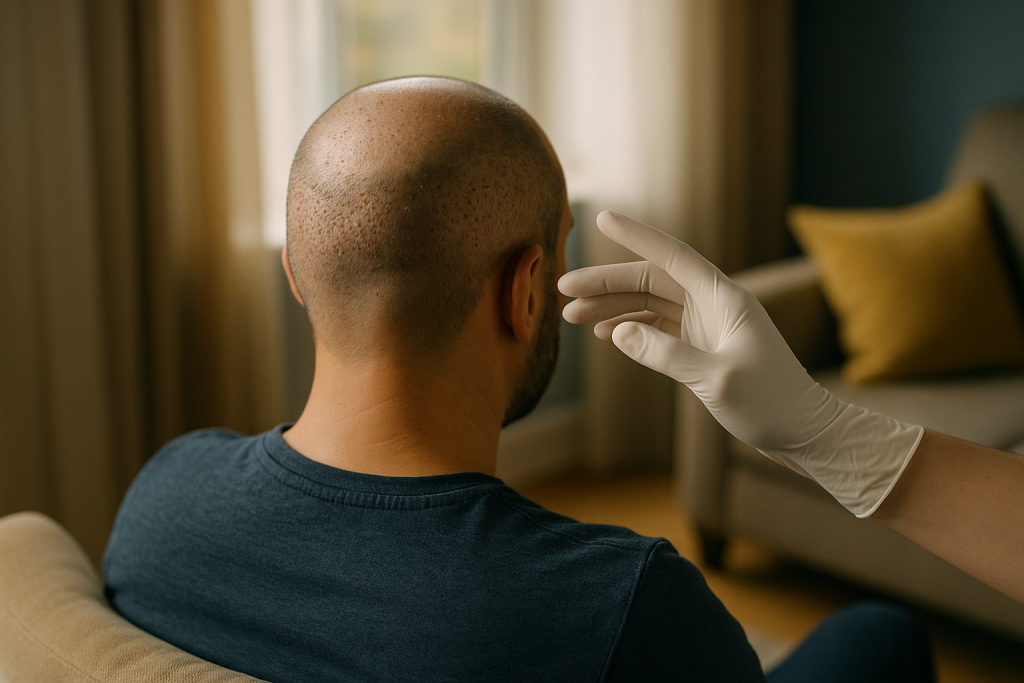
Scabbing is a normal part of early healing after a hair transplant in Turkey. In most patients, small crusts form around the implanted grafts, then soften and shed during the first 7 to 14 days when washing instructions are followed carefully.
- Small scabs around transplanted grafts are usually expected during the first one to two weeks after surgery.
- Do not pick, scratch, or forcefully rub scabs because this may disturb healing skin and recently placed grafts.
- Gentle washing, as instructed by your surgical team, helps soften crusts and allows them to release naturally.
- Redness, swelling, and mild tightness can occur early on, but worsening pain, discharge, or fever needs prompt medical review.
- Plan to protect your scalp from friction, direct sun, exercise-related sweating, and accidental contact during the early recovery period.
01Hair Transplant Turkey: Managing Scabbing After Surgery
Scabbing after hair transplant surgery is usually a normal healing response. Tiny crusts can develop around each newly implanted hair graft because the scalp has undergone many small incisions. These crusts are made from dried blood, natural skin fluid, and healing tissue. They may look worrying at first, especially when there are many grafts, but their presence alone does not usually mean that something is wrong.
For patients travelling for a hair transplant Turkey procedure, understanding the scabbing timeline before surgery can make the recovery period less stressful. Most crusts begin to appear within the first few days and gradually come away after gentle washing. The exact timing varies between patients, depending on scalp sensitivity, skin oiliness, the number of grafts, and how closely aftercare instructions are followed.
The main goal is not to remove scabs quickly. The goal is to protect the grafts while the scalp heals. Newly implanted follicles need time to settle in the recipient area. Your clinic should give clear instructions about sleeping, washing, lotion use, and returning to normal activity. If the appearance of the scalp concerns you, it is always better to send a photo to your medical team than to try a new home remedy.
02Why Crusts Form Around Newly Implanted Grafts
A hair transplant involves placing grafts into very small recipient sites in thinning or bald areas. Whether Sapphire FUE or DHI is used, the skin needs to repair these tiny openings. As part of this process, the body forms a light protective crust over the area. Similar scabbing can also appear in the donor area, where follicles were collected, although the pattern may look different because the sites are more spread out.
Scabs are often dark red, brown, or yellowish in colour. They can feel slightly rough when you touch the scalp, and some people experience itchiness as the skin heals. Itching is common, but scratching with fingernails is not recommended. Scratching can irritate the skin, introduce bacteria, and cause unnecessary bleeding. It can also make it difficult to know whether a graft has been disturbed.
It is important to separate normal crusting from signs that may need medical attention. Mild redness and tenderness can be expected shortly after surgery. However, increasing warmth, expanding redness, strong or worsening pain, unpleasant-smelling discharge, or a fever are not symptoms to ignore. These symptoms do not automatically mean there is an infection, but your doctor should assess them promptly and advise you on the next step.
03The First Three Days: Protect the Grafts Before Washing
The first 72 hours are a particularly delicate part of hair transplant recovery. During this time, the grafts are still settling into their new position. Patients are typically asked to avoid touching the recipient area, including brushing hair over it, wearing tight hats, or allowing a pillow to rub against it. Your surgical team may advise sleeping with the head elevated to help limit swelling and prevent contact with bedding.
Small spots of dried blood may be visible during this period. This is generally expected, particularly near the front hairline where grafts are closely placed. Do not attempt to wipe dried blood away with a towel, tissue, or cotton pad. Instead, follow the specific spray or moisturising routine provided by your clinic. Instructions differ between surgical protocols, so the guidance given after your own procedure should always take priority over general information.
During travel after a hair transplant Turkey visit, take extra care around luggage, headrests, car doors, and aeroplane seats. These ordinary situations can lead to accidental scalp contact. Avoid carrying heavy bags if this causes straining, and do not lean the recipient area against a surface. If accidental contact causes significant bleeding, pain, or concern that grafts may have been affected, contact your clinic as soon as possible.
04Days Four to Ten: How Gentle Washing Helps Scabs Release
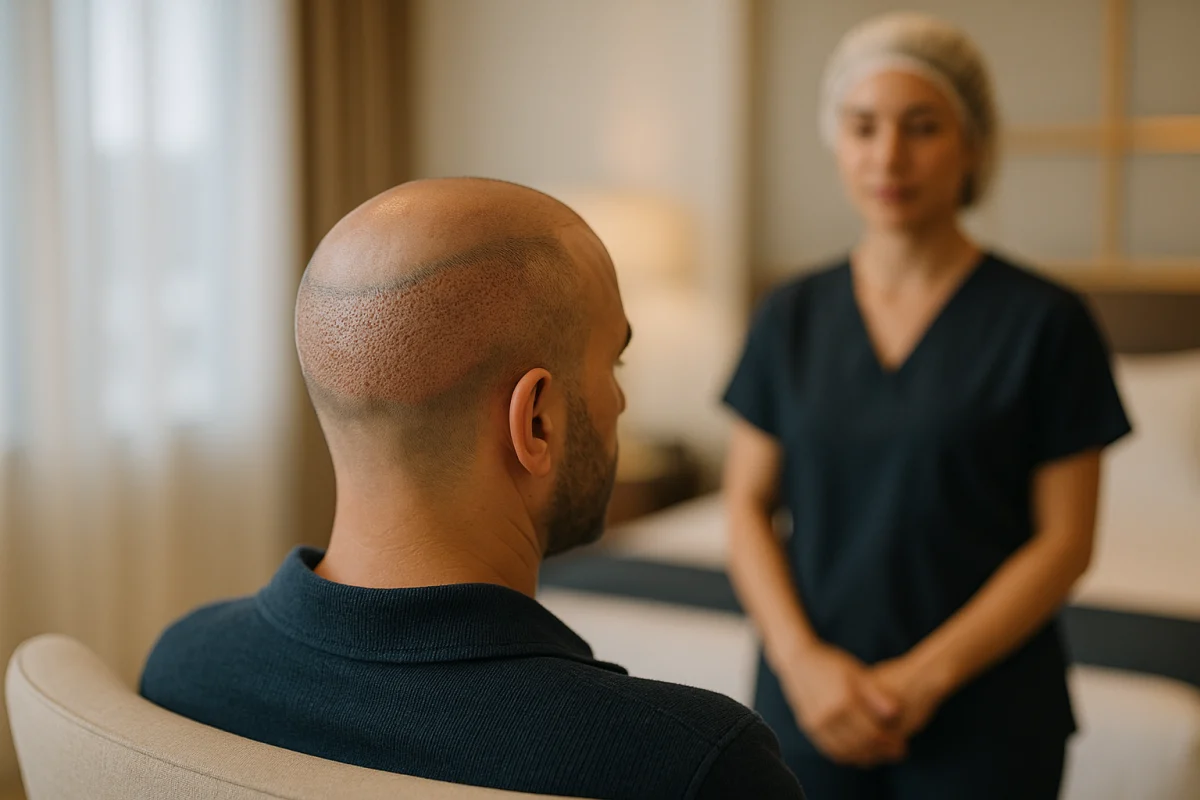
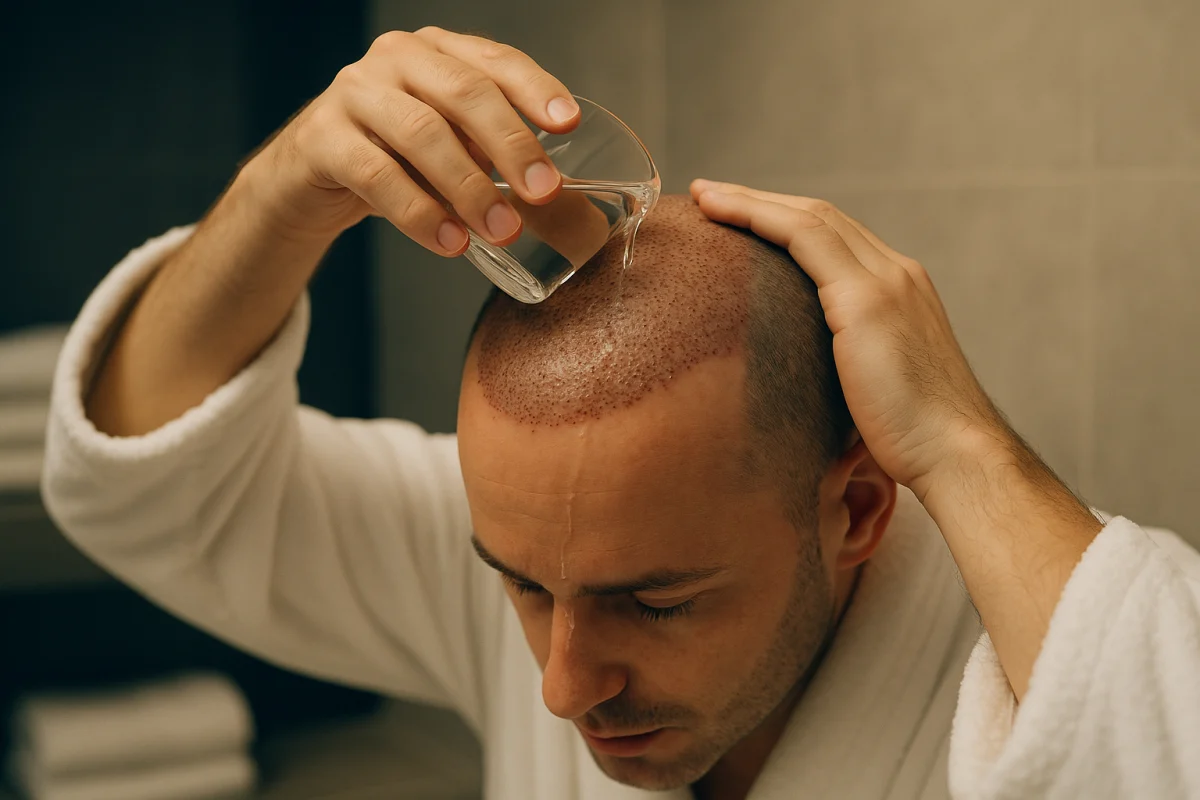
Gentle washing is usually the most important part of managing scabs after the first few days. Your clinic may provide or recommend a softening lotion and a mild shampoo. The lotion is commonly applied carefully to soften the crusts before washing. It should not be rubbed aggressively into the recipient area. The purpose is to help loosen dried material gradually while keeping the scalp clean and comfortable.
When washing begins, water should normally be lukewarm rather than very hot. Strong water pressure directly on the recipient area may not be suitable in the early stage. Many patients are advised to pour water gently from a cup or use a very soft flow, but your doctor will confirm the correct method and timing for you. Shampoo is generally lathered in the hands first, then applied using light dabbing movements rather than fingernail scratching.
By the end of the first week, some scabs may start coming away during washing. This can be a reassuring sign when it happens naturally. You may see short hairs attached to shed crusts, which can be alarming but does not always mean that a graft has been lost. The hair shaft can shed while the follicle remains under the skin. If you are uncertain, take clear photographs and ask your aftercare team for guidance.
05Removing Remaining Scabs Without Damaging Healing Skin
In many patients, most scabs are gone by around day 10 to day 14. Some clinics may instruct patients to use slightly more deliberate but still gentle circular movements at this stage to help remove crusts that remain attached. This should only be done when your surgical team says it is appropriate. The correct timing can depend on how your scalp is healing and the technique used during your procedure.
Do not use tweezers, combs, exfoliating scrubs, oils not approved by your doctor, or strong anti-dandruff products to remove crusts. These methods can irritate a healing scalp and may pull at hair shafts. Likewise, avoid peeling a scab simply because it is loose at the edge. Let washing and the natural renewal of the skin do the work. A few extra days of visible crusting is generally safer than forceful removal.
If thick scabs remain beyond the expected timeframe, do not assume that harder washing is the answer. Your clinic may want to check whether the scalp is dry, whether product has built up, or whether there is another reason for delayed shedding. A dedicated hair restoration clinic should provide a clear follow-up route, particularly for international patients who are already back home. At Acibadem Hair Transplant Center, patients receive 12 months of follow-up support as part of all-inclusive packages.
06Activities and Habits That Can Make Scabbing Worse
Friction is one of the biggest avoidable risks in the first stage of healing. Tight caps, motorcycle helmets, rough towels, and close-fitting clothing pulled over the head can catch on scabs or rub the recipient area. If you need to get dressed, choose shirts that open at the front. Wait for your clinic’s approval before wearing any head covering, and make sure it does not press directly against the transplanted region.
Heavy exercise, swimming, saunas, and intense sweating are usually restricted for a period after surgery. Sweat may cause irritation or itching, while public pools and open water can expose healing skin to unwanted microbes. Direct sunlight can also make a recovering scalp more sensitive. Your doctor will advise when it is appropriate to restart these activities, based on your healing progress and the type of activity involved.
Smoking and alcohol may also be discussed during aftercare because they can affect circulation, hydration, sleep, and general wound healing. Follow the pre-operative and post-operative advice given by your doctor. It is also wise to avoid new hair products, colouring treatments, styling sprays, and scalp treatments until your team confirms that the skin has recovered. A simple routine is usually best while scabs are present.
07When Scabbing Needs Medical Advice Rather Than Home Care
Most post-transplant scabs are temporary and settle with routine care. However, seek advice from your clinic if you notice symptoms becoming worse rather than gradually improving. Examples include persistent or spreading redness, marked swelling after the early recovery phase, pulsing pain, yellow or green discharge, a bad smell, or bleeding that does not stop with the instructions provided by your medical team.
Itchiness alone is often part of healing, but severe itchiness with a rash, blisters, or widespread irritation should be reviewed. This may be related to skin sensitivity, a reaction to a product, or another issue that needs professional assessment. Do not apply steroid creams, antibiotic creams, essential oils, or home treatments unless your doctor has specifically approved them. Products that are safe on normal skin may not be suitable for fresh recipient sites.
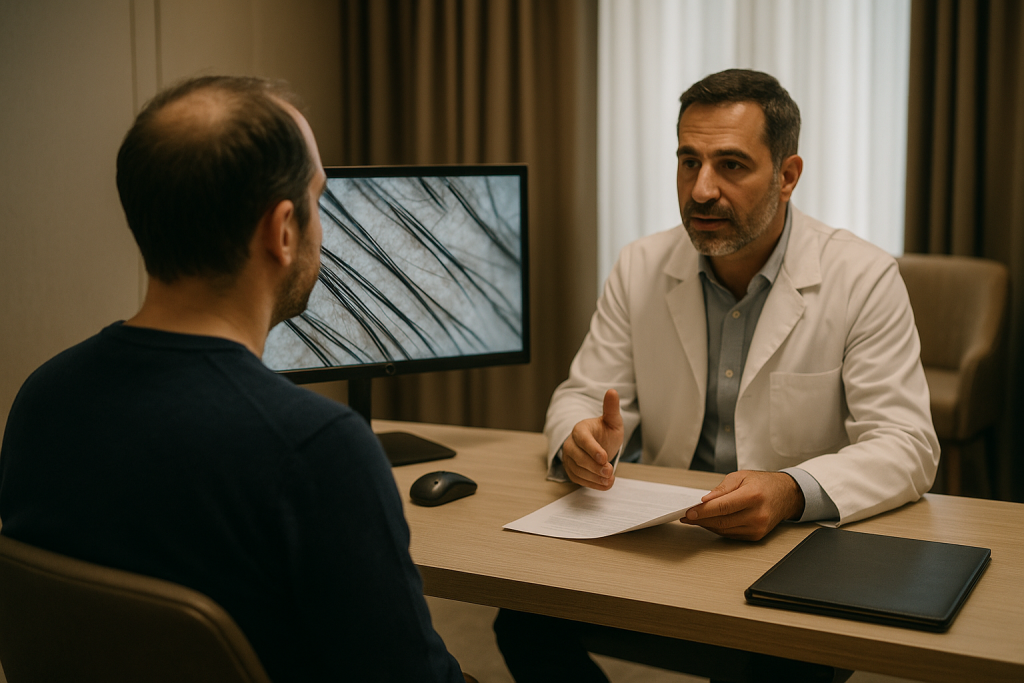
International patients should choose a provider with a realistic follow-up plan, not only a surgical appointment. Acibadem Hair Transplant Center is a dedicated hair restoration clinic in Istanbul licensed by the Turkish Ministry of Health. Patients can begin with a free online hair analysis reviewed by doctors, and messages sent on WhatsApp typically receive a reply within around two hours. This can be useful when a healing question arises after you have returned home.
08What Scabbing Means for Long-Term Hair Transplant Results
Scabs are an early recovery feature, not a reliable way to judge the final result. Even once the scalp looks clear, the transplanted hairs may shed in the following weeks. This is commonly called shedding or shock loss, and it can be part of the normal growth cycle after transplantation. New growth usually takes time, so patience and consistent follow-up are more useful than checking the hairline every day.
Long-term results depend on several clinical factors, including the quality and availability of donor hair, correct graft handling, suitable placement, the progression of natural hair loss, and aftercare. A responsible clinic will assess whether a transplant is suitable for you and explain what can realistically be achieved. No clinic should promise that every patient will have the same density or hair growth pattern, because each scalp and donor area is different.
At Acibadem Hair Transplant Center, results are measured through trichoscopic graft survival at month 12, with a documented 98% rate under written guarantee. This measurement does not remove the need for careful recovery at home. Following washing instructions, avoiding picking, and reporting unusual symptoms promptly are practical ways to support a calm healing period after a hair transplant Turkey procedure.
09Frequently Asked Questions
What does a 3,000-graft hair transplant in Turkey cost?
The cost of a 3,000-graft procedure can vary because graft number is only one part of a treatment plan. Technique, donor area assessment, medical support, travel arrangements, accommodation, and follow-up can all affect the final quote. A reputable clinic should review your photos or online hair analysis before providing a clear, personalised treatment plan and price.
Are hair transplants in Turkey genuinely good?
Turkey has many clinics offering hair restoration, but quality can vary significantly between providers. A good experience depends on medical assessment, proper licensing, surgical planning, graft handling, hygiene standards, and structured aftercare rather than the country alone. Patients should look for transparent clinical information and make sure doctors are involved in their evaluation and care.
Is it safe to have a hair transplant in Turkey?
Hair transplant surgery can be performed safely when it is carried out in an appropriately licensed medical setting by a qualified team following proper clinical protocols. As with any procedure, there are risks, including infection, bleeding, swelling, scarring, and an unsatisfactory cosmetic result. Check the clinic’s licensing, ask who will perform each stage of the procedure, and confirm how post-operative support will be provided after you travel home.
How long can the results of a Turkey hair transplant last?
Transplanted follicles are typically selected from areas that are more resistant to genetic hair loss, so they can provide long-lasting growth. However, results vary between patients, and existing non-transplanted hair may continue to thin over time. Your doctor can discuss long-term planning, including whether medical treatment or a future procedure may be appropriate for your pattern of hair loss.
This article is for general information only and is not a substitute for professional medical advice.
 06
06 12
12