
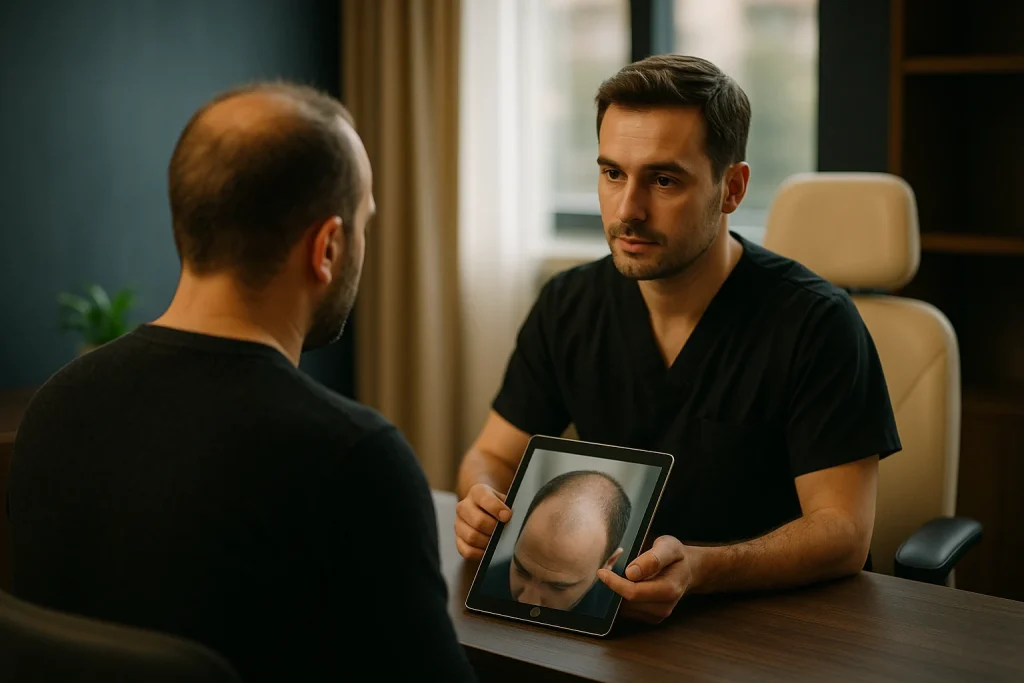
A hair transplant can restore hair to areas affected by male pattern baldness by moving resistant follicles from the donor area to thinning or bald zones. It does not usually stop future hair loss in untreated native hair, so a doctor-led long-term plan is important for natural-looking results.
- Male pattern baldness is a progressive condition that commonly affects the hairline, temples, mid-scalp and crown.
- A transplant redistributes permanent-looking donor follicles; it does not create new donor hair or cure the underlying tendency to lose hair.
- Donor density, hair characteristics, the pattern of loss and realistic expectations are central to safe graft planning.
- Sapphire FUE and DHI are established implantation approaches, but the most suitable technique depends on your individual assessment.
- Long-term planning may include monitoring, medical treatment where appropriate and preserving enough donor hair for the future.
01Hair Transplant for Male Pattern Baldness: When It Can Help
A hair transplant for male pattern baldness can be an effective option for men with stable or progressing androgenetic hair loss who have an adequate donor area. The procedure moves healthy follicles, usually from the back and sides of the scalp, into thinning areas such as the frontal hairline, temples, mid-scalp or crown. These donor follicles are generally more resistant to the hormonal effects linked with male pattern hair loss.
Male pattern baldness is the most common cause of hair loss in men. It often begins with recession at the temples or a gradual rise in the frontal hairline, although some men first notice thinning at the crown. Over time, the affected areas may join together. The speed and pattern are different for every person, which is why a proper assessment should come before deciding on surgery.
A transplant is designed to improve visible density and frame the face in a natural way, rather than return every patient to the hair density they had as a teenager. The available donor supply is limited, while the area that may require coverage can be large. A responsible plan therefore balances your current goals with the possibility of future thinning.
At Acibadem Hair Transplant Center, a dedicated hair restoration clinic in Istanbul licensed by the Turkish Ministry of Health, doctors review each case before planning treatment. A free online hair analysis can provide an initial review of photographs and your hair-loss history. This first step helps clarify whether a surgical consultation is appropriate and what questions should be explored in more detail.
02Why Male Pattern Baldness Develops and Progresses
Male pattern baldness, also called androgenetic alopecia, is influenced by genetics and hormones. In genetically susceptible follicles, a hormone-related process gradually shortens the active growth phase and causes hairs to become finer, shorter and less pigmented. This process is called follicular miniaturisation. It does not usually happen evenly across the scalp, which explains the familiar patterns of recession and crown loss.
The frontal scalp, temples, mid-scalp and crown are commonly more sensitive to this process. By contrast, follicles in the permanent donor zone at the back and sides of the head often retain greater resistance. This difference is the biological basis of hair transplantation. After careful extraction and implantation, transplanted follicles can typically continue to grow in their new location.
However, the original non-transplanted hair around the implanted grafts can still thin over time. A patient may therefore have growing transplanted hair at the hairline while the mid-scalp or crown continues to lose density. This is one reason why surgeons avoid designing an overly low or dense hairline that may be difficult to support later.
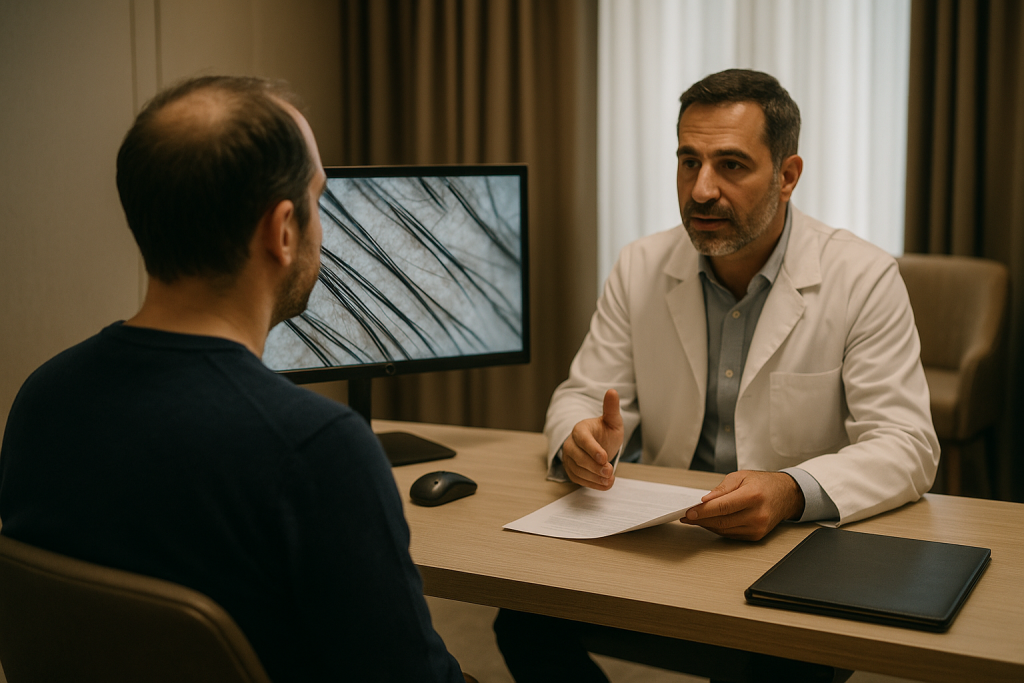
Not every type of hair loss is male pattern baldness. Sudden shedding, patchy loss, scalp inflammation, scarring, recent illness, nutritional concerns or medication-related changes may require a different evaluation. Your doctor may recommend further assessment before considering a transplant, especially when the diagnosis is unclear or hair loss is unusually rapid.
03Who Is Usually a Suitable Candidate for Surgery?
Suitability is based on more than age or the size of a bald area. In most patients, the key considerations include the quality and density of donor hair, the likely future pattern of loss, scalp health, hair calibre, curl pattern, skin-to-hair colour contrast and the patient’s expectations. Thick, wavy or curly hair can sometimes create more visual coverage than fine, straight hair, even with a similar graft number.
A doctor will also consider whether your hair loss has become reasonably predictable. Younger men can be suitable candidates, but they need particularly careful long-term planning because their pattern of baldness may continue to develop. In some situations, delaying surgery, treating active hair loss first, or planning a conservative hairline may be the safer approach.
Good general health and a healthy scalp support safe treatment and healing. Certain uncontrolled medical conditions, active scalp infections, significant scarring disorders, bleeding concerns, or unrealistic expectations may make surgery unsuitable or mean that it should be postponed. Smoking, medicines and previous procedures should also be discussed honestly during the medical review.
A hair transplant for male pattern baldness is not simply a matter of filling every visible gap. The surgeon must decide how to use a limited donor reserve intelligently. This includes preserving donor density, placing grafts at angles that follow natural hair direction and prioritising areas that will give the most meaningful aesthetic improvement. Your doctor will confirm whether the donor area can support your desired coverage.
04Donor Area Assessment and Realistic Graft Planning
Grafts are naturally occurring groups of one to several hairs. The number of grafts needed depends on the area being treated, the desired density, the size of the recipient zone and the characteristics of your donor hair. For example, rebuilding a mature frontal hairline requires a different strategy from improving a broad crown with extensive thinning. A graft estimate should always be personalised rather than chosen from a standard package list.
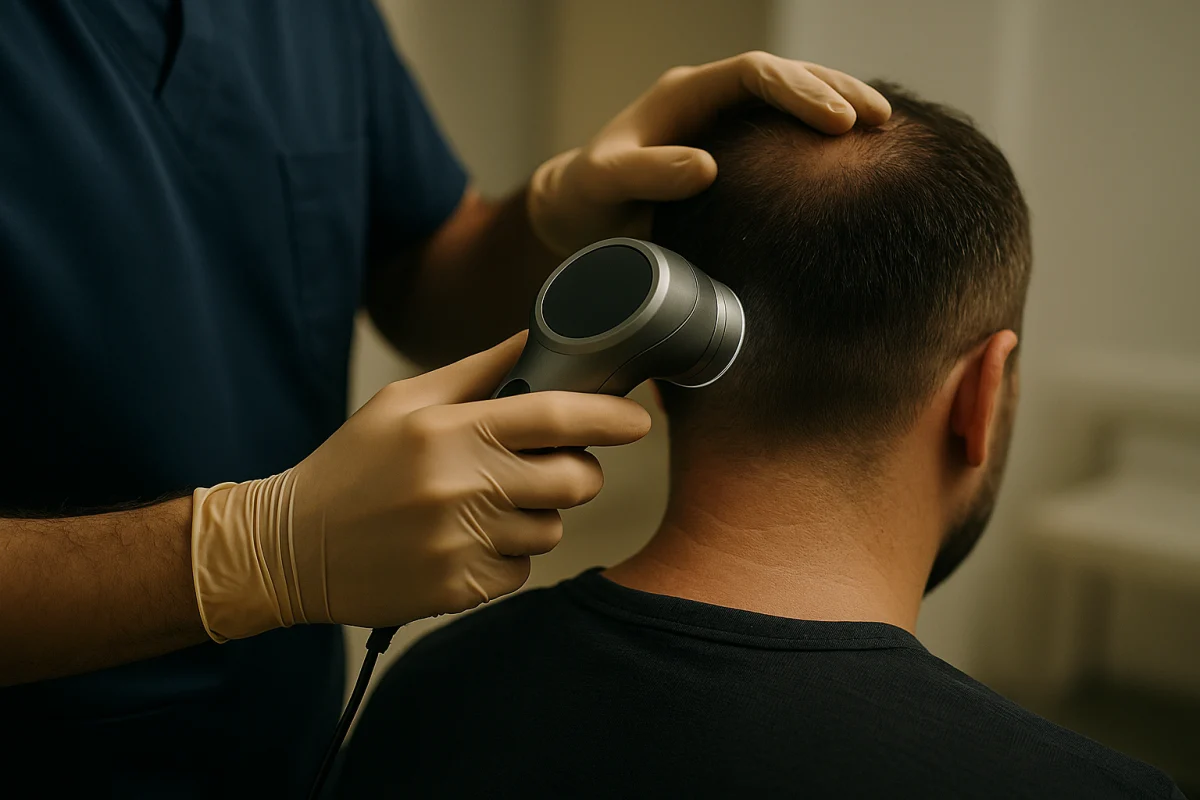
During planning, the donor area is examined for density, follicle quality and uniformity. Overharvesting can leave the back or sides of the scalp looking thin, particularly if hair is worn short. For this reason, a careful extraction pattern and a conservative approach are important. A clinic should also consider the possibility that further surgery may be needed in the future.
The hairline is one of the most visible parts of a transplant. A natural result usually depends on an age-appropriate design, irregular soft transitions and the placement of finer single-hair grafts at the leading edge. Behind this zone, multi-hair grafts may be used to build density where appropriate. The aim is to avoid a straight, artificial-looking line that does not age well.
Coverage and density are not the same thing. When the recipient area is large, it may be safer to create the appearance of coverage over priority zones than to pursue high density everywhere in one session. Photographs, trichoscopic assessment and open discussion about styling preferences can help set realistic goals before treatment begins.
05Sapphire FUE and DHI: Understanding the Main Approaches
Sapphire FUE and DHI are two techniques used in modern hair restoration. In Sapphire FUE, follicular units are extracted individually from the donor area and recipient channels are created before the grafts are placed. Sapphire blades may be used to create these channels with attention to their direction, angle and distribution. This can be useful when planning natural hair growth patterns across larger areas.
With DHI, extracted grafts are implanted using a specialised implanter tool. This method can offer controlled placement in selected cases, including work between existing hairs or in smaller target zones. It is not automatically better for every patient, and the best choice depends on the scalp, the number of grafts, the intended area and the clinical plan.
The quality of the result is influenced by much more than the name of the technique. Safe extraction, gentle graft handling, correct storage, accurate recipient-site planning and experienced clinical oversight all matter. Your doctor should explain which approach is recommended and why it suits your hair characteristics and goals.
Needle-free anaesthesia may be available for patients who are concerned about injections. This option and its suitability should be discussed with the clinical team before treatment. Regardless of the implantation method, patients should follow pre-procedure instructions carefully, including advice about medicines, alcohol, smoking and scalp preparation when provided.
06Recovery, Shedding and the Timeline for Visible Growth
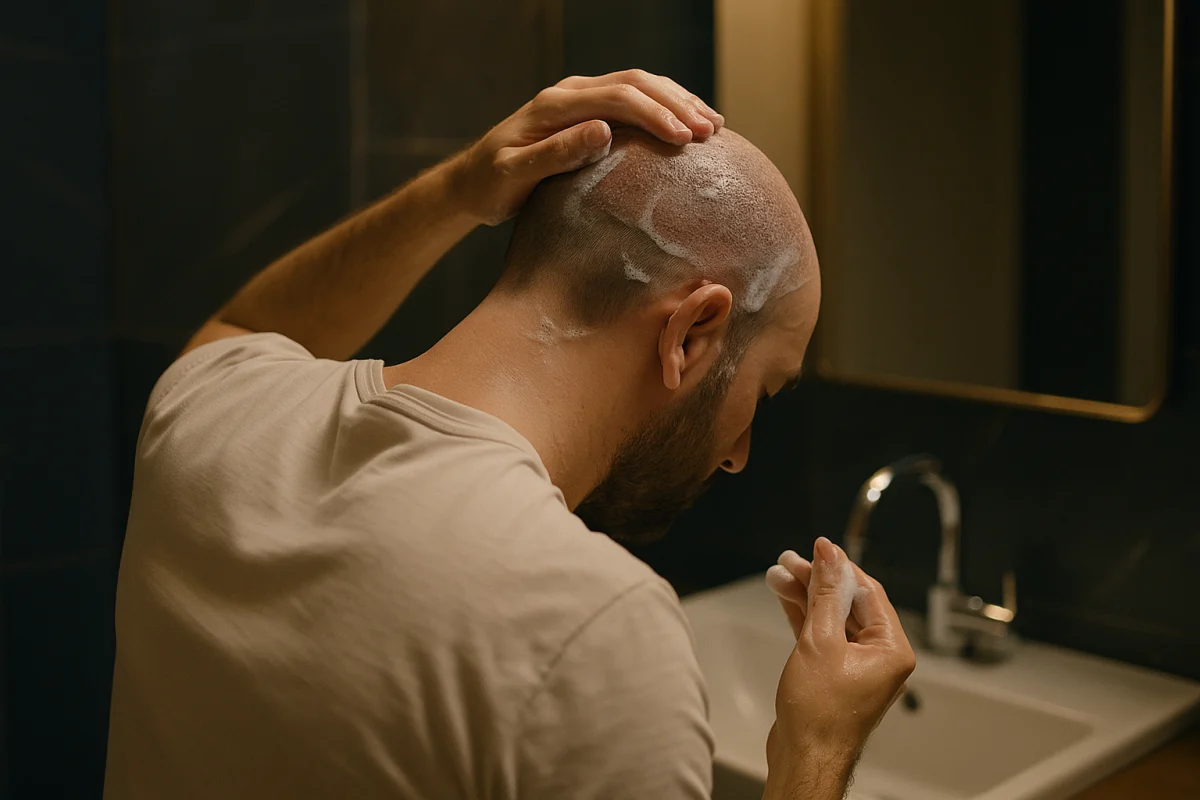
After a transplant, small scabs and redness are common in both the recipient and donor areas. Most patients receive detailed washing and aftercare instructions to protect the grafts during the early healing period. It is important not to scratch, rub or pick the implanted area. Your clinical team will advise when you can resume normal washing, exercise, headwear and other daily activities.
Transplanted hairs commonly shed within the first weeks after the procedure. This can be worrying, but it is usually a normal part of the cycle and does not necessarily mean the follicles have been lost. The implanted follicles remain beneath the skin and generally enter a resting phase before new growth begins. Early changes can vary considerably between patients.
New growth often becomes more noticeable over several months, while texture and density continue to improve gradually. A fuller impression is commonly assessed around 12 months, although crown areas may sometimes mature more slowly. Patience is essential because hair growth cannot be rushed safely. Your doctor will explain the expected timeline for your treatment area and hair type.
Acibadem Hair Transplant Center provides 12 months of follow-up as part of its all-inclusive packages, which also include VIP transfer, a 4-star hotel and a care kit. The clinic measures results through trichoscopic graft survival at month 12 and documents a 98% rate under a written guarantee. Individual cosmetic appearance can still vary because hair characteristics, healing and ongoing native hair loss differ from person to person.
07Protecting Native Hair After a Transplant
A transplant can restore selected areas, but it does not remove the genetic tendency toward male pattern baldness. Native hairs that were already vulnerable may continue to miniaturise after surgery. For this reason, long-term care is often as important as the operation itself, particularly for men with diffuse thinning or a family history of extensive loss.
Your doctor may discuss evidence-based medical or non-surgical options that could help manage ongoing hair loss, if they are medically appropriate for you. These treatments have possible benefits, limitations and side effects, so they should not be started based only on online information. A qualified doctor can review your history and advise whether any option is suitable.
Regular follow-up and consistent photographs can help identify changes in native hair before they become more noticeable. If progression occurs, the plan may involve observation, medical management where appropriate, styling adjustments or consideration of future surgery only if the donor supply remains adequate. Protecting the donor area should remain a priority throughout every stage.
For international patients, clear communication before and after surgery is especially valuable. Acibadem Hair Transplant Center has treated patients from 38 countries over 12 years, and its doctor-reviewed online hair analysis is available before travel planning. Replies on WhatsApp are typically provided within around two hours, helping patients ask practical questions about candidacy, treatment planning and aftercare arrangements.
08Frequently Asked Questions
Could baldness be cured by 2030?
There is no confirmed cure for male pattern baldness expected by 2030. Research into hair loss continues, and treatments may improve over time, but no future cure can be promised. Current management typically focuses on slowing further loss where appropriate and restoring selected areas with transplantation when a patient is suitable.
Will a hair transplant stop male pattern baldness from progressing?
No. A transplant usually moves resistant donor follicles into thinning areas, but it does not stop male pattern baldness in the surrounding native hair. Your doctor may discuss a long-term plan to monitor and, where medically suitable, help manage ongoing hair loss.
How much does 3,000 hair grafts cost?
The cost of 3,000 grafts varies because treatment plans differ in technique, donor complexity, the recipient area, clinical requirements and what is included in the package. A graft number alone does not show whether that number is safe or appropriate for your scalp. A doctor-reviewed assessment is the best way to receive an accurate, individual quotation.
What can disqualify someone from having a hair transplant?
Possible reasons include an insufficient or unstable donor area, an unclear hair-loss diagnosis, active scalp disease or infection, certain uncontrolled health conditions, and expectations that cannot be achieved safely. Rapidly progressing hair loss may also require monitoring or treatment before surgery. Your doctor will confirm suitability after reviewing your medical history, scalp and donor hair.
This article is for general information only and is not a substitute for professional medical advice.
 06
06 12
12