
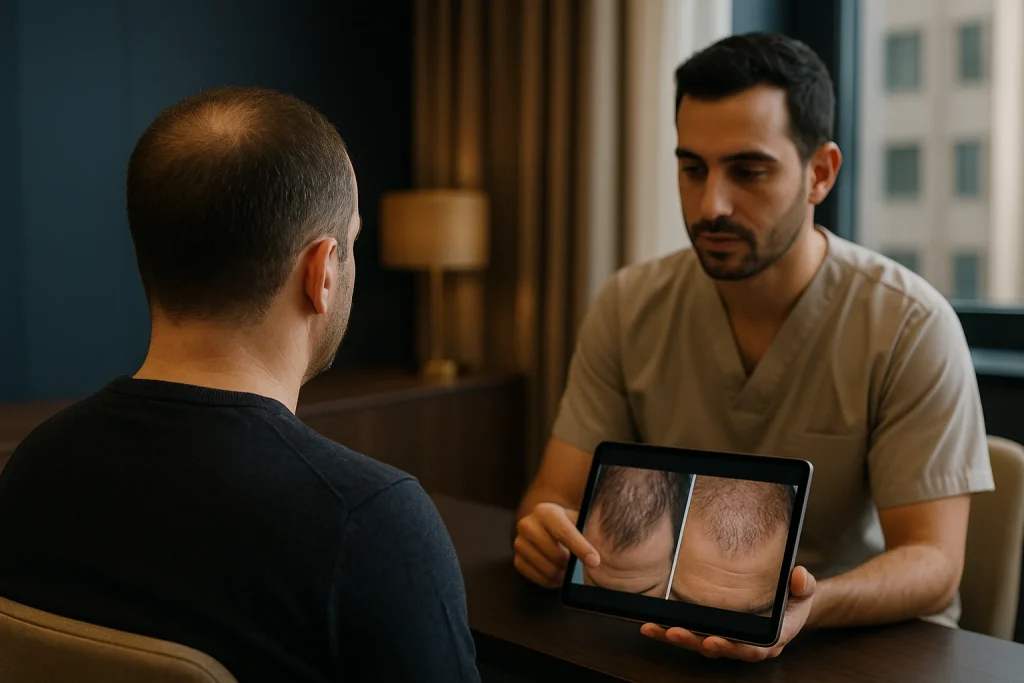
A hair plug is an older type of hair transplant graft that contained a relatively large round group of hairs. Because these grafts were placed in a pattern that could look uneven or artificial, hair plug techniques have largely been replaced by modern methods using smaller, more natural-looking grafts.
- Hair plugs were large, round grafts used in earlier generations of hair restoration surgery.
- The larger graft size could create a visible “doll’s hair” or “cornrow” appearance, especially at the hairline.
- Hair plug surgery was performed under local anaesthesia, but recovery and discomfort varied between patients.
- Modern Sapphire FUE and DHI techniques usually use much smaller graft units for softer hairline design.
- Some people with older plugs may be candidates for camouflage, graft removal, redistribution, or other corrective planning after medical assessment.
01What Is a Hair Plug? A Guide to Older Hair Restoration
A hair plug is a term used for a type of hair transplant that was common several decades ago. If you are asking “whats a hair plug,” the simple answer is that it was a relatively large, circular piece of scalp containing multiple hairs, moved from a fuller donor area to a thinning or bald area. The procedure was an important step in the history of hair restoration, but its graft design is now considered outdated for most patients.
Unlike modern follicular-unit transplantation, traditional plugs often contained many hair follicles in one round graft. A surgeon would create circular openings in the recipient area and place the grafts at intervals. This approach could provide coverage, particularly for larger bald areas, but it did not always reproduce the irregular spacing, direction, and density of natural hair growth.
Today, the phrase hair plugs may be used casually to describe any hair transplant. Clinically, however, it usually refers to these larger older-style grafts rather than current follicular-unit techniques. Understanding this difference can help you discuss a previous procedure, identify an older transplant appearance, or explore whether a corrective hair restoration consultation may be appropriate.
02How Traditional Hair Plug Surgery Worked
In traditional plug surgery, the donor tissue was usually taken from the back or sides of the scalp, where hair is often more resistant to genetic thinning. A round instrument was used to remove small discs of skin containing several hairs. These discs were then placed into prepared holes in the area affected by hair loss.
The size of grafts varied, but older procedures generally used grafts that were much larger than the individual follicular units used in modern surgery. Each recipient opening needed to accommodate the full plug. As a result, the grafts could be positioned in rows or a regular pattern, especially when the aim was to cover a wide bald area with the technology available at that time.
Hair plug procedures were usually performed in stages because the scalp needed time to heal and because a limited number of grafts could be placed during one treatment session. The final appearance also developed gradually as transplanted hair shed, entered a resting period, and then began to grow again. Results depended on graft placement, healing, hair characteristics, and the extent of ongoing hair loss.
03Why Older Hair Plugs Can Look Different
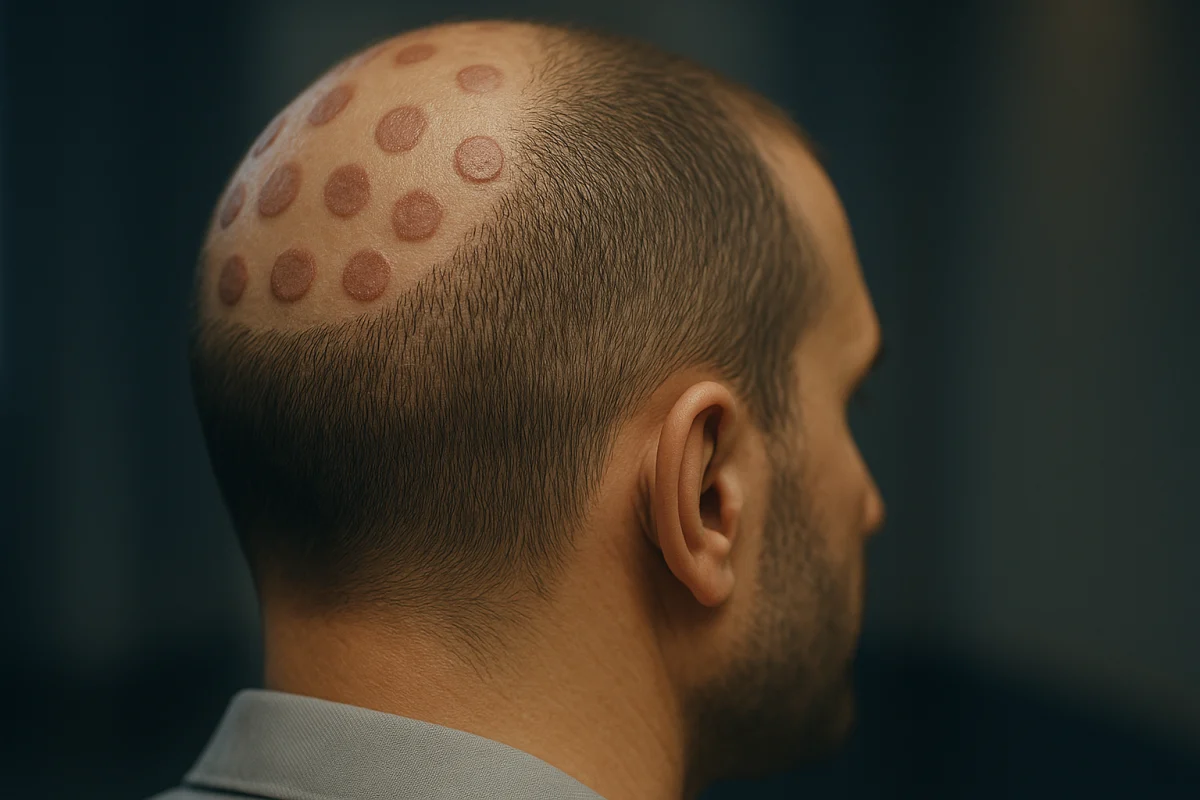
A natural scalp does not grow hair in identical round clusters. Hair emerges in small follicular units, commonly containing one to several hairs, with varied angles and uneven distribution. When larger round plugs were placed close to the frontal hairline, the grouped hairs could appear noticeably separate from one another rather than blending into the surrounding hair.
This is why some people describe older results as looking like doll’s hair, cornrows, or a pluggy hairline. The appearance may become more obvious in bright light, when the hair is wet, when it is cut short, or when further natural hair loss occurs around the transplanted grafts. A result that initially appeared acceptable can also look less natural over time if the patient’s non-transplanted hair continues to thin.
When people search “whats a hair plug,” they are often trying to understand this recognizable appearance. It is important to remember that not every older transplant looks the same. Some patients had smaller grafts, favourable hair texture, or enough surrounding hair to soften the result, while others may have more visible graft spacing or scarring.
04Hair Plugs Compared With Modern Follicular-Unit Methods
Modern hair restoration generally aims to transplant naturally occurring follicular units rather than large round groups of tissue. In most patients, this allows surgeons to create finer detail at the hairline, place single-hair grafts where softness is needed, and use multi-hair grafts behind the hairline to support visual density. Planning also considers the direction and angle of existing hair.
Sapphire FUE is a modern technique in which follicular units are extracted individually and recipient channels are created with sapphire blades. DHI also uses individually extracted grafts, with implantation planned using a specialised implanter approach. Your doctor will confirm which technique, if any, is suitable after reviewing hair loss pattern, donor capacity, scalp condition, and long-term expectations.
Modern methods do not mean that every patient will achieve the same density or coverage. Donor hair is limited, and future hair loss remains an important part of planning. However, smaller grafts and careful placement typically offer a more refined result than traditional plugs, particularly for creating a natural-looking transition from the forehead into the hairline.
05Possible Downsides and Long-Term Concerns
The main drawback of older hair plugs is their potential cosmetic appearance. Large, round grafts may create an uneven hairline or visible clusters of hair. This can be particularly concerning for people who prefer a short hairstyle, have fine hair, or have experienced continued thinning between the transplanted plugs. In some cases, an unnatural hairline can affect confidence even when the grafts themselves have grown well.
Scarring is another possible concern. Traditional plug extraction could leave small round scars in the donor area, while the recipient area may show uneven surface texture or a raised, depressed, or irregular appearance in some patients. Healing differs between individuals, and scar visibility can depend on skin type, hairstyle, surgical technique, and whether any complications occurred during the original procedure.
Older plug surgery could also make future planning more complex. A corrective approach may need to account for existing grafts, remaining donor reserves, scalp laxity, scarring, and progression of hair loss. For this reason, a responsible assessment focuses not only on what can be changed now, but also on protecting a realistic and sustainable appearance over the years ahead.
06Can Older Hair Plugs Be Corrected or Camouflaged?
In many cases, an older plug result may be improved, although the best approach depends on the individual scalp and previous surgery. A doctor may consider softening the hairline with carefully placed smaller grafts, adding density around visible plugs, changing the distribution of hair, or using other corrective strategies. Not every method is suitable for every patient, and more than one stage may sometimes be considered.
For someone asking “whats a hair plug” because they are concerned about an old transplant, the first step is a detailed evaluation rather than assuming that removal is necessary. Some larger grafts can be successfully blended with surrounding hair. In other cases, a clinician may discuss selective graft reduction, removal, or redistribution, but these options require careful judgement because they can involve further scarring and may use valuable donor resources.
At Acibadem Hair Transplant Center in Istanbul, doctors can review photos through a free online hair analysis before discussing possible next steps. The clinic is licensed by the Turkish Ministry of Health and provides Sapphire FUE and DHI techniques where clinically appropriate. An online review cannot replace an in-person medical examination, but it can help clarify whether a corrective consultation may be worth considering.
07What to Expect From a Modern Hair Restoration Consultation
A modern consultation begins with the cause and pattern of hair loss. The doctor may ask about previous surgeries, medicines, family history, scalp symptoms, and changes in shedding. The donor area is assessed to understand the available hair supply, while the recipient area is reviewed for hairline position, density needs, scar tissue, and the likely course of future thinning.
Good planning is especially important after older plug surgery. The aim is typically not simply to add the maximum possible number of grafts. Instead, the doctor considers how to create a balanced result that suits facial proportions, available donor hair, and the patient’s preferred hairstyle. A conservative hairline and strategic placement can be important where donor capacity is limited.
Acibadem Hair Transplant Center offers all-inclusive packages that can include VIP transfer, a 4-star hotel, a care kit, and 12 months of follow-up. Needle-free anaesthesia is also available. The clinic measures results through trichoscopic graft survival at month 12 and documents a 98% rate under a written guarantee; however, your own expected result and eligibility must always be confirmed by your doctor.
08Who May Be a Candidate for Hair Plug Repair?
A person with an older hair plug result may be considered for corrective treatment when there is enough donor hair available, the scalp is healthy enough for further surgery, and the cosmetic concern can be addressed with a realistic plan. Common concerns include a visibly rounded hairline, separate clusters of hair, gaps between plugs, scars that show through short hair, or thinning around previously transplanted areas.
Suitability is not based on the appearance of the plugs alone. The doctor will also assess whether hair loss is still progressing, how much native hair remains, the quality and density of the donor area, scalp mobility, and the location of old scars. People with very limited donor reserves or extensive scarring may need a more conservative strategy than someone who has had only one previous procedure.
Hair characteristics can influence what is achievable. For example, thicker or wavy hair may provide more visual coverage than very fine, straight hair, while contrast between hair colour and scalp colour can make spacing more noticeable. These factors do not automatically rule out correction, but they help the doctor set appropriate goals. In some patients, improvement may focus on softening the frontal hairline rather than trying to create maximum density across every area.
Before an assessment, it can be helpful to collect any available records from the original procedure, including the approximate year of surgery, number of sessions, graft information, and any history of healing problems. Clear photographs taken in daylight from the front, sides, top, and donor area can also support an initial online review. A doctor must still confirm candidacy through appropriate medical evaluation.
09Aftercare Following a Corrective Hair Transplant
Aftercare following a modern corrective procedure is important because previously transplanted scalp may contain scar tissue and because both existing hair and newly placed grafts need protection. Your clinical team will provide a personal aftercare plan based on the technique used, the treatment area, and your medical history. It is important to follow that plan rather than relying on advice from an older hair transplant procedure.
In the first days, patients are typically asked to avoid touching, rubbing, scratching, or picking at the recipient area. Newly placed grafts need time to settle. The clinic may provide guidance on careful washing, use of the supplied care products, and how to rinse the scalp without direct pressure. Do not use unapproved styling products, hair dyes, concealers, or topical treatments on healing areas until your doctor confirms that it is safe to do so.
Protecting the scalp from friction and swelling is also commonly part of early recovery. Patients may be advised about sleeping position, loose clothing that does not need to be pulled over the head, and avoiding activities that cause heavy sweating or raise the risk of impact to the scalp. Swimming pools, saunas, steam rooms, and direct strong sunlight are usually avoided for the period specified by the medical team because they can irritate healing skin or increase infection risk.
Contact the clinic promptly if you develop worsening pain, spreading redness, fever, discharge, significant swelling, unexpected bleeding, or another symptom that concerns you. These symptoms do not always mean that a serious problem is present, but they should be assessed without delay. Acibadem Hair Transplant Center provides a care kit and 12 months of follow-up as part of its all-inclusive packages, helping patients remain in contact with the clinic during recovery.
10Corrective Hair Transplant Timeline: What Changes May Happen Over 12 Months
A corrective hair transplant does not usually show its final cosmetic change immediately. In the early phase, small crusts, temporary redness, and a different-looking hairline can be expected as the scalp heals. The duration and visibility of these changes vary with skin type, procedure extent, scar tissue, and individual healing. Your doctor can explain what is expected in your case and when you may resume particular activities.
Transplanted hairs often shed during the weeks after surgery. This can be worrying, but it is commonly part of the normal transplant cycle and does not by itself indicate graft failure. The follicles remain beneath the skin and generally enter a resting phase before new growth begins. Existing native hair can also appear temporarily affected by the procedure or by ongoing hair loss, which is one reason that early visual assessment can be misleading.
New growth typically starts gradually rather than appearing all at once. Early hairs may be fine and uneven, while later growth usually becomes more noticeable as the hair lengthens and matures. In corrective cases, the visual blending of old plugs with newly placed follicular units may take time, particularly when the aim is to build a softer transition at the hairline or add coverage around visible grafts.
A meaningful review is often made over the following months rather than within the first few weeks. At Acibadem Hair Transplant Center, results are measured by trichoscopic graft survival at month 12, with a documented 98% rate under written guarantee. This clinic measurement does not mean that every patient will have the same aesthetic outcome, as coverage, density, hair calibre, scar behaviour, and future hair loss remain individual factors.
11Planning Travel to Istanbul for a Hair Plug Correction
Patients travelling for hair plug correction should allow enough time for the in-person assessment, treatment if confirmed as appropriate, and the first postoperative check. The exact travel schedule depends on the proposed procedure and your doctor’s instructions. It is sensible to avoid arranging important social events, strenuous work, or long unplanned travel immediately after treatment, as early aftercare and rest should be prioritised.
For an online assessment before travel, send recent, well-lit images with the hair dry and without fibres, sprays, or heavy styling products. Include close views of the hairline, areas with visible plugs, the top and sides of the scalp, and the donor area. Explain any previous transplant history, medications, allergies, medical conditions, and previous scar healing concerns accurately. This helps doctors identify questions that need to be discussed during the consultation.
Bring comfortable button-front or zip-front clothing for the treatment day and early recovery period, so garments do not need to pass over the scalp. You should also plan for sun protection that does not touch or compress the treated area unless your medical team advises otherwise. If you take regular medication, carry it in its original packaging and discuss it with the clinic before travelling; do not stop prescribed medication without advice from the clinician managing your care.
Acibadem Hair Transplant Center is a dedicated hair restoration clinic in Istanbul, licensed by the Turkish Ministry of Health. Its all-inclusive packages can include VIP transfer, a 4-star hotel, a care kit, and 12 months of follow-up. Patients can request a free online hair analysis reviewed by doctors, with WhatsApp replies typically available within approximately two hours. An online response is a useful starting point, but the final treatment decision should be made after appropriate medical assessment.
12Frequently Asked Questions
Is a hair plug procedure painful?
Traditional hair plug surgery was generally performed using local anaesthesia, so patients would usually be awake but should not feel sharp pain during graft removal and placement. They could still feel pressure, pulling, or discomfort, and soreness may occur as the anaesthetic wears off. The level of discomfort and recovery experience varied between patients and procedures.
How long did hair plug surgery usually take?
The length of traditional hair plug surgery depended on the number of grafts and whether treatment was completed in one or several sessions. A session could take several hours, while larger restoration plans were often staged over time to allow healing. Your surgeon would have determined the schedule based on the technology and treatment plan used at the time.
Can you recognise hair plugs in someone’s hair?
Sometimes, older plugs can be recognised by round clusters of hair, regular spacing, or a hairline that looks less gradual than natural hair growth. They may be more visible under strong lighting, with wet hair, or after further thinning of surrounding native hair. However, only a qualified assessment can determine whether an appearance is due to old plugs, scarring, hair loss progression, or another cause.
What are the main disadvantages of hair plugs?
The main disadvantages include the possibility of a clustered or artificial appearance, visible spacing, donor and recipient scarring, and difficulty adapting the result if hair loss continues. Larger grafts also offer less flexibility for creating a soft, detailed hairline than modern follicular-unit techniques. Some older results can be improved, but correction requires an individual medical evaluation and may be limited by available donor hair.
This article is for general information only and is not a substitute for professional medical advice.
 06
06 12
12