
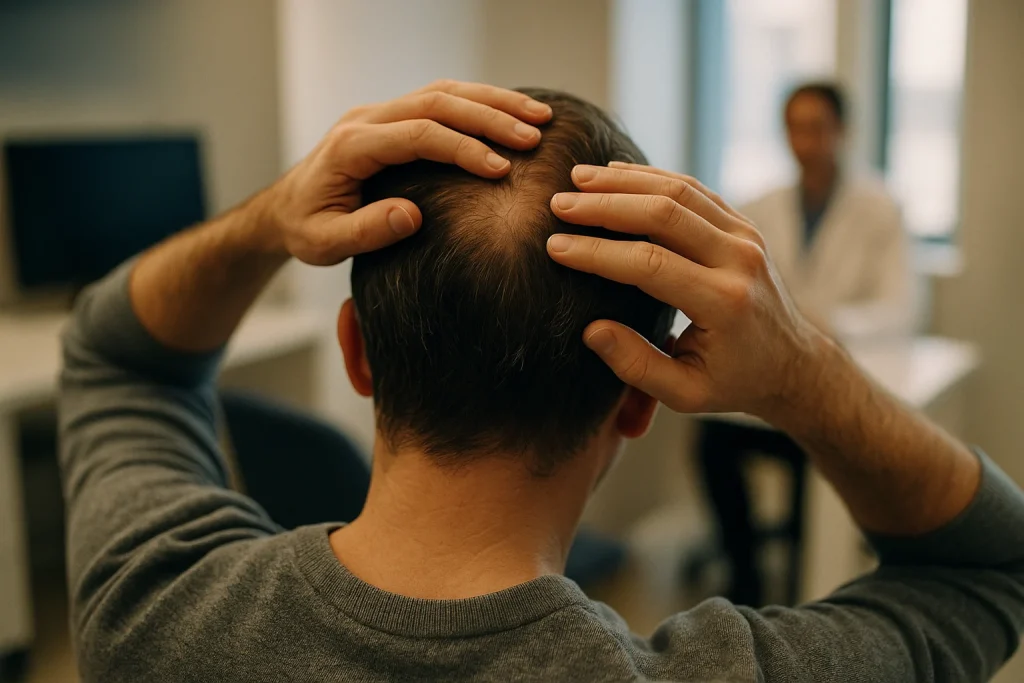
Alopecia can begin gradually with increased shedding, a widening part, thinning at the temples or crown, or small smooth patches of missing hair. If you are asking how does alopecia start, the answer depends on the type of hair loss, so a medical assessment is important before considering treatment or a transplant.
- Early alopecia may appear as increased shedding, pattern thinning, receding hairlines, or clearly defined patches.
- The cause of hair loss matters because temporary shedding, autoimmune alopecia, genetic thinning, and scarring conditions need different care.
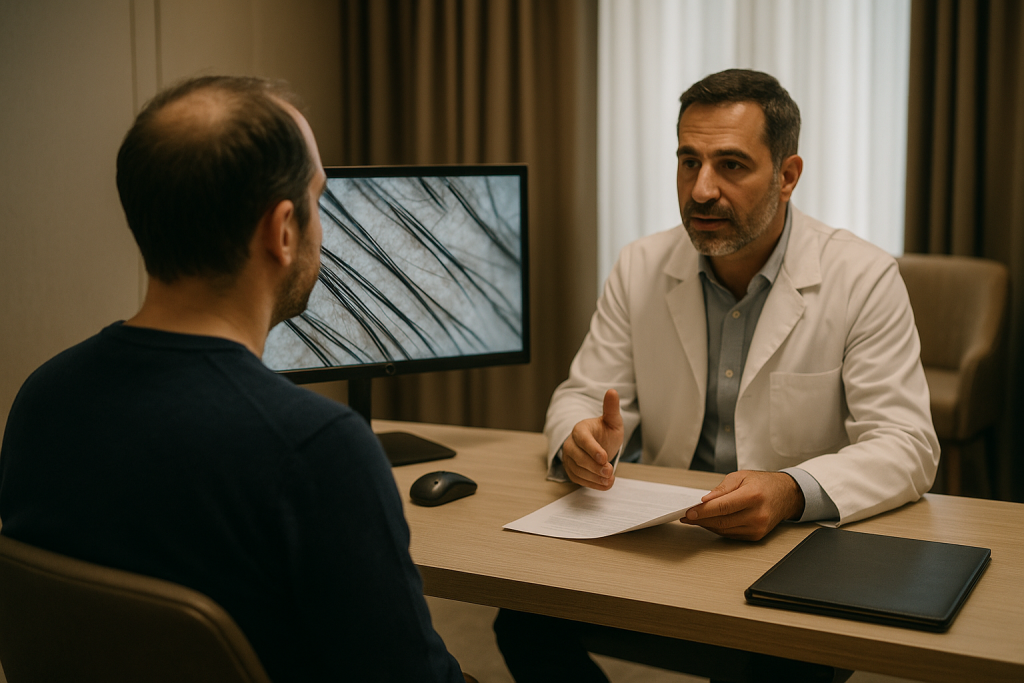
- A doctor may examine the scalp, review your history, and use trichoscopy to help identify the type of alopecia.
- Hair transplantation is usually considered only after the diagnosis is clear and the hair-loss pattern is stable.
- A transplant redistributes healthy donor follicles and does not stop future thinning in untreated areas.
01How Alopecia Begins and When Transplants May Be Considered
Alopecia is a medical term for hair loss, and it can begin in more than one way. People often first notice extra hairs on a pillow, brush, shower drain, or clothing. Others see that their part line is wider, their hairline has moved back, or the scalp shows more clearly under bright light. Understanding how does alopecia start can help you seek an assessment early, before making assumptions based only on what you see in the mirror.
Hair growth normally follows a repeating cycle of growth, transition, rest, and shedding. It is normal to lose some hairs every day because older hairs complete their cycle and are replaced. Alopecia may be suspected when shedding becomes noticeably heavier, when regrowth does not keep up, or when hair density changes in a specific area. A sudden change is not always permanent, but it deserves attention when it continues, creates visible gaps, or comes with scalp symptoms.
The word alopecia includes several conditions rather than one single diagnosis. Genetic pattern hair loss commonly develops slowly over years. Telogen effluvium can cause more diffuse shedding after a physical or emotional stressor. Alopecia areata may cause round or oval patches, while inflammatory or scarring conditions can affect the skin and follicles themselves. These different patterns explain why the first step is to identify the cause, not to choose a procedure immediately.
02How does alopecia start? The early biological changes
Hair follicles are small structures in the skin that produce individual hairs. In some forms of alopecia, follicles remain present but their activity changes. With genetic pattern hair loss, susceptible follicles may gradually produce finer, shorter hairs over repeated growth cycles. This process is often called miniaturisation. It can be subtle at first, and a person may notice reduced volume long before they see obvious baldness.
In telogen effluvium, a larger-than-usual number of hairs may shift into the resting phase at around the same time. Shedding can become apparent several weeks or months after a trigger such as illness, fever, surgery, major weight change, childbirth, nutritional difficulty, or intense stress. The scalp often looks healthy, and hair loss tends to be spread across the scalp rather than limited to one sharply defined area. Your doctor will consider your recent health history alongside the scalp examination.
Alopecia areata develops differently. It is an autoimmune condition in which the immune system affects hair follicles, often leading to sudden, smooth patches of hair loss. Some people notice small areas, while others may experience more extensive loss. Scarring alopecia is another distinct group of conditions and may involve inflammation that damages follicles permanently. Tenderness, burning, itching, redness, scaling, pustules, or shiny skin should be assessed promptly because these signs may point to a scalp condition needing medical treatment.
03The first visible signs can differ by hair-loss pattern
Genetic pattern hair loss often follows recognisable areas, although the exact pattern differs between individuals. In many men, the temples may gradually recede, the frontal hairline may change shape, or thinning may develop at the crown. In many women, the central part may become broader and the ponytail may feel less full, while the frontal hairline is often preserved. These changes usually progress slowly and may be easier to recognise in photographs taken months or years apart.
Diffuse shedding can feel alarming because hair may come out from many areas rather than one visible spot. A person may report more hair during washing or brushing, reduced overall density, and hair that no longer holds the same volume. However, seeing shed hair does not alone identify the cause. Hair breakage from chemical processing, heat, traction, or fragile hair shafts can look similar to shedding, but it involves damage along the hair length rather than release from the root.
Patchy alopecia can appear as one or more round, oval, or irregular areas where the scalp is more visible. In alopecia areata, the affected skin may look smooth and otherwise normal. In contrast, flakes, broken hairs, redness, crusting, or discomfort may suggest another scalp problem that requires evaluation. Taking clear, consistent photographs can help document change, but it should not replace an examination by a qualified clinician.
04Why the cause of hair loss needs to be confirmed
The question how does alopecia start is important because an early sign does not automatically reveal the diagnosis. Similar-looking thinning may have very different causes and outlooks. A clinician will usually ask when the hair loss began, how quickly it changed, whether there was illness or stress, which medicines are being used, and whether close relatives have similar hair loss. They may also ask about diet, menstrual or hormonal changes, scalp symptoms, grooming habits, and previous hair treatments.
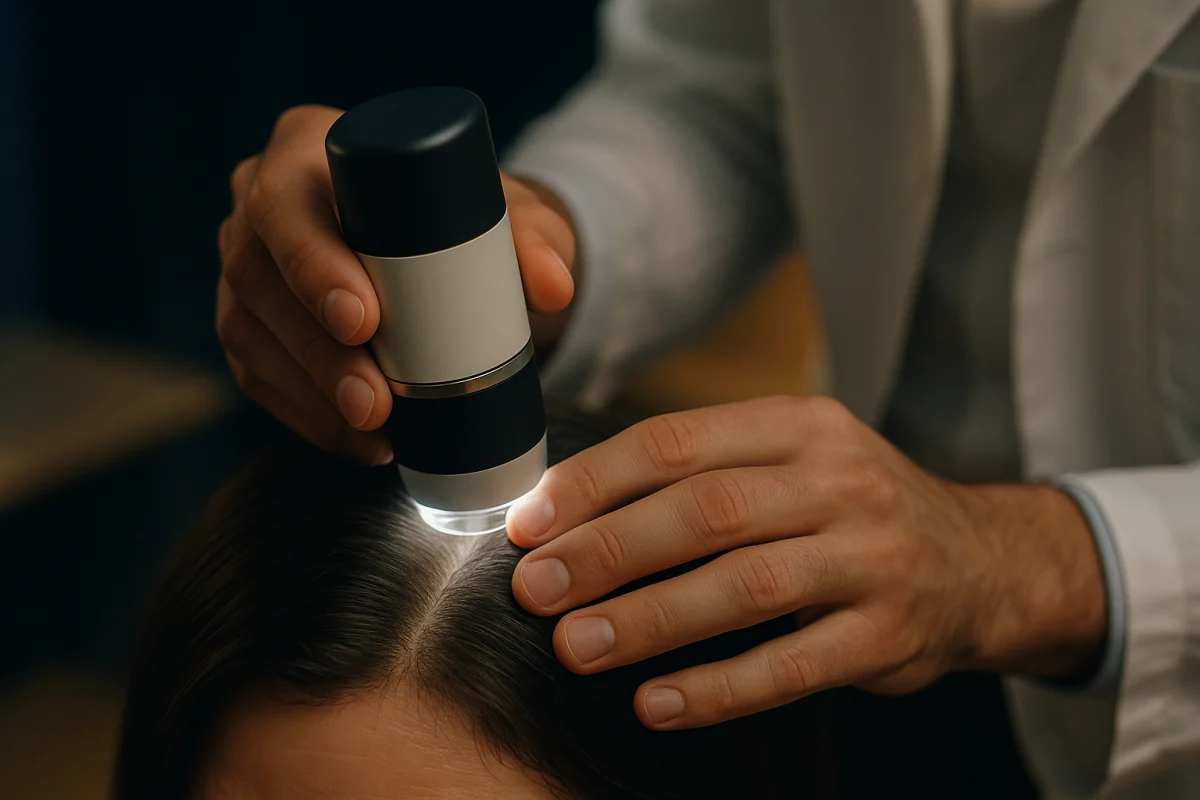
A scalp examination can assess the distribution of loss, the condition of the skin, the thickness of individual hairs, and signs of inflammation or breakage. Trichoscopy is a magnified examination of the scalp and hair shafts that can provide useful clues about follicle variation, miniaturisation, broken hairs, or inflammatory changes. Depending on the findings, a doctor may recommend blood tests or referral for further dermatological assessment. These steps help avoid treating the wrong problem.
Self-diagnosis can delay appropriate care, particularly when hair loss is sudden, patchy, painful, or associated with scalp changes. It is also important to discuss medicines and supplements with a doctor rather than starting multiple products without guidance. Some supplements may be unnecessary, and some treatments may not suit particular health conditions, pregnancy plans, or causes of alopecia. A careful diagnosis creates a more realistic plan and allows progress to be followed over time.
05Can hair loss settle, regrow, or progress?
Some forms of hair loss can improve when the underlying trigger resolves. Telogen effluvium, for example, may settle gradually after recovery from a temporary trigger, although visible improvement can take time because hair growth is slow. In alopecia areata, some people experience spontaneous regrowth, while others have recurring or more persistent episodes. The likelihood and speed of regrowth vary widely, so it is not possible to predict an individual outcome without medical assessment.
Genetic pattern hair loss is usually progressive without management, but the rate can differ greatly between people. Early changes may remain mild for a long period, while other people notice clearer thinning over several years. A doctor may discuss evidence-based medical options where suitable, along with practical hair and scalp care. The purpose of early review is not to create alarm; it is to understand the pattern and discuss options while more existing hair may still be present.
Scarring forms of alopecia require particular attention because damaged follicles may not produce hair again. Early medical care aims to identify active inflammation and protect remaining follicles where possible. A hair transplant is not usually the first response to suspected active scarring disease, diffuse unexplained shedding, or sudden patchy loss. The priority is to diagnose and manage the condition, then reassess whether surgical restoration could ever be appropriate.
06When a hair transplant may be considered
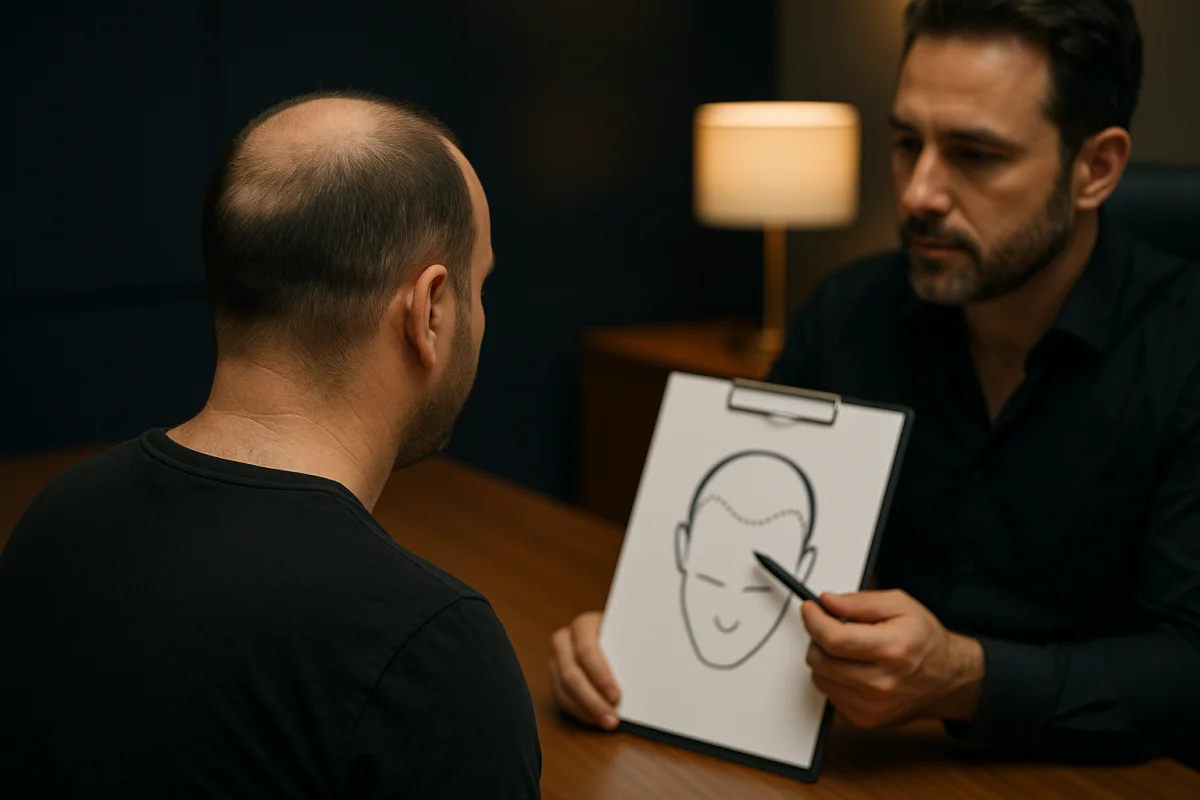
A hair transplant may be considered when a person has a confirmed diagnosis, a suitable donor area, and a hair-loss pattern that is stable enough for responsible planning. It is most commonly discussed for selected patients with genetic pattern hair loss. The procedure moves healthy follicles from a donor area, usually at the back or sides of the scalp, into areas of thinning. It does not create new follicles, and it cannot guarantee that existing non-transplanted hair will not continue to thin.
Before planning surgery, the doctor should consider age, family history, current rate of loss, scalp health, donor density, hair characteristics, and future hair-loss risk. A conservative design is often important, especially for a changing hairline or early thinning. When patients ask how does alopecia start and whether they need surgery immediately, the answer is usually that diagnosis and long-term planning come first. Waiting, monitoring, or treating an underlying cause may be more appropriate than operating too early.
At Acibadem Hair Transplant Center, doctors review a free online hair analysis before advising whether a consultation for restoration may be suitable. The dedicated hair restoration clinic in Istanbul uses Sapphire FUE and DHI techniques for appropriately selected patients. Needle-free anaesthesia is also available. A surgical plan should always be based on medical review and realistic expectations, rather than on a single photograph or an urgent wish to restore density quickly.
07What to expect from transplant planning and follow-up
If transplantation is suitable, planning includes discussion of the recipient area, donor supply, graft distribution, expected stages of growth, and aftercare. The goal is generally to create a natural-looking distribution that respects the available donor hair and future needs. Density depends on many factors, including the degree of hair loss, hair calibre, curl, colour contrast, scalp characteristics, and the number of safely available grafts. Your doctor will explain what may be achievable in your situation.
Transplanted hairs commonly shed after the procedure before new growth becomes visible. This is a typical part of the healing process and can be confusing without clear preparation. Results develop gradually over months, and the appearance may continue to mature up to month 12 or beyond. At Acibadem Hair Transplant Center, graft survival is measured by trichoscopic assessment at month 12, with a documented 98% rate under the clinic's written guarantee. Individual cosmetic outcomes can still vary according to clinical factors and follow-up care.
International patients should also consider the practical side of recovery and long-term communication. Acibadem Hair Transplant Center provides all-inclusive packages that include VIP transfer, a 4-star hotel, a care kit, and 12 months of follow-up. The clinic is licensed by the Turkish Ministry of Health and has supported patients from 38 countries over 12 years. For anyone concerned about early hair loss, an online review can be a useful first conversation, but it does not replace a full medical diagnosis when scalp disease or complex alopecia is suspected.
08Frequently Asked Questions
How can you tell whether alopecia may be starting?
Possible early signs include more shedding than usual, a widening part, thinning at the crown or temples, a receding hairline, reduced ponytail volume, or one or more smooth patches. These signs can also have causes other than alopecia, so a scalp examination is the most reliable way to clarify what is happening. Seek timely medical review if hair loss is sudden, patchy, painful, itchy, red, or associated with scaling.
What can alopecia look like in its earliest stage?
Early alopecia may look like finer hair, less volume, a slightly wider part, gradual recession around the temples, or increased scalp visibility in certain lighting. Some types begin as distinct round patches, while diffuse shedding may affect the whole scalp without a clear bald spot. The appearance depends on the cause and the individual hair pattern.
Can alopecia resolve without treatment?
Some hair loss, particularly temporary shedding after a trigger, may improve as the trigger resolves and the hair cycle normalises. Alopecia areata can also regrow spontaneously in some people, but it may recur. Genetic pattern hair loss and scarring alopecia usually need medical evaluation because they may continue or require targeted management.
At what age does alopecia usually begin?
Alopecia can begin at almost any age, depending on its type. Genetic pattern hair loss may start after puberty and can become more noticeable in adulthood, while alopecia areata and temporary shedding can occur in children, teenagers, or adults. Age alone cannot confirm the cause, so the pattern and scalp findings are important.
This article is for general information only and is not a substitute for professional medical advice.
 06
06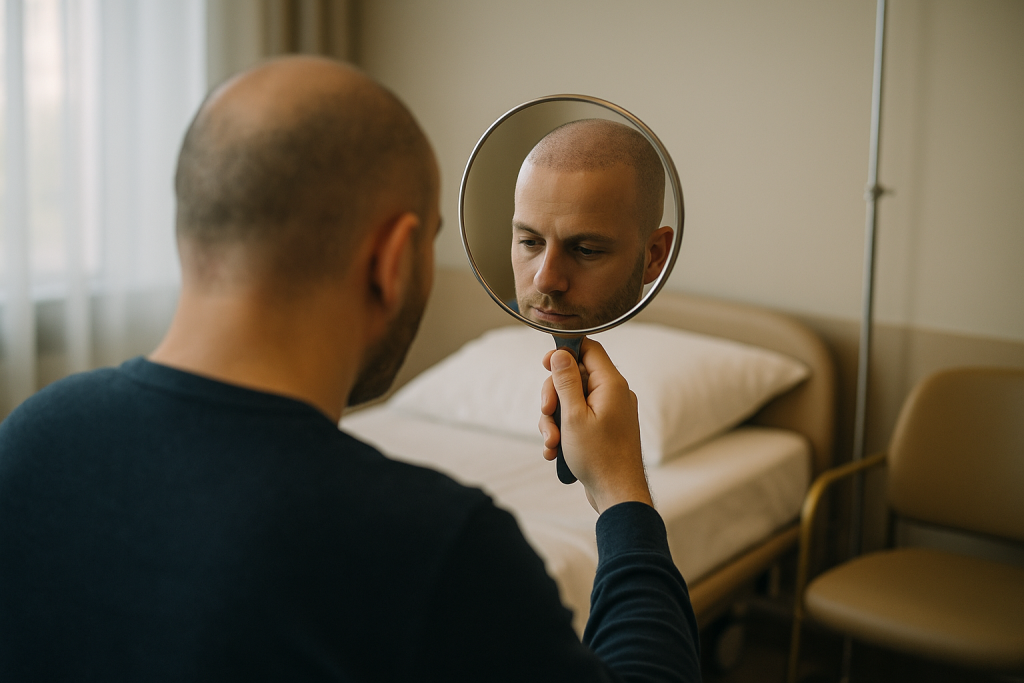 12
12