
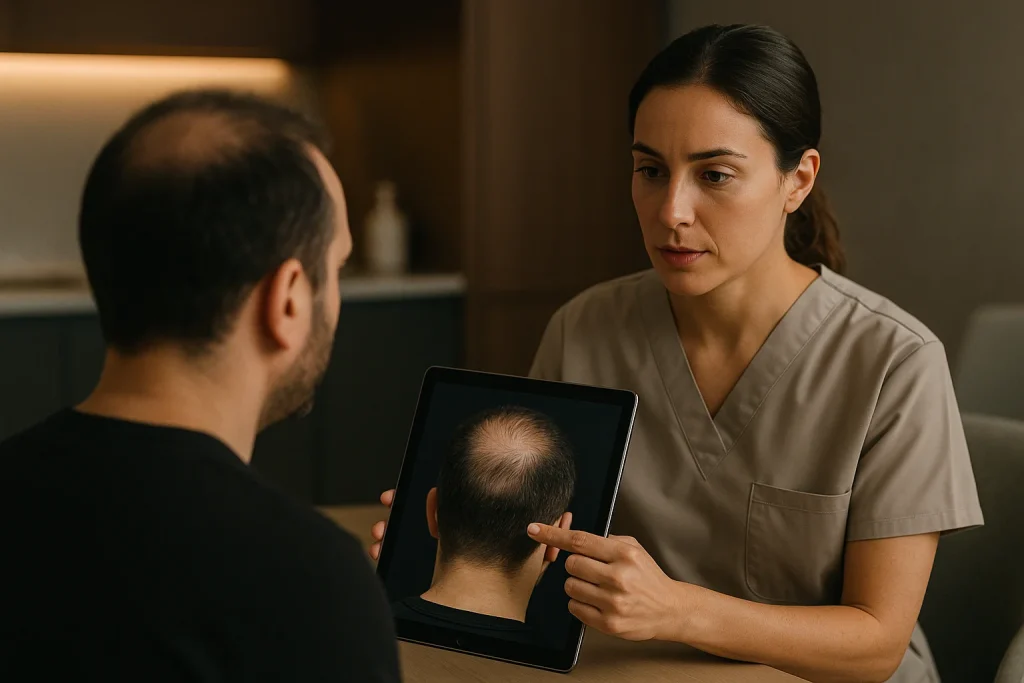
The answer to how much is a hair transplant in usa depends mainly on the number of grafts, the technique, the clinic location, and what is included in the surgical plan. There is no single national fee, so a written quote after a medical assessment is the safest way to understand the full cost and avoid unexpected charges.
- A hair transplant quote should explain the planned graft number, technique, clinical team, anaesthesia, aftercare, and any possible extra fees.
- A lower advertised starting price may not reflect the final total if grafts, medication, follow-up, or facility costs are billed separately.
- Grafts are a limited donor resource, so an appropriate graft plan matters more than choosing a number based only on price.
- Hair transplantation can provide long-term growth in transplanted follicles, but natural hair loss may continue without medical management.
- Insurance does not typically cover hair transplants performed for cosmetic hair loss, although exceptions may exist after certain medical conditions or injuries.
01How Much Is a Hair Transplant in USA?
When people ask how much is a hair transplant in usa, they usually want one clear figure. In practice, the final cost can vary widely because a hair transplant is planned around an individual scalp, donor area, hair type, degree of hair loss, and treatment goal. A small procedure to soften a receding hairline is not priced in the same way as a larger restoration for the front, mid-scalp, and crown. The most useful answer is therefore a detailed quote that explains exactly what clinical care is included.
In the United States, providers may price surgery by graft, by session, by treatment area, or as a fixed package. A graft is a naturally occurring group of one to several hairs taken from the donor area, commonly at the back and sides of the scalp. The number of hairs seen after growth is not the same as the number of grafts used. This distinction matters because two plans with the same graft count may create different visual density depending on the patient’s hair characteristics and the area being treated.
A responsible consultation should focus on suitability before cost. The clinician generally reviews the pattern and stability of hair loss, scalp health, existing hair density, medical history, medications, and donor capacity. They should also discuss whether non-surgical treatment may be useful before or alongside surgery. A quotation is easier to compare when it is based on this assessment rather than on a promotional starting price that may not reflect the size or complexity of the procedure.
02What Usually Changes the Final Hair Transplant Quote
The planned graft number is one of the largest cost factors. More grafts usually require more extraction, placement, clinical time, and careful handling. However, a higher number is not automatically better. The donor region contains a limited supply of hairs that should be managed carefully for current and possible future needs. Your doctor will estimate a safe donor range and explain what level of coverage can realistically be achieved in one session.
Clinic location can also influence the price. Operating facilities, staffing, local business costs, licensing requirements, and the availability of surgical appointments differ between cities and regions. The experience of the medical team and the level of supervision during key steps may also affect a clinic’s fees. Patients should not assume that a quote reflects only the time spent on the day of surgery; safe care also includes planning, sterile clinical processes, post-procedure instructions, and follow-up support.
When researching how much is a hair transplant in usa, ask whether the figure includes every part of the treatment journey. Some quotes may include consultation, surgery, local anaesthesia, washing instructions, medications, a care kit, and review appointments. Others may list some of these separately. It is sensible to request the total expected cost in writing, ask which items are optional, and find out how the clinic handles an unexpected change in the planned graft count on the day.
03Why Graft Count Is More Important Than a Simple Price Per Graft
A graft plan should be designed for visual balance, not simply for the largest possible number. The hairline is especially important because it frames the face and uses valuable donor hair. A natural-looking design normally considers age, family pattern of hair loss, facial proportions, hair calibre, curl, colour contrast, and the likelihood that hair loss may progress. A very low or densely packed hairline may look appealing in the short term but may not be suitable for every patient over time.
Grafts are commonly placed first where they can make the greatest cosmetic difference, often in the frontal hairline and front third of the scalp. For some patients, the mid-scalp and crown may require a separate plan because these areas can need many grafts to create visible coverage. Fine hair, straight hair, dark hair against a light scalp, and a broad area of hair loss can all change how full the result appears. The doctor should explain these limits clearly before surgery.
It is also important to ask how grafts are counted and recorded. A clinic should be able to state the planned number, the number extracted where applicable, and the number placed. The goal is careful use of healthy follicular units, not a sales target. If a clinic promises a very large graft number without reviewing donor quality or discussing future hair loss, patients may wish to seek further medical clarification before making a decision.
04Technique, Clinical Setting, and Aftercare Costs to Check
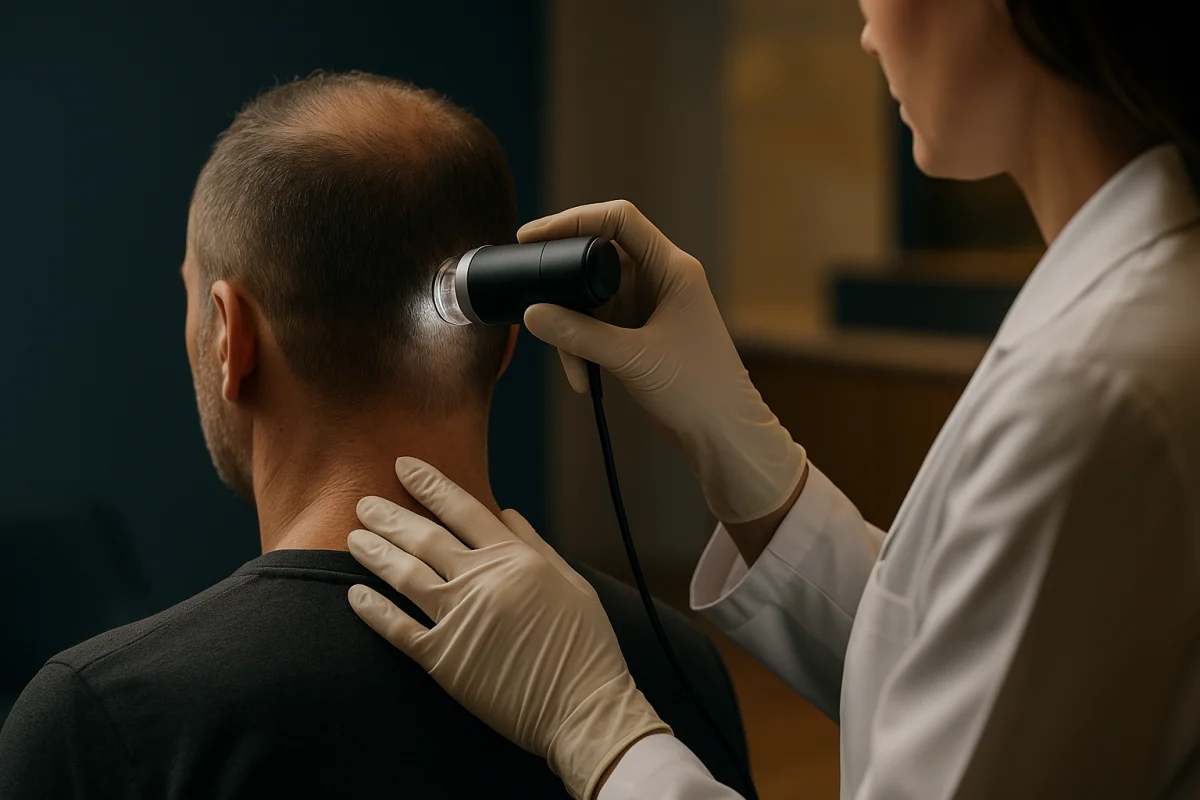
The method selected can affect the treatment plan and price. Follicular Unit Extraction, often called FUE, involves removing individual follicular units from the donor area and placing them into recipient sites. Sapphire FUE uses sapphire blades to create channels for implantation. Direct Hair Implantation, or DHI, uses a specialised implantation approach. Neither method is automatically best for every person; suitability depends on the scalp, hair characteristics, graft plan, and the medical team’s recommendation.
Ask who performs each stage of the procedure and how medical supervision is organised. Hair transplantation is a medical procedure, and patients should understand the role of the doctor, nurses, and technical team. It is reasonable to ask about sterile conditions, anaesthesia, emergency arrangements, pre-operative screening, and the instructions provided if concerns arise after returning home. These details may not be visible in a short online advertisement, but they are part of safe decision-making.
Comfort options may be included or charged separately. Some clinics offer needle-free anaesthesia for eligible patients, while others use standard local anaesthesia only. Recovery support can also differ. Check whether the quote includes post-operative washes, medication guidance, a care kit, follow-up calls, and help if you live far from the clinic. A less expensive surgical fee may not represent better overall value if meaningful aftercare is missing from the plan.
05What Can 3,000 Grafts Realistically Cover?
Three thousand grafts can create a visible change for many suitable patients, but it does not describe a fixed area of coverage. In some cases, 3,000 grafts may be used mainly to rebuild the hairline and add density through the frontal and mid-scalp regions. In other cases, the same number may be spread across a wider area, including part of the crown, which can produce a softer overall effect rather than dense coverage in one zone. The result depends on careful placement and the patient’s existing hair.
Each graft may contain one, two, three, or occasionally more hairs. Hairline work commonly uses finer single-hair grafts to create a softer transition, while multi-hair grafts may be placed behind the hairline for greater visual density. This means that graft count alone cannot predict the appearance of coverage. Hair texture, hair-to-scalp colour contrast, scalp visibility, and styling preferences can significantly influence what looks full after the hair has grown.
A doctor will also consider whether using all available grafts in the first surgery is wise. If hair loss is active or likely to progress, preserving donor hair for later treatment may be important. Some patients benefit from a staged approach, while others can achieve their primary goal in one session. A consultation should set practical expectations about coverage, density, and the possibility that the crown may need a different priority from the front of the scalp.
06How Long Transplanted Hair Can Last and What May Change Over Time
Hair follicles transplanted from a stable donor area are generally expected to retain many of their donor characteristics after they establish in the recipient area. For this reason, hair transplantation is often considered a long-term solution for appropriate candidates. However, no doctor can guarantee that every transplanted hair will grow indefinitely or that the surrounding natural hair will remain unchanged. Healing, graft survival, genetics, age, and ongoing hair-loss conditions all influence the longer-term appearance.
In the first weeks after surgery, the transplanted hair shafts commonly shed. This can be a normal part of the process and is sometimes called shock shedding of transplanted hairs. New growth usually begins gradually rather than all at once. Visible improvement often develops over several months, while the final maturation of hair texture and density may take around a year or longer. Your clinic should give a clear timeline for normal recovery and explain when to contact the medical team.
Ten years after a hair transplant, many patients still have transplanted hair growing in the treated area. The main change may come from continued thinning of non-transplanted hair around it. This can alter the overall balance of the scalp, particularly in people with progressive pattern hair loss. Follow-up with a doctor, appropriate medical management when suitable, and a conservative original hairline design can help support a more natural long-term appearance.

07Insurance, Financing, and How to Compare Quotes Safely
Health insurance in the USA does not typically cover a hair transplant when it is requested for cosmetic treatment of common pattern hair loss. There may be limited exceptions when hair loss is linked to trauma, burns, reconstructive needs, or another covered medical condition, but policy rules vary. Patients should contact their insurer directly and ask for written clarification before assuming any part of the procedure will be reimbursed.
If you are considering payment plans or third-party financing, review the full terms before agreeing. The monthly payment can make a procedure seem more affordable while hiding interest, administration fees, or a higher total repayment amount. It is helpful to separate the medical decision from the financial decision: first confirm that the treatment plan is medically appropriate, then decide whether the complete cost fits your budget without pressure.
To compare providers, request an itemised estimate and use the same questions for every clinic. Ask about the planned graft range, technique, doctor involvement, anaesthesia, medication, follow-up, revision policy, and whether travel or accommodation is included. Be cautious with time-limited offers or statements that make guaranteed cosmetic promises. A good clinic should give you time to understand the plan, risks, recovery requirements, and alternatives before you choose.
08Planning a Hair Transplant in Istanbul From the USA
Some US patients also consider travelling abroad because the overall treatment journey may be organised differently. Travel should never replace proper medical assessment. Before booking, confirm the clinic’s licensing, the doctor review process, the treatment technique proposed, the support available after you return home, and what happens if you have a concern during recovery. Keep in mind that flying after a procedure should be discussed with your treating clinic, based on your health and recovery plan.
For people comparing how much is a hair transplant in usa with international options, the most meaningful comparison is not the surgery price alone. Consider the total journey: clinical standards, accommodation, transfers, care products, communication, follow-up duration, and the cost and practicalities of travel. Acibadem Hair Transplant Center is a dedicated hair restoration clinic in Istanbul licensed by the Turkish Ministry of Health. It offers Sapphire FUE and DHI, with needle-free anaesthesia available for eligible patients.
Acibadem Hair Transplant Center provides all-inclusive packages that include VIP transfer, a 4-star hotel, a care kit, and 12 months of follow-up. Patients can begin with a free online hair analysis reviewed by doctors, with WhatsApp replies typically available within around two hours. The clinic has treated patients from 38 countries over 12 years. Its results are measured by trichoscopic graft survival at month 12, with a documented 98% rate under a written guarantee; your doctor will confirm what this means for your individual treatment plan.
09Frequently Asked Questions
What area can 3,000 hair grafts cover?
For an appropriate candidate, 3,000 grafts may cover the hairline, frontal scalp, and part of the mid-scalp, or they may be spread more widely for lighter coverage. The exact result depends on hair thickness, curl, colour contrast, existing hair, donor quality, and the placement plan. A doctor should assess the scalp before estimating the likely visual effect.
Is a hair transplant permanent?
Transplanted follicles from a stable donor area are generally intended to provide long-term growth. However, surrounding non-transplanted hair can continue to thin, and individual healing and long-term hair loss patterns vary. Ongoing medical review may be helpful for patients with progressive hair loss.
Does health insurance pay for hair transplant surgery?
In most cases, insurance does not cover hair transplantation for cosmetic treatment of common hair loss. Coverage may occasionally be considered for reconstructive reasons, such as hair loss after trauma or burns, depending on the policy. Contact your insurer for a written decision about your own cover.
What should I expect a decade after a hair transplant?
Many patients continue to have growth from transplanted follicles after 10 years. The overall appearance may still change if natural hair around the transplant continues to thin. A conservative hairline plan and appropriate management of ongoing hair loss can be important for long-term balance.
This article is for general information only and is not a substitute for professional medical advice.
 06
06 12
12