

Topical dutasteride may be considered as part of a wider hair loss and hair transplant treatment plan because it is designed to reduce scalp DHT exposure. It is not suitable for everyone, and a doctor should assess your diagnosis, medical history, current medicines and reproductive plans before recommending it.
- Topical dutasteride is a scalp-applied form of a medicine that reduces conversion of testosterone to DHT.
- It may help preserve existing vulnerable hair, while a transplant redistributes permanent donor follicles.
- Evidence for topical use is still developing, and absorption and response can vary between patients and formulations.
- A hair transplant plan should first confirm the cause and pattern of hair loss, plus the safety of the donor area.
- Long-term follow-up is important because non-transplanted hair can continue to thin without appropriate medical management.
01Topical Dutasteride and Hair Transplant Treatment Plans
Topical dutasteride can be discussed within a hair transplant treatment plan when androgenetic alopecia, also called pattern hair loss, is affecting both the visible thinning area and the native hair around it. The medicine is applied to the scalp rather than swallowed. Its intended role is usually to lower the effect of dihydrotestosterone, known as DHT, in the scalp, which may help slow ongoing miniaturisation of susceptible follicles. It does not create new donor hair, replace a careful surgical design, or guarantee that future hair loss will stop.
For many patients, the central question is not simply whether a topical medicine works, but how it fits into a long-term plan. A transplant moves follicles from a donor area, commonly at the back and sides of the scalp, to areas with reduced density. Medical treatment may be used before or after surgery to support remaining native hair. This distinction matters because transplanted follicles and untreated native follicles can behave differently over time.
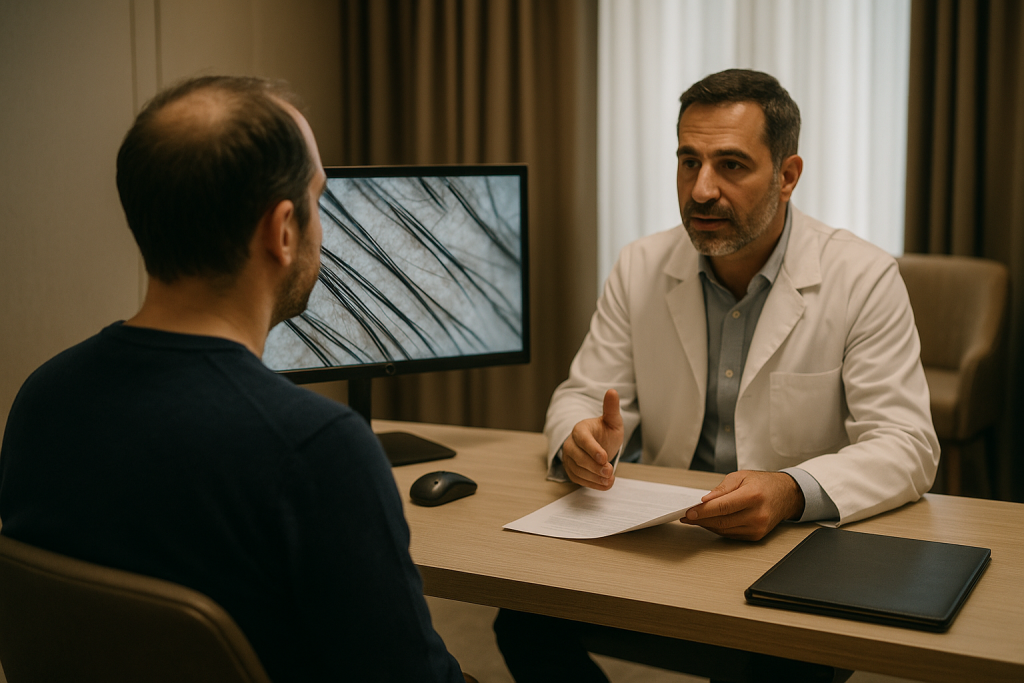
A doctor-led assessment should identify the type, speed and distribution of hair loss before any plan is made. Sudden shedding, scalp inflammation, scarring conditions, nutritional issues, hormonal changes and some medicines may need separate investigation. At Acibadem Hair Transplant Center in Istanbul, patients can begin with a free online hair analysis reviewed by doctors. This is useful for initial guidance, but an in-person clinical assessment and appropriate medical history remain important before surgery or prescription treatment.
02How topical dutasteride may support existing hair
Dutasteride works by inhibiting enzymes involved in converting testosterone into DHT. DHT is an important factor in androgenetic alopecia in genetically susceptible people. When follicles are repeatedly exposed to DHT over time, their growth phase may become shorter and the hairs they produce may become finer. Reducing this signal may help some patients maintain hair calibre and density, particularly where follicles are still present but miniaturised.
With scalp application, the clinical aim is generally to deliver the medicine locally while potentially limiting whole-body exposure compared with oral treatment. However, topical application does not mean that systemic absorption is impossible. The degree of absorption can depend on the vehicle, concentration, amount applied, scalp condition, frequency of use and individual factors. Products and compounding methods are not all equivalent, so a doctor should explain what is known and what remains uncertain for a particular formulation.
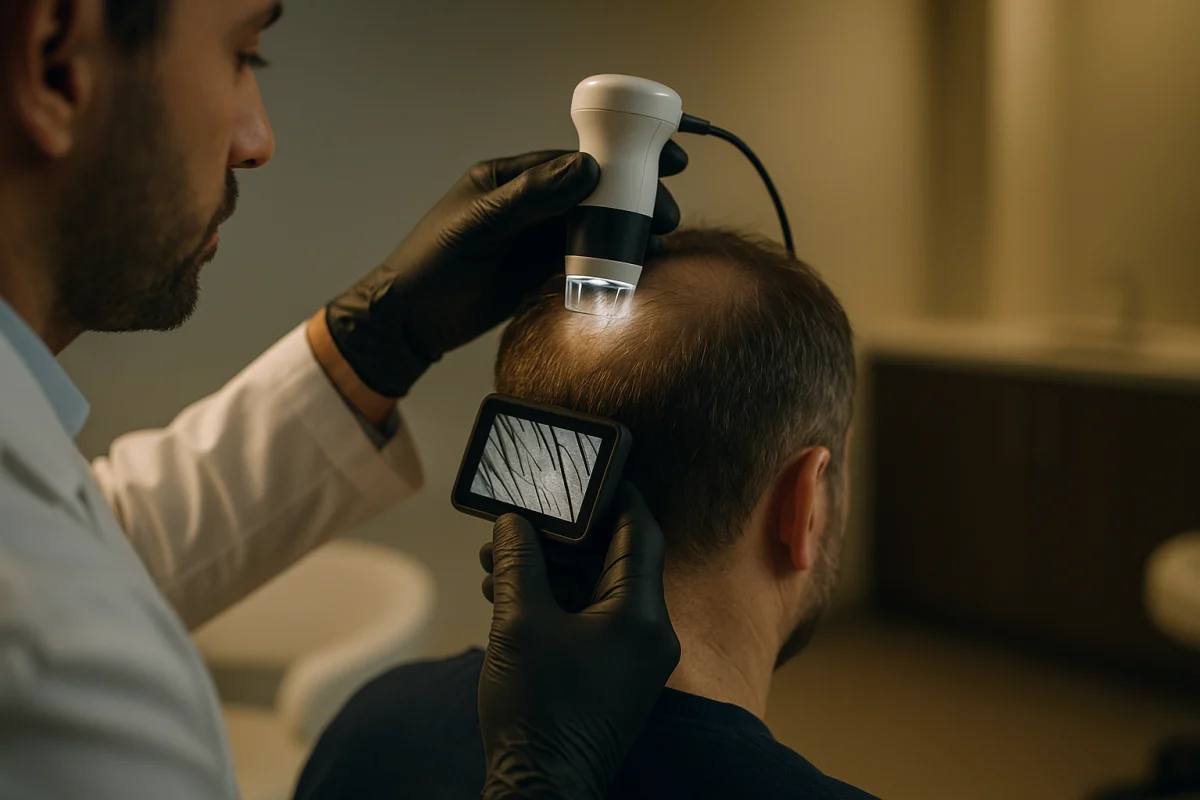
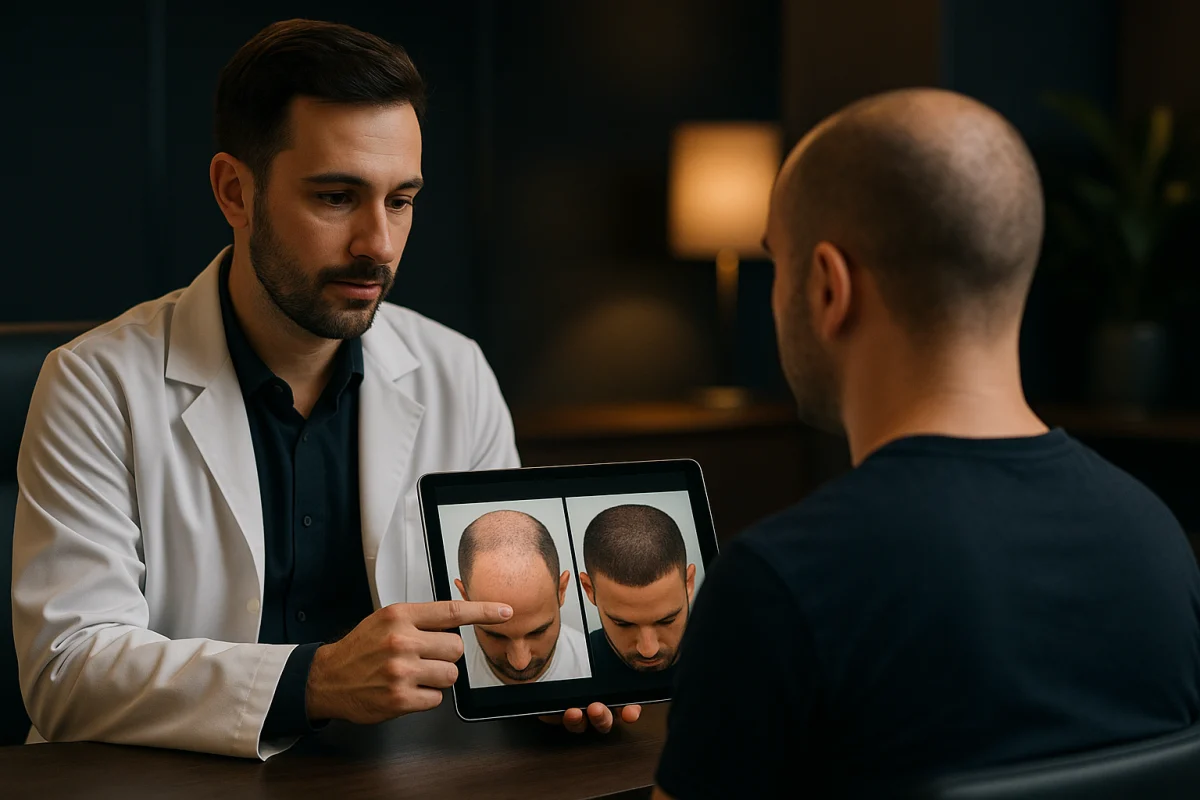
Response is usually assessed over months rather than days or weeks. Hair growth follows a slow biological cycle, and an early increase in shedding can occur with some hair loss treatments as follicles shift between phases. Photographs taken under consistent lighting, clinical examination and trichoscopic assessment can help show whether density and shaft thickness are stable, improving or continuing to decline. A treatment should not be judged only by how the hair looks on one particular day.
03Choosing between medical treatment and surgery first
Whether medical management should begin before a transplant depends on the individual pattern of loss. In a younger patient with active thinning, a doctor may first recommend a period of observation or medical treatment to understand the rate of progression and improve stability. This can help prevent a situation where a newly transplanted hairline looks isolated later because the original hair behind it has continued to thin.
In other cases, surgery and medical treatment may be planned together. For example, a patient with a stable donor area and clear recession may be an appropriate candidate for transplantation while also discussing ways to protect native hair. Sapphire FUE and DHI are available at Acibadem Hair Transplant Center. The most suitable technique depends on factors such as the donor supply, hair characteristics, recipient-area needs, scalp condition and the surgical plan, rather than on a single technique being universally best.
A realistic design protects donor reserves for the future. A medication may support at-risk native follicles, but it cannot turn a limited donor area into an unlimited resource. Your doctor and surgical team should discuss the likely progression of hair loss, the number of grafts that can be harvested safely, the intended density, and the possibility that further treatment may be needed later. A conservative plan can be especially important when loss is still evolving.
04Planning topical dutasteride before a hair transplant
Before starting topical dutasteride, clinicians typically review the diagnosis, age, scalp findings, family history, current treatments, allergies, liver history, sexual health concerns and plans for conception. Dutasteride affects hormone metabolism and is not appropriate in every circumstance. Women who are pregnant or may become pregnant should avoid handling leaking capsules or certain preparations because of potential risk to a developing male fetus. A prescribing clinician can give specific safety instructions based on the medicine being considered.
It is also important to check for scalp irritation, psoriasis, dermatitis, infection or open skin. Applying an active treatment to an inflamed or damaged scalp may cause discomfort or unpredictable absorption. If a person uses styling products, camouflage fibres, anti-dandruff treatments, microneedling devices or other scalp therapies, these should be discussed. Combining products without guidance may increase irritation or make it difficult to identify the cause of a side effect.
For a transplant consultation, clear photographs and a medical questionnaire can help the team give preliminary information. Patients travelling to our dedicated hair restoration clinic in Istanbul receive planning support as part of an all-inclusive pathway that can include VIP transfer, a 4-star hotel, a care kit and 12 months of follow-up. The clinic is licensed by the Turkish Ministry of Health. Treatment eligibility, medication decisions and the final surgical plan are confirmed clinically, not from photos alone.
05Pausing and restarting scalp treatments around surgery
A transplant creates small recipient-site wounds and, with FUE, donor-site wounds that need careful early healing. The exact instructions for pausing or restarting any scalp-applied treatment vary according to the product, the condition of the scalp and the surgical technique. Do not apply a medicine, cosmetic serum or other non-approved product to newly implanted grafts unless your surgical team has told you to do so. Early rubbing, spraying too forcefully or causing irritation can disturb the recovery process.
Some clinics may ask patients to stop particular topical products shortly before surgery to keep the scalp clean and reduce irritation. After the procedure, the team will provide washing guidance and a timeline for normal activities. A doctor may recommend restarting a topical DHT-reducing treatment only after the recipient area has healed sufficiently. This is not a one-size-fits-all schedule, so following the written post-operative instructions is safer than relying on advice from social media or another patient's routine.
Temporary shedding of existing hair, often called shock loss, can occur after transplantation, especially where native hair was already weak. This can be distressing but does not automatically mean graft failure. Protecting native hair is one reason medical therapy may be discussed as part of the wider plan. At Acibadem Hair Transplant Center, graft survival is measured trichoscopically at month 12, with a documented 98% rate under a written guarantee. This measurement relates to the clinic's graft-survival protocol and should not be interpreted as a guarantee of medication response or final cosmetic density.
06Safety, side effects and realistic expectations
Topical treatments can cause local effects such as itching, redness, dryness, burning, flaking or contact dermatitis. These may be related to the active medicine or to the base solution used to carry it. Stop using a product and seek medical advice promptly if you develop marked irritation, swelling, rash, breathing difficulty or other concerning symptoms. A clinician may need to assess whether the problem is an allergy, an infection, an inflammatory scalp condition or simple product intolerance.
Although topical use is often chosen in the hope of lower systemic exposure, systemic effects remain possible. Dutasteride has been associated with sexual side effects, breast tenderness or enlargement, mood changes and changes in semen parameters in some users, particularly in the context of oral treatment. The frequency and relevance of these effects with a topical formulation may differ, and available evidence is less extensive. Patients should report symptoms without embarrassment so the prescribing doctor can decide whether monitoring, a treatment change or discontinuation is appropriate.
It is not medically accurate to describe dutasteride as inevitably feminising. The medicine changes DHT metabolism; it is not an oestrogen treatment. However, hormonal side effects, including breast symptoms, can occur in a minority of people and should be evaluated. No hair treatment should be continued simply because it is part of a transplant package or because someone else tolerated it well. The right approach balances potential benefit for hair preservation against safety, comfort and personal priorities.
07Monitoring results over the first 12 months
A structured follow-up plan makes it easier to separate medication effects, transplant growth and normal changes in styling or hair length. In the first weeks after surgery, the focus is healing. In the following months, transplanted hairs commonly shed and then gradually re-enter growth. Visible growth often becomes more noticeable later in the recovery period, while maturation of hair texture and coverage can continue toward month 12 and sometimes beyond.
Regular photographs should use the same hairstyle, dry or wet status, camera angle, distance and lighting where possible. Trichoscopy can add a closer clinical view of hair shaft variation, follicular units and emerging graft growth. If a person starts or stops topical dutasteride during this period, recording the dates helps the doctor interpret later changes. It is also helpful to note irritation, shedding, missed applications and any other treatments used on the scalp.
Acibadem Hair Transplant Center has welcomed patients from 38 countries over 12 years and provides 12 months of follow-up within its all-inclusive packages. For international patients, clear aftercare communication is especially valuable when they return home. Free online hair analysis requests are reviewed by doctors, and WhatsApp replies are typically provided within around two hours. This support can help patients understand next steps, but urgent symptoms or severe reactions should be assessed through appropriate local medical care without delay.
08Frequently Asked Questions
Does topical dutasteride really work for pattern hair loss?
Topical dutasteride may help some people with androgenetic alopecia by reducing DHT activity at the scalp. Research and clinical experience suggest potential benefit, but topical formulations are less standardised and less extensively studied than some established oral approaches. Results vary, and a doctor should confirm whether it is appropriate for your diagnosis.
Can dutasteride be used as a scalp-applied treatment?
Yes, dutasteride can be prepared for topical scalp use in some settings. It should be used only under guidance from a qualified prescriber because formulation, dose, scalp condition and potential absorption all matter. Topical use is not automatically free from systemic side effects.
Is topical dutasteride better than minoxidil for hair loss?
They work differently, so one is not universally better. Dutasteride targets DHT-related follicle miniaturisation, while minoxidil is used to support the hair growth cycle. A doctor may discuss one treatment, the other, or a carefully supervised combination depending on the cause of hair loss, medical history and treatment goals.
Can dutasteride cause feminising effects?
Dutasteride is not an oestrogen medicine and does not inevitably cause feminisation. However, hormonal side effects such as breast tenderness or enlargement can occur in some people, and sexual or mood-related symptoms should also be discussed with a clinician. Seek medical advice if you notice breast changes or any concerning symptoms.
This article is for general information only and is not a substitute for professional medical advice.
 06
06 12
12