
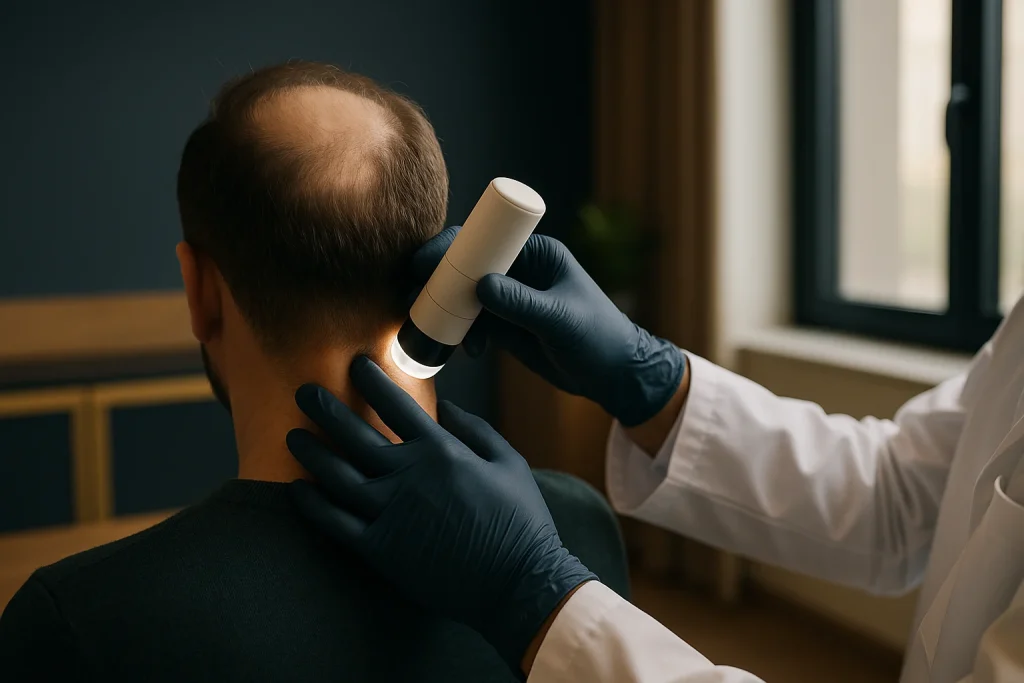
What is fue hair transplantation? FUE, or Follicular Unit Extraction, is a hair restoration technique in which individual follicular units are removed from a donor area and implanted into areas of thinning or hair loss. It usually leaves tiny dot-like extraction marks rather than a linear scar, but suitability, graft numbers, and expected results should be confirmed by a qualified doctor.
- FUE removes naturally occurring follicular units one by one from a donor area, usually at the back and sides of the scalp.
- A successful FUE plan depends on donor hair quality, the pattern and cause of hair loss, scalp condition, and realistic long-term planning.
- Most patients experience temporary redness, scabbing, and shedding before newly transplanted hairs begin their longer growth cycle.
- FUE results are usually assessed over several months, with the most meaningful assessment commonly taking place around month 12.
- FUE and FUT can both be appropriate options; the better technique depends on individual clinical needs, hairstyle preferences, and donor management.
01What Is FUE? Understanding Follicular Unit Extraction
What is fue in practical terms? Follicular Unit Extraction, usually called FUE, is a surgical hair restoration technique that moves healthy hair follicles from a donor area to a recipient area affected by thinning or baldness. The donor area is commonly the back and sides of the scalp, where hair may be more resistant to the hormone-related process that causes pattern hair loss. Each follicular unit may naturally contain one, two, three, or sometimes more hairs.
During FUE, a medical team uses a very small instrument to separate individual follicular units from the surrounding scalp tissue. The grafts are then carefully prepared and placed into tiny recipient sites made according to the treatment plan. Because units are extracted individually, FUE does not create the long linear donor scar associated with strip-based surgery. Small circular extraction marks can still occur, although they are often difficult to see once the hair has grown.
FUE is widely used for hairline restoration, crown thinning, and more diffuse patterns of hair loss when the donor supply is suitable. It can also be considered for selected beard or eyebrow restoration cases, following medical assessment. However, FUE is not simply a matter of moving as many grafts as possible. Good treatment focuses on protecting the donor area, creating a natural-looking distribution, and preserving options should hair loss progress later.
02Who May Be a Suitable Candidate for FUE?
An FUE consultation normally begins with understanding the cause, pattern, and stability of hair loss. Pattern hair loss is common, but shedding can also be related to illness, nutritional issues, hormonal changes, scalp inflammation, medication, stress, or other factors. A transplant may not be the first or most appropriate step when hair loss is sudden, active, unexplained, or linked to a medical condition that needs treatment first.
Doctors generally assess the density and thickness of donor hair, the size of the area to be treated, hair texture, scalp flexibility, and the likely future pattern of hair loss. Age can be relevant, but it is not the only consideration. A younger patient with rapidly changing hair loss may need a particularly careful, conservative approach, since a low hairline or excessive graft use may not suit their future needs.
People with realistic expectations tend to be better prepared for the FUE process. A transplant can improve the appearance of density, but it cannot recreate unlimited natural density over a large bald area when donor hair is limited. Your doctor will also review your medical history, regular medicines, smoking status, previous procedures, and any scalp concerns before confirming whether surgery is appropriate.
03Hairline Design and Donor-Area Planning Before Surgery
The quality of an FUE result begins long before graft extraction. Planning includes deciding where grafts can create the most useful visual improvement, how the hairline should mature over time, and how much donor hair can be safely harvested. A natural hairline is rarely a perfectly straight line. It typically includes small irregularities and a softer transition of finer single-hair grafts at the front.
When patients ask what is fue treatment designed to achieve, it is helpful to think beyond the procedure day. The aim is usually a balanced result that fits the person’s facial proportions, age, existing hair, and likely future hair loss. For this reason, doctors may prioritise the frontal hairline and frontal third of the scalp rather than attempting to cover every area at the same density in one session.
The donor area must be managed carefully because donor follicles are a limited resource. Removing too many grafts from one area can leave visible thinning, especially with very short hairstyles. A responsible plan spreads extraction appropriately and considers whether the patient may want, or need, further treatment in the future. Photographs, scalp assessment, and a discussion of goals help create a plan that is individual rather than formula-based.
04How an FUE Hair Transplant Procedure Is Performed
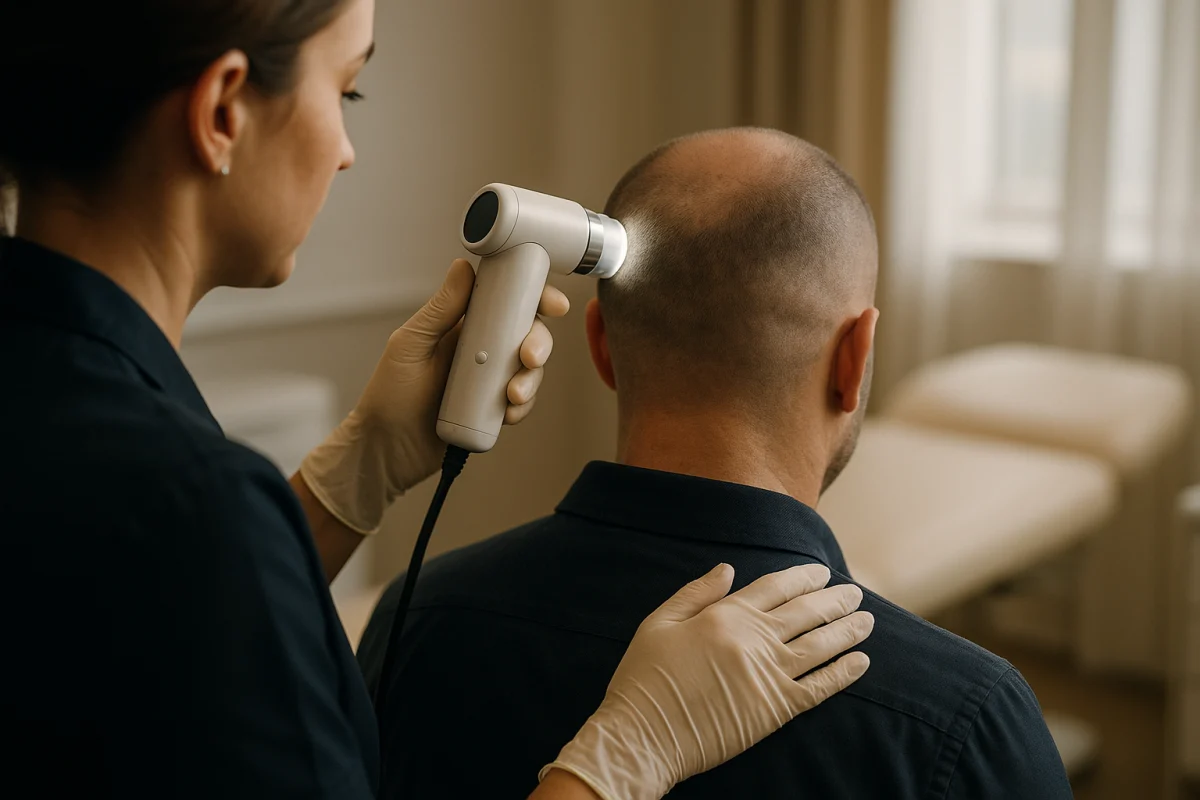
On the procedure day, the donor and recipient areas are usually prepared and trimmed as needed. Local anaesthesia is commonly used so that the scalp is numb during the surgical stages. Some clinics also offer needle-free anaesthesia options for suitable patients. The exact sequence can vary, but an FUE procedure generally includes extraction, recipient-site creation, and placement of grafts.
First, individual follicular units are removed from the donor zone using a small punch tool. This stage requires careful angle control to reduce damage to the follicles and surrounding tissue. The extracted grafts are handled under controlled conditions while the recipient sites are planned and created. The direction, angle, and spacing of these sites are important because they influence how the transplanted hair will lie and how natural it may appear as it grows.
The grafts are then placed into the recipient sites, often using fine instruments. Sapphire FUE is one variation of the technique that uses sapphire blades to create recipient channels. The most suitable method and graft-placement approach depend on the clinical plan, scalp characteristics, and the treatment team’s assessment. Procedure length varies according to the number of grafts, the complexity of the case, and whether treatment is completed in one or more sessions.
05Recovery After FUE: The First Days, Weeks, and Months
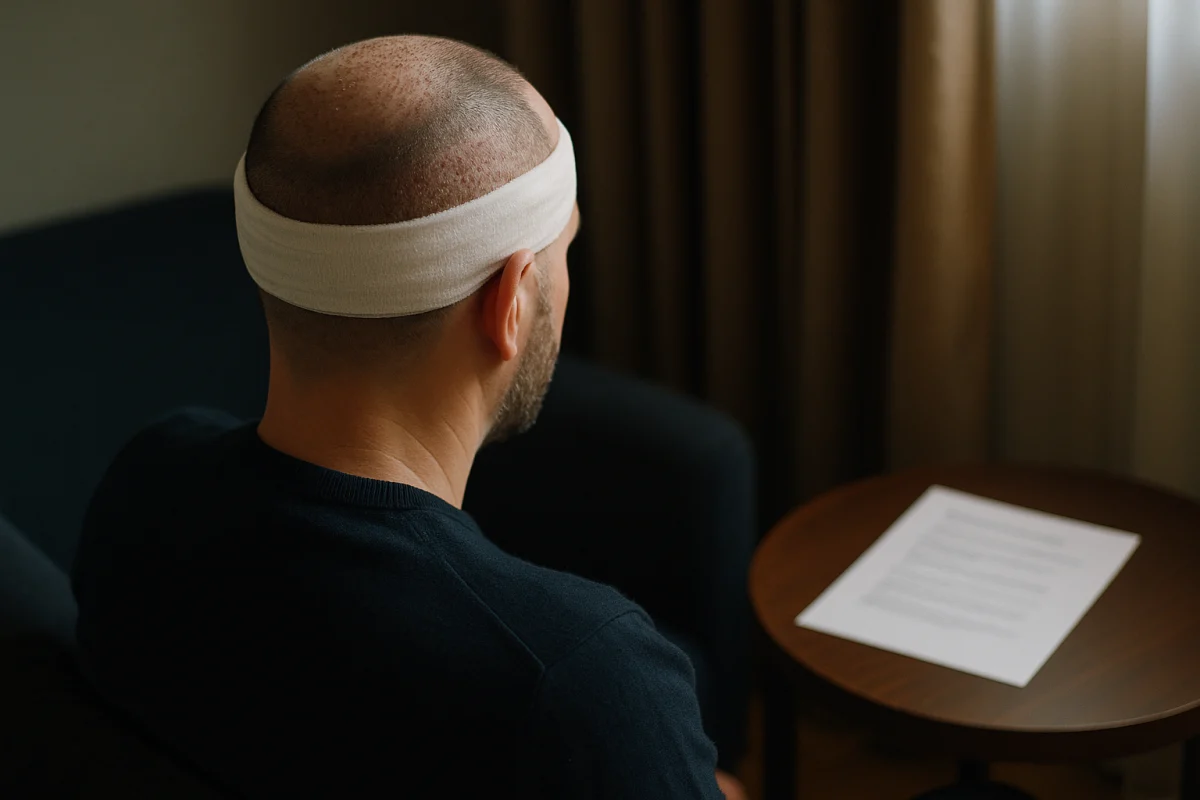
Recovery after FUE is usually gradual and requires careful aftercare. In the first few days, patients may notice mild swelling, tightness, redness, or small crusts in the treated areas. These effects are commonly temporary, but recovery differs from person to person. The clinic should provide written instructions about washing, sleeping position, activity, headwear, medicines if prescribed, and when to contact the medical team.
The transplanted area needs protection while grafts settle. Patients are typically asked not to rub, scratch, or expose the scalp to pressure during the early healing period. Strenuous exercise, swimming, direct sun exposure, and certain work activities may need to be postponed for a period advised by the doctor. It is important not to rely on general online timelines alone, as individual instructions can differ based on the procedure and medical history.
Many patients see the transplanted hairs shed within the first weeks after surgery. This can be an expected part of the process and does not necessarily mean the follicles have been lost. The follicles then enter a resting phase before new growth begins. Early new hairs may be fine or uneven at first, and appearance usually changes gradually over subsequent months. Follow-up appointments allow the team to check healing and answer questions.
06When FUE Results Become Visible and How Long They Last
FUE growth is not immediate. After the early shedding phase, new growth often begins gradually over the following months, although the timing and rate of change vary. Hair may appear thin and delicate at first, then gain length, texture, and visual coverage as the growth cycle continues. A fuller cosmetic change is commonly seen later in the first year, rather than in the first few weeks.
In most patients, transplanted follicles taken from a stable donor area are intended to continue growing for the long term. However, no medical procedure can stop the progression of non-transplanted hair loss. Existing hairs around the transplant may continue to thin over time, which can change the overall appearance and may make medical management or future planning relevant. Your doctor can explain what is realistic for your pattern of hair loss.
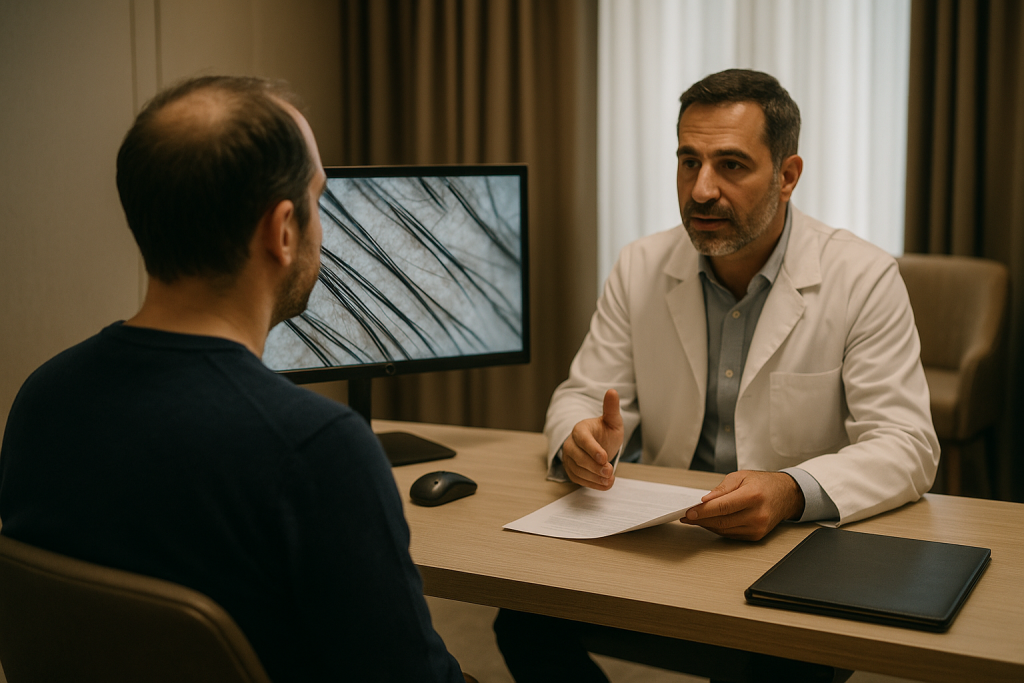
A meaningful clinical assessment is often made at around month 12, when a large part of the growth and maturation process can be evaluated. At Acibadem Hair Transplant Center, outcomes are measured by trichoscopic graft survival at month 12, with a documented 98% rate under a written guarantee. Individual appearance can still vary based on healing, hair characteristics, pre-existing hair loss, and adherence to aftercare instructions.
07Possible Risks, Limitations, and the Importance of Aftercare
Like any surgical procedure, FUE has possible risks and limitations. These can include temporary swelling, bleeding, discomfort, numbness, prolonged redness, infection, inflammation around follicles, uneven growth, or a result that does not meet expectations. Scarring can also occur, including small donor extraction marks. Although complications are not expected in most properly managed cases, they should be discussed clearly before treatment.
Shock loss is another term patients may hear. It describes temporary shedding of existing hair near the transplanted area, and it may occur after surgery in some patients. In certain cases, shedding may reveal that nearby hair was already fragile. Careful planning, appropriate graft placement, and medical assessment can help manage risk, but they cannot eliminate every uncertainty associated with healing and ongoing hair loss.
Aftercare is part of the treatment rather than an optional extra. Patients should follow the clinic’s instructions, attend recommended reviews, and report unusual pain, fever, discharge, worsening redness, or other concerns promptly. A responsible clinic should explain its hygiene standards, who performs each stage of the procedure, how complications are handled, and what follow-up support is available after the patient returns home.
08FUE Compared With FUT and How to Choose a Clinic
FUE and FUT are both established methods of harvesting donor hair, but they use different approaches. FUT, also called strip surgery, removes a narrow strip of scalp from the donor area and then separates it into grafts. It can leave a linear scar, while FUE creates multiple small extraction sites. Neither technique is automatically better for every person; the choice depends on donor characteristics, the number of grafts needed, scalp factors, hairstyle preferences, and the surgeon’s recommendation.
Cost should be considered in context, not as the only decision point. A treatment quote may be influenced by graft requirements, the technique used, the complexity of hair loss, medical supervision, facility standards, aftercare, and travel support. A very low headline price may not explain who performs the procedure, whether follow-up is included, or what happens if a patient has concerns after returning home. Ask for a clear written treatment plan and inclusions before making a decision.
For international patients, communication and continuity of care are especially important. Acibadem Hair Transplant Center is a dedicated hair restoration clinic in Istanbul licensed by the Turkish Ministry of Health. It offers Sapphire FUE and DHI techniques, free online hair analysis reviewed by doctors, and WhatsApp replies within approximately two hours. All-inclusive packages can include VIP transfer, a 4-star hotel, a care kit, and 12 months of follow-up, while the doctor confirms the final treatment recommendation after assessment.
09Frequently Asked Questions
What is the typical cost of an FUE hair transplant?
There is no single average cost that is reliable for every FUE patient. The total can vary according to the number of grafts, the extent of hair loss, the technique, medical team, clinic standards, aftercare, and the country where treatment is performed. Request a written quote that clearly explains what is included rather than comparing headline prices alone.
Is FUE better than FUT hair transplantation?
FUE is not universally better than FUT, and FUT is not universally better than FUE. FUE may appeal to people who prefer to avoid a linear donor scar or who wear shorter hair, while FUT may be considered in selected cases where a strip-harvesting approach is clinically appropriate. A doctor should assess donor hair, scalp characteristics, graft needs, and future hair-loss planning before recommending either method.
How much does FUE hair transplantation cost in India?
FUE pricing in India varies widely between cities, clinics, graft requirements, and the level of medical supervision and follow-up provided. For this reason, it is not appropriate to rely on one online figure as a dependable estimate. Patients should ask a licensed clinic for an itemised written plan, including whether consultation, medicines, aftercare, and any additional visits are included.
How long do FUE hair transplant results last?
In most patients, transplanted donor follicles are intended to grow for the long term once they have healed and entered their normal growth cycle. However, a transplant does not prevent continued thinning of non-transplanted hair, so the overall appearance can change as natural hair loss progresses. Long-term planning and follow-up with a doctor are important for maintaining a balanced result.
This article is for general information only and is not a substitute for professional medical advice.
 06
06 12
12