
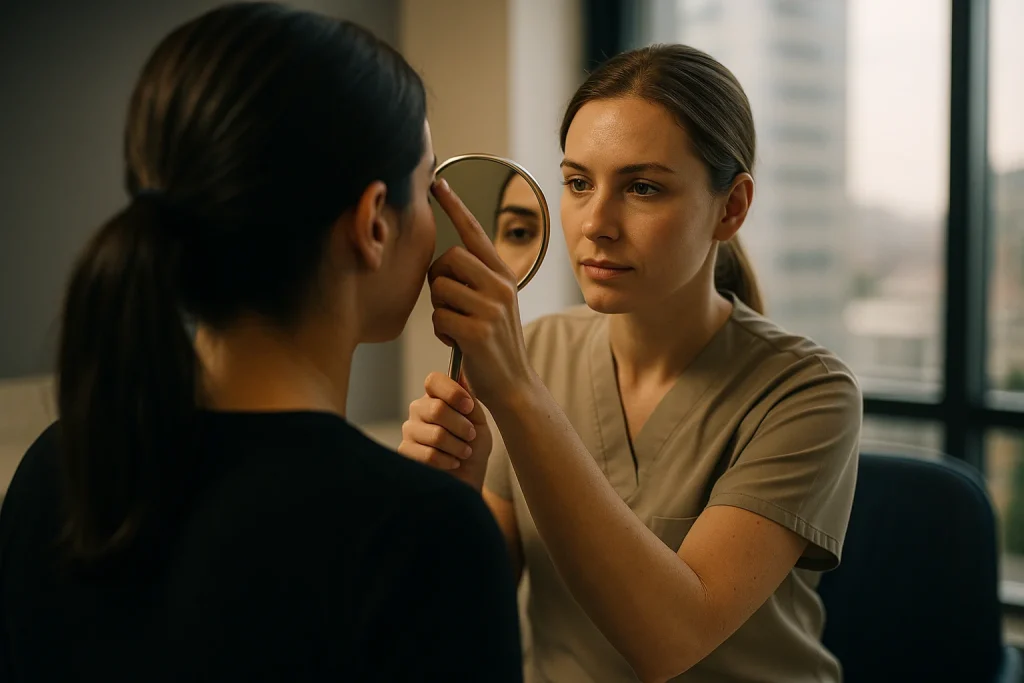
Eyebrow transplant results develop gradually rather than appearing immediately. Most patients see early shedding first, new growth from around three to four months, and a more mature eyebrow shape between 9 and 12 months; your final timeline depends on healing, graft growth, and aftercare. Reviewing eyebrow transplant before and after progress by stage can help set realistic expectations.
- Newly placed eyebrow hairs usually form small crusts, then shed before permanent regrowth begins.
- Visible new growth often starts around months 3 to 4, while density and texture continue to improve for up to 12 months or longer.
- Because transplanted scalp follicles keep their natural growth pattern, regular eyebrow trimming is usually needed.
- Careful graft direction, angle, and placement are important for a natural-looking eyebrow result.
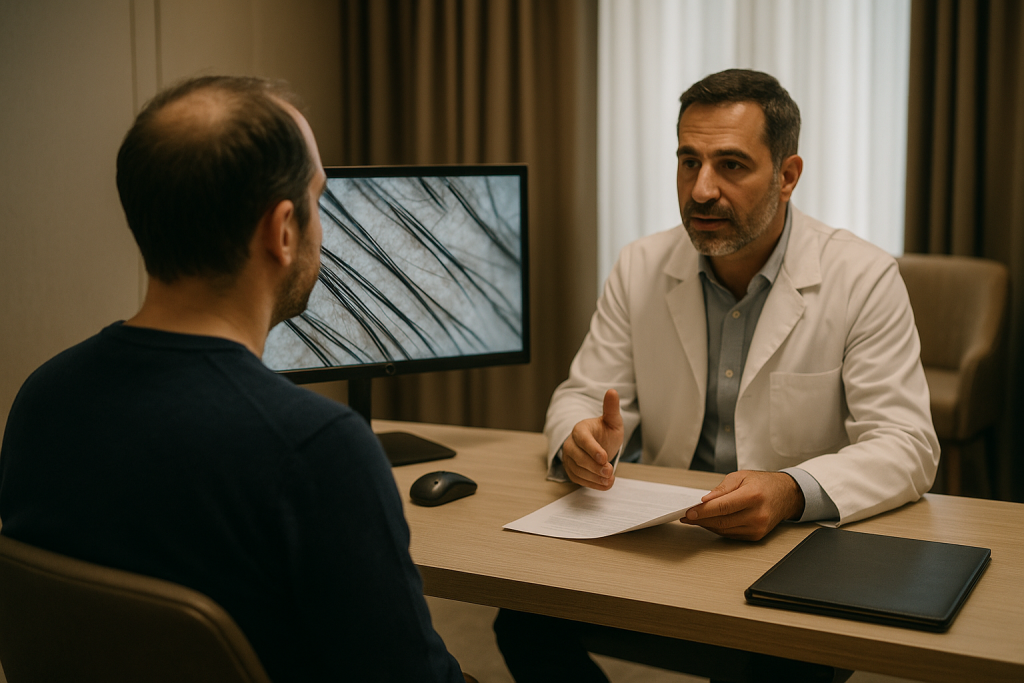
- A doctor should assess the cause of eyebrow loss and your donor hair quality before recommending surgery.
01Your eyebrow transplant results timeline at a glance
Eyebrow transplant before and after results change in clear stages, and the first days do not show the final outcome. During the procedure, individual hair follicles are usually taken from a donor area, often at the back or side of the scalp, and placed into tiny recipient sites within the eyebrow. The hairs are positioned to follow the natural direction and angle of eyebrow growth. Immediately after surgery, the eyebrows can look darker, fuller, and more defined because the transplanted hairs are already visible, but this early appearance is temporary.
In most patients, the early healing phase lasts about 7 to 14 days. Small scabs or crusts may form around each graft, and mild redness or swelling can occur. These effects usually settle with appropriate aftercare. It is important not to rub, scratch, pick, or forcefully wash the eyebrow area, as the follicles need time to become secure. Your clinical team will explain when and how to cleanse the area safely.
The transplanted hair shafts commonly shed during the first few weeks. This can be surprising, but shedding does not usually mean that the procedure has failed. The follicles remain beneath the skin and enter a resting stage before they start producing new hairs. From around month 3 or 4, early regrowth may become noticeable. Results then build gradually, with a more established appearance commonly seen at 9 to 12 months.
02What eyebrow transplant before and after photos can show
Before-and-after images can be useful when they show comparable lighting, eyebrow position, and time points. They may help you understand how a sparse, scarred, uneven, or absent eyebrow can become more defined over time. However, photographs cannot predict an identical result for every person. Natural eyebrow density, skin type, the reason for hair loss, donor hair characteristics, and the number of grafts suitable for placement all influence the outcome.
An early photograph taken in the first week often shows implanted hairs, mild redness, and tiny healing crusts. At this stage, the eyebrow may appear unusually sharp or dense. A photo taken at one or two months may look less impressive because many implanted shafts have shed. This is a normal part of the growth cycle for many patients, so the intermediate period should not be judged as the final result.
The most informative images are generally taken after enough time has passed for new hairs to grow and settle. At six months, the outline and coverage may be clearer, although some hairs can still be fine, short, or growing at different speeds. At 12 months, doctors can usually assess survival, density, direction, and overall harmony with the face more accurately. In some cases, subtle maturation can continue beyond this point.
03Days 1 to 14: protecting the grafts during early healing
The first two weeks are mainly about protecting the implanted follicles and allowing the skin to heal. You may notice tiny scabs, short hair shafts, mild tenderness, or a feeling of tightness. Some patients also experience temporary swelling around the upper face, especially during the first few days. Your doctor may give specific instructions about sleeping position, washing, medication, and when to return to normal activities.
You should avoid touching the recipient area unless instructed to do so for cleansing. Direct pressure from towels, cosmetics, helmets, or tight headwear may irritate the skin. Strenuous exercise, swimming, saunas, and heavy sweating are often limited for a short period because they can affect comfort and hygiene during early recovery. Follow the recovery plan provided by your medical team rather than relying on general online advice alone.
By the end of this stage, most visible crusting has usually loosened and fallen away naturally. Do not remove crusts by picking, even if they seem ready to come off. Forceful removal could disturb a graft in the early days. If you notice increasing pain, spreading redness, discharge, fever, or another concerning symptom, contact your clinic promptly for medical guidance.
04Weeks 2 to 12: why the transplanted hairs shed
After the recipient skin has healed, many patients enter the shedding phase. The implanted hair shafts can fall out between roughly two and eight weeks after surgery, while the follicle itself remains in place under the skin. This process is often called shock shedding or temporary shedding. It is a recognised part of recovery and should be discussed before treatment so that expectations remain realistic.
The eyebrow area may look similar to its pre-procedure state during this waiting period. Occasionally, it can look temporarily thinner if nearby existing hairs also shed due to local surgical stress. In most cases, this is temporary. The follicles need time to establish their blood supply and move through a resting phase before new visible hairs emerge.
It is understandable to compare your progress with eyebrow transplant before and after images online at this point, but comparisons can be misleading. Different people have different hair cycles, donor hair types, and healing responses. A planned follow-up allows the medical team to examine the recipient area, answer questions, and assess whether recovery is progressing as expected.
05Months 3 to 6: the first signs of new eyebrow growth
New hairs often begin to appear from approximately the third or fourth month. Early regrowth can be fine, soft, pale, or unevenly distributed. Some follicles may become active before others, so one section of the eyebrow can appear more developed than another. This does not necessarily indicate a problem, as hair growth is naturally asynchronous.
Between months 4 and 6, the eyebrow shape may become increasingly visible. The doctor-created design begins to emerge as more follicles produce hairs. Patients may notice that the hairs are longer than natural eyebrow hairs and may grow in a slightly different texture at first. This is expected when scalp donor follicles are used, because they retain some of their original biological characteristics.
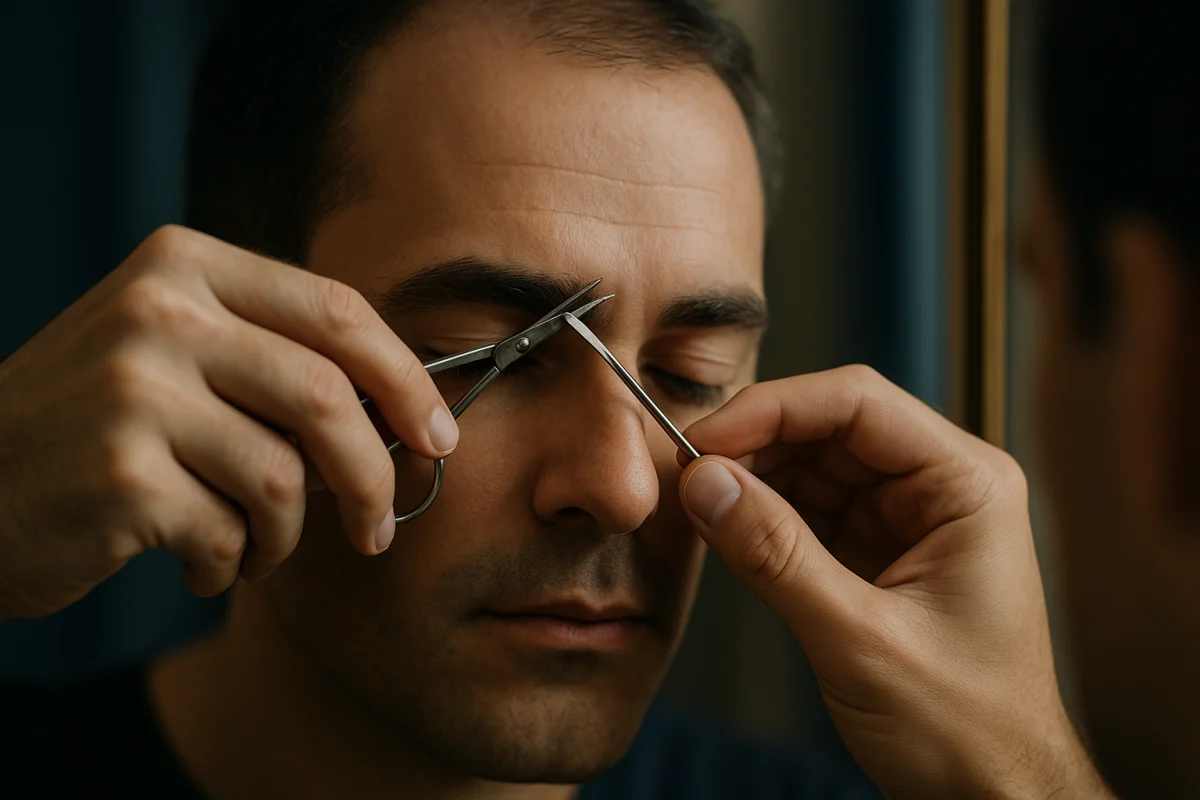
At this stage, careful grooming becomes more relevant. Transplanted eyebrow hairs typically require trimming because they may continue growing like scalp hair. Your clinic can advise when it is appropriate to trim and how to do this gently. Avoid aggressive plucking, chemical treatments, or procedures that could irritate the skin until your doctor confirms that the area has recovered sufficiently.
06Months 6 to 12: density, direction, and natural appearance
From six months onward, many patients see a fuller and more consistent result. Individual hairs may become thicker and longer, and the gaps between them can become less noticeable. The eyebrow does not usually become dense overnight; instead, the visual change develops gradually as more follicles enter their active growth phase. Patience is important during this part of the recovery timeline.
When people look at eyebrow transplant before and after results at the 9- to 12-month point, they often focus on density. Density is important, but direction is equally important for a natural appearance. Eyebrow hairs grow in changing patterns across the inner brow, body, arch, and tail. Meticulous placement at a shallow angle helps the hairs sit closer to the skin rather than projecting outward.
A final review around month 12 can help assess graft growth, eyebrow balance, and styling needs. At Acibadem Hair Transplant Center, hair restoration results are measured through trichoscopic graft survival at month 12, with a documented 98% rate under a written guarantee. Your doctor will explain what outcome measures are relevant to your own eyebrow procedure and whether any additional observation is needed.
07Long-term eyebrow care after the final result
An eyebrow transplant is generally designed as a long-lasting solution because the transplanted follicles continue to grow after they establish in their new location. However, long-lasting does not mean maintenance-free. Since donor follicles are commonly taken from the scalp, they may grow longer and faster than natural eyebrow hairs. Regular trimming is usually needed to maintain the chosen eyebrow shape.
Styling should remain gentle, especially during the first year. Once healing is complete and your doctor approves it, you may generally return to normal brow makeup and grooming. Some patients choose to use eyebrow pencils, powders, or gels while they wait for density to mature. These cosmetic methods can be helpful during recovery, but they should not be applied until the recipient skin is ready.
The surrounding natural eyebrow hairs can still be affected by the original cause of hair loss. For example, hormonal changes, skin conditions, autoimmune disease, nutritional concerns, scarring, or repeated over-plucking may influence native hairs. A transplant adds placed follicles, but it does not automatically treat an underlying medical condition. A proper assessment is important if eyebrow loss is ongoing or unexplained.
08Factors that influence your final eyebrow transplant result
The reason for eyebrow hair loss is one of the first factors to consider. Some people seek treatment after over-plucking, trauma, burns, surgery, or a stable scar. Others have patchy loss linked to a medical or inflammatory condition. In cases of active disease, doctors may recommend postponing surgery or investigating the cause first, because transplanting into an unstable area may not be appropriate.
Donor hair quality also matters. Fine donor hair may suit an eyebrow because it can look softer, while very coarse or strongly curled hair may need particularly careful selection and placement. The available donor supply, skin condition, scar tissue, and the desired level of density all affect the treatment plan. The aim is usually a balanced result that suits the facial features rather than an artificially heavy eyebrow.
Surgical planning is especially important because eyebrow hairs change direction across a small area. Grafts must be placed at a very shallow angle and in a pattern that reflects natural growth. At our dedicated hair restoration clinic in Istanbul, patients can request a free online hair analysis that is reviewed by doctors. Replies on WhatsApp are usually provided within around two hours, helping international patients understand whether an in-person assessment may be appropriate.
09Frequently Asked Questions
How long do eyebrow transplant results last?
Eyebrow transplant results are generally intended to be long-lasting because the transplanted follicles continue producing hair after they settle into the recipient area. In most patients, the hairs need regular trimming because they often retain scalp-like growth characteristics. The long-term appearance can also be influenced by the health of surrounding natural eyebrow hairs and any underlying cause of hair loss.
What is the cost of an eyebrow hair transplant?
The cost depends on factors such as the cause of eyebrow loss, the number of grafts needed, scar tissue, the complexity of the design, and the treatment plan recommended after assessment. A safe quote should be based on a doctor-reviewed evaluation rather than a standard online price. You can request a free online hair analysis to receive information relevant to your situation.
Are there risks with an eyebrow transplant?
Like any surgical procedure, an eyebrow transplant has potential risks. These can include swelling, redness, temporary shedding, infection, uneven growth, scarring, or hairs growing at an unnatural angle if placement is not carefully planned. A qualified medical team should explain the possible benefits, limitations, aftercare requirements, and individual suitability before treatment.
What is the newest procedure for eyebrow restoration?
There is no single procedure that is universally the newest or best for every eyebrow concern. Modern eyebrow restoration commonly uses refined follicular extraction methods and precise implantation approaches, including techniques such as Sapphire FUE or DHI when clinically suitable. Your doctor will recommend an approach based on your donor hair, eyebrow design, skin condition, and reason for hair loss.
This article is for general information only and is not a substitute for professional medical advice.
 06
06 12
12